This post contains affiliate links. We may earn a small commission when you buy through our links — at no extra cost to you.
Bedside cribs promise convenience: baby sleeps next to you, you reach over for feedings. But many models marketed as ‘grow-with-you’ lose their usefulness after a few months. The frame may wobble, the weight limit is too low, or the drop-down side doesn’t align with your bed height. The result? You end up buying a second sleep solution sooner than expected.
The key is focusing on three factors that determine real longevity: weight capacity (aim for 25 lbs or more), height adjustability (check against your mattress top), and breathable mesh sides. A bedside crib that converts to a playard or changing table can delay the next purchase by months. This guide highlights models that deliver on those specs, so you can buy once and use it through the first year.


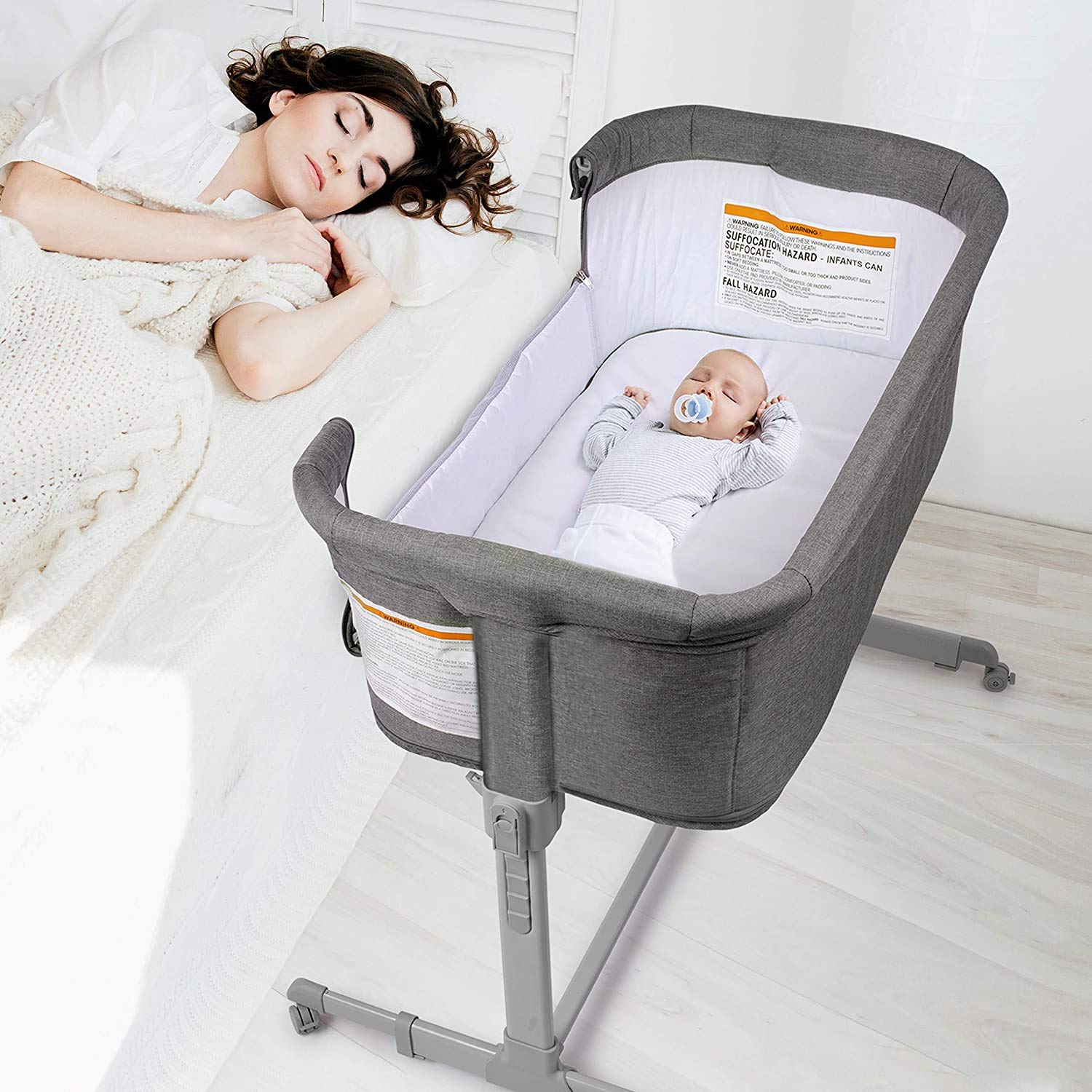

Best for Versatile All-In-One
BEKA 4-in-1 Bassinet
Key Features
- Weight Capacity: 30 lbs
- Drop-Down Side: Yes, zippered
- Mesh/Fabric: 360° mesh
- Height Adjust: 5 positions
- Portability: Lockable wheels, foldable
- Multi-Function: 4-in-1 (bassinet, playard, changing)
- Price: $$
The BEKA combines a bedside sleeper, standalone bassinet, playard, and changing table in one frame. Its 30 lb weight capacity and 360° mesh sides support most babies through the first year and beyond. Assembly is tool-free, and the side pocket plus under-bed basket hold diapers and wipes. Lockable wheels and stable feet keep the bedside sleeper secure against the bed frame, and owners report the structure remains stable across daily mode changes and repeated folding for travel. The changing station is best for babies under 25 inches; once the infant grows, parents rely on the other three modes, which continue to work well.
This is the right choice for families with limited nursery space who want a single item to serve as newborn co-sleeper, play yard, and changing table. The high weight limit extends usefulness into toddlerhood, and the tool-free fold makes occasional trips manageable. Skip it if you only need a lightweight travel bassinet for the first few months — the folded size is moderate, and the changing table is a bonus that smaller babies outgrow faster than the rest of the product.
Pros
- Rigid frame and thick padding endure daily transitions between bassinet, playard, and changing table.
- Seamlessly switches from bedside sleeper to playard to changing station without tools.
- Side pocket and under-bed basket keep diapers and wipes within arm’s reach.
Cons
- Changing station sized for babies under 25 inches; larger infants outgrow this mode quickly.
- Folded size (11x11x29 in) is still somewhat bulky for very small car trunks.
Buy this if you want one nursery item that works from birth through toddler playpen. Skip it if you only need a lightweight travel bassinet for the first few months.
Best for Full Mesh Budget
Fodoss Bedside Bassinet
Key Features
- Weight Capacity: 19.8 lbs
- Drop-Down Side: Yes, zippered
- Mesh/Fabric: All mesh
- Height Adjust: 7 positions
- Portability: Lockable wheels, folds
- Price: $
Compared to the more versatile 4-in-1 option, the Fodoss trades long-term use for superior airflow and lower cost. Its all-mesh sides and seven height adjustments make it a standout for warm climates or parents concerned about overheating. The trade-off is a 19.8 lb weight limit – most babies will outgrow it around five to six months. This bassinet suits families who want maximum breathability and don’t mind transitioning to a crib sooner.
Pros
- Full mesh sides provide exceptional airflow for safer sleep.
- Tool-free snap-together assembly in minutes.
- Lockable wheels glide smoothly on carpet and hard floors.
Cons
- 19.8 lb weight limit – larger babies may outgrow it before 6 months.
- Occasional reports of a slight wobble in the basket, though most find it stable.
Buy this if you want the most breathable budget-friendly bedside sleeper with adjustable height and easy mobility. Skip it if your baby is expected to exceed 20 lbs before 6 months.
Best for Mobile 3-In-1
KoolerThings 3-in-1 Bassinet
Key Features
- Weight Capacity: 24 lbs
- Drop-Down Side: Yes, zippered
- Mesh/Fabric: Mesh sides
- Height Adjust: 5 positions
- Portability: Lockable wheels
- Multi-Function: 3-in-1 (bassinet, playpen)
- Price: $$
Unlike the top pick’s 4-in-1 setup, this model prioritizes mobility: lockable wheels roll smoothly over carpet, tile, and hardwood, letting you move the bassinet from bedroom to living room without waking the baby. Sturdy construction and tool-free assembly add to the convenience. It’s a fit for parents who need to reposition the sleep space often and want a single product that lasts through the playpen stage. The trade-off: no bottom storage, and the height adjustment mechanism can be stiff for some users, so it’s best if you don’t change settings daily.
Pros
- Sturdy, safe build assembles without tools.
- Lockable wheels glide on all floor types for easy room-to-room movement.
- Converts from bassinet to bedside sleeper to playpen as baby grows.
Cons
- No bottom storage; consider adding a separate caddy for essentials.
- Height adjustment mechanism can be stiff for some users.
Buy this if you need a bedside sleeper that rolls easily between rooms and doubles as a playpen, and you’re okay with a minimalist design lacking storage.
Best for Budget Travel
Dream On Me Karley Bassinet
Key Features
- Weight Capacity: 25 lbs
- Drop-Down Side: No
- Mesh/Fabric: Fabric canopy
- Portability: Folds flat, carry bag
- Price: $
At 12.4 pounds and folding flat into a carry bag, this bassinet stands apart from heavier, multi-mode competitors. Assembly is intuitive, and the aluminum frame feels solid for the price. The trade-off for that portability comes in two forms: there’s no drop-down side for true bedside co-sleeping, and the zippered canopy is noticeably stiff and noisy when opened or closed. The mattress pad is thin and firm, but many parents add a padded cover. This is a straightforward travel or second-room sleeper for budget-conscious families who prioritize weight and ease over bedside access or full-mesh breathability.
Pros
- Weighs only 12.4 lbs and folds flat with a carry bag
- Quick, tool-free assembly in under five minutes
- Delivers solid build and durability at a budget-friendly price
Cons
- Zipper on canopy is stiff and noisy when opening or closing
- Mattress pad is thin and firm; some parents add extra padding
Buy this if you need a lightweight, portable bassinet for travel or tight spaces and value easy setup. Skip it if you want a drop-down side for co-sleeping or a canopyless mesh design for maximum airflow.
Best for Low Bed Style
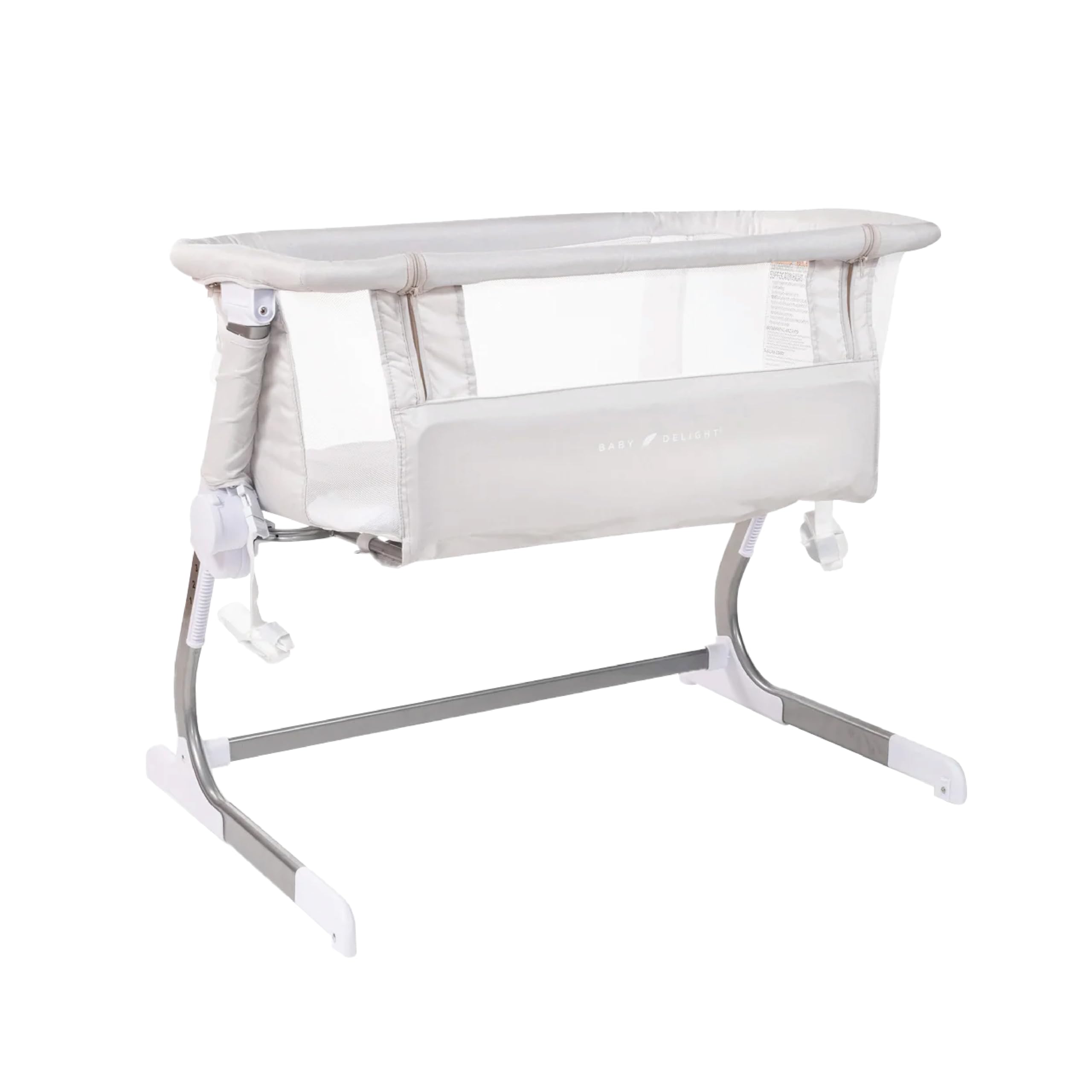
Baby Delight Beside Me Dreamer
Key Features
- Weight Capacity: 20 lbs
- Drop-Down Side: Yes, anchor straps
- Mesh/Fabric: Mesh sides
- Height Adjust: 6 positions
- Portability: Lift to move
- Multi-Function: Bedside only
- Price: $$$
Unlike more versatile all-in-one sleepers, the Baby Delight Beside Me Dreamer focuses on looks and simplicity for low-profile beds. Its driftwood grey finish and generous sleep space appeal to parents who want the bassinet to blend with their décor. Assembly requires no tools and takes minutes. However, this trade-off comes with real-world compromises: stability is inconsistent — some units wobble — and the wheels don’t roll, so you must lift it to move. The height adjustment maxes out too low for standard beds over 25 inches, making it best for beds under 22 inches. It’s a short-term (0–5 months) bedside solution for those who prioritize aesthetics over mobility and rock-solid stability.
Pros
- Stylish driftwood grey finish that blends with home decor
- Tool-free assembly takes only a few minutes
- Spacious sleep area fits growing infants comfortably
Cons
- Stability varies; some units wobble or feel unsteady
- Wheels do not roll effectively; must lift to reposition
Buy this if you have a low bed (under 22 inches) and want a stylish, roomy bassinet for the first few months. Skip it if your bed is standard height or you need a stable, mobile sleep solution.
How to Choose
The most overlooked factor when buying a bedside crib is not the initial convenience, but how long it lasts before your baby outgrows it.
Weight Capacity
Weight limits typically range from 15 to 30 lbs. A higher capacity (25 lbs or more) means the crib can safely hold your baby for more months. Check this first if you want the crib to serve past the newborn stage.
Drop-Down Side
A drop-down or zippered side lets you reach the baby without leaning over. Ensure the mechanism is easy for one-handed operation and can be securely latched. Some models use anchor straps instead of a drop-down side.
Mesh vs Fabric Sides
Mesh sides provide maximum breathability and visibility, reducing overheating risk. Fabric sides may look cozier but can trap heat. Look for mesh on all sides, not just one or two.
Height Adjustability
The crib height must match your mattress top. Most beds are around 25 inches, but adjustable cribs with 5–7 positions can accommodate lower platform beds. Measure your bed before buying.
Portability
If you plan to move the crib between rooms, check for lockable wheels that roll smoothly on carpet and hard floors. Foldable models with carry bags are best for travel. Some cribs must be lifted to move.
Multi-Functionality
Models that convert to a playard or changing table extend the crib’s useful life beyond the first 5–6 months. Verify that the transition is tool-free and the weight limit applies to all modes.
FAQ
Can a bedside bassinet be used as a playpen later?
Only if the bassinet is specifically designed to transition into a playpen, like the BEKA 4-in-1 or KoolerThings 3-in-1. Most standard bassinets have a different frame and weight limit that make them unsuitable as floor-level playpens. Check the product specs for ‘playpen mode’ and ensure the weight capacity matches your baby’s size.
How do I know if a bedside crib will fit my bed height?
Measure from the floor to the top of your mattress. Most bedside cribs offer 5–7 height positions, but the highest setting typically reaches 24 inches. If your bed is 25 inches or taller, look for models with a maximum height of at least 26 inches. Some cribs like the Baby Delight Beside Me Dreamer sit too low for standard beds.
Is mesh or solid fabric safer for a baby bassinet?
Mesh sides are safer because they allow airflow even if the baby’s face presses against the side, reducing the risk of suffocation and overheating. Solid fabric or canopy sides may restrict airflow. For maximum safety, choose a bassinet with breathable mesh on all four sides.
Do bedside sleeper bassinets need to be anchored to the bed?
Yes, most bedside sleepers include anchor straps that attach to your bed frame to prevent gaps and shifting. Always use them as directed. A bassinet that is not secured can create a dangerous gap between the mattress and the crib side, posing an entrapment risk.