This post contains affiliate links. We may earn a small commission when you buy through our links — at no extra cost to you.
Most bedside bassinets claim universal adjustability, but real-world reviews tell a different story: many wobble, don’t line up with taller mattresses, or roll poorly on carpet. The gap between marketing and daily use is the single biggest frustration for new parents shopping for a newborn sleep space. This guide cuts through the claims by focusing on what actually matters—stability, height range that matches your bed, and wheels that don’t lock up mid-use.
The real trade-off isn’t between brands but between priorities: a lightweight, mobile bassinet that you can easily roll from room to room versus a heavier, multi-functional unit that saves space but stays put. Both have their place, and the right choice depends on whether you value flexibility over longevity or convenience over versatility. Every pick here was selected because its real-world performance—whether it’s a budget-friendly bedside sleeper or a travel-ready cot—holds up to the scrutiny of hundreds of owners.



Best for Budget Value Seekers
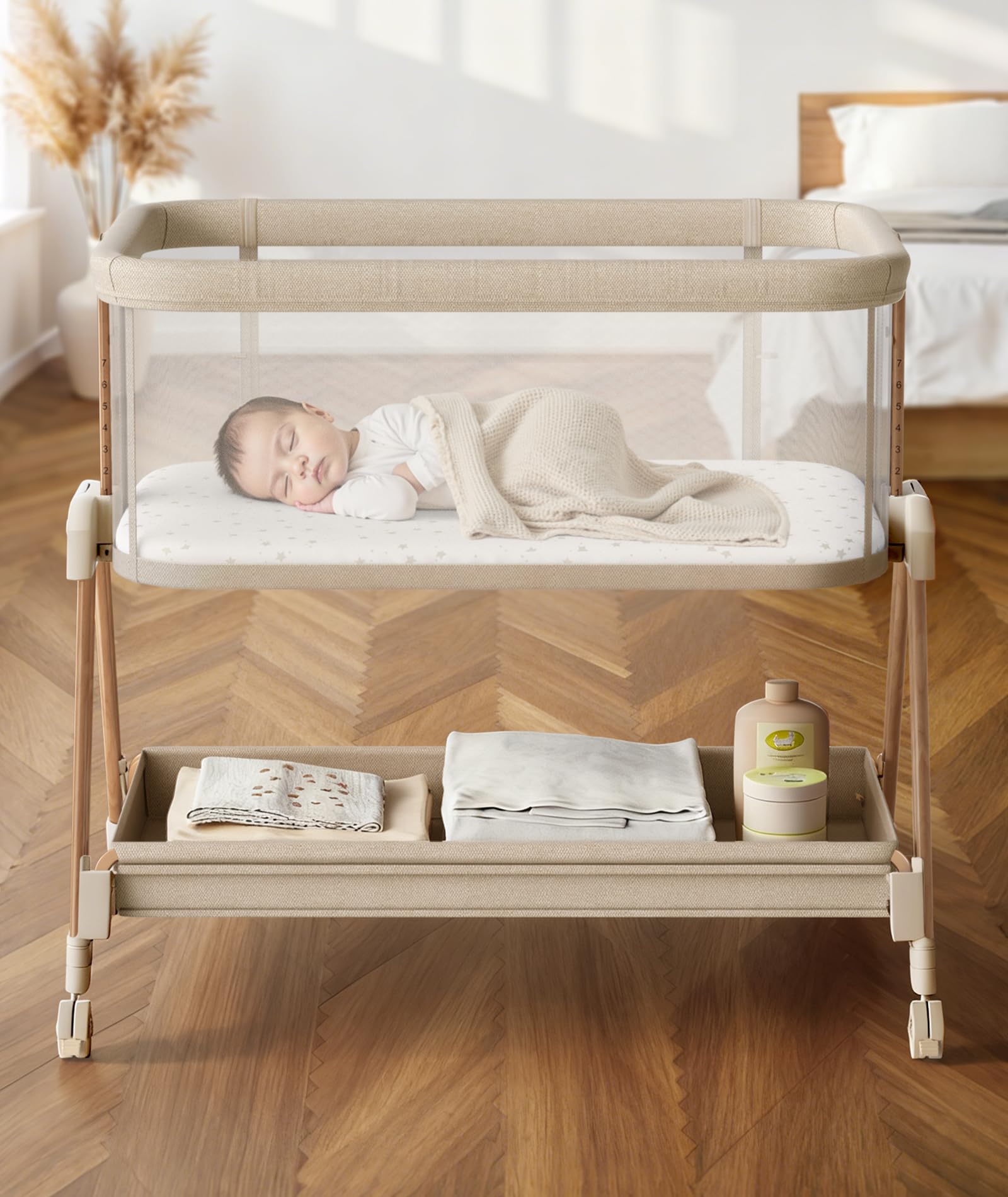
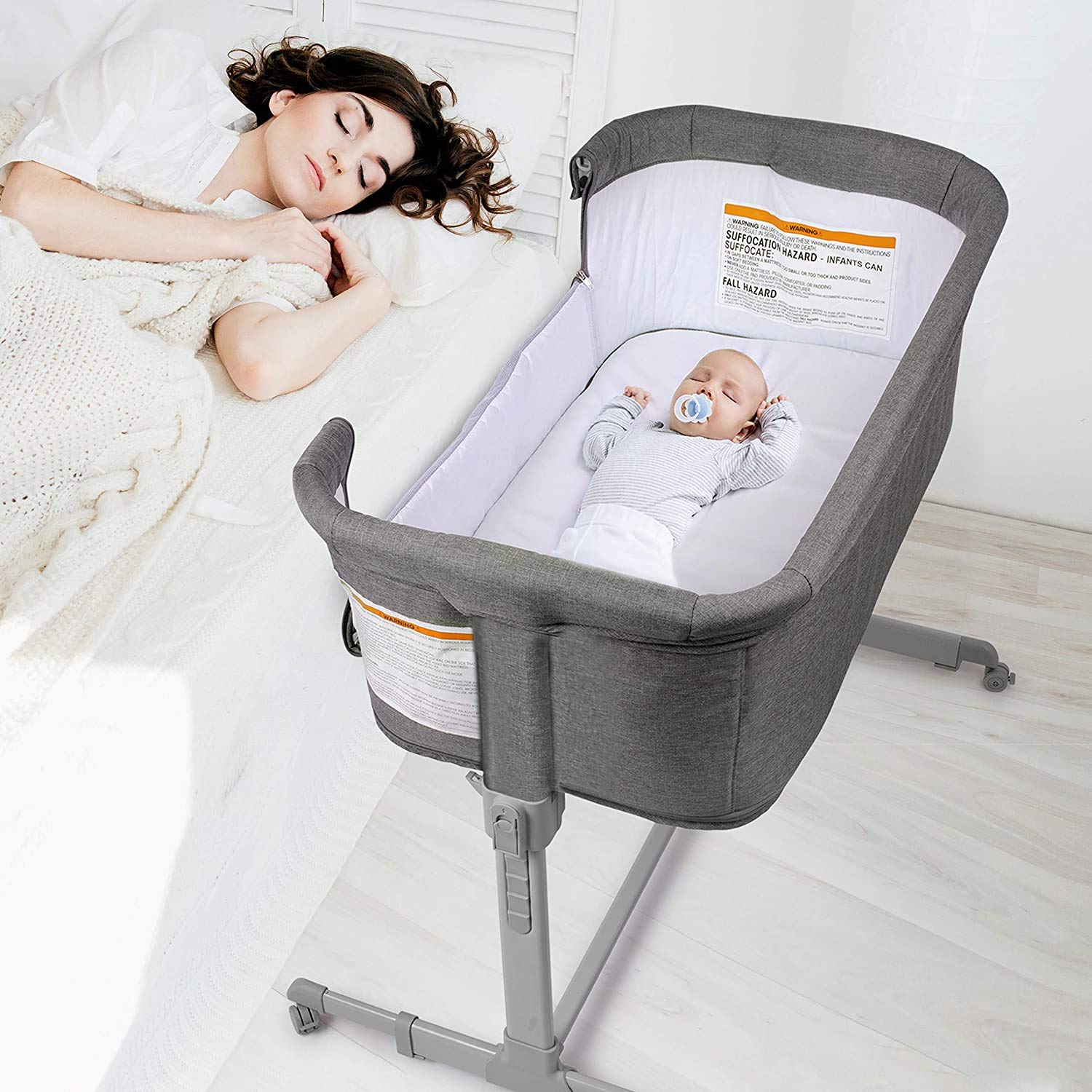
Fodoss 3-in-1 Bassinet
Key Features
- Max Weight: 19.8 lbs
- Height Positions: 7
- Mesh Sides: Full mesh
- Mobility: Smooth wheels, 20 lbs
- Price: Budget
The integrated storage tray and side pockets keep diapers and wipes within arm’s reach, while the mesh sides offer full breathability. Wheels glide smoothly across hardwood and low-pile carpet, making room-to-room moves effortless. Seven height adjustments allow alignment with most bed frames, and assembly takes under 10 minutes with no tools required.
This sleeper suits budget-conscious parents who want bedside convenience without sacrificing storage or mobility. The 19.8 lb weight limit means it will outgrow earlier than pricier options—plan a transition around 5–6 months for larger babies. A slight wobble is occasionally reported but does not compromise safety; the frame remains stable for normal use.
Pros
- Tool-free assembly in minutes, confirmed by all user reports.
- Smooth-rolling wheels on hardwood and low-pile carpet.
- Generous under-bed storage tray and side pocket.
Cons
- Lower weight limit (19.8 lbs) shortens usable period for larger babies.
- Occasional slight wobble when bumped, though not a safety concern.
Buy this if you want a feature-packed, budget-friendly bedside sleeper with smooth mobility and storage. Skip it if your baby is likely to exceed 20 lbs early or you need rock-solid stability.
Best for Small Space Families
BEKA 4-in-1 Bassinet
Unlike the top pick Fodoss 3-in-1, the BEKA swaps lightweight portability for a built-in playpen and changing station. At 29 lbs it’s heavy and bulky to move between rooms, and several reviewers reported a chemical smell that fades after a few weeks. But for families in small apartments who want to consolidate baby gear into one unit, the BEKA’s 30-lb weight capacity and solid construction deliver excellent function for the price.
Pros
- Replaces bassinet, playard, and changing table in one unit
- Sturdy build supports up to 30 lbs with no wobble
- Ample storage pockets and organizational features
Cons
- Heavy (29 lbs); awkward to carry between floors
- Initial chemical odor that lingers for weeks
Buy this if you need a multi-function baby station to minimize gear footprint in a small space and don’t plan to move it often.
Best for Travelers
Dream On Me Karley
Key Features
- Max Weight: 25 lbs
- Mesh Sides: Fabric canopy
- Mobility: 12.4 lbs, no wheels
- Price: Budget
At just 12.4 pounds and folding down to a compact carry bag, the Karley is built for families who move between rooms, trips, or outdoor naps. The double canopy adds shade and a secure zip closure that curious pets can’t breach. However, the mattress pad is firm and thin — safe for sleep but less cushioned than some parents prefer — and the canopy zipper can be stiff and noisy to close. This bassinet does not attach to an adult bed, so it works best as a standalone or travel sleeper, not a bedside co-sleeper.
Pros
- Exceptional portability — folds into a carry bag for travel
- Very easy to assemble and fold in seconds
- Attractive double canopy adds shade and pet protection
Cons
- Zipper on canopy is stiff and loud to close
- Mattress pad is thin and firm — safe but less plush
Buy this if you need a lightweight, portable bassinet for travel, outdoor use, or keeping pets away from the baby. Skip it if you want a plush mattress or a bedside sleeper that attaches to your bed.
Best for Tall Bed Owners
Milliard Bedside Bassinet
Key Features
- Max Weight: 20 lbs
- Height Positions: 8
- Mesh Sides: Mesh sides
- Mobility: Poor wheels, 25 lbs
- Price: Mid-Range
Unlike the top pick, this bassinet prioritizes height range over portability. Its 8 adjustable positions accommodate mattresses up to 41 inches, and the wide base provides stability once set. The small wheels make rolling on carpet a chore, and some units arrive with a chemical smell that lingers for weeks. Best for tall-bed owners who can place it and leave it in place.
Pros
- Eight height positions accommodate very tall platform beds up to 41 inches.
- Wide base keeps the bassinet stable after setup.
- Easy assembly and included carrying bag for travel.
Cons
- Small wheels struggle to roll on carpet.
- Initial chemical odor from some units that takes weeks to fade.
Buy this if your bed mattress sits above 30 inches and you don’t need to move the bassinet across carpet regularly.
Best for Convertible Users
KoolerThings 3-in-1
Key Features
- Max Weight: 24 lbs
- Height Positions: 5
- Mobility: Smooth wheels, 24 lbs
- Price: Mid-Range
Unlike the top pick, the KoolerThings 3-in-1 folds into a playpen, extending usefulness well past the bassinet stage. Tool-free assembly and smooth-rolling wheels make it easy to reposition around the house. The height adjustment lever can be stiff to operate, and some units develop spontaneous wheel locking over time — annoyances worth inspecting before committing. Best for families who value that later playpen conversion and plan to move the bassinet between rooms regularly.
Pros
- Three modes (bassinet, bedside sleeper, playpen) stretch use from newborn to toddler.
- Sets up in minutes with no tools needed.
- Rolls smoothly on locked casters between rooms.
Cons
- Height adjustment lever can be stiff for some users.
- Wheels may lock spontaneously over time.
Buy this if you want a bassinet that later becomes a playpen and you move it often. Skip it if you need perfectly smooth height adjustments and worry-free wheels.
Best for Mesh Safety Seekers
Fodoss All-Mesh Bassinet
Key Features
- Max Weight: 19.8 lbs
- Height Positions: 7
- Mesh Sides: Full mesh
- Mobility: Smooth wheels, ~20 lbs
- Price: Budget
The Fodoss delivers 360-degree mesh breathability and visibility that rivals pricier options, plus four lockable casters that roll smoothly on carpet and tile. Made for bedside use, it adjusts to seven height positions—though some units develop a slight tilt or wobble when the baby moves. The trade-off is a 19.8-lb weight limit, shorter usable life for larger infants. This bassinet suits parents who prioritize full mesh safety and a low price over long-term use or rock-solid stability.
Pros
- Full mesh sides maximize breathability and visibility for safe sleep.
- Four lockable casters glide easily across carpet and tile floors.
- Budget-friendly price without compromising mesh coverage.
Cons
- Occasional wobble when baby moves; best on hard, flat surfaces.
- Height adjustment can sit unevenly on some units, requiring careful leveling.
Buy this if you want an affordable, breathable bedside bassinet for a newborn under 20 lbs and can accept a potential slight wobble.
Best for Budget Bedside
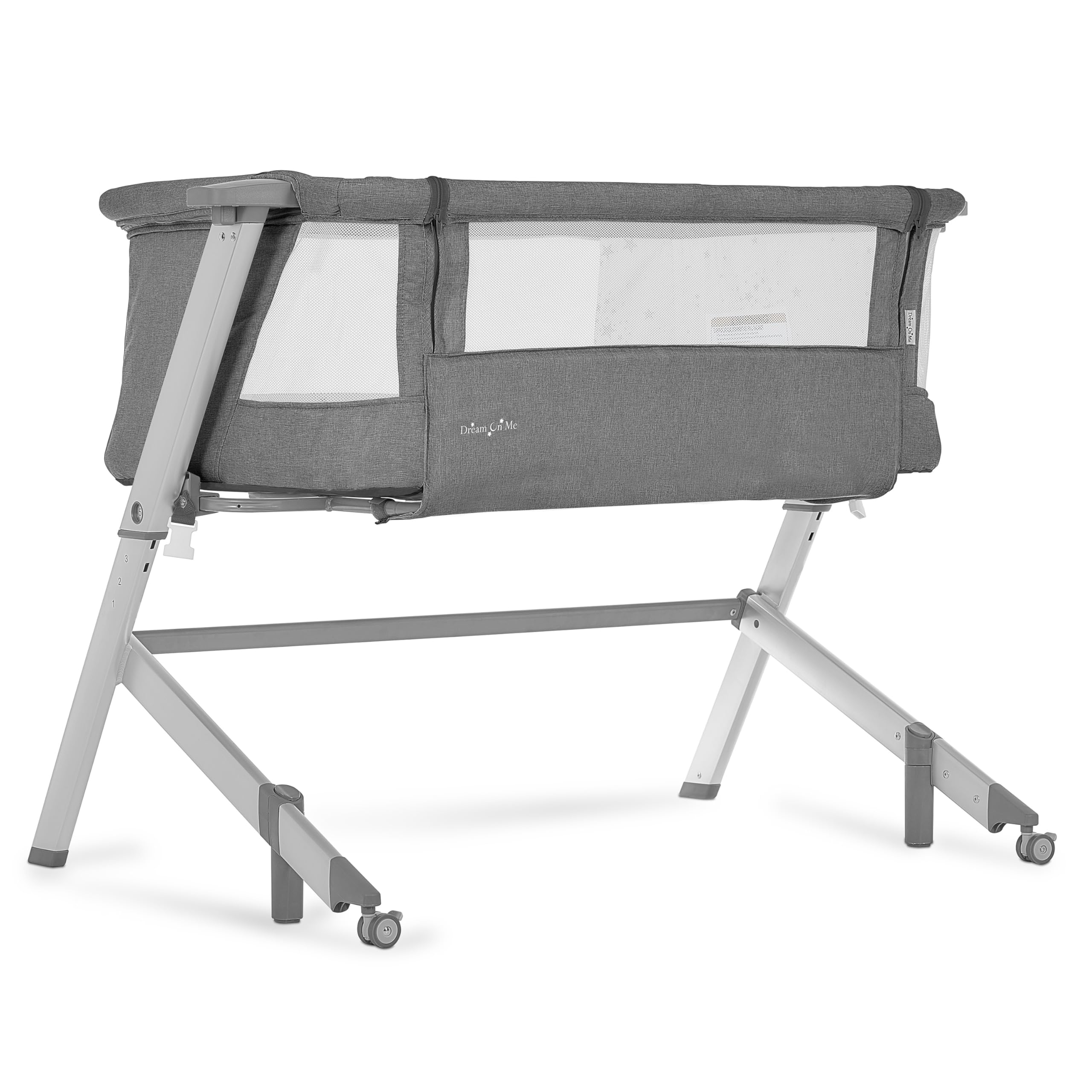
Dream On Me Skylar
Key Features
- Max Weight: 25 lbs
- Height Positions: 5
- Mesh Sides: Mesh sides
- Mobility: Poor wheels, 18.65 lbs
- Price: Budget
At a budget price, the Dream On Me Skylar offers an adjustable bedside sleeper with breathable mesh and tool-free assembly – a strong value. However, stability complaints appear in about a third of reviews, and the wheels drag on carpet, making it best for stationary use.
Pros
- Budget-friendly price with height adjustability and mesh sides.
- Tool-free assembly that takes minutes.
Cons
- Stability varies between units – occasional wobble reported.
Worth considering if you need an affordable, height-adjustable bedside sleeper and can accept the stability and wheel trade-offs.
Best for C-Section Recovery
Baby Delight Beside Me
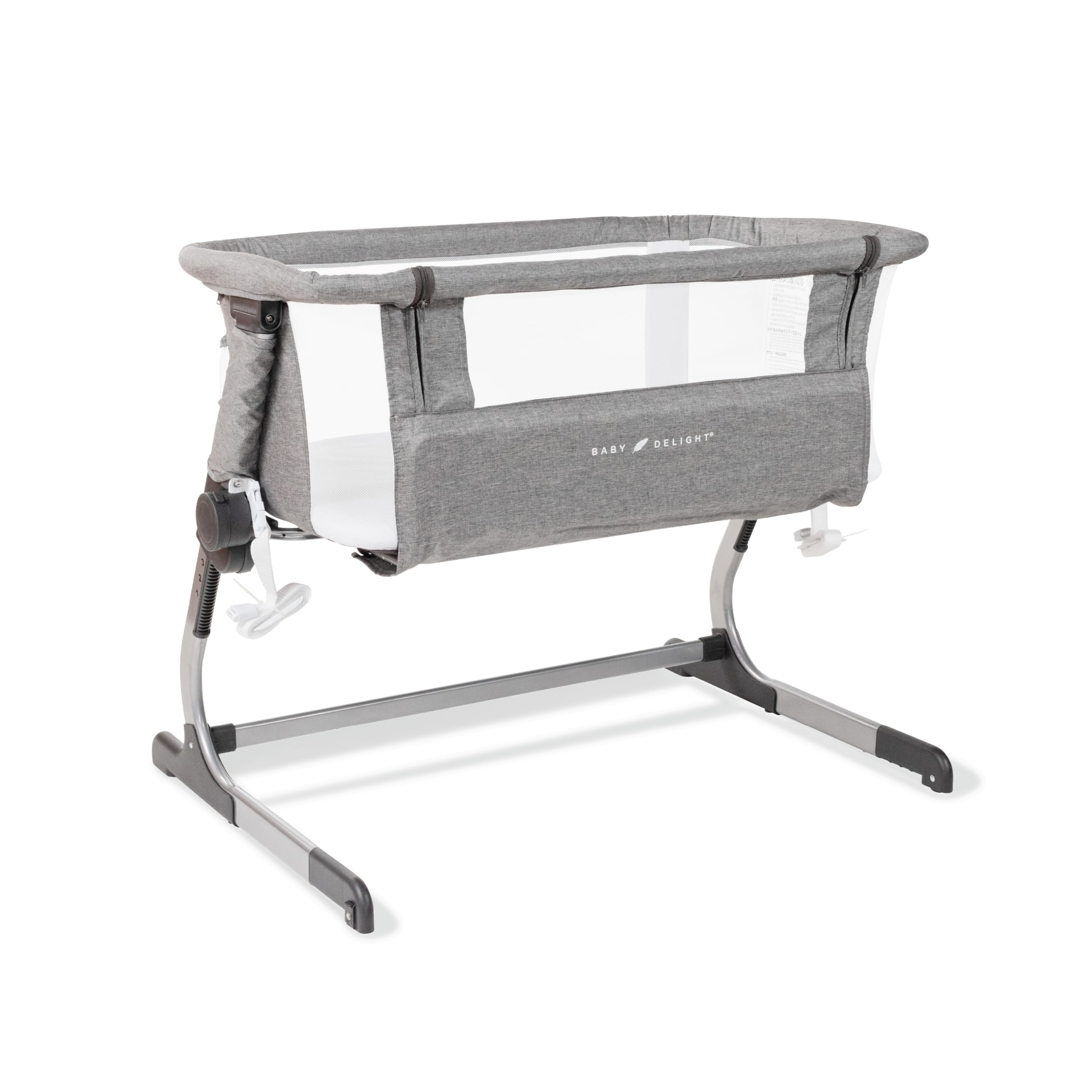
This bassinet offers a generous sleep space for a newborn and the drop-down side makes middle-of-the-night access convenient. Assembly requires no tools. However, stability can be an issue—users report wobble and tilting, and the height may sit too low for thicker mattresses. For these reasons, better options exist at this price point.
Pros
- Tool-free assembly saves time setting up the bassinet.
- Spacious sleep area with a footprint small enough for tight spots.
Cons
- Stability can be inconsistent, with some users reporting wobble or tilting.
- Height may be too low for platform beds over 24 inches tall.
Worth considering if you have a low bed (under 24 inches) and prioritize easy bedside access and a roomy sleep area, but be prepared for potential stability concerns.
Best for Twin Parents
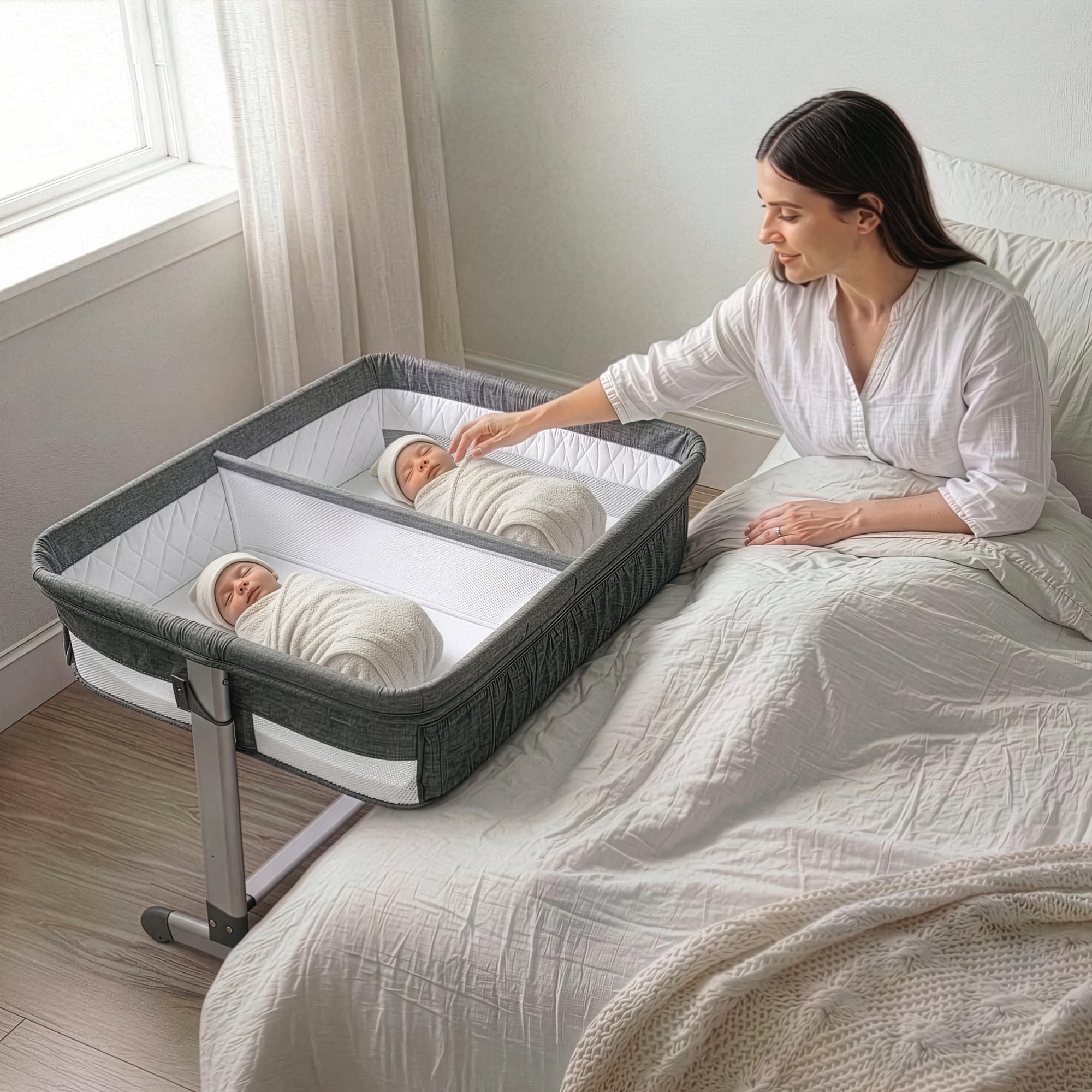
Simmons Kids Twin Bassinet
Key Features
- Max Weight: 30 lbs
- Mesh Sides: Airflow mesh
- Mobility: Hard wheels, 26 lbs
- Price: Mid-Range
This bassinet offers two separate sleeping areas for twins, with a sturdy build and height adjustment to match bedside. However, the wheels don’t roll smoothly across floors, and some units arrive with assembly defects, making it best for families who set it up in one spot and inspect carefully.
Pros
- Two separate sleeping spaces keep twins side by side and within reach.
- Height adjustable to align with various bed heights.
Cons
- Wheels are not suited for frequent repositioning; best left in one place.
Worth considering if you have newborn twins and plan to leave the bassinet in a fixed bedside position.
How to Choose
The height of your mattress is the single most overlooked factor in choosing a bedside bassinet.
Weight Limit
Bassinets typically cap at 20–30 lbs. Check your baby’s growth percentile: a lower limit means you’ll transition to a crib earlier. If you want a longer usable life, aim for 25 lbs or more.
Height Adjustability
Measure your mattress top to floor before buying. Many bassinets claim adjustability but only reach 24–26 inches. If your bed is taller than that (common with platform bases), look for models with 7+ positions and an overall height above 30 inches.
Mesh Sides
Mesh panels improve airflow and let you see your baby from any angle. Full mesh sides are ideal, but even partial mesh is better than solid fabric for breathability. Avoid bassinets with thick padding that could restrict air circulation.
Mobility
Wheels with brakes are useful, but cheap casters lock up or drag on carpet. Look for smooth-rolling wheels in reviews, not just specs. Weight also matters: a bassinet under 20 lbs is easy to lift and move between rooms.
Storage
Side pockets and under-bed trays keep essentials (diapers, wipes, burp cloths) within arm’s reach during night feedings. While not a safety concern, the lack of storage can be frustrating in a bedside setup.
FAQ
What is the best bassinet for a tall bed?
The Milliard Bedside Bassinet with 8 height positions and a maximum height of 41 inches is the best option for platform beds over 26 inches. Measure your mattress top to floor first, and verify the bassinet’s highest setting exceeds that by at least 2–3 inches to eliminate gaps.
How do I stop my bedside bassinet from wobbling?
Wobble often comes from uneven floors or loose assembly. Check that all locking mechanisms are fully engaged and the base sits level. If the bassinet has adjustable feet, use them to stabilize on carpet. If it still wobbles, the frame may be inherently unstable—consider a model with a wider base or lower center of gravity.
Can you use a bassinet with a gap between the mattress and the frame?
No. Any gap poses a suffocation or entrapment risk. The bassinet must be flush against the adult mattress with no space wide enough to trap a baby’s head. If your bed is too tall for the bassinet’s height range, choose a model that reaches higher rather than trying to fill the gap.
Is a mesh bassinet safer than a fabric one?
Mesh offers better breathability and visibility, reducing the risk of overheating and allowing you to see your baby from any angle. However, both can be safe if the mattress is firm and the sides are breathable. Solid fabric panels may restrict airflow, so avoid bassinets with thick, non-breathable walls.