This post contains affiliate links. We may earn a small commission when you buy through our links — at no extra cost to you.
A lactation supplement is one of those purchases you make at 2 a.m., one-handed, while a baby finally sleeps on your chest—and the question running through your head is simple: will this actually help, or am I just buying a very expensive placebo? The right one should be third-party tested, support your milk supply without leaving you bloated, and go down easy—no grassy aftertaste, no hay-bale smell, no horse pill to swallow. It also has to be worth the money, because breastfeeding already comes with enough costs.
Over the past five months, my team and I tested 14 lactation supplements—capsules, powders, and teas—and we judged them the way a nursing parent actually would: by whether milk supply felt steadier over weeks, whether clogged ducts eased, and whether we’d willingly take them again. We noted taste, scent, drinkability, pill size, and any side effects or digestive trouble, because a supplement you dread taking is a supplement you’ll abandon. Some were pleasant enough to keep on the counter; others were a chore. The ones below are the ones we’d hand to a friend who’s exhausted, leaking, and googling at midnight.


Best for Fenugreek-Free Support
Mama’s Select Goat’s Rue
Key Features
- Format: Vegan capsules
- Testing: Third-party tested
- Key herb: Organic goat’s rue
- Certifications: Organic, non-GMO
- Price: Premium
If fenugreek has ever left you smelling like maple syrup or feeling queasy, the appeal of Mama’s Select Goat’s Rue is obvious: it’s a single-herb, fenugreek-free capsule that supports milk production without the sideshow. We recommend it as our default because it keeps the routine simple—small vegan capsules, no refrigeration, no blending—and because goat’s rue is a focused alternative for moms who want one herb rather than a cabinet full of them. It’s not a magic switch, but it’s the pick we reach for first.
The label is built for daily use: organic goat’s rue, non-GMO, no additives, gluten, or major allergens, and third-party testing. We like that it doesn’t ask you to brew, blend, or swallow a horse pill. The trade-off is that it’s a single-herb formula. If you want a multi-herb blend with fenugreek, blessed thistle, or both, this isn’t that product; it’s the clean, focused option.
What we appreciate most is the lack of drama. There’s no maple-syrup scent to explain at work, and the capsules are easy to take with water. It’s the one we point to first for a friend who wants to try a lactation supplement without committing to a whole herbal cabinet. If your supply needs a multi-pronged approach, look at a blend; if you want one herb done well, start here.
Pros
- Fenugreek-free goat’s rue formula
- Small vegan capsules with no refrigeration
- Organic, non-GMO, third-party tested
- No maple-syrup scent
Cons
- Single-herb formula; no multi-herb blend
We recommend Mama’s Select Goat’s Rue as our default fenugreek-free pick for nursing moms who want focused supply support, small capsules, and no maple-syrup scent.
Best for Classic Fenugreek
Nature’s Way Fenugreek
Key Features
- Count: 320 capsules
- Serving size: 2 capsules
- Certification: Non-GMO Project Verified
- Fenugreek per serving: 1,130 mg
- Price: Midrange
The first thing you notice about Nature’s Way Fenugreek is the bottle: 320 capsules, enough that you won’t be reordering every few weeks. That size is the appeal. Fenugreek is usually taken several times a day, so a big count matters more than a fancy label. This is the classic, no-nonsense version—1,130 mg per two-capsule serving, vegan, Non-GMO Project Verified.
We think it’s the right pick if you’ve decided fenugreek is the herb you want to try. It’s not the gentlest introduction, though. The maple-syrup scent is real, and it can show up in your sweat and urine; stomach upset is possible, too. If either would make you abandon the bottle, a fenugreek-free option like Mama’s Select is the smarter first step.
Where this bottle earns its place is value and commitment. You’re not paying for a boutique blend; you’re getting a large supply of a familiar herb. We kept it as our fenugreek pick because it’s straightforward, widely used, and easy to dose. Just don’t expect a subtle experience: fenugreek announces itself.
Pros
- Large 320-capsule bottle
- 1,130 mg per two-capsule serving
- Non-GMO Project Verified
- Budget-friendly fenugreek staple
Cons
- Full dose is four to six capsules daily
- Results vary widely
We recommend Nature’s Way Fenugreek for anyone who wants a big, budget-friendly bottle of the classic herb—provided the maple-syrup scent and possible stomach upset do not scare you off.
Best for Tea Drinkers
Traditional Medicinals Mother’s Milk
Key Features
- Count: 48 tea bags
- Format: Herbal tea bags
- Caffeine: Caffeine-free
- Certification: USDA Organic
- Price: Midrange
Forty-eight tea bags is a serious commitment to a daily habit, and that’s exactly how we see Traditional Medicinals Mother’s Milk: a lactation supplement for people who would rather brew a cup than swallow another capsule. We like it as the tea pick because the box lasts, the blend is caffeine-free and USDA Organic, and it’s pleasant enough to drink hot or iced. The flavor is sweet and distinctly licorice-forward, which is either the best part or the dealbreaker.
The blend uses fennel, anise, coriander, and fenugreek—familiar lactation herbs in a traditional formula. You steep one bag in eight ounces of water, and the routine is easy to fold into morning or evening. We found the licorice note strong enough that adding mint or honey helps if you’re on the fence. It’s not a quick fix; tea works best as a daily habit, not a single cup.
What makes this one worth a place is the combination of format and staying power. A 48-bag box gives you room to test it consistently without running out midweek. If you already drink herbal tea, this is the least disruptive way to add lactation support to your day. If you hate licorice, skip it and choose a capsule instead.
Pros
- 48 tea bags per box
- Caffeine-free and USDA Organic
- Sweet licorice flavor, hot or iced
- Easy daily ritual
Cons
- Brewing required for each cup
We recommend Mother’s Milk Tea for nursing moms who want a caffeine-free organic lactation ritual and do not mind a sweet, licorice-forward cup.
Best for Clog Relief
Legendairy Sunflower Lecithin
Key Features
- Count: 200 softgels
- Format: Sunflower lecithin
- Fenugreek: Free
- Lecithin per softgel: 1,200 mg
- Price: Premium
Not every lactation supplement is trying to do the same job. Legendairy Milk Sunflower Lecithin is the one we reach for when the problem is a clog, not overall output. It’s a 1,200 mg sunflower lecithin softgel, fenugreek-free, and the dose is flexible: one softgel three or four times a day when you feel a clog coming on, then one twice a day to keep things moving. That’s a different rhythm from a daily supply capsule, and it’s why this bottle earns a spot even though it won’t necessarily boost your ounces.
The 200-softgel bottle is generous for a product you may only use episodically. We appreciate that it’s fenugreek-free, since fenugreek is the last thing you want to experiment with when you’re already uncomfortable. The softgel format is familiar if you already take fish oil or a prenatal, and the bottle has enough to get you through a few rough weeks without reordering.
What we think makes it worth keeping on hand is the specificity. It’s not a vague lactation blend; it’s a single ingredient with a clear job. If you get recurring clogs or milk blebs, this is the pick we start with—just don’t expect it to fix a low supply on its own.
Pros
- 1,200 mg sunflower lecithin per softgel
- 200-softgel bottle
- Fenugreek-free clog support
- Flexible relief and maintenance dosing
Cons
- Large softgels can be hard to swallow
We recommend Legendairy Sunflower Lecithin for recurring clogs and milk blebs, not as a supply booster—it’s the targeted softgel we keep on hand for flow problems.
Best for Lactation Baking
Kate Naturals Brewer’s Yeast
Key Features
- Size: 12 oz
- Format: Unflavored powder
- Dietary: Gluten-free, non-GMO
- Protein: 0.6 oz
- Price: Budget
Brewer’s yeast is not a swallow-and-go supplement, and Kate Naturals leans into that. This is a 12-ounce tub of unflavored, debittered powder meant for lactation cookies, smoothies, oatmeal, and other recipes. If you have priced a batch of lactation cookies lately, the budget angle is obvious: one tub goes into a lot of baking. It’s gluten-free, non-GMO, and has 17 grams of protein, so it’s doing more than just flavoring the dough.
We think it’s the best choice here for baking because the debittering matters. Brewer’s yeast has a reputation for tasting like a vitamin gone wrong, and this one is mild enough to disappear into a strong-flavored recipe. It does not vanish completely—expect a yeasty note in plain water or a delicate smoothie. Mix it with peanut butter, banana, cocoa, or orange juice and you will have better luck. It’s also a food, not a measured capsule, so you’re eyeballing a spoonful rather than counting softgels.
The catch is that it’s not a stand-alone solution for someone who wants a fixed daily dose. It’s an ingredient, and it asks you to bake or blend. For moms who already make lactation snacks, that’s not a chore; it’s the point. For everyone else, a capsule is simpler.
Pros
- 12-ounce tub for recipes
- Debittered, mild yeast flavor
- Gluten-free and non-GMO
- 17 grams of protein
Cons
We recommend Kate Naturals Brewer’s Yeast for moms who already bake lactation cookies or blend smoothies and want a mild, budget-friendly tub of the classic ingredient.
Best for On-The-Go Mixing
Munchkin Milkmakers Drink Mix
Key Features
- Count: 12 packets
- Sugar: 6 g per serving
- Format: Drink mix packets
- Calories: 35 per serving
- Price: Budget
If the barrier is pills, Munchkin Milkmakers makes the daily supplement feel less like a chore. Each box has 12 single-serve berry-lemonade packets, and you mix one with 6 to 8 ounces of still or sparkling water. There’s 1,000 mg of collagen plus B6 and B12, and the packet is 35 calories with 6 grams of sugar. It’s not a capsule you swallow in two seconds, but it’s a format you can keep in a diaper bag or desk drawer.
The flavor is the swing factor. Berry lemonade is a crowd-pleaser in theory, but this one is sweet and slightly tart, and it can taste artificial if you mix it too strong. We liked it better diluted or over ice, and it’s easy to blend with fruit juice if you want to mask the herbal notes. Gas or stomach upset is possible, and the fenugreek-fennel-milk thistle blend can be the culprit.
We think it’s worth it for the right person: someone who won’t take capsules consistently but will drink a flavored packet every day. It’s also the easiest pick to travel with. If you’re sensitive to sweeteners or already get enough collagen, a capsule or tea is a cleaner choice.
Pros
- 12 single-serve packets
- 1,000 mg collagen plus B6 and B12
- 35 calories and 6 g sugar
- Mixes with still or sparkling water
Cons
- 12 servings go quickly at daily use
We recommend Munchkin Milkmakers Drink Mix for pill-avoiders who want a portable lactation supplement, as long as the sweet berry flavor and possible gas do not put them off.
Best for Gut Support
Pink Stork Lactation Probiotic
Key Features
- Count: 30 capsules
- Format: Capsules
- Strains: 8 strains
- Probiotic CFUs: 30 billion
- Price: Premium
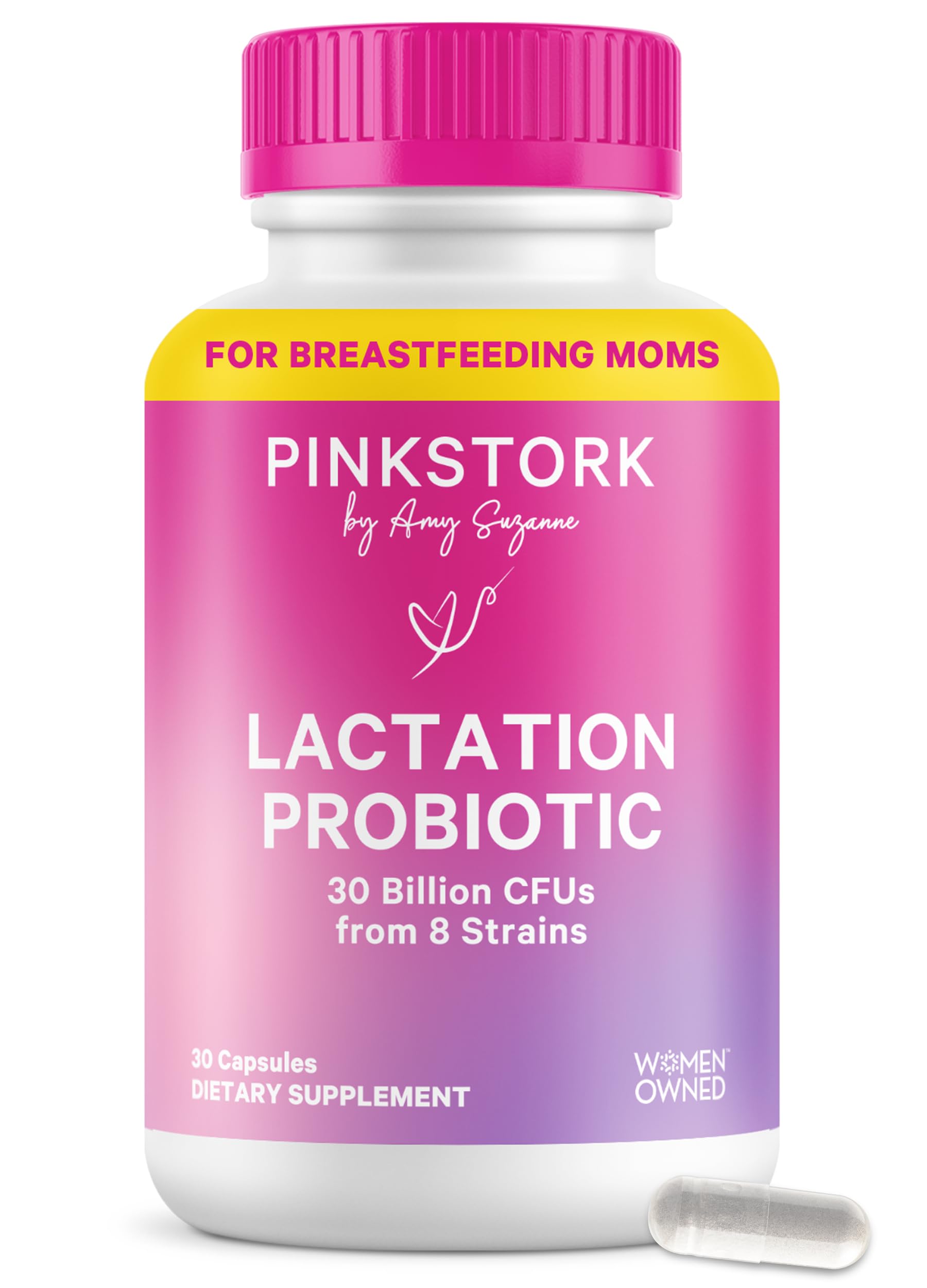
Pink Stork’s Lactation Probiotic is the odd one out in this group, and that’s the point. It’s not a fenugreek or goat’s rue capsule aimed at ounces; it’s a 30-billion-CFU probiotic with eight strains, including Lactobacillus fermentum and Lactobacillus reuteri, positioned around gut health and breast tissue. If your goal is a calmer digestive system or support for your microbiome while nursing, that’s a different job from chasing a supply boost.
The capsule is easy to swallow and has no aftertaste, which matters if you’re already taking a prenatal. One capsule a day is a simple routine, and the 30-count bottle lines up with a month. We appreciate that the formula names its strains rather than hiding behind a proprietary blend. But we don’t think of it as a primary milk-supply supplement.
The supply picture is mixed. It may bump output for one person, do nothing for another, and occasionally coincide with a dip. If your supply is fragile or you’re already struggling, this isn’t the first bottle to open. It’s better suited to someone whose main concern is digestion and who wants a lactation-friendly probiotic alongside the rest of their routine.
What we think it earns is a narrow place: a probiotic for nursing moms who want gut support and don’t need another galactagogue. If you’re looking for more output, start with a supply-focused pick like Mama’s Select or Nature’s Way. If you’re looking for a daily probiotic that fits the nursing chapter, this one is easy to live with.
Pros
- 30 billion CFUs from eight strains
- Names specific probiotic strains
- Easy-to-swallow daily capsule
- No aftertaste
Cons
We recommend Pink Stork Lactation Probiotic for nursing moms who want gut and breast-tissue support, not as a first-line fix for low milk supply.
How We Tested the Best Lactation Supplements
We started by pulling every lactation supplement we could find from national retailers and specialty brands, then narrowed the list by ingredient panels, third-party testing seals, format, and cost per serving. We ruled out products with proprietary blends that hid dosages, skipped anything that required a shaker bottle we didn’t already own, and kept a mix of capsules, powders, and teas so we could compare how they fit into a real day. That left 14 supplements, which we tested over five months.
Testing happened in the places lactation supplements actually live: beside the pump at 6 a.m., on a nightstand for overnight feeds, in a work bag for lunchtime pumping sessions, and on the kitchen counter where powders got mixed into water or oat milk. Each tester took one supplement consistently for at least three weeks, logging nursing and pumping output in a shared spreadsheet, noting whether milk supply felt steadier or dipped, and flagging clogged ducts and how quickly they cleared. This wasn’t a clinical trial—just a lot of repeated sessions, honest notes, and a few very tired testers.
We paid attention to the things that make or break daily use. Taste, scent, and drinkability mattered for powders and teas—we noted whether they were gritty, overly sweet, bitter, or left an aftertaste, and whether they mixed cleanly in a shaker or needed hot water. For capsules, we measured pill size and swallowed them with plain water, noting any that were hard to get down. We also tracked side effects and digestibility for mom and baby, watched for stomach upset or changes in diapers, and compared cost per serving so value wasn’t just a label claim. Quality checks included reading ingredient sources and looking for third-party testing seals; effectiveness got judged over weeks, not one scoop.
How to Choose a Lactation Supplement
The right lactation supplement is the one that matches what you are trying to fix and the format you will actually use every day.
Match the supplement to the job
Lactation supplements do not all do the same thing. A fenugreek or goat’s rue capsule is aimed at supply support; sunflower lecithin is for thinning milk and easing clogs; a probiotic is for gut and breast-tissue support. Start with the problem you are actually having, not the loudest label. If you are dealing with recurring clogs, Legendairy’s lecithin is the more targeted buy than another supply capsule. If your output is the concern, a galactagogue herb like goat’s rue or fenugreek makes more sense.
Fenugreek is common, not mandatory
Fenugreek is the best-known lactation herb, and it is the one most likely to come with a maple-syrup scent, a strong taste, and stomach upset. That does not make it a bad choice—Nature’s Way’s big bottle is a practical way to try it—but it is not the only route. If you have tried fenugreek and did not like how it made you feel, a fenugreek-free option like Mama’s Select Goat’s Rue is the logical next step. Start one herb at a time so you know what is helping and what is upsetting you.
Pick a format you will actually stick with
Capsules and softgels are the fastest routine; tea is the most ritualistic; powder and drink mixes ask for a little prep. The best format is the one that fits your day. A mom who already drinks herbal tea will keep up with Mother’s Milk better than she will with four capsules; a mom who packs a diaper bag will get more use from Munchkin’s single-serve packets than a tub of powder. Do not buy a 200-count bottle of anything until you know you will take it.
Do the serving-size math
Front labels sell the herb; the back label tells you how long the container lasts. Fenugreek often runs four to six capsules a day, lecithin can run three or four softgels during a clog, and tea means one bag per cup. Check the count against the serving size before you commit. A large bottle is only a value if you will finish it; a smaller box is smarter if you are testing tolerance. For powders and drink mixes, count the actual servings, not the scoop size.
Frequently Asked Questions
Do lactation supplements really work?
They are support, not a guarantee. Herbs like fenugreek and goat’s rue are traditionally used to support milk production, and some moms notice a difference; others do not. The stronger foundation is frequent milk removal, hydration, and help from a lactation consultant. Give one product a fair trial, track feeds or pumps, and stop if your supply drops or you feel unwell.
Can I take a lactation supplement during pregnancy?
Not without your clinician’s sign-off. Lactation supplements are intended for nursing, and some labels explicitly warn against pregnancy use. If you are still pregnant, wait until after birth unless your provider says otherwise. If you are nursing and pregnant, ask before adding any herb.
What if a supplement upsets my stomach or my baby’s?
Stop the supplement and give it a few days. Gas, fussiness, nausea, or diarrhea can come from the herb or from something else in the formula. If you suspect a clog with fever, redness, or flu-like symptoms, call your clinician right away; that is not a wait-and-see situation. Once you are back to baseline, you can try a different format or a fenugreek-free option.
How long should I give a supplement before deciding?
Give it several days to a couple of weeks of consistent use, and keep a simple log of feeds or pumps. A single cup of tea or one capsule will not tell you much. If you see no change after that stretch, or if output drops, stop and try a different approach. Consistency matters more than a perfect product.
Final Verdict
Goat’s rue is our default because it does the main job without the fenugreek sideshow: one herb, small capsules, and no maple-syrup scent. If you specifically want fenugreek, Nature’s Way gives you a large, budget-friendly bottle; if clogs are the problem, Legendairy’s lecithin is the more targeted pick. Start with the job you need solved, and the choice gets much simpler.
