This post contains affiliate links. We may earn a small commission when you buy through our links — at no extra cost to you.
The ‘closest to breast milk’ claim is printed on almost every can, but parents quickly learn that marketing and baby’s stomach don’t always align. Organic formulas tout clean labels and no corn syrup, yet a persistent fishy smell turns many babies away, while sensitive-tummy formulas ease gas and colic but often rely on processed proteins and lack organic certification.
The real trade-off is between ingredient purity and digestive tolerance. One option delivers the Clean Label Project award but risks constipation and a metallic odor that babies reject. Another gently settles colicky stomachs but uses hydrolyzed whey that some find off-putting. Neither is universally right – the winning formula is the one your baby will actually swallow and keep down, which means testing a single tub before stocking up.
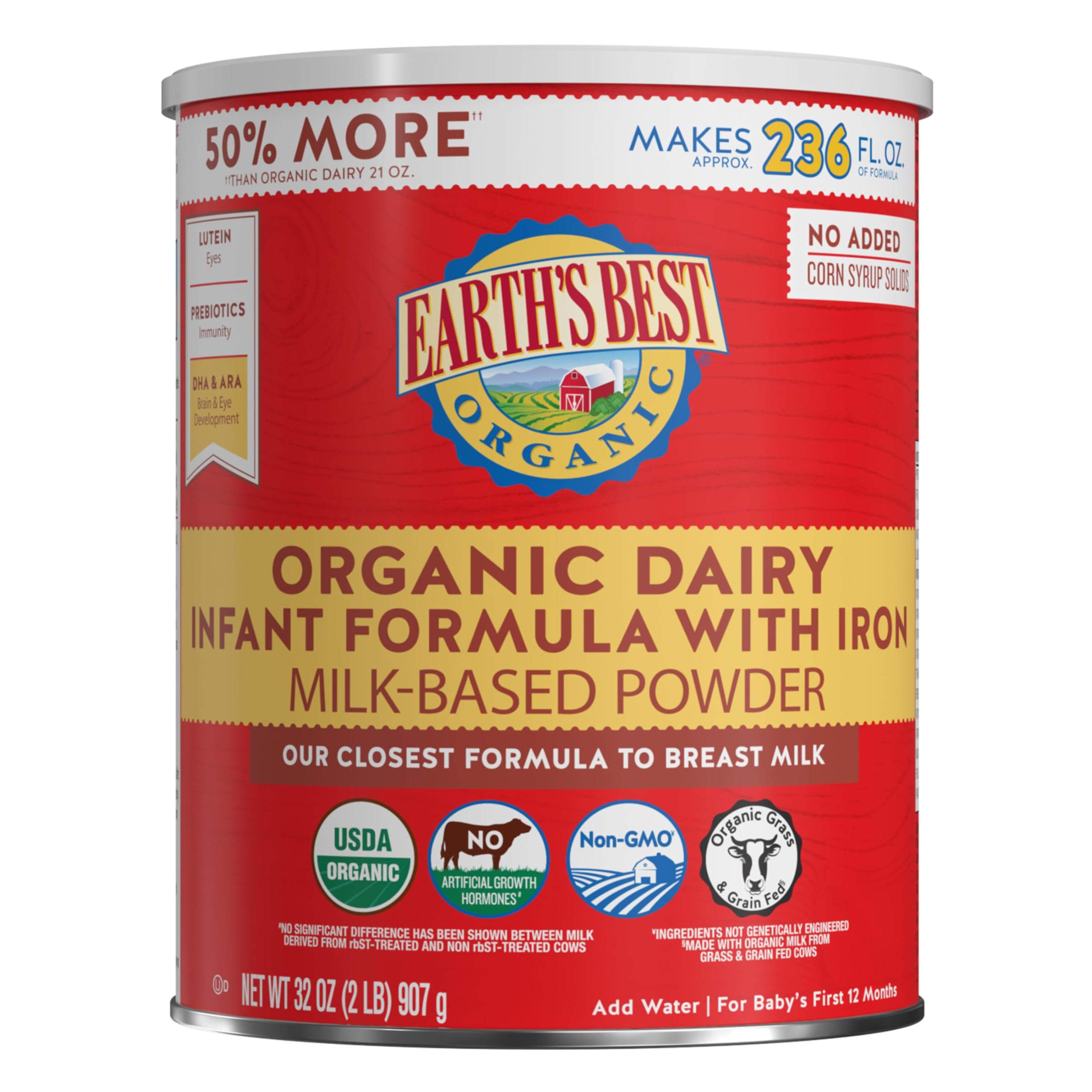


Best for Organic seekers
Earth’s Best Organic Formula
Rating: 4.7 ★ | Price: $42.99 | Formula Type: Powder | Organic Cert: Yes (Clean Label) | HMO Prebiotics: No | Sensitive Tummy: No
The only organic baby formula with Clean Label Project Purity Award — no corn syrup, no artificial growth hormones.
Earth’s Best Organic Formula carries the Clean Label Project Purity Award, meaning every batch is tested for hundreds of contaminants — a rarity among baby formulas. In practice, that purity comes with a trade-off: a strong fishy/metallic smell that some babies flat-out refuse, and a tendency to cause constipation in roughly half the babies who try it. Parents report that babies who accept it grow well and tolerate the formula without serious reactions, but the sensory and digestive hit-or-miss is part of the deal.
This formula fits best for parents who will not compromise on organic, non-GMO, clean-label ingredients and are willing to risk a mild odor and potential constipation. Many families use it successfully to supplement breast milk, noting an easy transition. If your baby has a sensitive nose or a history of constipation, start with a single can before stocking up.
Pros
- Organic ingredients with no corn syrup or artificial growth hormones
- Good value for an organic formula, often on sale
- Most babies tolerate it well with no serious reactions
Cons
- Strong fishy/metallic smell that many babies reject
- Can cause constipation in a significant portion of babies
Buy this if you prioritize organic purity and clean-label ingredients over a fishy smell and possible constipation. Skip it if your baby has a sensitive nose or is prone to constipation.
Best for Immune support
Similac 360 Total Care Powder
Rating: 4.7 ★ | Price: $34.98 | Formula Type: Powder | Organic Cert: No | HMO Prebiotics: Yes (5 HMOs) | Sensitive Tummy: No
The only mainstream powder with 5 HMO prebiotics for immune support — but no organic certification like the top pick.
Similac 360 Total Care Powder packs 5 HMO prebiotics that mimic breast milk immune support, a feature the top-pick Earth’s Best lacks. In customer reports, babies show steady weight gain and gentle digestion, consistent with hospital-grade Similac. The trade-off: you give up organic certification and pay more per ounce than basic powders like Similac Advance. This tub is only 20.6 oz, so refills come more often. Best suited for parents who want HMO technology in powder form — especially those transitioning from Similac 360 RTF to a cheaper daily option — and are comfortable with a non-organic formula.
Pros
- 5 HMO blend supports immune and digestive health, mimicking breast milk components.
- Trusted hospital-grade formula that promotes steady weight gain.
- Works as a cost-effective powder alternative to Similac 360 ready-to-feed.
Cons
- Higher cost per ounce than basic powders; smaller 20.6-oz tub means more frequent purchases.
- Lacks organic certification, which matters for clean-label shoppers.
Buy this if HMO immune support is your priority and your baby does well on Similac. Skip it if you require organic ingredients or the lowest possible cost per serving.
Best for Sensitive tummies
Good Start Gentle Pro
Rating: 4.8 ★ | Price: $42.99 | Formula Type: Powder | Organic Cert: No | HMO Prebiotics: No | Sensitive Tummy: Yes (hydrolyzed whey)
Hydrolyzed whey and probiotics target colic and constipation — a practical alternative for sensitive tummies without the organic premium.
Unlike the organic top pick, which risks fishy smell and constipation, Dr. Brown’s Gentle Pro uses 100% whey protein with 2-step hydrolysis and B. lactis probiotics to ease gas and soften stools. Parents report 86% positive feedback on colic relief and softer poops. The 32 oz powder costs less than competing sensitive brands, offering good value. Some babies find the powder’s odor off-putting, but this is not a systemic issue. Best for parents transitioning from breast milk or dealing with colic, reflux, or constipation who don’t require organic certification.
Pros
- Very gentle on digestion and relieves colic and gas
- Great value for a sensitive formula
- Effective for babies with reflux or constipation
Cons
- Some babies find the powder’s odor unappealing
Buy this if your baby struggles with gas, colic, or constipation and you want a non-organic, proven sensitive formula at a fair price.
Best for On-the-go
Similac 360 Total Care RTF

Rating: 4.7 ★ | Price: $9.88 | Formula Type: Ready-to-feed | Organic Cert: No | HMO Prebiotics: Yes (5 HMOs) | Sensitive Tummy: No
Ready-to-feed bottles that require zero preparation – ideal for outings and supplementing newborns.
These 2-ounce ready-to-feed bottles eliminate mixing and measuring, making them perfect for travel and emergency feeds. However, they cost significantly more per ounce than powder formulas, and a notable number of babies experience vomiting – a systemic risk that makes them unsuitable for daily use.
Pros
- No mixing or measuring – each bottle is ready to feed straight from the package.
- Contains 5 HMO prebiotics to support immune system development.
Cons
- Reports of uncontrollable vomiting and gas in some infants – a known systemic risk.
Worth considering if you need a no-prep formula for short-term use like travel or supplementing – but not for full-time feeding.
How to Choose
The cleanest formula on paper means nothing if your baby refuses to drink it or suffers digestive issues.
Formula Type
Powder is the most economical and eco-friendly option, but requires clean water and mixing. Ready-to-feed eliminates prep work but costs up to three times more per ounce and creates more waste. Reserve ready-to-feed for travel or emergencies.
Organic Certification
Organic certification ensures no synthetic pesticides or growth hormones, but does not guarantee palatability. Many organic formulas have a strong fishy smell from DHA oils. If your baby is picky, try a single tub before buying in bulk.
HMO Prebiotics
Human milk oligosaccharides (HMOs) support immune and digestive health by feeding beneficial gut bacteria. Formulas with multiple HMOs more closely mimic breast milk’s composition. They are worth the premium if your baby tolerates them.
Sensitive Tummy Formulation
If your baby has colic, gas, or constipation, look for partially hydrolyzed whey protein and added probiotics. These break down proteins for easier digestion. Note that sensitive formulas often contain corn syrup solids and may not be organic.
Price per Ounce
Powder formulas range from $0.20 to $0.40 per prepared ounce. Ready-to-feed can exceed $0.60 per ounce. Calculate your monthly cost before choosing – a $10 price difference can add up to $50 per month.
FAQ
Why does my baby’s formula smell fishy?
The fishy smell is usually from DHA oils added to support brain development, especially in organic formulas. This odor is harmless but can cause some babies to refuse the bottle. Switching to a non-organic formula with different DHA sources or a sensitive-tummy formula often resolves the issue.
Is ready-to-feed formula worth the extra cost?
Ready-to-feed is the most convenient option – no mixing, no measuring, just open and pour. But it costs about three times as much per ounce as powder and creates more packaging waste. Use it for travel, emergencies, or the first few weeks with a newborn, but switch to powder for daily feeding to save money.
Which baby formula is easiest on digestion?
Formulas with partially hydrolyzed whey protein and added probiotics, like Good Start Gentle Pro, are designed for sensitive tummies and show high success rates for colic, gas, and constipation. Avoid formulas with intact milk proteins if your baby has digestive issues. Always consult your pediatrician before changing formulas.
How do I transition between baby formula brands without upsetting my baby?
Mix the old and new formula in increasing ratios over three to five days. Start with 75% old / 25% new for two days, then 50/50 for two days, then 25/75, then full new formula. Stop and consult your pediatrician if your baby develops severe gas, vomiting, or rash.