This post contains affiliate links. We may earn a small commission when you buy through our links — at no extra cost to you.
A magnetic tile is a plastic frame with a small magnet sealed into every edge, which means the whole toy comes down to two things you can’t see from the box: how strong those magnets are and how well the plastic holds them in. A weak set doesn’t just build worse castles — it teaches a kid to quit, because every wall they put up slumps over. I’ve watched a 4-year-old walk away from a bin of tiles that couldn’t hold a roof.
We’ve kept a dozen sets in rotation over the past six months, and the ones that win are the ones kids don’t need help with: strong enough for a two-story tower, generous enough in tile count to build something worth showing off, and good-looking enough that they get dumped out in the first place. One thing I’d tell any first-time buyer — more tiles beats fancier tiles nearly every time. A plain 60-piece set gets more play than a 24-piece set with printed windows and a booklet. The picks below are the ones that stayed in rotation.


Best for First Tile Set
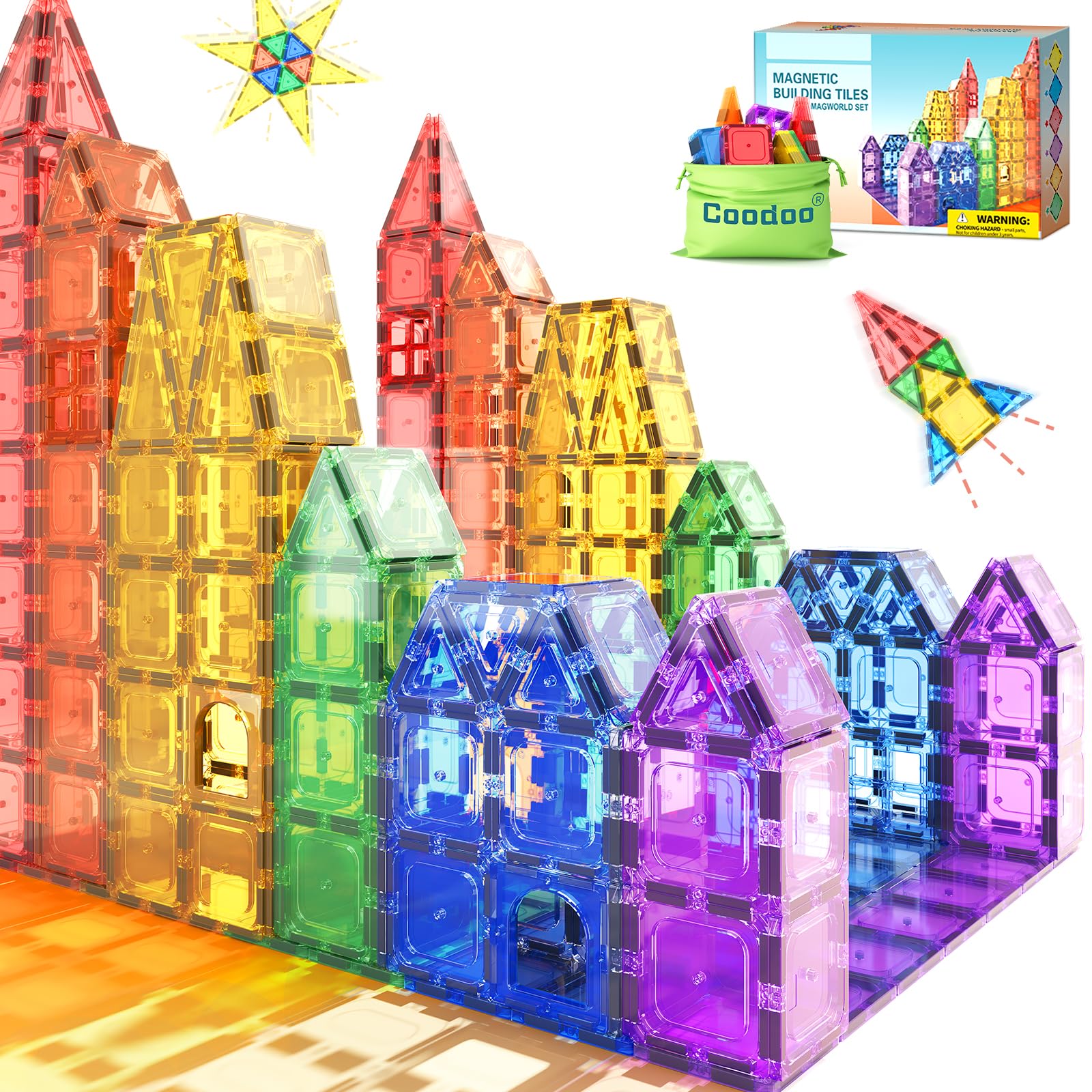
Coodoo 40-Piece Set
Key Features
- Pieces: 40
- Material: Food-grade ABS plastic
- Tile size: 3 inches
- Recommended age: 36 months to 14 years
- Price: Budget
Three inches across the base is the number that matters, because it is the size most magnetic tile brands build to, which means the Coodoo starter pack is not a dead end. Ours went together with tiles from the bigger boxes in this guide without a fuss, and that is the thing to check before you buy any first set.
Small hands are where these earn their place. The magnets hold firmly enough that a preschooler’s tower survives being added to, and they let go when a child pulls, which is the balance a couple of the sets here get wrong. Ours has been knocked over, stepped on and rebuilt, and the frames are still square.
The finish helps: smooth, rounded edges, plastic that wipes clean after snack time, and colours bright enough that sorting them becomes its own game. It is the set we hand a three-year-old without hovering, and the one we add to rather than replace.
Pros
- Magnets hold without fighting small hands
- Standard 3-inch size takes other brands’ tiles
- Lowest entry price of the sets here
Cons
- 40 pieces won’t stretch to castles
We recommend the Coodoo set as the first magnetic tiles for most families: the magnets hold, small hands manage them, and every other brand’s pieces will join them.
Best for One-Box Families
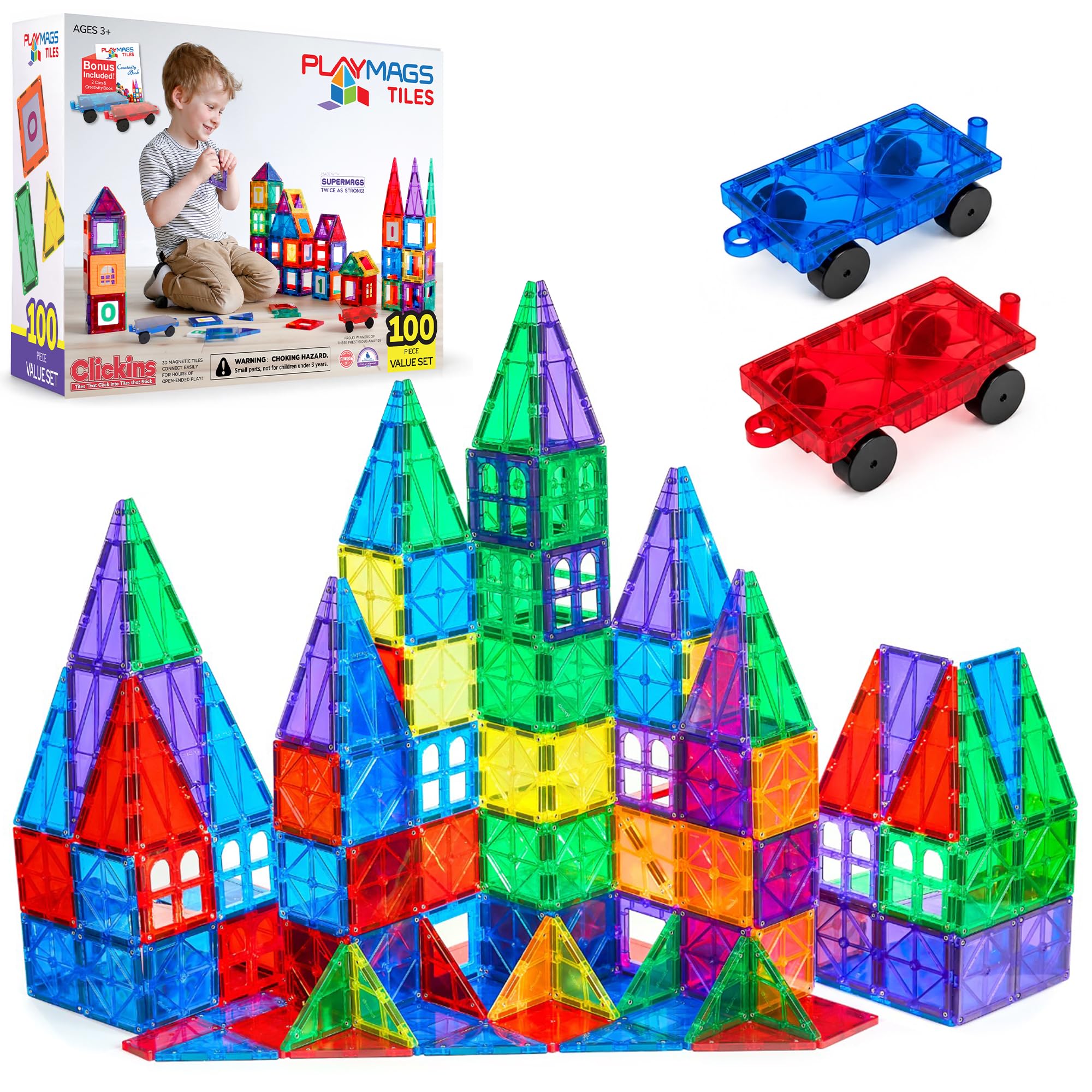
Playmags 100-Piece Set
Key Features
- Extras: Idea booklet and storage bag
- Pieces: 100
- Tile size: 3 x 3 inches
- Large squares: 2 at 6 x 6 inches
- Price: Midrange
The Playmags box is the only one here that reads like a plan for the afternoon: 26 squares, 14 windows, four divided window tiles, 30 triangles, eight rectangles, two six-inch squares, 13 letter and number click-ins and five window inserts, plus an idea booklet and a fabric bag to put it all back in.
The windows are what change the play. A wall of plain tiles is a wall; drop a window into it and the build becomes a house, and the letter click-ins turn the front of that house into a name. Nothing else in this guide gives a child that second layer of things to do with the same pieces.
The magnets are the strong sort, firm enough that a two-storey wall holds while a child adds the roof, and strong enough to pinch if fingers are in the way, so show them how to slide tiles apart rather than pull. The bag is the quiet win: a hundred pieces go back in it in one sweep, which is the difference between a toy that gets put away and one that lives on the floor.
We think it is the right buy for a household that wants one box and no add-ons for a year or two, and the one to choose over a plain tile set plus a storage bag you will never get round to buying.
Pros
- Windows and letters turn tiles into houses and signs
- Idea booklet and fabric storage bag included
- Strong magnets hold two-storey walls
- 100 pieces with a wide shape mix
Cons
- Lots of small window and letter inserts to keep track of
For one box that builds houses, spells names and packs itself away, the Playmags set is the most complete buy here, and the one we suggest for families starting out.
Best for Hand-Me-Down Quality
MAGNA-TILES Classic 32-Piece
Key Features
- Pieces: 32
- Shapes: 14 squares, 16 triangles, 2 large squares
- Certification: STEAM certified
- Recommended age: 3 years and up
- Price: Premium
Thirty-two pieces: two six-inch squares, fourteen small squares and sixteen triangles in six translucent colours. The tiles inside that small box are the best finished of any set here, with dense plastic, frames that hold the magnets flat, and edges that have not chipped on us despite some hard landings.
We think the premium is worth paying once. This is the original magnetic tile, the set other brands copy, and it carries a STEAM certification through Dr. Gummer’s Good Play Guide along with a 90-day warranty. It is also the one we hand down rather than replace.
What it will not do is keep up with a child who wants to build big. Thirty-two pieces makes a tidy house for a doll and a garage for a couple of cars, and then you are out of squares. If your builder is already past that stage, buy a hundred-piece box instead and come back to this one for the quality.
Pros
- Best-finished tiles in this roundup
- STEAM certification and 90-day warranty
- Shape mix builds tidy houses and towers
Cons
- Premium price for only 32 pieces
Our pick for a set that gets handed down is the MAGNA-TILES Classic: the best-made tiles here, in the smallest box.
Best for Big Shared Builds
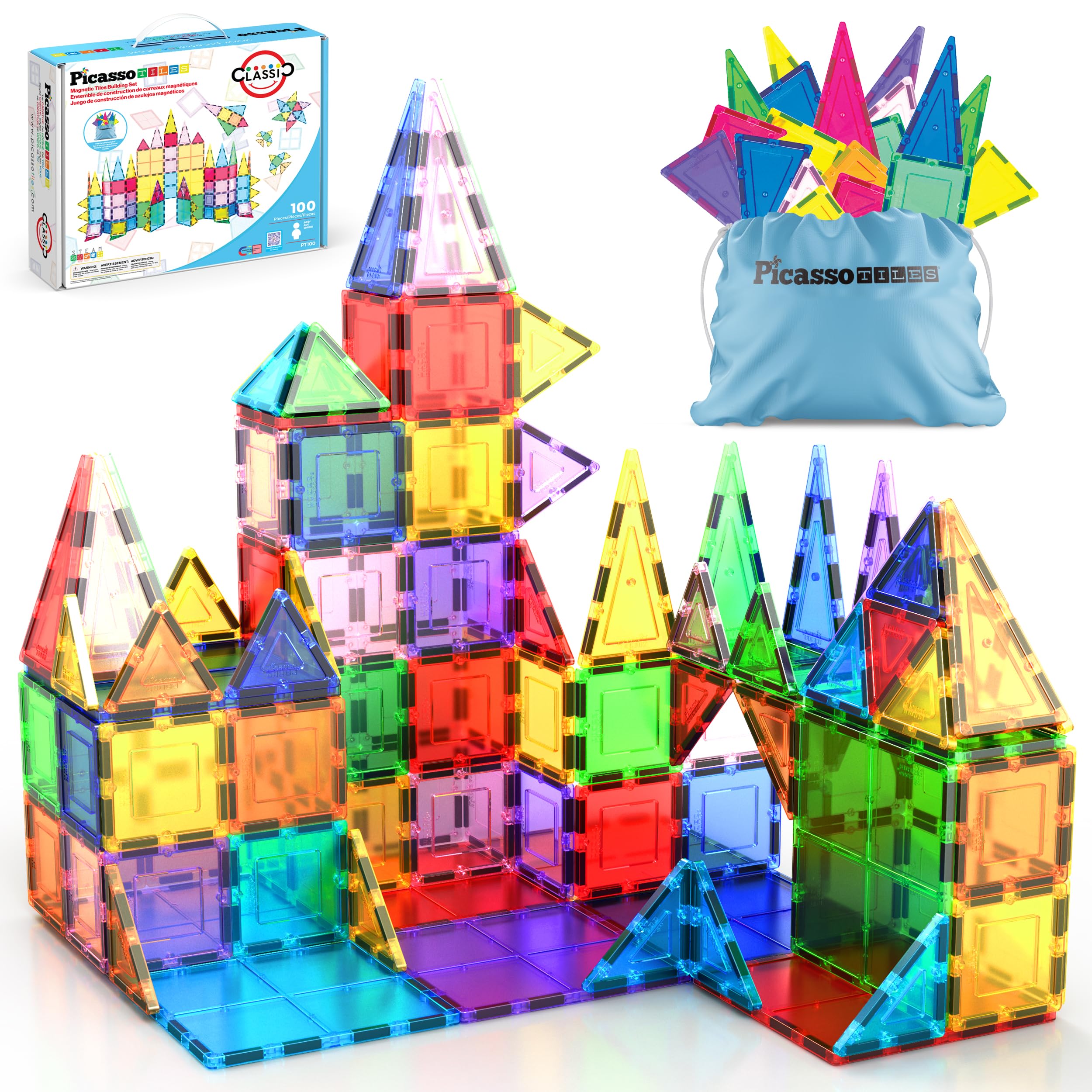
PicassoTiles 100-Piece Set
Key Features
- Colors: Clear translucent multicolor
- Pieces: 100
- Scalability: Add sets for bigger builds
- Recommended age: 3 years and up
- Price: Midrange
Tip out a hundred clear tiles and the play changes: there is enough here for a garage, a zoo and the fence around both, which is roughly what it takes to keep two children at the same table. The translucent panels throw colour across the floor when the sun reaches them, and the pile flattens back into the box in one sweep.
Where this set gives ground to the better magnets here is hold. Build low and wide, houses and ramps and garages, and the tiles stay put; push a tower taller and the joints start to slide and the whole thing comes down with a clatter. Wide bases and triangles used as bracing keep it standing, and most children build that way anyway.
A hundred tiles of a few shapes is a lot of building: squares become walls and floors, triangles become roofs and ramps, and there is no single piece the build depends on. We recommend it for the builder who wants volume and a blank canvas rather than a theme.
Pros
- A hundred tiles for sprawling houses and garages
- Clear panels throw colour in sunlight
- All standard structural tiles, nothing fiddly
Cons
- No cars, letters or storage bag in the box
The PicassoTiles set is our choice for big, low, shared builds: a hundred tiles, a blank canvas, and magnets that prefer wide walls to tall towers.
Best for Dinosaur Fans
Jasonwell 110-Piece Dinosaur Set
Key Features
- Pieces: 110
- Figures: 4 dinosaurs, 20 stickers
- Surface: Diamond textured
- Recommended age: 3 years and up
- Price: Budget
Four chunky dinosaur figures, twenty stickers and a hundred-plus tiles: the theme is what gets this box picked out of a stack, and it is also what keeps it on the floor. Children build pens and caves and then put something inside them, which is the oldest trick in the toy business and it still works.
The magnets are the surprise. Plenty of budget tiles hold weakly enough that a wall bows the moment a roof goes on; ours held a two-storey pen with a dinosaur parked on top, and the diamond-textured faces make the finished thing look less like a stack of plain squares.
The frames are welded and the edges rounded, and the pieces we have handled show no splits at the seams, which is where cheap tiles usually give up. It has taken being thrown, trodden on and used as a ramp for a toy car, and the worst we can say is that it looks well used.
This is the cheapest way in this guide to get past a hundred pieces, and it does not feel like the cheap option in the hand. Buy it when the budget is real and the child already knows the names of twelve dinosaurs.
Pros
- Dinosaur figures give the building a story
- Strong magnet hold at this price
- Over a hundred pieces for the least money here
Cons
- Twenty stickers need applying before first play
For dinosaur-mad kids on a tight budget, we point to the Jasonwell set: over a hundred pieces, magnets that hold, and figures that give the building a purpose.
Best for Vehicle Play
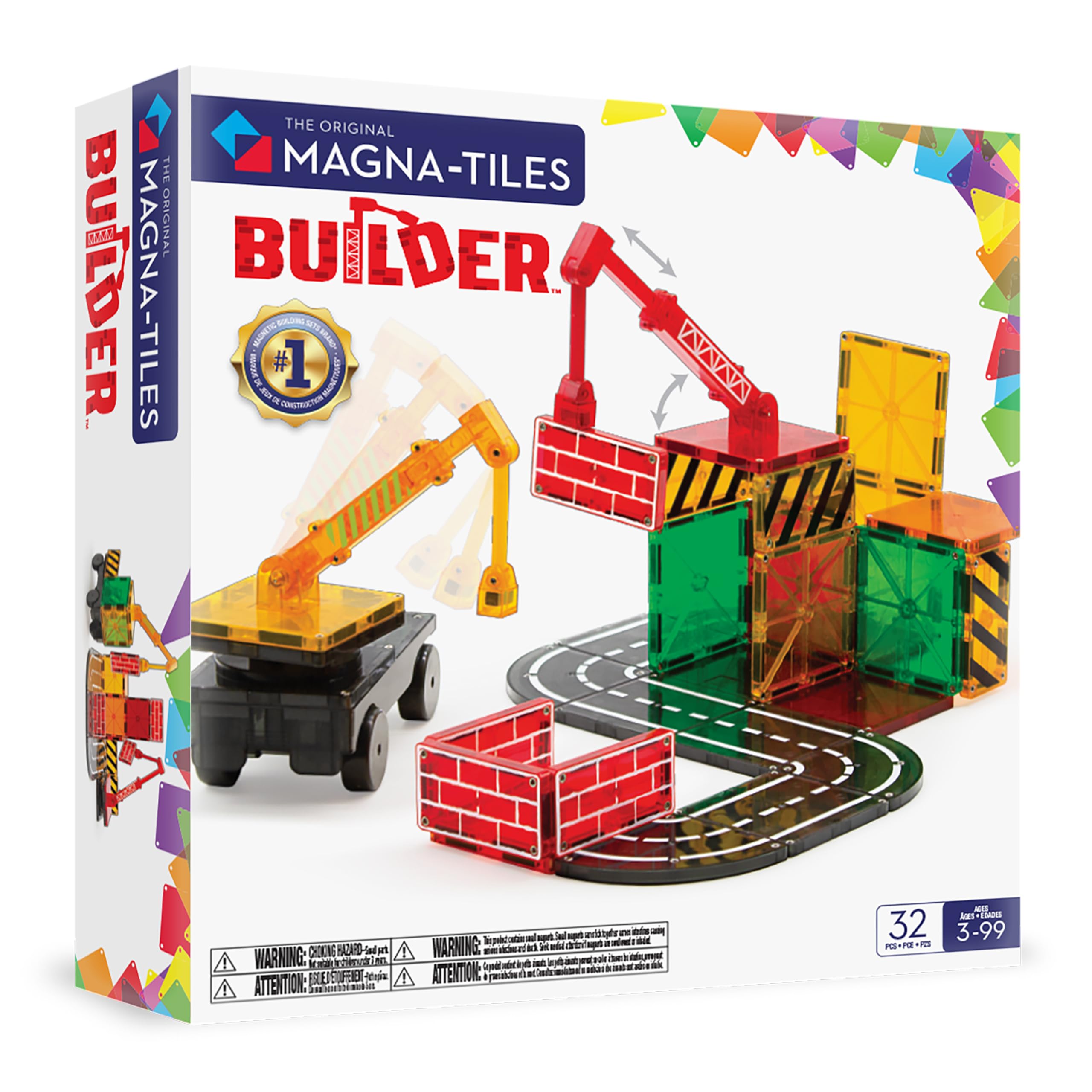
MAGNA-TILES Builder 32-Piece
Key Features
- Cranes: 2 extendable
- Pieces: 32
- Road pieces: 14
- Recommended age: 3 years and up
- Price: Premium
Two extendable cranes, a car chassis, a spinner and fourteen road pieces: this is the tile set for the child who builds a road and then wants something to drive on it. It is the only box here built around vehicle play, and for a four-year-old currently obsessed with diggers, that is the difference between ten minutes and an hour.
The road squares and quarter-circles are what make it work. A build can start on the floor, run as a road across the rug, and turn into a construction site with a car park attached, and the cranes give a child something to operate rather than just assemble. It joins the rest of the MAGNA-TILES range and standard tiles from other brands, so it works as an add-on as readily as a first set.
The pieces have the same dense, well-finished feel as the Classic set, the chassis rolls properly on a wooden floor, and ours has survived being driven off the coffee table. It is the most expensive 32 pieces in this guide, and for the right child it is also the box that gets opened most often.
Pros
- Working cranes and a rolling car chassis
- Road tiles turn builds into construction sites
- Same durable finish as the Classic set
Cons
- Only six plain squares in the box
When your builder wants roads and working cranes rather than a pile of squares, we think the Builder set earns its premium, alongside plain tiles rather than instead of them.
Best for Siblings and Classrooms
SUNNY AUNTIE 150-Piece Set
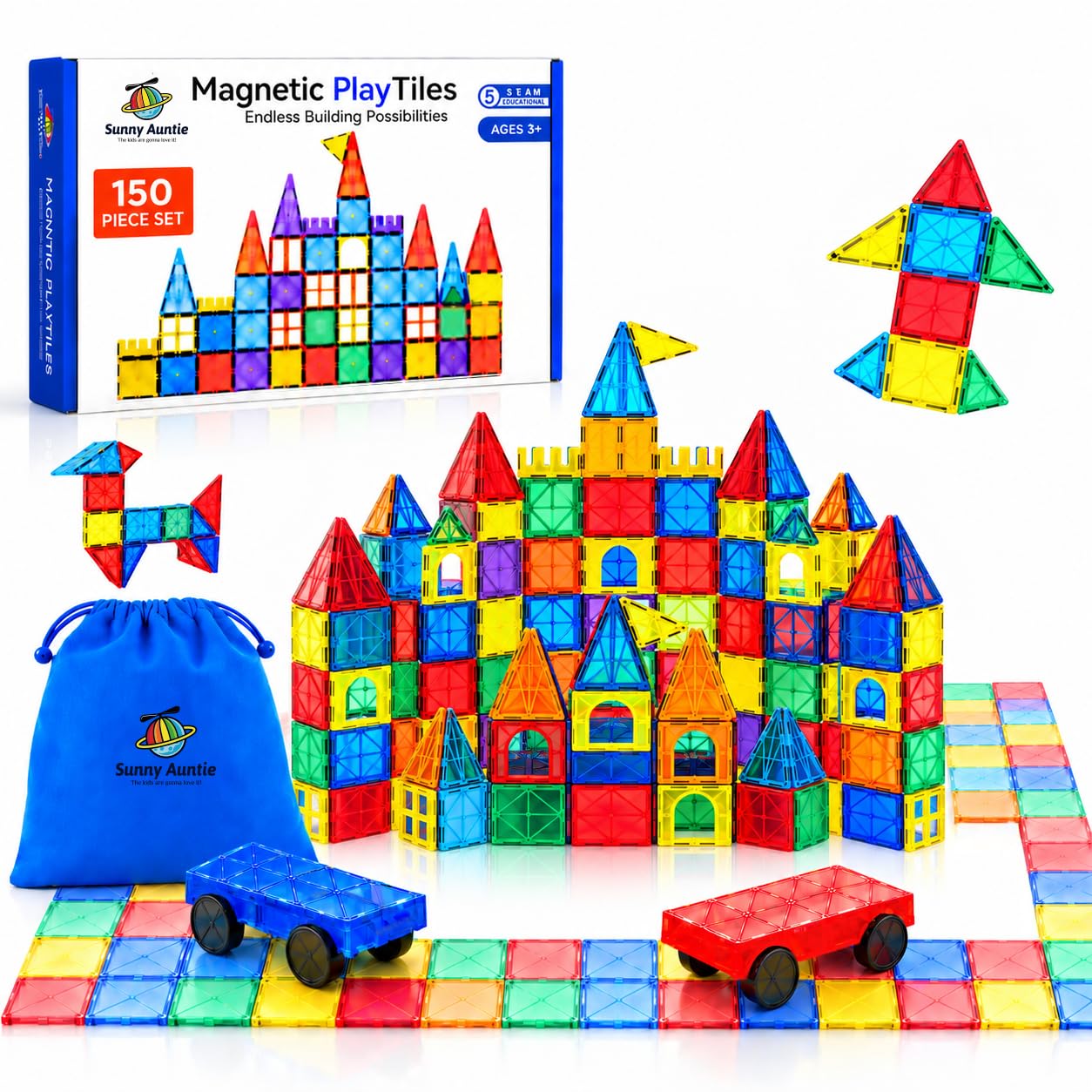
Key Features
- Extras: 2 cars, guide booklet, storage bag
- Pieces: 150
- Material: BPA-free ABS plastic
- Recommended age: 3 to 8 years
- Price: Premium
A hundred and fifty pieces, two cars and a fabric bag: this is the box you buy when the tiles are going to be shared. There is enough here for two children to build separate things at the same time, which is the real test of a set this size, and enough left over for an adult to join in without taking pieces off anyone.
The pieces hold together well. Our builds stayed up through a morning of very ungentle play, and the plastic has a gloss to it that makes a finished house look like something worth keeping on the shelf rather than knocking down immediately.
The guide booklet does more than most: it gives a child something to copy before they start inventing, and the cars mean a finished build has somewhere to go. What sells it for us is the bag. It swallows the whole set, it has a handle, and it is the difference between tiles that live in a cupboard and tiles that live in a drift across the living-room floor.
We recommend it for playrooms, classrooms and siblings who build together, with one caveat: this is the most you will spend on any set in this guide, and you are spending it before you know whether tiles will take in your house.
Pros
- 150 pieces keep two or three kids building
- Two cars and an idea booklet included
- Fabric storage bag makes tidy-up easy
Cons
For shared play and a playroom that stays tidy, we name the Sunny Auntie box: the biggest set here, and the bag makes packing up painless.
Best for Castle Pretend Play
Soyee Diamond Castle 58-Piece

Key Features
- Pieces: 58
- Figures: Princess and prince
- Tile size: 2.95 inches
- Recommended age: 3 to 12 years
- Price: Budget
Fifty-eight faceted pieces, a princess and a prince, plus doors, windows and stairs: this is the set that turns into a dollhouse and stays one. Where most tiles in this guide are building material, these are props, and we think that makes it the best pretend-play buy here.
The diamond surface is the reason to pick it over a plain box of tiles. The facets catch the light, the pink and purple palette is consistent across the whole set, and the pieces are standard size, so they click onto the plain tiles you already own and the castle can grow into whatever else is on the floor.
Build quality is sound. The magnets held a three-storey tower with a prince at the top, the edges are smooth, and the figures survived being carried around in a pocket. It is unmistakably a castle set, though, and the theme decides what the play is: if your child wants to build cars and towers, a plain set goes further for the same money.
Pros
- Diamond-faceted tiles in pink and purple
- Princess, prince and castle fittings for pretend play
- Standard size, so it joins other tiles
Cons
- Window pieces don’t attach magnetically
- Box photo needs more than one set
For the kid who builds a house and then moves a princess into it, we choose this one; the diamond finish makes it feel like a present.
How We Tested the Best Magnetic Tiles
We started with every set we could find rated for ages 3 and up, then narrowed by piece count, price per tile, and construction — ultrasonically welded seams versus glued ones, magnet size, and whether the brand published its safety certifications. That left us with 12 sets, which stayed in rotation for six months across a playroom, a living room rug, and the back seat of a car on two long drives. The kids ranged from 3 to 8, and there were usually two or three of them building at once.
Magnet strength got measured in the least scientific way possible, then a slightly more rigorous one: we built the same six-tile tower with every set, lifted the top tile, and counted how many pieces came with it. We also held two tiles by a single edge and shook them, since a set that comes apart when a kid jogs past is a set that gets abandoned. Quality showed up in the drops — table height onto hardwood, over and over — and in whether corners cracked, seams opened, or magnets worked loose and rattled.
For fun, cuteness, and creativity, we mostly got out of the way. Each set got a week on the shelf with no instructions and no adult suggestions, and we noted which bins came down unprompted, what got built, and how long a session ran before someone wandered off. The printed and pastel sets got picked first — cuteness is real currency with kids — but the clear ones held attention longer once the first castle was up. We also timed cleanup, because 100 loose tiles on a floor is its own kind of test.
How to Choose Magnetic Tiles for Kids
The set that gets played with is the one whose magnets hold and whose pieces are big enough for the child in front of you; everything else is detail.
Magnet strength decides whether the toy works
A tile set lives or dies on hold. Weak magnets mean walls that slump every time a child adds a roof, and that frustration ends play faster than boredom does. The target is firm but clean: strong enough to keep a two-storey wall square, gentle enough that a four-year-old can pull a roof off unaided. If an adult has to tug, small fingers will get pinched, and the fix is teaching a slide-apart rather than a yank.
Test any set in five minutes: build a wall two tiles high, add a roof, and nudge it. If it folds under its own weight, everything after that is a compromise.
How many pieces you actually need
Thirty-two to forty pieces is a starter: a doll’s house, a garage, a tower, and then you are out of squares. A hundred or more is where two children can build at once and where castles and zoos become possible. The trap is buying the small box first and the big one a month later; if siblings are involved, or you already know tiles are a hit, go straight to a hundred-piece set.
More pieces also means more to tidy, which is why the sets that close with a bag or a solid box stay in rotation longer than the ones that arrive in a flimsy carton.
The three-inch standard and why it matters
Most tiles here measure about three inches across the base, and that shared size is what lets a Coodoo starter mix with a Playmags box and a MAGNA-TILES build. Check the base measurement rather than the brand before you add to a collection; a set that does not state it is a gamble, and tiles that miss by a few millimetres will not sit flush with what you own.
It is also the argument for starting plain. A box of standard squares and triangles is raw material you can add to forever; a themed set is a finished idea.
Extras, small parts and storage
Cars, dinosaurs, letters, windows and idea booklets all stretch play, and every one of them is another part to lose. For a toddler or a child who still mouths things, fewer loose inserts is better. For a five-year-old spelling their name across the front of a house, the letter click-ins in the Playmags box are a genuine draw.
Then look at what the box closes with. A fabric bag turns a hundred scattered tiles into one motion at the end of the afternoon.
Frequently Asked Questions
Are magnetic tiles better than LEGO or wooden blocks?
They are better for different play. Tiles build an enclosure, walls, a roof, a garage for cars, in a couple of minutes, and the magnets do the work, so a three-year-old succeeds before they have the dexterity for studs. Blocks win on fine detail and on rebuilds that have to stay exactly put.
If your child builds houses and hides toys inside them, tiles earn the shelf space. If they build vehicles and take them apart, buy the bricks.
Do magnetic tiles stick to the fridge?
Usually, yes. The magnets sit inside the plastic, so a tile will hold on a steel fridge door or a magnetic whiteboard and give a child a vertical surface to build on, which is a favourite trick for toddlers.
Test one tile before you count on it: brushed stainless doors and painted panels are often not magnetic at all.
What should I do if a magnet comes loose?
The magnets are sealed inside the plastic frame on every set here, and that seal is the part to check. Run a thumb around each tile every few weeks; if a frame is cracked or a magnet rattles, take that tile out of the box for good.
Swallowed magnets are a medical emergency, because they can attract each other through tissue. If you think a child has swallowed one, get medical help immediately.
Final Verdict
Start with the Coodoo starter pack. It holds, it accepts every other brand’s pieces, and it costs the least of anything here, which leaves money for the second box when the buildings get bigger.
If two or more children will be building at once, go straight to the Playmags 100-piece box for the windows, letters and storage bag. And if you want the set that survives being handed down to the next child, the MAGNA-TILES Classic is the best-made box here, even with the fewest pieces in it.
