This post contains affiliate links. We may earn a small commission when you buy through our links — at no extra cost to you.
A sandbox looks simple until you own one. Then the questions start: Will the lid keep rain—and the neighbor’s cat—out? Will the wood splinter by July? Will assembly eat a whole Saturday? I’ve watched a flimsy plastic one crack after a single winter and a “bargain” wooden box shed splinters into tiny hands, so I don’t treat any of this as hypothetical. The right sandbox gives kids a patch of diggable territory and gives you one less thing to worry about.
For eight months, we tested 11 sandboxes in backyards, from compact plastic tubs to full wooden structures. We assembled each one, hosed them down, left them through spring rain, and let kids climb in and out until the novelty wore off. The ones worth buying got the basics right: a sturdy frame, a cover that fits tightly enough to keep sand dry, and a size that fits kids and yard. Design and value mattered, but only after the lid, hardware, and edges held up—the picks below are the ones I’d leave outside all season.


Best for Family Backyards
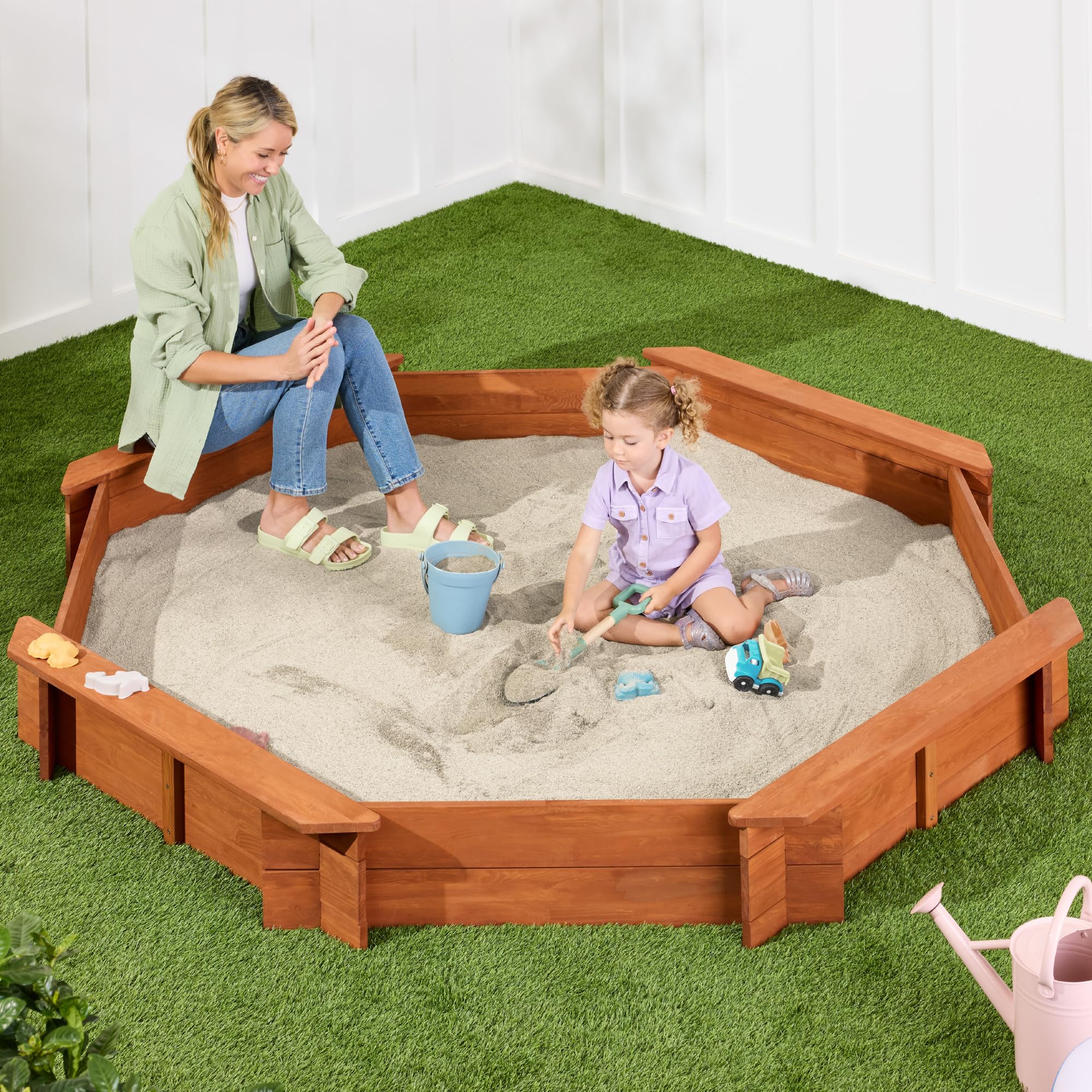
Mederra Wooden Octagon Sandbox
Key Features
- Seating: 4 built-in benches
- Footprint: 85"L x 78"W x 9"H
- Sand capacity: 800-1,000 lb
- Cover and liner: Waterproof cover, bottom liner
- Price: Midrange
Eighty-five inches across and nine deep, this octagon is listed for six to eight children, with four benches built into the sides so the adults who get roped into digging have somewhere to sit. We think it is the sandbox most families should buy: group-sized play in cedar, for less than the plastic two-seater here. The number that decides it for you is the footprint. If your yard cannot spare seven feet, nothing else about it matters.
The build is what convinces us it will hold up. The cedar panels bolt to angle-iron posts at each corner instead of screws biting into end grain, which is exactly where wooden sandboxes let go. A waterproof cover and a fabric bottom liner come in the box, and the cover does double duty: flat it keeps rain and cats out, propped up it is a sunshade. The maker lists ASTM F963 and CPSIA compliance, and the wood arrives with a water-resistant finish.
The canopy is the fragile piece of the kit. It is the first thing to take down when wind is coming, and the box is perfectly good without it, so we do not hold it against the sandbox, but do not expect the shade to survive a season of storms. And this is furniture: once it is filled, it stays where you put it. Measure the spot twice before the sand arrives.
Pros
- Play space for six to eight kids
- Cedar panels on angle-iron posts
- Cover, bottom liner and shade in one
- Listed as meeting ASTM F963 and CPSIA
Cons
- Takes 800 to 1,000 lb of sand to fill
Our pick for most backyards: a big cedar pit that seats six kids for less than the plastic two-seater costs.
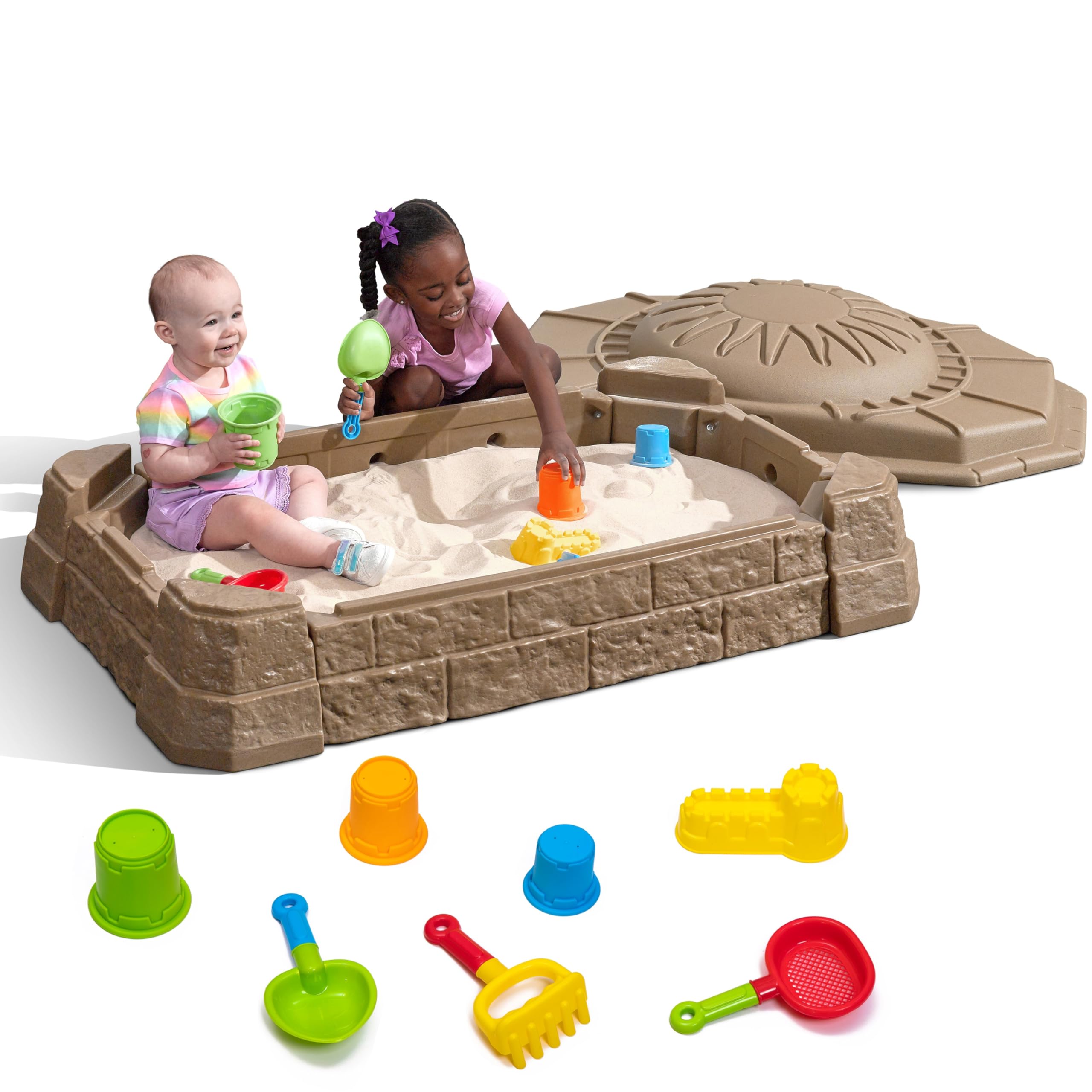
Best for Two Toddlers
Step2 Naturally Playful Sandbox II
Key Features
- Seats: Four molded-in seats
- Age range: 12 months – 10 years
- Footprint: 50.38"L x 31.25"W x 16"H
- Weight limit: 200 lb
- Price: Premium
Four molded seats sit inside this box rather than beside it, and that is the detail that keeps it in the roundup. The walls are 16 inches high, so a one-year-old drops over the edge and sits waist-deep in sand instead of kneeling on wet grass, and the 200-pound limit covers two toddlers plus a parent leaning in. At 50 inches long it tucks along a fence without eating the lawn.
We recommend it for a family with two small children who want a box that stays put and hoses clean in spring. The lid ties down with elastic at each end, so covering it is a stretch-and-hook job rather than a hunt for clips, and the roadways molded into the top turn the cover into a toy instead of something to store in the garage. Seven tools come with it, shovel and rake and bucket among them, which saves buying a set separately. It is the priciest plastic box here, though, and one toddler does not need it.
Wet weather is the weak spot. The lid keeps animals and leaves out, but a covered box through a rainy week still ends up with damp sand underneath. The fix is unglamorous: pull the lid off on the first dry day, rake the top inch, and let the sun work on it. Do that after every long wet spell and the sand stays pleasant instead of clumped and sour.
Pros
- Four seats and 16-inch walls keep toddlers inside
- Plastic shell hoses down, no splinters
- Lid ties down and doubles as a race track
- Seven sand tools included
Cons
- Costs more than the other plastic picks here
We recommend it for two toddlers: four molded seats, tall walls, and a plastic shell you can hose down.
Best for Group Play
Best Choice Products Wooden Octagon
Key Features
- Cover: UV-resistant soft cover
- Liner: Bottom liner included
- Benches: 8, rated 220 lb each
- Footprint: 78"L x 78"W x 9"H
- Price: Midrange
A little smaller than our top pick and about the same money, the Best Choice octagon argues its case with seating: eight benches, each rated to 220 pounds, so four adults can sit on the rim while the children dig. That is the difference between supervising a sandbox and joining one. The 78-inch frame still holds several children around the sand, and the hemlock panels lock together at the joints rather than hanging off corner brackets.
Assembly is a screwdriver job, which matters because a box this size is never going back in its carton. A bottom liner comes with it and does two jobs: it stops weeds coming up through the sand, and it lets water drain away instead of sitting. Tuck the liner over the top edge of the frame before you fill, because the gap between fabric and timber is exactly where sand escapes, and once it is buried you will not fix it without emptying the box.
The cover is a soft UV-resistant tarp rather than a rigid lid. It keeps leaves and animals out, but rain gathers in the low middle and finds the seams; prop a board or a ball under the center before you pull it tight and most of that goes away. We still prefer it to a hinged wooden lid, because there is no hinge or strut to fail with two children climbing on it.
Pros
- Eight benches rated to 220 lb each
- Hemlock panels interlock at the joints
- Bottom liner blocks weeds and drains
- Room for six kids and four adults
Cons
- Soft tarp cover pools rain in the middle
This is the one we pick when grown-ups join the digging: eight benches rated to 220 pounds each.
Best for Small Patios
Little Tikes Dirt Diggers Sandbox
Key Features
- Weight: 16.5 lb
- Included: 6 accessories plus excavator
- Age range: 3 – 8 years
- Footprint: 29"L x 28.5"W x 9"H
- Price: Budget
The excavator is the whole point. It is mounted on the rim and it genuinely works: the arm scoops, swings and dumps into the truck, and the lid flips over to become a ramp when play moves to the middle of the box. Six accessories come with it, including the digger figure, so a three-year-old can start moving sand the moment it is filled.
At 29 inches square and nine inches deep, this is a solo box. There is no floor space to sit inside, so your child kneels or sits beside it, and two children will be negotiating elbow room inside ten minutes. In exchange you get a sandbox that takes barely any sand, fits on a patio or a strip of lawn, and does not need a second adult to move.
Where it earns its place is price and audience. It is the cheapest good box on this page, and if you have a child currently obsessed with diggers, nothing else here will get the same use out of them. The lid has to sit level to drop into place, which is mildly annoying on uneven ground, and the digging arm is a toy rather than a load-bearing part. Treat it that way and it will outlast the phase.
Pros
- Working excavator that scoops and dumps
- Lid flips into a truck ramp
- Six accessories included
- Budget price for a digger set
Cons
- No room for a child to sit inside
- Lid only drops in on level ground
Our budget pick: a working excavator and a ramp lid for a child who wants to move sand, not sit in it.
Best for Renters and Patios
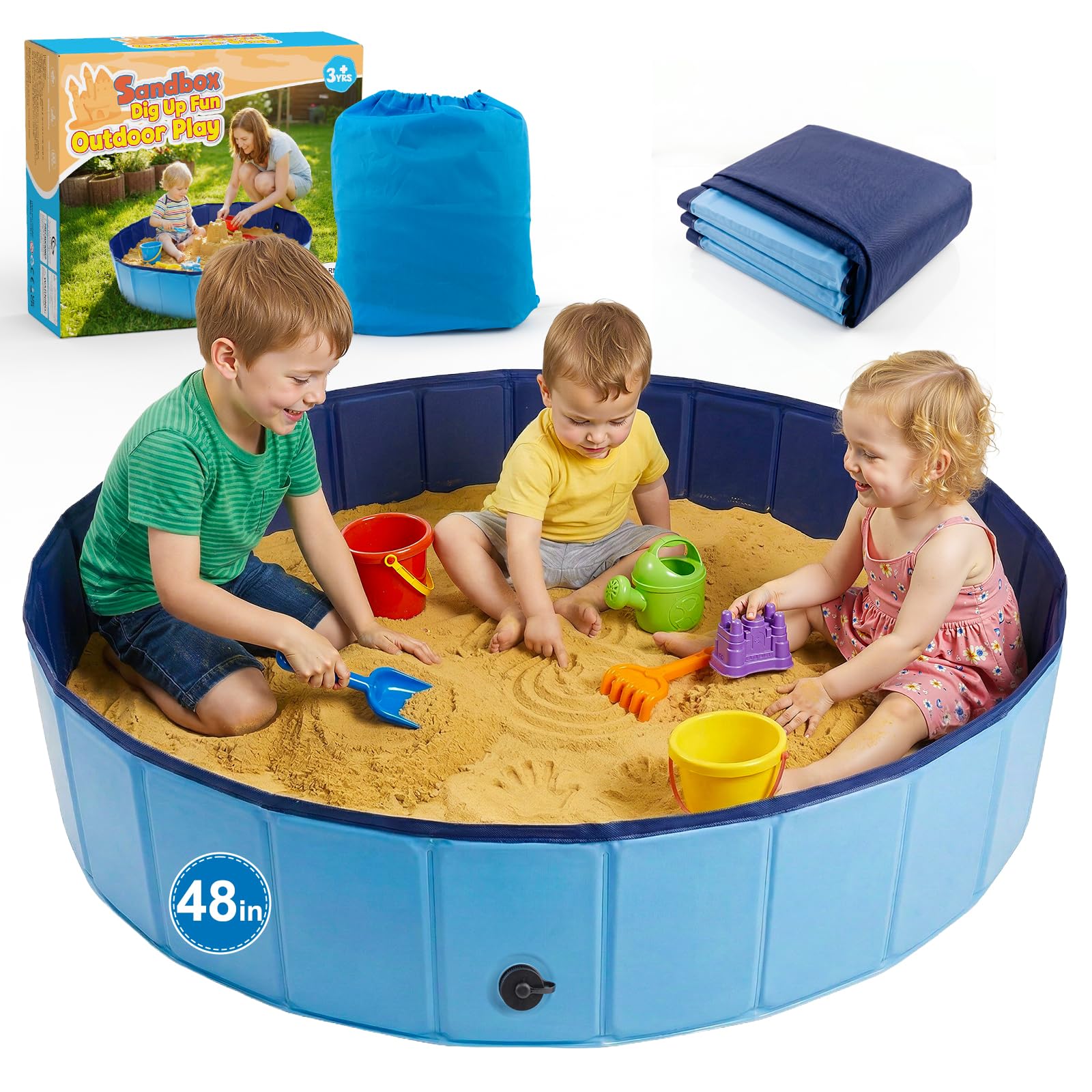
Aywewii Foldable 48-Inch Sandbox
Key Features
- Weight: 4.4 lb
- Assembly: None, unfolds
- Drainage: Built-in drain cap
- Footprint: 48"L x 48"W x 9"H
- Price: Budget
There is nothing to build. This one comes out of the drawstring bag, unfolds flat on the ground and takes sand: no screws, no drill, no afternoon gone. The walls are multi-layer PVC with smoothed edges and a drain cap in one corner, and the whole thing folds back down to briefcase size when the season ends.
We keep this one for renters, grandparents and anyone whose yard is a patio slab. At 4.4 pounds it is the only pick here one person can carry up a flight of stairs, and four feet square is enough for two or three toddlers to dig without crowding. The drain cap is the detail we appreciate most: sand stays put, water play drains away, and the whole box hoses off and dries in the sun.
It is not furniture, and it does not pretend to be. The walls are soft-sided with no seat to perch on, there is no cover in the box, and a loose tarp is what you will be using to keep cats out, so weigh the corners down or it will sail off in the first breeze. Buy it for portability and for indoor winter play; do not buy it expecting it to look like part of the garden.
Pros
- Unfolds in seconds with no tools
- 4.4 lb with a carry bag
- Drain cap for water play
- Folds flat between seasons
Cons
- No cover included
- Soft-sided walls with no seats
We keep this one for renters and patio-only yards: no tools, four feet of play space, and it folds into a bag.
Best for Big Yards
SoliWood Octagon Sandbox

Key Features
- Warranty: Lifetime against defects
- Footprint: 85"L x 78"W x 9"H
- Sand capacity: 800-1,000 lb
- Panel thickness: 0.7"
- Price: Premium
Same 85-by-78 footprint as our top pick, same 800 to 1,000 pounds of sand to fill it, but the frame here is 0.7-inch wood bolted through angle-iron posts and it carries a lifetime warranty against manufacturer defects. It is the heavier-built of the two big octagons on this page, and that is the whole reason to look at it.
Cedar is the right material for something that lives outside, and this one is heat-treated rather than painted, so there is no film to peel. The open bottom with the included fabric liner lets water through and air in, which is what keeps sand from souring in a wet spring. A coat of water sealer once a year is cheap insurance, since even treated timber greys and checks after a few seasons in the open.
Two things keep it behind the Mederra. The nylon cover is the weak link: it fits loosely and does not shed rain like a taut cover, so plan on weighting the corners or replacing it with a proper tarp. And it costs meaningfully more for the same play area. Buy it if the thicker frame and the warranty are worth the difference to you; otherwise the money is better spent on sand.
Pros
- 0.7-inch frame on angle-iron posts
- Lifetime warranty against defects
- Same 4-to-8-kid play space as the top pick
- Open bottom and liner drain well
Cons
- Cover fits loosely and lets rain through
- Costs more than our top pick
We point to it when the frame matters more than the cover: thicker cedar, a lifetime warranty, same big octagon.
How We Chose and Tested 11 Backyard Sandboxes
We started by comparing specs and owner reviews for two dozen sandboxes, then narrowed the field by footprint, sand capacity, material, lid style, and price. Eleven made the cut, and we spent eight months living with them in real backyards—not just unboxing them for a photo. I assembled each one solo with a timer running, noting whether the holes lined up, how clear the instructions were, and whether I needed a second person or a trip to the hardware store.
Once built, the sandboxes went to work. Kids from toddlers to early elementary climbed in and out, leaned on the rims, dragged toys over the edges, and dug down to the bottom, while we watched for wobble, splinters, sharp corners, and pinch points. We measured the actual play area against the footprint and noted how much sand each one swallowed, because a box that looks big online can leave two kids bumping elbows.
We left every unit outside through spring rain and hot weekends, hosing them down and checking whether water pooled on the lid, seeped into the sand, or sat in the corners. Lids got opened and closed daily; we noted which ones seated tightly, stayed put in wind, and were easy for an adult to remove without being a puzzle for a child. At the end, we looked for fading, cracks, rusted hardware, and rot, then weighed what each box included—cover, liner, ground barrier—against its price and how it looked in the yard.
How to Choose a Sandbox for Kids
Two numbers decide most of this purchase, the footprint it takes up and the sand it takes to fill, and everything else is detail you can settle once those are right.
Measure the footprint, not the adjective
Manufacturers are generous with the word large. A 29-inch box is large enough for one preschooler kneeling beside it; a 50-inch box seats two toddlers inside; the 78- and 85-inch octagons are group furniture that six or eight children share. Before you order, chalk the outline where it will live. A seven-foot octagon looks reasonable in a listing and enormous next to a garage wall.
Then check the route in. The wooden boxes arrive as flat panels, but once they are built and full of sand they do not move, so the spot you pick in April is the spot they sit in for years.
Price the sand before you commit
Every box on this page ships empty, and the fill is a second purchase that scales with the footprint. A small plastic box takes a couple of bags. The two 85-by-78 octagons list 800 to 1,000 pounds of sand, which is sixteen to twenty fifty-pound bags, so it is worth checking delivery as well as the sand itself.
Buy bagged play sand rather than all-purpose or paver sand, which is graded for setting bricks. Cheap play sand is fine; you are paying for washed and screened, not for a brand.
Lids, tarps and what actually stays dry
There are three approaches here: a molded plastic lid that ties down, a soft tarp pulled over the rim, and nothing at all. A rigid lid is the easiest to live with and the one a child can help with. A tarp is lighter and cheaper but pools water in the low middle unless you prop something underneath it.
Any cover keeps cats and leaves out. None of them keeps sand dry through a wet week, so plan on pulling the lid off after rain and raking the top inch so the sun can reach it.
Plastic, cedar or fabric
Plastic boxes start at twelve months, have no splinters to sand down, and hose clean in spring. Wood looks like garden furniture rather than a toy, holds a bench seat, and wants a coat of sealer every year or two.
Where wooden boxes fail is the hinge line. A bench that folds over to become a lid puts the weight of two children on small screws biting into soft cedar, so fixed benches are the safer long-term shape. Foldable PVC is the third option: nothing to build, nothing to splinter, and no seat.
Placement, drainage and getting it home
Sand needs somewhere for water to go. A closed plastic tub holds it; an open-bottom wooden box with a liner lets it through, which is what you want on soil and not what you want on a deck. Set any box on level ground, because one that rocks will open at the seams and shed sand.
Weigh portability honestly, too. The foldable option is under five pounds, while the wooden octagons take two people to shift before the sand goes in and none after.
Frequently Asked Questions
What kind of sand do I put in a sandbox?
Bagged play sand. It is washed, screened, and fine enough to hold a castle shape; all-purpose, mason, and paver sands are graded for setting bricks and arrive gritty with dust. Hardware stores and home centers sell play sand in fifty-pound bags, and colored play sand costs more without behaving any differently. Skip anything that is not labeled for play.
Can a sandbox go on a deck or patio?
Yes, with the right box. Anything with an open bottom and a fabric liner is designed to sit on soil, where water drains away; on a slab it will leave a sand ring and a damp patch underneath. Choose a plastic tub instead, or the foldable PVC box, which has a drain cap so water runs off rather than sitting. Put a mat underneath if the decking is composite.
Is a wooden sandbox okay for a one-year-old?
Not on its own. The wooden octagons here are rated from three years up, while the plastic boxes start at twelve months. A one-year-old needs low walls and a molded seat more than a big pit, so start with a shallow plastic box and move up to wood when the child is steady on their feet and past the stage of eating sand.
Final Verdict
If your yard can spare seven feet and you have more than one child, buy the Mederra octagon. It gives you the largest play area here, it comes with a cover and a bottom liner, and it costs less than the plastic two-seater does.
Two toddlers and a patio? The Step2’s molded seats and taller walls suit them better. Renting, or moving the box between a patio and a playroom each season? The foldable Aywewii is the only one that packs into a bag, and the only one that survives a move.
