This post contains affiliate links. We may earn a small commission when you buy through our links — at no extra cost to you.
The first weeks after birth, your skin can feel like a stranger’s: stretched, dry, itchy, and raw in places you didn’t expect—like a C-section scar or the underside of your belly. The right postpartum skin care isn’t about bouncing back; it’s about giving that skin moisture, relief, and a chance to heal, without fragrance or harsh ingredients that sting. That’s a low bar, but you’d be surprised how many products miss it.
Over eight weeks, I worked with a panel of new mothers to try 12 postpartum creams, oils, balms, and washes. We noted which ones actually moisturized through night feeds, whether they soothed itchy stretched skin, and if they helped soften the look of stretch marks and C-section scars. Texture and consistency mattered—some balms sat on top, some creams disappeared—and we tracked fragrance, irritation, value per ounce, and whether a body wash foamed without leaving skin tight. The picks below are the ones we kept reaching for.




Best for Stretch Marks
Bio-Oil Body Oil Serum
Key Features
- Size: 4.2 fl oz
- Format: Body oil serum
- Targets: Scars, stretch marks, uneven tone
- Absorption: Fast-absorbing
- Price: Midrange
Bio-Oil is the pick we reach for first when the concern is the whole postpartum skin picture: stretch marks, scars, and uneven tone. It is a lightweight body oil serum rather than a heavy butter, so it spreads over a belly, hips, or thighs without a long massage, and it is non-comedogenic, which matters if your skin has turned reactive. The clinical claim is about appearance, not erasure, and that is the right way to read it.
The 4.2 fl oz bottle is midrange here, and a little goes a long way. We like that it absorbs quickly enough to use after a shower without waiting around, though it still feels like an oil on the skin. The vitamin E, chamomile, and lavender give it a distinct scent; if smells bother you postpartum, that is the main reason to look at an unscented lotion instead.
We recommend it for stretch-mark and scar care on large areas. The lightweight finish is exactly what makes it easy to keep using every day, especially if you already have a richer body butter for night.
Pros
- Covers scars, stretch marks, and uneven tone
- Lightweight and fast-absorbing
- Non-comedogenic for reactive skin
- Large bottle for regular use
Cons
- May be too light for very dry skin
We recommend Bio-Oil as our best overall pick here for stretch marks and scar appearance, especially when you want one lightweight product for large areas.
Best for Breastfeeding Relief
Earth Mama Nipple Butter
Key Features
- Size: 2 fl oz
- Format: Nipple butter
- Wash-off: Not required
- Lanolin-free: Yes
- Price: Budget
Nursing soreness is its own small emergency, and Earth Mama’s nipple butter is the one we keep in the diaper bag because it is built for the middle-of-the-night application: no petroleum, no preservatives, no lanolin, and no need to wash it off before the next feed. The 2 fl oz jar is small enough to live on a nightstand, and the herbal oil blend is designed to soothe dry, cracked skin rather than just coat it.
We like it best for the early weeks when every latch feels like a decision. The texture is smooth and silky, and it spreads without dragging, which is more than we can say for some thicker balms. It is also the one we recommend when you want a lanolin-free option that still feels protective. The scent is noticeable, more chocolate-herbal than neutral, so a scent-sensitive household may prefer a fragrance-free balm.
The jar seals securely and the small size is easy to keep within reach. If you are pumping and nursing, it earns its place as a general nipple and lip balm too, though that is a bonus rather than the reason to buy it.
Pros
- Lanolin-free with no wash-off required
- Smooth, silky texture spreads easily
- Soothes sore, dry nipples
Cons
- Jar is awkward for one-handed use
For sore nipples and a no-wash breastfeeding routine, Earth Mama’s lanolin-free butter is the one we recommend first, especially in the early nursing weeks.
Best for Sensitive Skin
Burt’s Bees Belly Butter
Key Features
- Size: 6.5 oz
- Format: Belly butter
- Fragrance-free: Yes
- Natural origin: 99.0%
- Price: Budget
Burt’s Bees Mama Belly Butter is the pick for anyone who cannot stand a scented product on a stretching belly. The label says fragrance-free, and the 99.0% natural-origin formula uses cocoa, shea, and jojoba butters to soften skin without the perfumed cloud that follows some oils. We think that makes it the easiest one here to use twice a day, even when nausea or scent aversion is still hanging around.
The 6.5 oz jar is generous for a belly butter, and the texture is rich but not greasy; it absorbs into that tight, itchy feeling rather than sitting on top. We also appreciate that it is formulated without phthalates, parabens, or petroleum, which keeps the ingredient list simple for sensitive skin.
For everyday maintenance on a growing belly, breasts, and thighs, the lighter feel is a benefit: you can dress without waiting, and the jar lasts through a long stretch of twice-daily use.
Pros
- Fragrance-free for scent-sensitive users
- 99.0% natural origin
- Non-greasy finish
- Generous 6.5 oz jar
Cons
- Can feel thin for very dry skin
If scent is the thing that makes you skip belly care, Burt’s Bees is the fragrance-free belly butter we recommend for daily use on sensitive skin.
Best for Budget Stretch Care
Palmer’s Stretch Marks Lotion
Key Features
- Size: 8.5 oz
- Format: Body lotion
- Non-greasy: Yes
- Key ingredients: Cocoa and shea butters
- Price: Budget
Palmer’s Stretch Marks Body Lotion is the value play in this set: a big 8.5 oz bottle of cocoa and shea butter, argan oil, collagen, elastin, and lutein that is meant for all-over use, not just a small belly patch. It is a lotion rather than an oil or butter, so it goes on quickly and disappears into the skin without the slip of a body oil.
We recommend it for the shopper who wants a straightforward daily moisturizer and does not want to spend premium money on a single-purpose stretch-mark product. The non-greasy finish is the part we appreciate most; you can pull a shirt on after a minute or two. It is not as rich as a butter, so very dry skin may want something heavier at night.
At the budget end, it is the one we suggest for a first postpartum stretch-mark routine or for someone who wants to moisturize hips, thighs, and belly without a separate body lotion. The pump bottle makes that daily habit easier, and the size means you are not rationing it.
Pros
- Budget-friendly for daily use
- Non-greasy lotion finish
- Large 8.5 oz bottle
- All-over body use
Cons
- Fragrance is divisive
Palmer’s Stretch Marks Body Lotion is the budget pick we recommend for daily all-over moisture, as long as you are not relying on it as a rich butter.
Best for Intimate Dryness
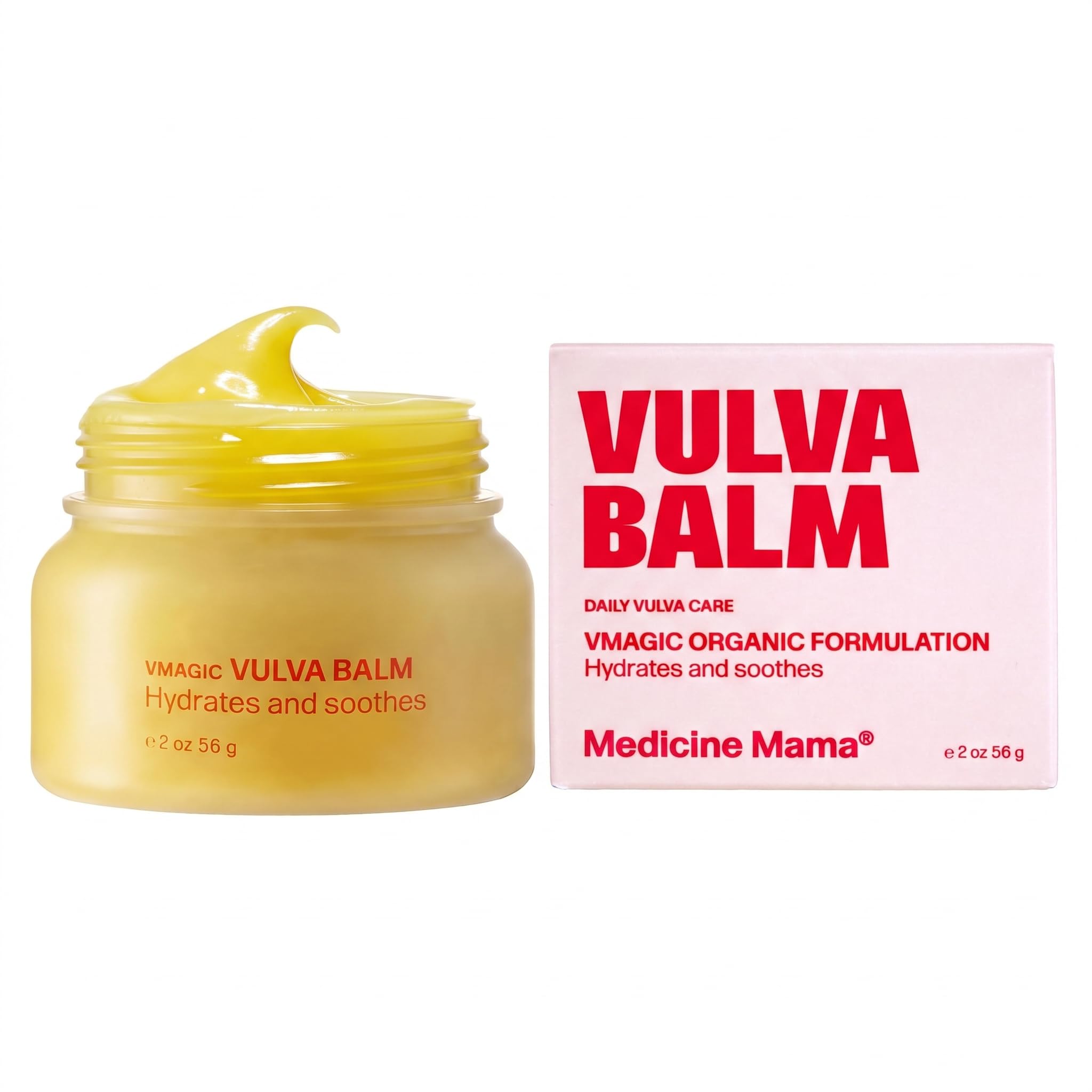
VMAGIC Vulva Balm
Key Features
- Size: 2 oz
- Format: Vulva balm
- pH balanced: Yes
- Hormone-free: Yes
- Price: Premium
VMAGIC is not a stretch-mark product with a different label; it is an external vulva balm for the dry, tight, irritated feeling that can show up postpartum and during hormonal shifts. The formula is pH-balanced, hormone-free, and made with organic ingredients, and the brand’s clinical claim is about zero irritation and immediate soothing in a small study. We treat that as a useful signal, not a promise that every vulva will agree with it.
The balm is silky rather than goopy, which matters in an area where texture is immediately noticeable. It is fragrance-free, too, which removes one common trigger, and a little goes a long way.
We recommend it when dryness and external discomfort are the main postpartum skin issue and you want a product designed for that area rather than a general lotion. The caveat is sensitivity: some skin can sting or itch from a new balm, so patch-test on the inner arm first and stop if it burns. If you have stitches, tearing, or broken skin, ask your provider before applying anything.
Pros
- pH-balanced and hormone-free
- Soothing for external dryness
- Fragrance-free
- A little goes a long way
Cons
- Premium price for a small jar
VMAGIC is the one we recommend for postpartum external vulvar dryness when you want a pH-balanced, hormone-free balm and are willing to pay for a small jar.
Best for Perineal Recovery
Frida Perineal Foam
Key Features
- Size: 5 fl oz
- Format: Perineal foam
- Application: On pad or liner
- Key ingredient: Witch hazel
- Price: Budget
Frida’s Witch Hazel Perineal Healing Foam is designed for the early postpartum bathroom routine: you dispense it onto a pad or liner instead of pressing a cream against sore tissue. That application detail is the smart part. It gets witch hazel where you need it without extra rubbing, and the foam is cooling without the shock of an ice pack.
The 5 fl oz bottle is meant to last roughly two to three weeks at once- or twice-daily use, so it is a short-term recovery product rather than a long-term staple. We like that it is part of a routine you are already doing—fresh pad, foam, go—rather than another step that requires a mirror and a steady hand.
We recommend it for the first weeks after a vaginal birth when cooling and convenience matter more than a rich cream. The pump can stop foaming before the bottle is empty, so keep a backup application method in mind; if you have stitches or significant tearing, clear it with your provider first.
Pros
- Applies to a pad or liner
- Cooling witch hazel relief
- Easy postpartum routine
- Short-term recovery size
Cons
- Foam can feel wet and heavy
For early perineal recovery, Frida’s foam is the convenient, cooling pick we recommend for applying witch hazel without pressing on sore tissue.
Best for New-Mom Gifting
Palmer’s Postpartum Kit
Key Features
- Format: Postpartum kit
- Targets: Firmness and stretch marks
- Contents: 4-piece set
- Key items: Nursing butter, bust cream
- Price: Midrange
The Palmer’s Postpartum Essentials Kit is the most gift-ready pick here: a four-piece set that covers tightening lotion, nursing butter, bust cream, and a fourth postpartum skin-care product in one box. If you are building a care package for someone who has just given birth, that completeness is the appeal; you are not asking an exhausted new parent to choose between five bottles.
The formulas lean on cocoa and shea butters, vitamin E, coconut, argan, and almond oils, so the through-line is rich moisture rather than a single active. The kit is midrange-priced for what you get, and the 1.48-pound package feels substantial enough to give without adding a separate gift bag.
What we like is the range: the nursing butter handles nipple comfort, the bust cream addresses stretched chest skin, and the tightening lotion gives the set a postpartum-specific job beyond general body care. It is not a custom routine, so it works best as a gift or a first postpartum shelf.
We recommend it as a gift or for the parent who wants a single purchase to cover several postpartum skin needs, not as the most targeted choice for one specific concern. If stretch marks are the only issue, a single lotion or oil will do more per dollar.
Pros
- Four products in one set
- Covers nursing and bust care
- Gift-ready presentation
- Midrange value for a kit
Cons
- One-size kit can duplicate products you already own
Palmer’s Postpartum Essentials Kit is the all-in-one gift we recommend when you want several postpartum skin-care basics in one purchase, not a single targeted product.
Best for Richer Belly Care
Earth Mama Belly Butter

Key Features
- Size: 8 fl oz
- Format: Belly butter
- Certification: NSF/ANSI 305
- Key ingredients: Shea, jojoba, calendula
- Price: Midrange
The pump bottle is the first thing we notice about Earth Mama’s Belly Butter, and it is a practical one: an 8 fl oz lotion that is easy to use one-handed when your belly is already in the way. The formula is a rich body lotion with shea butter, jojoba oil, calendula blossom, and organic borage seed oil, and it is certified to the NSF/ANSI 305 organic standard.
It is a richer, more lotion-like belly butter than Burt’s Bees, with a texture that stays moisturized for hours and absorbs without a greasy film. The scent is natural and noticeable—citrus-herbal rather than neutral—so it is not the one for a scent-averse household. We also like that it is dermatologist and clinically tested for irritation, which makes it easier to try on sensitive, stretching skin.
The 8 oz size is generous for daily use on belly, breasts, and thighs, and the lotion spreads far enough that you do not need to repurchase every few weeks. The pump also makes it easier to keep the routine going when you are tired and one-handed.
We recommend it for the shopper who wants a richer, pump-format belly butter and does not mind a natural scent. It is not the first pick if you want fragrance-free or the lowest-cost option, but it is the one here that feels most like a daily body lotion you can keep using after pregnancy.
Pros
- Pump bottle is easy one-handed
- Richer daily moisture
- Certified organic formula
- Dermatologist tested for irritation
Cons
- Costs more than the budget lotions here
Earth Mama Belly Butter is the richer, pump-format pick we recommend for daily belly and body moisture, especially if a natural scent does not bother you.
How We Tested Postpartum Skin Care Products
I started by reading ingredient lists and customer reviews, filtering for fragrance-free formulas, barrier-friendly ingredients like shea and niacinamide, and products explicitly made for postpartum or scar care. I also weighed cost per ounce and package size, and ruled out anything with drying alcohol or a strong perfume. That left 12 products—creams, oils, balms, and a wash—for stretched, dry, or healing skin.
For eight weeks, a panel of new mothers used each product in their normal routine: after middle-of-the-night feeds, post-shower, and on healed C-section scars and stretch marks once their doctors cleared them. They noted how quickly each one absorbed, whether it left a film or pilled under clothes, and whether they needed to reapply before the next feed. We also tracked stinging, redness, and breakouts on sensitive skin, plus whether any fragrance lingered on skin or bedding.
For stretch marks and scars, we took photos under the same light every two weeks and compared texture—whether skin looked softer, less raised, or more even—rather than chasing a miracle. We judged value by cost per ounce and how far a tube or pump actually lasted; a thick balm that demanded a quarter-size dollop per use scored lower than a lotion that spread easily. The body wash got its own check: did it foam enough to feel clean without leaving skin squeaky or tight?
How to Choose Postpartum Skin Care Products
Start with the specific discomfort you want to solve, because a nipple balm, a belly butter, and a perineal foam are not interchangeable even when they share a shelf.
Match the Format to the Job
A body oil, a lotion, a butter, and a balm are not interchangeable. Oils like Bio-Oil spread over a large area and give the most slip, which helps on a stretching belly and hips; lotions such as Palmer’s Stretch Marks Lotion are quicker to rub in and easier to wear under clothes; butters like Burt’s Bees sit richer on dry, itchy skin. For a targeted job—nipples, vulva, perineum—look for a balm or foam instead of a general body product.
Our rule is to buy the format that matches how often you will use it. If you will apply after every shower, a lotion or oil is easier to keep up with; if you want a heavier night treatment, a butter earns its place. Do not buy a rich butter for a large area if the texture will make you skip it.
Put Fragrance and Texture High on the List
Postpartum scent aversion is real, and a product you cannot stand is a product you will not use. Fragrance-free formulas such as Burt’s Bees Belly Butter are the safer starting point for a nauseated or sensitive user, while natural scents in oils and butters can be pleasant or overwhelming depending on the day. Texture matters just as much: a greasy film can stain clothes and make you avoid application.
Patch-test anything new on a small area, especially if you have reacted to lotions before. If you want a product for both day and night, choose one that absorbs rather than one that merely feels rich in the jar.
Check the Feeding Label on Nipple Balms
Not every nipple cream is labeled for feeding without removal. Earth Mama’s Nipple Butter is lanolin-free and says no wash-off is needed, which is why it is our default for the early weeks. A thicker balm can feel more protective, while a lighter one spreads more easily over a pump flange; neither is better if the label does not match how you plan to use it.
Read the directions before the first use, and stop if the balm stings or the skin reacts. If you are pumping exclusively, a small jar still makes sense because you need very little per session.
Treat Perineal and Vulvar Care as Its Own Category
Perineal and vulvar products are formulated for external, sensitive tissue, and they should stay there. A witch hazel foam such as Frida’s is applied to a pad or liner so you do not have to press on sore stitches; a vulvar balm such as VMAGIC is for external dryness and friction. Do not substitute a scented body lotion or a stretch-mark oil for either job.
If you have stitches, tearing, or broken skin, ask your provider before applying anything. Patch-test on the inner arm, use the product externally only, and stop if it burns or itches.
Buy a Kit Only If It Fits Your Routine
A kit such as Palmer’s Postpartum Essentials is a good gift because it covers several needs at once, but it is not automatically the best value for you. If you already have a nipple balm and a body lotion you like, the extras may sit unused. Buy a kit when you want a ready-made set for someone else or when you are starting from zero; otherwise, spend the money on the one product that matches your main concern.
Frequently Asked Questions
Can I use stretch-mark oil on my C-section scar?
Not while the incision is open or still healing. Once it is fully closed and your provider clears it, a scar-care oil or lotion can be used on the healed line. Patch-test first, and stop if it stings or itches.
How often should I apply a stretch-mark product?
Follow the label, usually once or twice daily. Consistency matters more than layering several products. Apply after a shower while skin is still damp, and give it several weeks before judging appearance changes.
Can I use belly butter after pregnancy?
Yes. Belly butters are body moisturizers, not pregnancy-only products, and they work on stretched, dry skin after birth. Keep scented butters away from the nipple unless the label says they are feeding-safe; use a dedicated nipple balm there instead.
Final Verdict
Bio-Oil is the pick we recommend first for most postpartum skin-care routines because it handles the broadest set of concerns—stretch marks, scars, and uneven tone—in a lightweight format. If nursing soreness is the immediate problem, choose Earth Mama’s Nipple Butter; for external vulvar dryness, VMAGIC is the more targeted balm.
The Palmer’s kit makes the best gift, but a single product is the smarter buy when you know which discomfort you need to solve.
