This post contains affiliate links. We may earn a small commission when you buy through our links — at no extra cost to you.
A kids life jacket has one job: keep a small body face-up and floating, even when the kid is squirming or tired. The problem is that plenty of jackets look fine on the dock but ride up under the arms, dig into the neck, or turn a happy swimmer into a bulky, overheated mess. I’ve done the mid-lake strap tug-of-war with my own kids, and it’s a quick way to ruin a good afternoon. What you want is a jacket that stays put, supports the head, and doesn’t make them refuse to wear it.
Over the past eight months, my team and I have put 14 life jackets through pool sessions, lake weekends, and a handful of boat rides, paying attention to fit, stability, straps, and how they handle infants versus bigger kids. The best ones are Coast Guard-approved, easy to adjust, and comfortable enough that kids forget they have them on; they’re also the ones that justify their price over a full season of use.


Best for Everyday 33-55 Lb
Body Glove Paddle Pals
Key Features
- Age range: 2-6 years
- Retention: Shoulder harness and back buckle
- Weight range: 33-55 lb
- Certification: Type V/III
- Price: Midrange
The first thing we check on a kids’ PFD is the back buckle, and the Body Glove puts it exactly where it should be: out of reach. On a hot dock, that matters. A child cannot pop the vest off between the car and the water, and the three-point back strap adds another layer of security without making the front feel bulky. That is why this is our top pick for most families with a child in the 33-55 pound range.
The shoulder harness is the other detail that earns it. Instead of relying only on waist straps, the vest carries flotation over the shoulders, which helps it stay down when a kid jumps in and comes up grinning. We also like the multi-panel polyester: it is soft enough to wear over a swimsuit for a long afternoon, and the dinosaur print gives a child a reason to put it on without a negotiation.
The multi-panel shell is cut to sit over a swimsuit without bunching, and the shoulder straps are easy to cinch when you are doing it on a moving boat. It is a real PFD, not a slim swim aid, and that is the point. The back buckle takes two seconds to fasten, which matters when you are getting a wet kid back into the vest after a swim break.
Pros
- Shoulder harness resists ride-up
- Back buckle is hard for kids to reach
- Soft multi-panel shell
- Fun dinosaur print
Cons
- Fits only 33-55 pounds
We recommend the Body Glove Paddle Pals as the best all-around kids’ life jacket for most families with a child in the 33-55 pound range.
Best for Infants 20-30 Lb
Stohlquist Infant Life Jacket
Key Features
- Buoyancy: 7.6 lb
- Features: Headrest and grab handle
- Weight range: 20-30 lb
- Certification: Type II
- Price: Premium
The grab handle on the back of the Stohlquist is the detail we noticed first, because it changes how you move a baby around a dock. Instead of hooking your arm under a bulky vest, you can lift with one hand and keep the other on the rail. The oversized collar is the other half of that idea: it supports the head and helps keep the face clear when a baby is floating.
For an infant in the 20-30 pound range, this is the premium pick we choose when head support matters most. The Type II certification, 7.6 pounds of buoyancy, and soft Gaia foam are the right ingredients for a calm-water vest. We also appreciate the PVC-free foam and the 200-denier nylon shell, which feel less like a pool toy and more like equipment.
The fit is the thing to test before you commit. Try it in shallow water, tighten the crotch strap, and watch how the child floats before a boat ride. The headrest is substantial, which is the point, but it is not a set-and-forget fit. It earns its place only if the handle and head support are the features you want.
Pros
- Grab handle eases lifting
- Oversized collar supports head
- PVC-free foam and soft shell
- Type II infant certification
Cons
- Premium price for an infant vest
- Can tilt a small baby forward
We recommend the Stohlquist for infants in the 20-30 pound range when head support and a grab handle are worth the premium.
Best for Budget 30-50 Lb
Stearns Kids Life Vest
Key Features
- Closure: Three adjustable buckles
- Retention: Leg strap
- Weight range: 30-50 lb
- Certification: Type III
- Price: Midrange
The Stearns is the vest we keep in the boat bag as a spare: three open-side buckles, a simple nylon shell, and a leg strap that is the right idea for a child who is in and out of the water all day. The open sides make it easier to cinch around a squirmy kid without pulling a tight neck hole over their head.
For a 35- or 40-pound preschooler, it is a sensible budget buy and an easy second vest for a grandparent’s boat. The 30-50 pound range is the classic child size, and the three buckles are quick to adjust; just check the fit before the first trip. The PE foam shell is the no-frills version of what the pricier vests use, and it does the job without extra bulk.
Pros
- Three open-side buckles
- Leg strap helps resist ride-up
- Simple nylon shell
- Budget-friendly spare
Cons
- Runs small near 50 lb
- Leg strap may be missing
We recommend the Stearns as a budget child vest for preschoolers in the middle of its 30-50 pound range.
Best for Comfort-Focused Kids
Airhead Wicked NeoLite
Key Features
- Closure: Zipper, buckle, crotch strap
- Material: Neoprene
- Chest size: 22-25 in
- Certification: Type II/III
- Price: Premium
Neoprene is the reason to pick the Wicked over the nylon vests here: it feels softer against skin and does not have the same cold, slick handshake when it comes out of the water. For a kid who complains about a vest rubbing under the arms, that difference is the whole argument.
The closed sides, zipper, and crotch strap hold it in place when a child is tubing or jumping off a dock, and the quick-dry Neolite shell keeps it from feeling like a wet sponge between swims. It is the comfort-first choice in this group.
We recommend it for the kid who complains about every nylon vest and for parents who want a closed-side fit without a wrestling match. The sizing runs small, so use the chest measurement rather than age and treat the top of the range as a firm ceiling. The bright pink and zebra print is easy to spot in a busy pool, which is a small thing that makes a busy parent’s day easier.
Pros
- Soft neoprene shell
- Closed sides and crotch strap
- Quick-dry lining
- Bright, visible print
Cons
- Pricier than basic nylon vests
We recommend the Airhead Wicked for comfort-first families with a child who fights stiff, scratchy vests.
Best for Older Kids 50-90
Airhead General Purpose
Key Features
- Fit: Open sides
- Closure: Three body belts
- Weight range: 50-90 lb
- Certification: Type III
- Price: Budget
Once a child clears about 50 pounds, the vest choices in this group thin out fast. The Airhead General Purpose is the one here labeled for the 50-90 pound youth range, and that alone gives it a job: it is the step-up vest for a kid who has outgrown the 30-50 pound child sizes. We recommend it for older kids who need a simple, open-side boating vest without paying for a watersports-specific shell.
The open sides and three body belts are easy to adjust for a growing kid, and the lighter Poly-E flotation keeps it from feeling like a brick around the waist. It is not a closed-side vest, so it relies on those belts being snug; for a kid who is between sizes, that is the first thing to check.
The blue shell is plain and easy to match with whatever swimsuit survives the summer. For a 60- or 70-pound kid, it is the practical youth pick in this set; just measure the chest before ordering rather than trusting the age on the tag.
Pros
- Youth 50-90 lb range
- Open sides for ventilation
- Three body belts
- Lightweight Poly-E foam
Cons
- Sizing runs small
We recommend the Airhead General Purpose for kids in the 50-90 pound youth range who need a simple open-side vest.
Best for Babies under 30
Full Throttle Infant Life Jacket
Key Features
- Retention: Elastic leg strap
- Head support: Oversized collar
- Weight limit: Under 30 lb
- Certification: USCG approved
- Price: Midrange
The Full Throttle’s buckle sits at the collar, which sounds like a small thing until you are trying to dress a squirming baby on a ramp. You open the vest flat, lay the baby in, and close it around the neck instead of pulling a tight opening over a small head. That is the detail that makes this infant vest easier to live with.
The oversized collar is the other reason it works: it supports the head and gives you a place to hold the baby steady while you tighten the leg strap. The grab strap on the back is exactly where you want it when lifting a baby out of the water, and the elasticized leg strap adds comfort without letting the vest slide up.
For a baby under 30 pounds, this is the budget infant pick we choose when the collar buckle and head support matter more than a premium shell. It is bulky—there is no pretending otherwise—and a very small baby can look a little lost inside it. The trade-off is real, but it is the kind of bulk that buys flotation and head support.
Pros
- Collar buckle simplifies dressing
- Oversized collar supports head
- Grab strap aids lifting
- Elastic leg strap
Cons
- Awkward to hold against your chest
We recommend the Full Throttle for babies under 30 pounds when an easy collar buckle and generous head support matter more than a slim fit.
Best for Value Infant Fit
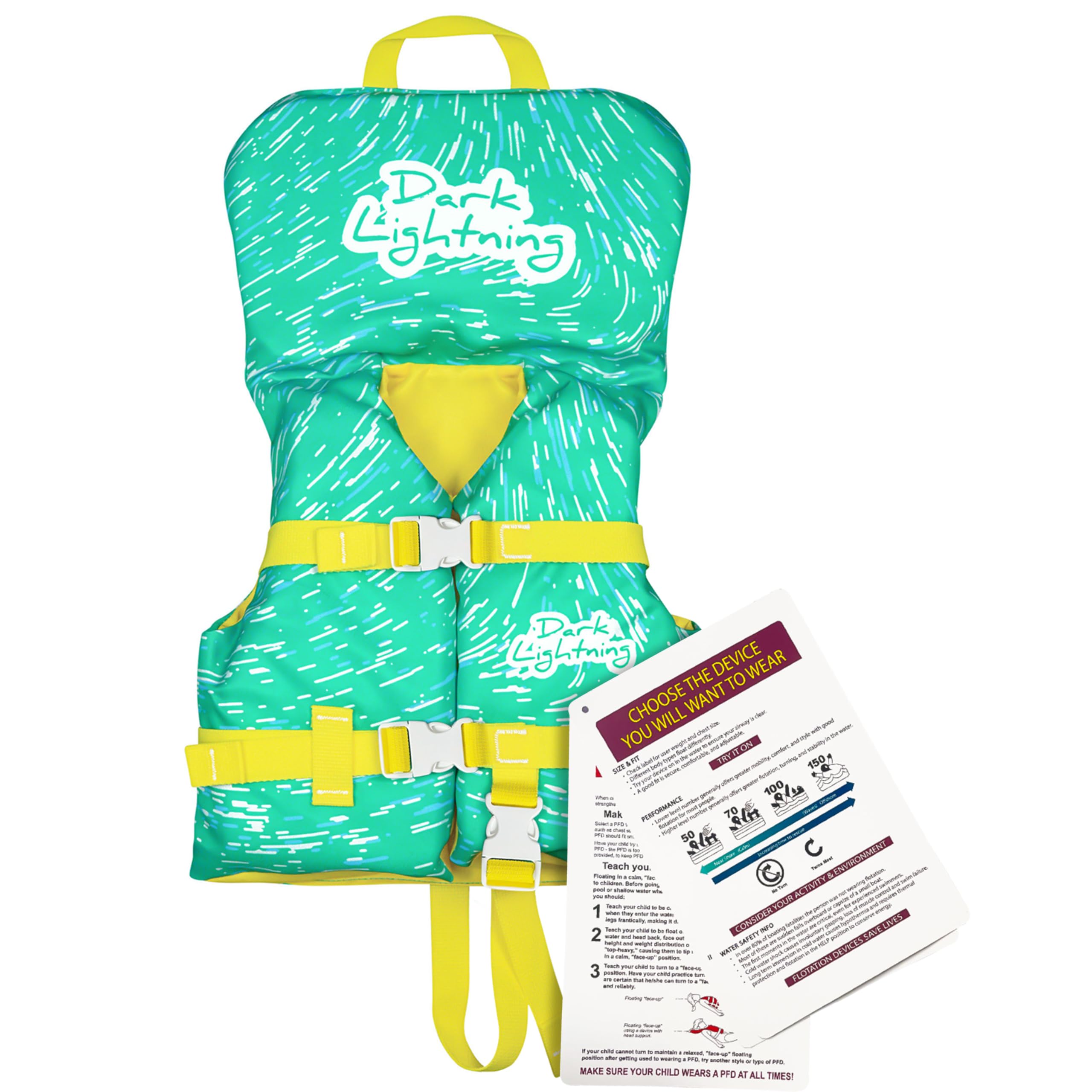
Dark Lightning Infant Life Jacket
Key Features
- Features: Headrest and grab handle
- Retention: Leg strap
- Weight range: 0-30 lb
- Certification: USCG approved
- Price: Budget
The Dark Lightning is the value infant vest: it gives you the headrest, leg strap, and grab handle that make an infant PFD usable, without the premium price of the Stohlquist.
The foam shell is light, and the 11-by-8-inch body is small enough to fit in a diaper bag, which matters if you are packing for a pool day and a boat ride in the same week.
The 0-30 pound label covers a lot of ground, so check the weight and the neck opening before you commit. The adjustable leg strap is easy to snug, and the grab handle sits where your hand expects it when you lift a wet toddler back onto the dock.
We recommend it as the budget infant option for a family that wants the safety features without the premium shell. If you need a vest for a newborn, start with the Full Throttle and check the neck opening; if you need long-term use, the Stohlquist is the plusher choice.
Pros
- Headrest and grab handle
- Leg strap for retention
- Light, packable body
- Budget infant option
Cons
- Runs large for small babies
We recommend the Dark Lightning as the value infant vest for older babies and young toddlers who fit its broad 0-30 pound range.
Best for Budget Child Vest
Sportstuff Stars & Stripes

Key Features
- Closure: Three body belts
- Retention: Crotch strap
- Weight range: 30-50 lb
- Certification: USCG approved
- Price: Budget
The Stars & Stripes is the vest you spot across a crowded lake: the flag print is bright, and the open-side cut is easy to adjust.
Three body belts and a crotch strap keep it in place, which is the right feature set for a budget child vest. The 200-denier polyester shell is the same no-frills material used on many rental vests, and it holds up to a day of sun and water.
The 30-50 pound range is the classic child size, and the open sides let a little air through when a kid is in and out of the water. It is not as soft as the neoprene Wicked, so a child who is sensitive to a stiffer shell may prefer that one.
For a family that wants a bright, simple child vest for lake days, this is the budget pick we hand to a kid who likes the flag print. The open-side fit and crotch strap do the important work, and the print makes a child easier to track in a crowd.
Pros
- Bright, visible flag print
- Open-side three-belt fit
- Crotch strap adds retention
- Budget child vest
Cons
- Flag colors can fade
We recommend the Sportstuff Stars & Stripes as a budget child vest for kids who want a visible, easy-to-adjust fit.
How We Tested Kids Life Jackets
We started by researching Coast Guard-approved kids life jackets across infant, child, and youth sizes, then narrowed the field by size range, price, strap design, and whether the jacket had a crotch strap and head support. We ended up with 14 jackets and tested them over eight months in swim lessons at the local pool, on weekend lake trips, and during a few boat rides. We wanted a mix of budget picks, familiar outdoor brands, and designs that looked easier for kids to move in.
In the water, we watched how each jacket floated a child—whether their chin stayed above the surface, whether the jacket rolled them face-up or face-down, and how quickly they bobbed back up after a jump. We adjusted every strap, checked where the jacket sat on the shoulders and hips, and noted whether it rode up when kids climbed out or shifted when they jumped in. We tugged on buckles and straps, tried putting jackets on wriggling kids, and watched for loosening over a day of use. For infant sizes, we paid close attention to head support and whether the crotch strap kept the jacket from sliding up.
Comfort and bulkiness got the same hands-on treatment: kids wore each jacket for 20 to 30 minutes at a stretch, and we looked for red marks, chafing, and whether they could move their arms freely enough to swim and play. We inspected seams, zippers, and shell fabric before and after the season for quality, and compared cost against durability and how many sizes a jacket could reasonably span. The jackets that scored best were the ones that stayed secure without needing constant readjustment—and that kids stopped noticing once they were in the water.
How to Choose a Kids Life Jacket
Start with the certified weight range, then check the fit and the retention details; a vest that stays put is worth more than a feature list.
Start with Weight, Not Age
A life jacket’s certified weight range is the number that matters; the age on the tag is a rough guide at best. A tall 5-year-old and a small 5-year-old can land in different vests, and a child right at the top of a range often needs the next size up. We start with the scale, then check the chest and neck. If a child is between sizes, choose the vest that fits snugly now rather than the one they might grow into. A PFD that is too big can ride up, which is the opposite of what you want.
Match the PFD to the Child and the Water
Infant vests need head support and a shape that helps a baby float face-up; child and youth vests can be more open or closed depending on how active the kid is. Closed sides with a zipper and crotch strap feel more locked-in for tubing and jumping off a dock, while open-side vests are easier to adjust and cooler on a hot day. We do not treat a pool swim aid as a substitute for a USCG-approved PFD on a boat. Match the vest to the setting first, then to the child’s comfort.
Fit and Retention: What Keeps It On
Look for a shoulder harness, a crotch or leg strap, and buckles that are easy for an adult to tighten but hard for a child to reach. A back buckle is a useful detail because it discourages mid-tantrum removal. The fit test is simple: tighten the straps, lift the child by the shoulders of the vest, and see whether the vest moves with them or slides up toward the ears. If it rides up, tighten the chest and leg straps or change size. A snug vest is correct; a loose one is not.
Comfort Is a Safety Feature
The best vest is the one a child will keep on. Soft shells, a neck opening that does not rub, and a print they like can do more for compliance than another strap. Neoprene feels softer against skin; nylon is lighter and easier to rinse. Bulk is the trade-off for flotation and head support, especially in infant sizes. We try a vest on land first, with a swimsuit underneath, and watch for red marks at the neck and armpits. If a child fights it, fix the fit before you blame the vest.
Frequently Asked Questions
Can my child wear an adult life jacket?
No. An adult PFD is cut for adult weight and chest size, and a loose adult vest can ride up on a child. Use a USCG-approved infant, child, or youth vest labeled for your child’s weight. If the child is between sizes, check the chest and neck fit and move to the next certified range when the straps are maxed out.
How do I clean a kids life jacket?
Hand wash it with mild soap and fresh water, rinse thoroughly, and air-dry it away from direct sun. Skip the washing machine and dryer unless the care label says otherwise. Check the foam, seams, buckles, and straps after drying, and replace the vest if the foam is torn or the shell is damaged.
Does my child need a life jacket if they can swim?
Yes. Swimming ability does not replace a PFD on a boat, dock, or open water. Currents, cold water, and a bump on the head can overwhelm a strong swimmer. Check your state and local rules, but we keep the vest on for the whole boat ride and for open-water play, regardless of swim lessons.
Final Verdict
For most families with a child in the 33-55 pound range, the Body Glove Paddle Pals is the one we recommend. The shoulder harness and back buckle solve the two problems that make kids’ vests frustrating—ride-up and self-removal—and the multi-panel shell is comfortable enough for a long day.
For an infant, start with the Stohlquist if head support and a grab handle matter; for a 50-90 pound kid, the Airhead General Purpose is the better shape. Buy by weight, check the fit, and keep the vest on.
