This post contains affiliate links. We may earn a small commission when you buy through our links — at no extra cost to you.
You will swear you’ll remember the first smile, the exact weight, the way they curled a fist around your finger. Then a Tuesday arrives and you can’t recall whether the first roll happened before or after the pediatrician visit. A baby journal fixes that—but only if it’s easy enough to actually use when you’re running on three hours of sleep.
Over the past six months, my team and I have filled, flipped through, and occasionally abandoned 14 baby journals. The ones that stuck around had prompts that felt like a conversation rather than homework, paper that didn’t bleed through a felt-tip pen, and a size that fit on a nightstand without becoming clutter. A pretty cover is nice, but a journal only earns its shelf space if you can write in it one-handed during a contact nap—and the best ones make room for the messy stuff, like a pocket for the hospital bracelet, without turning into a scrapbook project. The picks below are the ones we’d actually give as gifts and keep using ourselves.


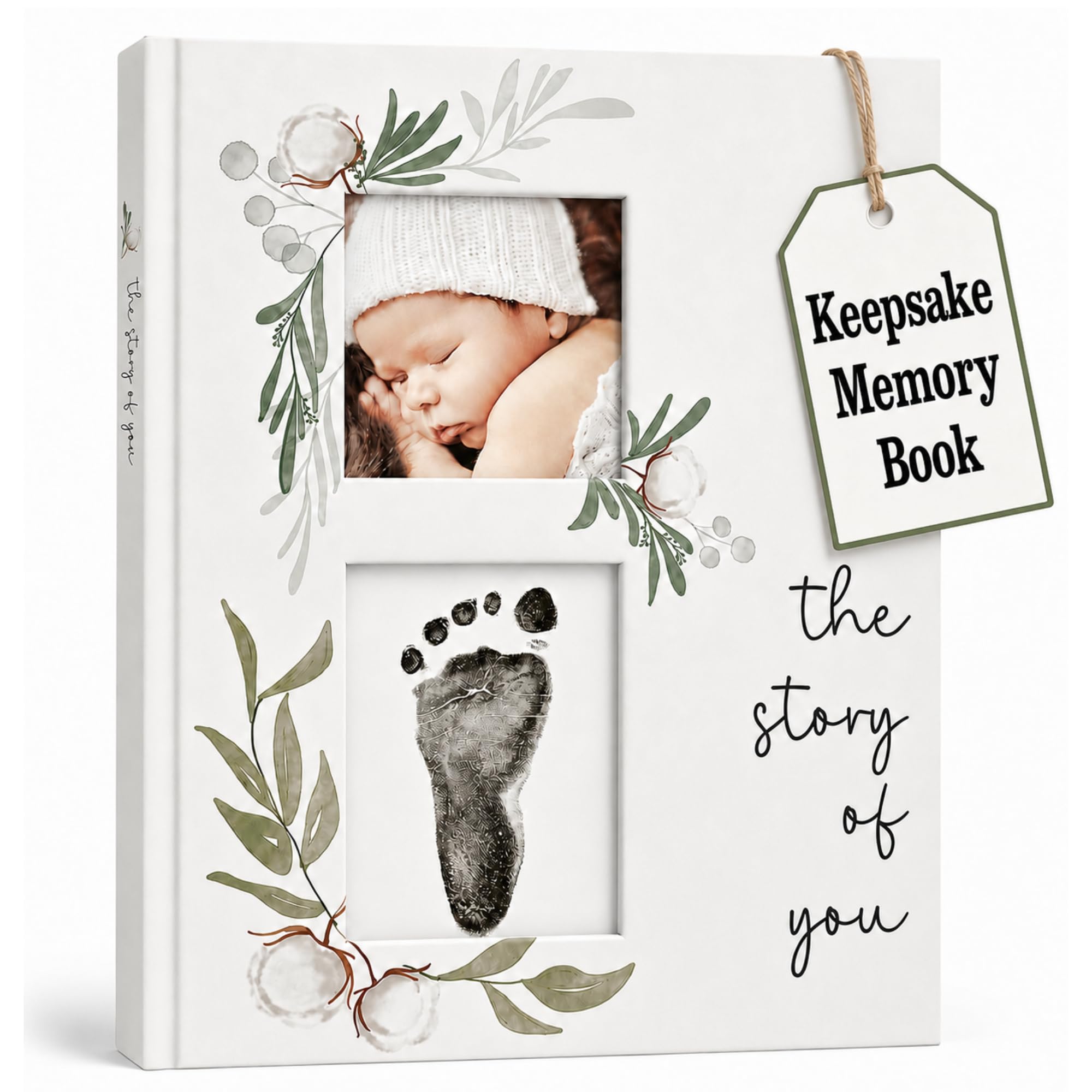
Best for Most Families
ZIRI & ZANE Baby Memory Book
Key Features
- Pages: 120 pages
- Binding: Lay-flat gold double spiral
- Photo sizes: 4×6, 3×3, 4×4 in
- Keepsake storage: 6 large folders
- Price: Midrange
The six large keepsake folders are the first thing we noticed, and they are why this is our top pick. A 120-page book that runs from pregnancy to age five can easily become a pile of loose sonograms and hospital bracelets, but the folders give those small things a home. The sections for before birth, first weeks, and monthly milestones keep you from deciding where every note belongs. We like that the organization does the nagging for you.
The lay-flat gold double spiral is the other detail that matters day to day. It opens wide enough to write across the gutter, and the 160 GSM paper feels substantial without being stiff. At 9.75 by 9.25 by 1.5 inches, it has the presence of a proper shelf keepsake. The protective sleeve is a nice finish.
The prompts are extensive without being fussy. There is room for 4×6, 3×3, and 4×4 photos, plus a woodland design that stays gender-neutral and calm. We appreciate that the pages ask for memories rather than a daily log; you can fill a section in one sitting and come back later. The gold foil cover also makes it gift-ready without wrapping it in a theme.
If you want a book that will hold everything from a pregnancy test to a fifth birthday, this is the one we hand to most families. The storage is the reason to choose it, and the result is a keepsake you can actually keep.
Pros
- Six large folders keep small mementos organized
- Lay-flat spiral makes writing across pages easier
- Covers pregnancy through age five in 120 pages
- Gender-neutral woodland design suits either child
Cons
- Thick spine makes it a shelf book, not portable
Our top pick for most families is a complete five-year keepsake with six folders and a lay-flat binding that makes filling it in easier.
Best for Long-Term Record
Promptly Journals Childhood History
Key Features
- Cover: Embossed leatherette
- Pages: 254 pages
- Format: Guided prompts
- Coverage: Pregnancy to 18 years
- Price: Premium
The coverage window is the first thing to understand: this is not a five-year baby book but a 254-page childhood history that runs from pregnancy to age 18. The guided prompts are split into short sittings, and the book is designed so each year can be completed in about an hour. That changes the purchase. You are not buying a baby album; you are buying the one book you keep adding to after preschool.
We recommend it for parents who want that long view. The leatherette cover feels substantial, and the prompts are balanced enough to shape your thoughts without turning the page into a questionnaire. We were struck by how much room there is for letters and open-ended reflection, which suits a family that wants a written record more than a photo grid.
If you want monthly photo pages and six pockets for hospital mementos, choose a five-year book instead. This one is for the parent who knows they will still be writing when the child is in elementary school. The 254 pages give it room to grow, but they also make it a longer commitment. We like it best as a family archive, not as a baby-shower-only gift.
The quality is there, and the concept is unusually practical for busy parents. It earns its place as our long-term pick because it solves a problem most baby books create: the book ends just as the memories get interesting.
Pros
- One book covers pregnancy through age 18
- Guided prompts are designed for short sittings
- Leatherette cover feels like a lasting keepsake
- 254 pages give the book room to grow
Cons
- Premium price for a long-term journal
For parents who want one guided book to follow a child from pregnancy to 18, we hand them this one.
Best for Detailed Keepsake
As You Grow Memory Book
Key Features
- Pages: 160 pages
- Design: Gender-neutral illustrations
- Format: Guided journal
- Dimensions: 10.79 x 1.5 x 10.08 inches
- Price: Premium
At 2.87 pounds and roughly 10.8 inches square, this is a stay-at-home book. We noticed the weight as soon as we picked it up; it is not the journal you tuck into a hospital bag. That is fine for a keepsake you fill over months, and the square format gives the month-by-month pages a generous canvas.
The 160 pages are detailed from beginning to end, with illustrations that feel modern rather than babyish. The gender-neutral design is a real advantage if you are buying before a reveal or want one book that works for siblings. We appreciate that the prompts leave room for writing without turning every page into an essay.
The keepsake pockets are the one place to adjust your expectations. Some are flat page slots rather than deep envelopes, so a hospital bracelet or a chunky memento needs a separate envelope. We still recommend it for detail-loving parents who want a book to display and fill slowly; it is the most design-led option here.
Choose it over the ZIRI & ZANE if you want a larger, more illustrated book and do not need six dedicated folders. Choose the ZIRI if storage is the priority. The As You Grow is the one we reach for when the book is meant to sit out on a shelf and be paged through, not packed away.
Pros
- Detailed month-by-month prompts across 160 pages
- Gender-neutral illustrations feel timeless
- Large square format gives photos room
Cons
We choose this for detail-loving parents who want a large, illustrated keepsake, as long as flat pockets and a stay-at-home format suit them.
Best for Photo Organization
two little dinos 120-Page Baby Book
Key Features
- Pages: 120 pages
- Dimensions: 10 x 8.75 x 1.5 inches
- Photo sizes: 3×3, 4×4, 4×6 in
- Keepsake storage: 6 large pockets
- Price: Midrange
It has the same 120-page span as our top pick, but the organization is different: six dividers, six large keepsake pockets, and 52 photo and sonogram pages. We liked that the sections do the filing for you. If you are the kind of parent who will actually print the sonogram and the monthly photo, this is the easier book to keep up with.
The photo pages fit 3×3, 4×4, and 4×6 prints, so you are not hunting for a custom size. The hardcover slipcase protects the book between fill-ins, and the 10 by 8.75 by 1.5-inch footprint gives the layouts room to breathe. The prompts are simple and tailored, which keeps the book from feeling like a scrapbook project.
We recommend it for photo-heavy parents and anyone who wants a place for small mementos without adding a separate envelope. If you want a smaller book to hold in your lap, the Duncan & Stone is easier, but it will not hold as much. For a first-five-years book that keeps photos and papers sorted, this is the one.
Pros
- Six dividers and pockets organize photos and mementos
- 52 photo and sonogram pages in standard sizes
- 120 pages cover pregnancy through age five
- Hardcover slipcase protects the keepsake
Cons
- Wide 10-inch footprint takes shelf space
We like this best for photo-heavy families: six dividers and pockets turn a 120-page book into an organized archive.
Best for First Year
Duncan & Stone First-Year Baby Book
Key Features
- Size: 9.25 x 7.75 inches
- Cover: Linen cloth with gold foil
- Pages: 112 pages
- Coverage: Pregnancy to first year
- Price: Premium
The linen cloth cover with gold foil is the first thing you see, and it sets the tone: this is a first-year book that looks like a grown-up coffee-table book, not a babyish album. The cream palette and clean pages make it easy to leave out in a nursery.
At 112 pages, it covers pregnancy through the first year with monthly updates, photo pages, and prompts that are detailed without being excessive. We recommend it for parents who want a focused first-year keepsake that feels special but does not ask for five years of upkeep. The compact 9.25 by 7.75-inch size is easy to hold and fill.
The smaller page size is also the limitation: photo spaces are tighter than on the 10-inch books, so large prints and wide layouts need more trimming or a different book. That is the trade-off for a book that is easier to hold and more likely to be filled. We like it best as a gift for someone who wants a beautiful first-year record, not an exhaustive archive. If you want six pockets and 120 pages, choose the two little dinos instead.
Pros
- Linen cover with gold foil looks gift-ready
- 112 pages focus on pregnancy through first year
- Compact 9.25 x 7.75 size is easy to handle
Cons
This is the first-year book we choose when a linen cover and compact size matter more than big photo spaces.
Best for Minimalist Record
two little dinos Minimalist Baby Book
Key Features
- Cover: Personalized photo cover
- Pages: 60 pages
- Design: Minimalist gender-neutral
- Format: Guided prompts
- Price: Budget
The inclusive wording is the first thing we noticed. The page titles and content are designed to work for single-parent, LGBT, and adoptive families, not just a mother-and-father household. That is not a small detail when you are filling in a family tree; it is the difference between a book that fits your family and one that asks you to cross things out.
The rest is deliberately minimal: 60 pages, white space, hand-sketched leaves, and short prompts. The cover has a spot for a baby photo and a tiny handprint or footprint, so it feels personal without extra scrapbook supplies. We like that the book does not overwhelm you with questions; it gives you a starting point and gets out of the way.
The 60 pages are enough for monthly milestones and photos if you keep entries short. It is for the parent who wants a simple record they will actually finish, or a gift that works for a family you may not know the shape of.
We recommend it as our minimalist pick, especially for busy parents and non-traditional families. If you want a more archival book, step up to the larger two little dinos; if you want simple and inclusive, this is the one.
Pros
- Inclusive wording suits single-parent and LGBTQ+ families
- Minimalist prompts reduce decision fatigue
- Personalized cover holds a photo and handprint
Cons
- 60 pages won’t cover every holiday and first
We point busy parents and non-traditional families here for inclusive prompts without a 120-page commitment.
Best for Simple Milestone Book
Paper Peony The Baby Memory Book

Key Features
- Pages: 98 pages
- Design: Modern design
- Format: Guided memory book
- Coverage: Pregnancy to 5 years
- Price: Budget
The pregnancy section is brief, and that is the first thing to know. If you want to record every appointment, ultrasound, and craving, this 98-page book will feel thin. We noticed the shorter pregnancy section right away, but it is also why the book stays manageable. It asks for the highlights and moves on.
The rest covers pregnancy through age five with monthly pages, photo spaces, and prompts that are simple without being empty. The design is modern and not childish, so it can sit on a shelf without looking like a baby-themed binder. The 98 pages are enough for the major milestones and a few favorites, and the layout is easy to fill in short sittings.
We recommend it for parents who care more about the monthly milestones than a detailed pregnancy journal, and for anyone who wants a budget-friendly book that does not feel cheap. If you want more room to improvise, choose the ZIRI & ZANE or the larger two little dinos. For a simple book that covers the journey without asking for a scrapbook, it earns its place.
Pros
- Simple prompts cover pregnancy through age five
- Modern design avoids a babyish look
- 98 pages are easy to keep up with
Cons
- Few blank pages for extra photos
We reach for this simple, modern book when monthly milestones matter more than a detailed pregnancy section.
Best for Letters Only
Letters to My Baby

Key Features
- Pages: 12 pages
- Format: Letters with envelopes
- Dimensions: 3.8 x 0.63 x 8.1 inches
- Price: Budget
This is not a milestone book, and that is the point. There are no month-by-month pages, no photo sleeves, no family tree. It is a set of prompted letters you write now and give later, which makes it a different kind of baby journal. If you are looking for a place to track first steps and first foods, keep looking.
The format is compact and ritualistic: 12 pages, envelopes, and prompts that give you a starting point. We like that you can write a short note, seal it, and date it without needing photo corners or a binder. The 3.8 by 0.63 by 8.1-inch size is easy to tuck into a drawer or a gift bag.
The format rewards brevity. It is better for one meaningful thought per page, or for a parent who expresses themselves in short notes. The envelopes are the keepsake mechanism; the book is the container, not the archive.
We recommend it as a letters-only keepsake, not as the main baby book. It is a lovely gift for a parent who already has a milestone album or who wants to say something in their own voice. If you need photos and milestones, choose the ZIRI & ZANE or the larger two little dinos instead. The 12 letters fill faster than you expect, so buy it for the ritual, not the page count.
Pros
- Prompted letters with envelopes create a lasting ritual
- Compact format is easy to fill and store
- Gift-ready concept for expecting parents
Cons
- Little writing room per letter
We treat this as a letters-only keepsake: prompted notes and envelopes, not a milestone or photo album.
How We Tested 14 Baby Journals Over Six Months
We started by scanning the market for journals with structured prompts, open-ended pages, and room for keepsakes, then narrowed by price, size, and availability. That left us with 14 journals, from slim linen-covered notebooks to thick ring-bound binders. For six months, we kept one on a nightstand, one in a diaper bag, and one on the changing table—wherever a parent might actually scribble a note.
We wrote in each journal with a ballpoint pen, a felt-tip, and a pencil, noting whether ink bled through, whether the book lay flat on a lap, and whether the pages felt sturdy enough to survive a diaper bag. We tested pockets by stuffing them with a hospital bracelet, an ultrasound photo, and a lock of hair, then checking whether the journal still closed flat. We also noted how the binding held up after repeated opening and closing.
Content got the same scrutiny: did the prompts feel like a chore or an invitation, and were there pages for the small, everyday moments? We left each journal on a coffee table for a week to see whether it looked like a keepsake or clutter, wrapped a few to judge giftability, and measured footprint on a crowded shelf and bulk in a diaper bag. Finally, we asked whether the price felt fair for what you actually fill out, not just what’s on the cover.
How to Choose a Baby Journal
The right baby journal is the one you will actually fill in, so start with the coverage window and the way you like to write, not the page count alone.
Match the Coverage Window to Your Plans
A first-year book is a project with an end date; a five-year book keeps going through preschool; an 18-year book becomes a childhood history. For most families, the five-year window is the sweet spot because it holds the baby milestones everyone wants without asking for a decade of upkeep. Duncan & Stone is the first-year example, ZIRI & ZANE runs to age five, and Promptly Journals goes to 18. The trap is assuming more years automatically means more value. If you want a baby-only record, an 18-year journal can feel like a school project you did not sign up for.
Choose Prompts You Can Finish
Guided prompts are training wheels for tired parents: they turn a blank page into a few questions you can answer in five minutes. Minimalist books leave more room for your own words but ask you to bring the structure. Letters-only journals are a different ritual; they preserve your voice, not a milestone timeline. two little dinos Minimalist keeps prompts short, As You Grow is more detailed, and Letters to My Baby is letters-only. We don’t pay more for a book with more prompts unless the prompts are short enough to finish. The trap is buying the most elaborate book and then avoiding it because every entry feels like homework.
Check Photo Sizes and What the Pockets Actually Hold
Photo pages are only useful if they fit the prints you actually order. Standard sizes here are 3×3, 4×4, and 4×6 inches; check your photo service before you commit. Keepsake storage matters just as much: a large envelope can hold a hospital band or first curl, while a flat page slot is best for a sonogram or a note. ZIRI & ZANE uses six folders, two little dinos uses six large pockets, and As You Grow has flatter page slots. The trap is assuming every pocket is a deep envelope. Look for dividers and separate folders if you plan to save bulky items.
Look at Binding, Size, and Family Wording
A lay-flat spiral or ring binding makes writing across the gutter much easier, especially if you fill pages in bed or on the couch. Casebound books feel more like a traditional album but can be stiffer at the spine. Size is a trade-off: a 10-inch square gives photos room but lives on a shelf; a compact 9.25 x 7.75 book is easier to hold but leaves less photo space. ZIRI & ZANE opens flat, Duncan & Stone is compact, and two little dinos Minimalist uses inclusive wording. The cover is not the whole book; the binding and the language are what you live with.
Frequently Asked Questions
Can I start a baby journal after my baby is born?
Yes. Plenty of books include retrospective prompts for birth, coming home, and the first weeks, so you can fill them from photos, texts, and calendar notes. Start with the birth story and work forward in short sittings. Choose a book with undated pages or prompts that ask for memories rather than daily logs, then set aside one evening to catch up before the first month gets away from you.
How do I keep up with a baby journal?
Put a monthly reminder on your phone and keep a running note of funny sayings, weights, and firsts between entries. Print photos in small batches instead of waiting for a perfect album, and write short answers rather than full essays. A guided book with five-minute prompts is easier to maintain than a blank journal. If you miss a month, fill the dates and move on; the book is a record, not a test.
What’s the difference between a baby journal and a baby memory book?
The terms overlap, but a baby journal usually emphasizes writing and prompts, while a memory book emphasizes photos, milestones, and keepsakes. Many books combine both. Decide which pages you will actually fill: if you want to write, prioritize prompt style and paper; if you want photos and mementos, prioritize photo sizes, pockets, and dividers. Choose the format that matches your habit, not the label on the cover.
Final Verdict
For most families, the ZIRI & ZANE is the baby journal we recommend: 120 pages, six keepsake folders, and a lay-flat binding make it easy to keep up with from pregnancy through age five.
If you want one book that follows your child into the teenage years, choose Promptly Journals instead; its 254 pages run from pregnancy to 18. For a first-year-only keepsake with a linen cover, Duncan & Stone is the more focused choice.
