This post contains affiliate links. We may earn a small commission when you buy through our links — at no extra cost to you.
The trick with bug spray for babies is that the protection you need—lasting through a sweaty stroller nap—often comes bundled with a sharp scent, a greasy shine, or a bottle that leaks all over the diaper bag. I learned that on an evening walk when a natural spray left my daughter’s arms tacky and every mosquito in the neighborhood found us. A good formula has to do the hard part without those side effects: work at dusk, feel light on repeat applications, and be pleasant enough that you actually reapply.
Over one full mosquito season, my team and I tested 14 baby-safe sprays and lotions, noting how long protection held, whether the scent faded or lingered, and if a bottle survived life sideways in a diaper bag. The best weren’t the strongest-smelling or the priciest; they went on without a fight, dried down without a film, and didn’t leave us watching for redness. Below are the ones we’d reach for again, whether you want scent-free, plant-based, or a bottle that sprays evenly while you’re holding a wiggly baby.


Best for Babies from 6 Months
OFF! Adults & Kids Lotion
Key Features
- Form: Lotion, 3.8 oz
- Scent: Unscented
- Minimum age: 6 months
- Active ingredient: Picaridin
- Price: Budget
Six months is the number that decides this one. It’s the only product in this group that prints a minimum age below a year on the label, and for a parent holding a five-month-old, that turns a maybe into a yes. The rest is a fragrance-free picaridin lotion that rubs in like a light moisturizer, which is exactly what you want in your hands when the baby is already halfway out the door.
What we noticed first was how little there is to notice. The gel goes on clear, disappears within a few seconds, and leaves no sheen on skin or on the car seat afterwards — no small thing when a lotion rides against harness straps twice a day. It’s unscented, so there’s nothing to announce to a baby’s nose in a closed car, and it never looked or felt greasy on the adults who borrowed it.
The label doesn’t give a protection time, so we work to a two-hour rhythm and reapply after water or a sweaty nap. That’s the one place it asks something of you, and it’s a small ask for a formula this easy to put on. It’s also the cheapest of the lotions here, which is why one lives in the diaper bag and another in the glove box without any guilt.
Pros
- Labeled for babies from six months
- Fragrance-free and dries with no residue
- Rubs in like lotion on a moving baby
- Gentle enough for everyday use
Cons
- Small 3.8-ounce bottle runs out fast
For a baby from six months up, this is the one we reach for: a fragrance-free picaridin lotion that rubs in like moisturizer and carries the clearest age guidance in the group.
Best for Long Days Outdoors
Boogie Insect Repellent Lotion
Key Features
- Form: Lotion, 6 fl oz
- Scent: Fragrance-free
- Active ingredient: 20% picaridin
- Claimed protection: Up to 14 hours (mosquitoes, ticks), 8 hours (flies, gnats)
- Price: Midrange
Fourteen hours against mosquitoes and ticks is the longest claim on this page, and eight against biting flies and gnats. Boogie gets there with 20% picaridin in a lotion, which also means the bottle doesn’t vanish the way a spray does — you’re spreading a thin film, not misting half of it into the air.
For a day that starts at nine and ends at dinner, this is the one we pack. It’s odorless, it dries down without a sticky feel, and the six-ounce bottle covers two adults and two children without anyone rationing. Rubbing it into a wriggling pair of legs takes a few seconds each, and there’s no cloud of mist to hold a baby’s face away from — which is the practical reason we prefer lotions in this category at all.
What it doesn’t do is tell you an age. There’s no minimum printed anywhere on the bottle, and for an infant that’s the gap that keeps this behind our top pick rather than ahead of it; from toddlerhood up, it’s our favorite thing here. The six-ounce bottle is also why it lives in the car instead of the diaper bag — it’s family-sized, not purse-sized.
Pros
- Longest protection window in the group
- Odorless and non-greasy on skin
- Six-ounce bottle covers the family
Cons
- No stated minimum age for infants
We keep coming back to this one for long days out — the protection window is the longest here, and the big bottle covers the whole family without anyone rationing.
Best for Family Gear Bag
Sawyer Picaridin Pump Spray
Key Features
- Form: Pump spray, 4 fl oz
- Scent: Fragrance-free
- Active ingredient: 20% picaridin
- Claimed protection: Up to 12 hours (mosquitoes, ticks), 8 hours (biting flies)
- Price: Midrange
The bottle is the problem. The pump throws a coarse line rather than a mist, and it leaks — ours rides in a zip bag in the stroller basket, and that’s the only way we carry it. And yet the formula is the one we reach for when an adult or a school-age kid needs spraying on the way out, because it does everything else right.
Twenty percent picaridin, up to twelve hours against mosquitoes and ticks and eight against biting flies, with no fragrance at all. The detail that surprised us is what it doesn’t do: it won’t damage plastics or synthetic coatings, so it’s the one we’re comfortable using near sunglasses, watch straps, and the plastic buckles and fabric on a stroller. It’s the only product here that makes that claim.
There’s no stated age on it, so it stays off a baby’s skin here and goes on the adults, the backpacks, and the camp gear. A shelf life of five-plus years means the bottle left in the car isn’t wasted, and keeping one for the car and one for the pack doesn’t feel extravagant.
Pros
- Fragrance-free 20% picaridin formula
- Twelve-hour claim against mosquitoes and ticks
- Won’t damage plastics, coatings, or gear
Cons
- No stated minimum age on the label
The fragrance-free spray we hand to adults and older kids: 20% picaridin, a twelve-hour claim, and a formula that won’t hurt sunglasses or stroller plastics.
Best for High-Bug Trips
OFF! Family Care Insect Repellent
Key Features
- Form: Aerosol, two 4 oz cans
- Scent: Unscented
- Pests listed: Mosquitoes, ticks, biting flies, gnats, chiggers, fleas
- Active ingredient: 15% DEET
- Price: Budget
Fifteen percent DEET is the oldest tool in this bag, and it’s still the one we take to a cottage with bad screens or a trail where the grass is tall. The can lists mosquitoes, ticks, biting flies, gnats, chiggers, and fleas — the broadest pest list here — and it goes on dry rather than oily, with none of the slick film people remember from older DEET sprays.
We use it on ourselves and on school-age kids, and reach for the lotion when there’s a baby in the group. That’s not a knock on the formula; it’s about the aerosol. A mist you can breathe isn’t what you want two feet from an infant, so this is a spray-on-your-own-hands product, and that’s why it sits below the lotions for a baby specifically.
Two cans is the quiet advantage: one for the car, one for the pack, and neither feels precious. The scent is the weak point — it’s noticeable, and it lingers on skin and clothing for a while after you’ve applied it, so it’s not the can you open in a small tent.
Pros
- 15% DEET covers ticks and biting flies
- Goes on dry, not oily
- Two cans for the car and the pack
Cons
- Aerosol with a noticeable, lingering scent
We keep a can of this for tick country and lake weekends, when a moderate DEET dose still beats everything else in the bag.
Best for Scent-Sensitive Kids
Avon Skin So Soft Bug Guard Plus
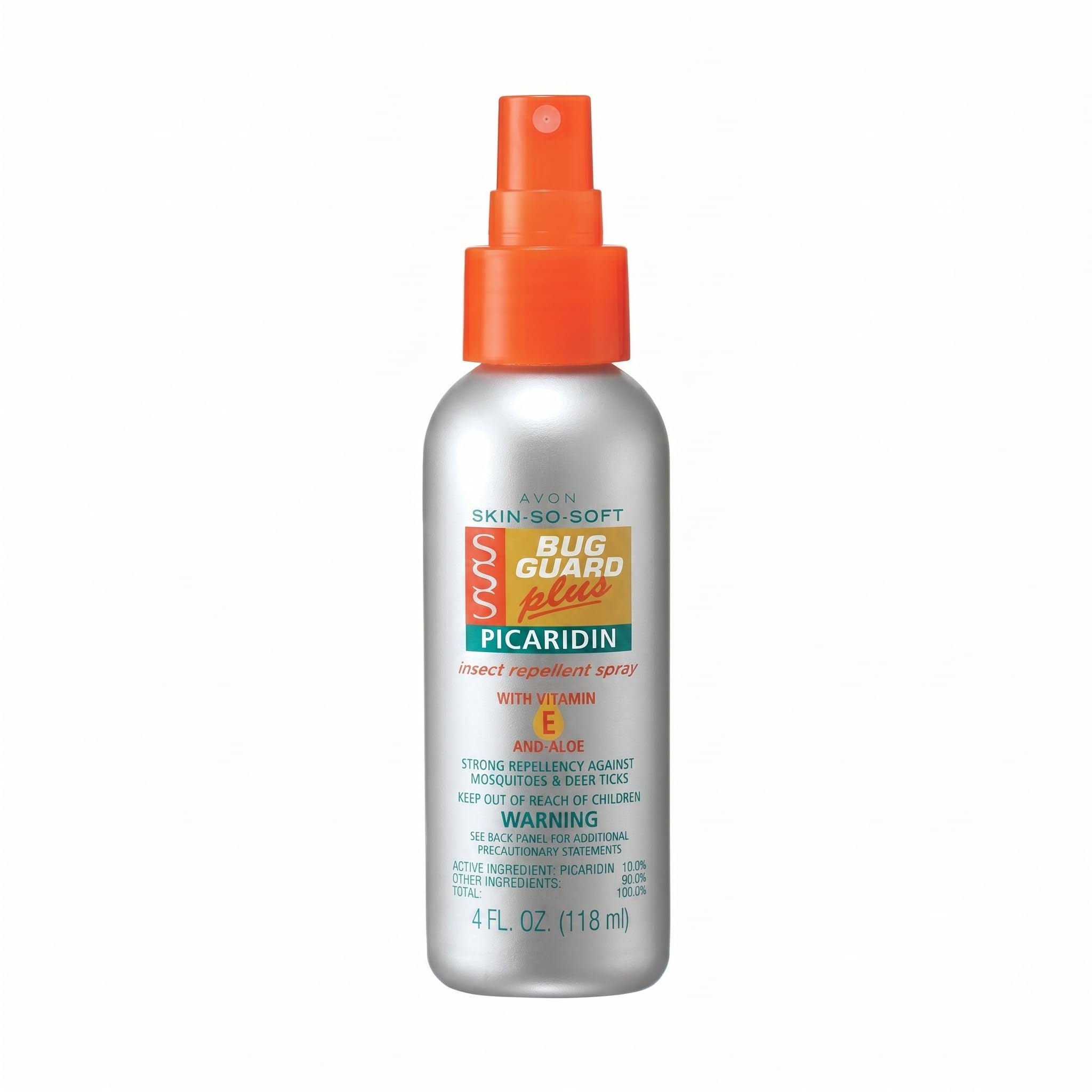
Key Features
- Form: Spray, 4 oz
- Scent: Low-odor
- Active ingredient: Picaridin
- Claimed protection: 8 hours (mosquitoes), 12 hours (deer ticks)
- Price: Premium
It smells like the Skin So Soft line — soft, a little perfumey, nothing like a repellent. If you have a child who fights application, or an adult who won’t wear anything that smells medicinal, that single fact does more work than any specification on the label.
Underneath the scent it’s a picaridin spray with an eight-hour mosquito claim and a twelve-hour claim against deer ticks, oil-free and PABA-free, and it dries to nothing — no film, no shine, no sticky patch on the back of the neck. The four-ounce bottle is a sensible size for a glove box, and it’s low-odor rather than scented enough to notice across a room.
We recommend it when scent is what stands between your kid and being protected. The sprayer is the weak link — check that a nozzle is in the box before the first outing, because some bottles turn up without one — and everything else about wearing it is genuinely pleasant.
Pros
- Smells like a body spray, not a repellent
- Oil-free and dries with no residue
- Picaridin with an eight-hour mosquito claim
Cons
- Priciest formula per ounce here
We recommend this when scent is the standoff: it smells like a nice body spray rather than a repellent, and it dries without a film.
Best for Older Kids, Adults
Murphy’s Naturals Repellent Spray
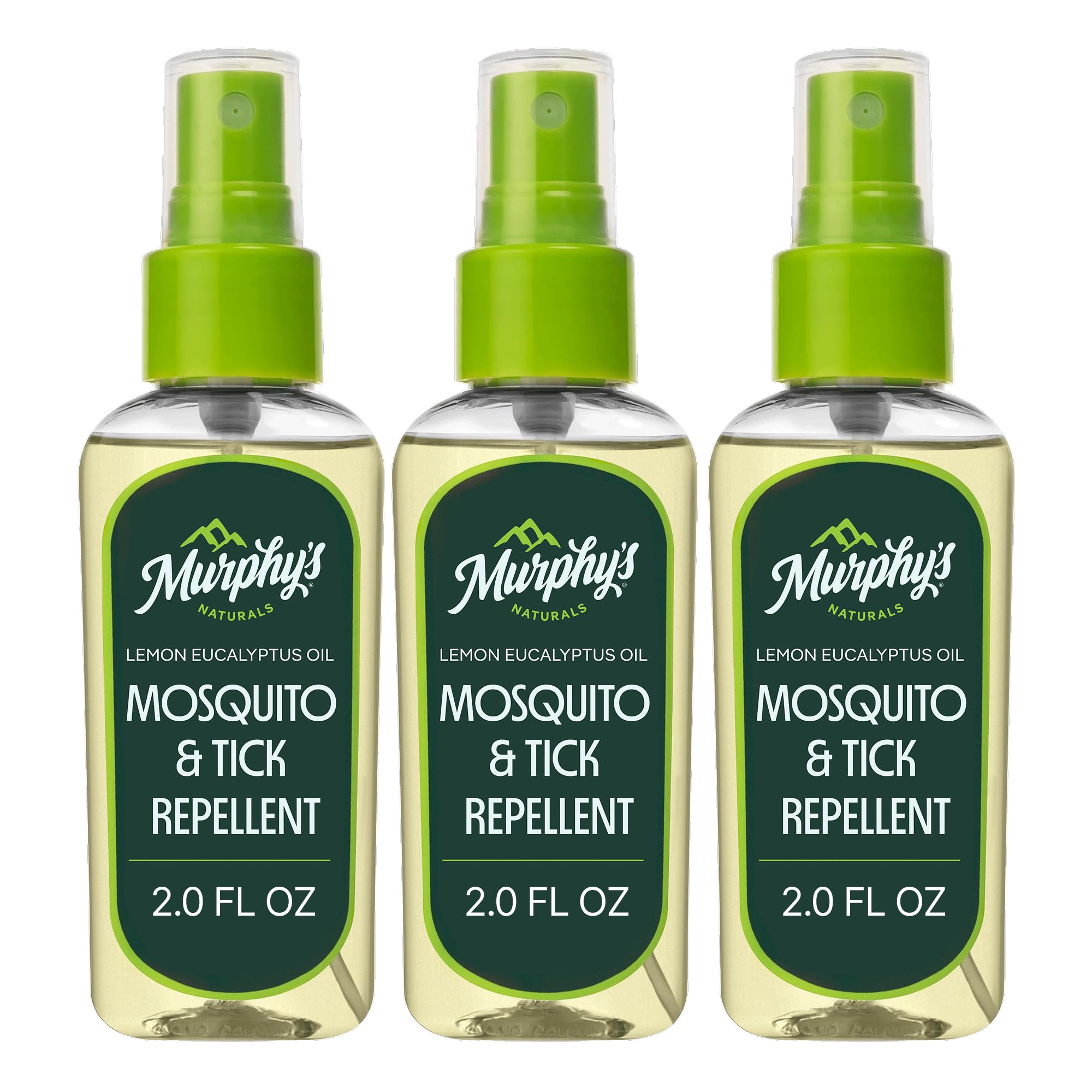
Key Features
- Form: Spray, three 2 fl oz bottles
- Active ingredient: 30% oil of lemon eucalyptus
- Claimed protection: Up to 6 hours (mosquitoes), 4 hours (ticks)
- Price: Midrange
Thirty percent oil of lemon eucalyptus is a real active ingredient, not a label full of nice-sounding oils. It’s EPA-registered, it carries a stated six hours against mosquitoes and four against ticks, and among the plant-derived options here it’s the only one whose numbers hold up without a caveat.
It sprays thin, smells like fresh lemon rather than citronella, and dries without the greasy film plant formulas often leave. The three-pack of two-ounce bottles is the most useful packaging here for a family: one in the glove box, one in the stroller basket, one in the kitchen drawer, and no single bottle to lose.
Two things to know before you buy. The scent is the divider — it’s strong and it lingers, and in a closed car it’s a lot. And on sensitive skin it can sting, so patch-test a forearm before a full application on a child. Six hours also means a mid-afternoon top-up on a long day, more often than the picaridin lotions ask.
Where it lands for us: the plant-based pick for older kids and adults. Oil of lemon eucalyptus carries a three-year floor in the guidance, so it isn’t the baby’s bottle, and we don’t stretch it. In a household with a toddler and a seven-year-old, that’s one bottle doing half the family’s work.
Pros
- Registered 30% oil of lemon eucalyptus
- Six hours against mosquitoes, four against ticks
- Thin, non-greasy lemon-scented spray
Cons
- Scent is strong and lingers
- Needs a top-up every six hours
For older kids and adults who want a plant-based formula, this is the one here whose numbers we trust.
Best for Diaper Bag Touch-Ups
Badger Bug Repellent Stick
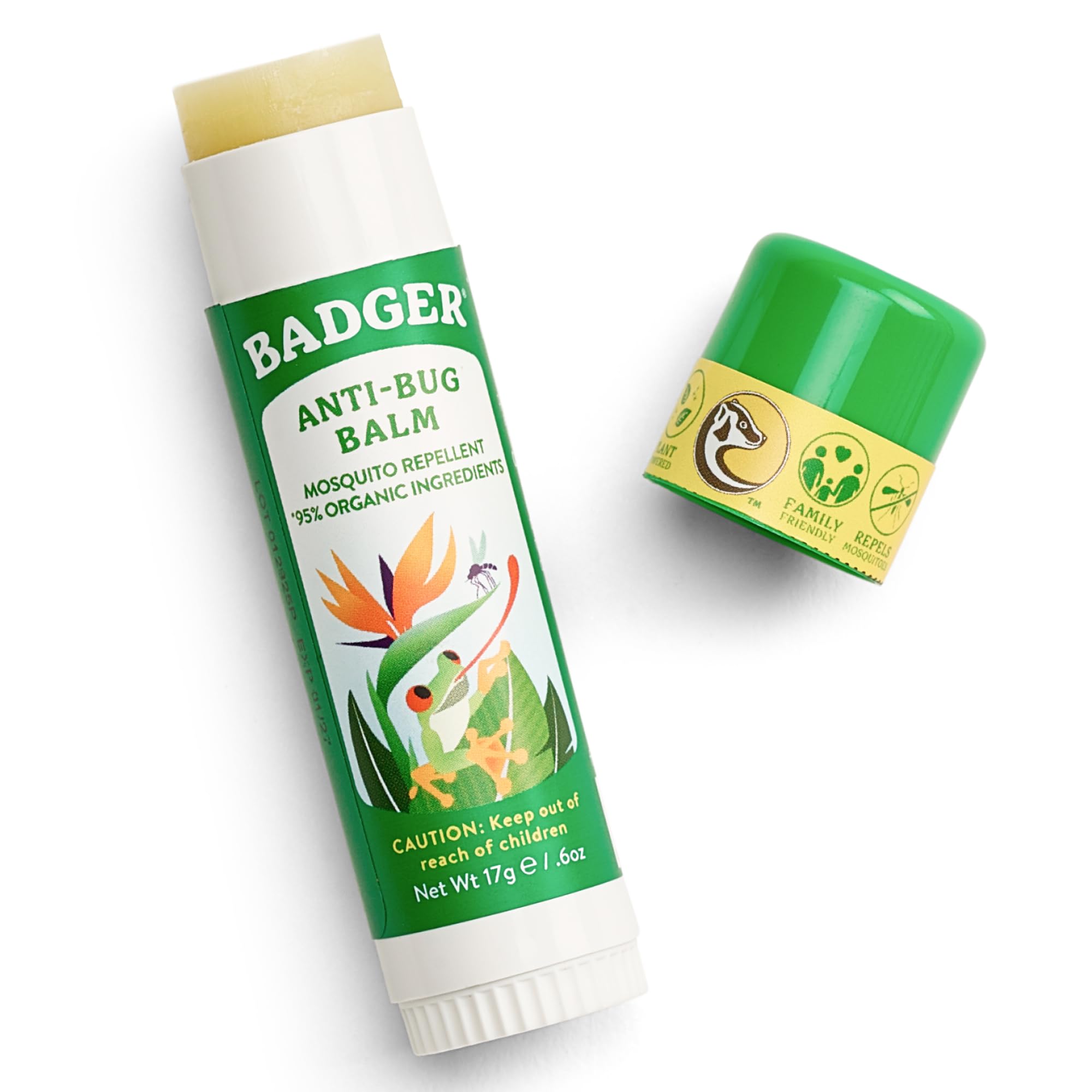
Key Features
- Form: Balm stick, 0.6 oz
- Active ingredients: Citronella, cedar, lemongrass oils
- Claimed protection: 3.5 hours (mosquitoes, flies)
- Price: Premium
A balm stick about the size of a lip balm, with a twist-up tube and a screw-on cap. You draw it on an ankle, a wrist, the back of a neck — no mist, no hands, no puddle on the stroller seat. In a bag that already holds a spare onesie and a half-eaten snack, that matters more than it sounds.
It’s lab-tested at three and a half hours against mosquitoes and flies, and the oils are citronella, cedar, and lemongrass, which smell like a pleasant candle rather than a chemical. On the twenty-minute walk to the park or a backyard half-hour it’s the easiest thing here to apply to a child who won’t stand still, because you’re touching one spot instead of coating a limb.
The catch is arithmetic. Three and a half hours is the shortest window here, and 0.6 ounces disappears quickly if you’re covering legs every day. It also goes on slick on warm skin, so a little goes further than you’d think.
Pros
- No mist, no spills, no hands
- Easy to target ankles and wrists
- Pleasant citronella and cedar scent
Cons
- Only three and a half hours of protection
- Tiny 0.6-ounce stick runs out quickly
A balm stick we’re glad to keep in the diaper bag: no mist, no spills, and you can hit an ankle without coating a whole leg.
Best for Plant-Oil Preference
Babyganics Insect Spray

Key Features
- Form: Spray, two 6 oz bottles
- Scent: Scented
- Key oils: Citronella, peppermint, rosemary, lemongrass, geranium
This is the bottle parents ask about by name, because it’s sold as a baby product: plant and essential oils, no parabens, sulfates, phthalates, synthetic fragrance or dyes, and nothing tested on animals. Two six-ounce bottles is a lot of spraying for the money, and the big size is genuinely convenient to leave by the door.
In the hand it’s a thin, oily spray with a strong citronella-and-mint smell. It goes on wet and stays noticeable for a while, and it marks fabric if you spray a leg and then sit down. As a scent experience in a car seat, it’s the least baby-friendly thing here.
Effectiveness is where it slips. On everything we tried it on, it’s the least dependable at preventing bites of anything in this group — the sort of formula that seems to be working until someone comes in with three on an ankle.
So: a reasonable second bottle for short, low-stakes time outside if you want to stay away from picaridin and DEET, and not the one that goes to the lake. If you already own it, use it for the ten minutes before nursery pick-up and keep a picaridin lotion for the evenings that matter.
Pros
- Plant and essential oils, no synthetic fragrance
- Gentle on skin for everyday use
- Two large bottles for bags and cars
Cons
- Least dependable at preventing bites
- Oily on skin and strongly scented
For short, low-stakes time outside with a toddler and a preference for plant oils it’s fine; it’s not the bottle we pack for a mosquito-heavy evening.
How We Tested Baby Bug Sprays
We started with a shortlist of sprays and lotions labeled for infants and toddlers, then narrowed it by reading ingredient panels, age guidance, and application instructions—not by assuming natural meant gentler. From that pool, we tested 14 formulas over one full mosquito season, from late spring through early fall. Testing happened where parents actually use them: stroller walks, backyard play, evening porch time, and park afternoons when the mosquitoes were bad enough to send everyone inside.
Each bottle went into a diaper bag sideways for a week, and I checked for oily rings or wet patches on the lining. I also tested sprayability one-handed while holding a wiggly baby, noting whether the mist landed evenly, sputtered, or clogged; lotions got judged by how far a pea-sized dab stretched over a squirming leg. On our own forearms first, we looked for redness, warmth, or stinging, then followed the label on our kids and watched for fussiness or blotchiness.
For effectiveness and duration, we sat outside at dusk and tracked how long treated skin stayed bite-free, reapplying when the label said to and noting whether sweat shortened that window. Scent got checked immediately, ten minutes later, and on clothes and stroller fabric; some fragrance-free formulas still had a faint carrier smell. Greasiness was judged by shine, tackiness, and whether sand or crumbs stuck to treated arms. We also counted how many pumps it took to cover a baby’s legs and arms, since a watery mist that needs twenty sprays is poor value, and compared that with each bottle’s stated coverage.
How to Choose a Bug Spray for Babies
The first thing to read on a repellent isn’t the ingredient list — it’s the age line, because a formula can be perfectly good and still be labeled for children older than yours.
Start With the Age Line
Repellents are labeled by age, and the labels disagree. Among these eight, one states a minimum of six months, several say nothing at all, and the plant-derived option carries a higher floor still. That line is worth more than anything printed on the front of the bottle, because it’s the manufacturer telling you who the formula was assessed for. When a bottle stays silent, treat it as one for older children and adults rather than assuming an infant is covered.
Then look at the active. Picaridin and DEET have the longest track records and the numbers behind them; oil of lemon eucalyptus works but comes with a three-year floor in the guidance; citronella and lemongrass blends are the shortest-lived and least predictable. Our pick for a baby is a fragrance-free picaridin lotion with a stated six-month minimum.
Lotion, Spray, or Stick
Form decides whether you’ll actually use the thing. A lotion puts a controlled amount exactly where you want it — behind the ears, on the ankles, along the hairline — without a mist going up a small nose. A pump spray is faster on a school-age kid’s legs before camp, and a balm stick is the best of the three for topping up a wrist in a parking lot. Match the form to the person: lotion for an infant, spray for a seven-year-old, stick for the bag.
The trap is spraying toward a face. Put it on your own hands first and pat it on. Skip a baby’s hands entirely, since they end up in the mouth within a minute.
Match the Hours to the Outing
The claimed window runs from three and a half hours to fourteen, and it’s the biggest practical difference between these picks. A stick that holds for three and a half hours is fine for the walk to the park and wrong for a long evening at the water. Heat, sweat, and the sprinkler shorten whatever the label promises, so build a top-up into the plan instead of discovering it at dusk.
Don’t judge by ounces alone. A six-ounce lotion gets spread thin and lasts; a 0.6-ounce stick on two children’s legs disappears within a couple of weeks.
Scent, Residue, and the Bath Afterwards
Fragrance-free stops being a marketing word when the wearer is strapped into a car seat two feet from your face. The picaridin lotions here are effectively odorless; the plant-oil sprays announce themselves, and the lemon-eucalyptus one is strong enough that you smell it on yourself an hour later.
Check the feel, too. An oily formula transfers to car seats, stroller fabric, and your own clothes. Whatever you choose, plan on a soap-and-water bath at the end of the day and wash treated clothes before they go back in the drawer.
Frequently Asked Questions
Can you put bug spray on a newborn?
Nothing in this group is labeled for a newborn — the youngest stated minimum here is six months. Below that, the practical approach is covering rather than spraying: long sleeves and legs, a stroller net, and shade. Ask your pediatrician before putting any repellent on an infant’s skin.
Can I spray it directly on my baby’s face?
Not from the bottle. Spray or squeeze into your own palms first, then pat it onto cheeks, chin, and the edges of the ears, keeping it away from eyes, mouth, and any broken skin. Skip the hands as well — babies put them straight in their mouths and take the repellent with them.
Do I have to wash it off at night?
Yes, and it’s easier than it sounds: a normal bath with soap and water takes the residue off, and it’s worth doing before bed even on a cool evening. Wash treated clothes before they go back in the drawer, and wipe down the stroller or car-seat surfaces the spray landed on.
Final Verdict
For a baby, buy the OFF! Adults & Kids lotion. It’s the bottle we hand to a parent of a six-month-old: the only repellent here that prints a minimum age below a year, and the easiest of them to apply — a fragrance-free picaridin lotion that rubs in like moisturizer and leaves nothing noticeable on skin or fabric.
Once your child is past babyhood, the Boogie lotion’s much longer protection window makes it the better bottle for a full day out, and a household with older kids and adults should look at Murphy’s lemon-eucalyptus spray to stay plant-based.
