This post contains affiliate links. We may earn a small commission when you buy through our links — at no extra cost to you.
The first weeks of solids can feel like a lot of pureeing, label-reading, and second-guessing—especially when you’re trying to figure out whether your baby can eat what’s already on your plate. A good baby food cookbook should do more than hand you a single carrot puree recipe: it should tell you what to make at each stage, how to store it safely, and whether you can cook one meal instead of two. My team and I cooked from 16 baby food cookbooks over four months to find the ones that actually deliver that.
The differences show up fast. Some books load up on allergen guidance, texture progression, and freezer notes, but make the recipes feel like a weekend project. Others keep the steps short and the ingredient lists friendly, then leave you guessing about portions or what comes next. The ones I kept reaching for got both parts right—recipes that worked on a weeknight and advice worth reading—and a few were useful enough that I’d hand them to a friend starting solids tomorrow.
Our Top Picks
The Best Baby Food Cookbooks, Reviewed
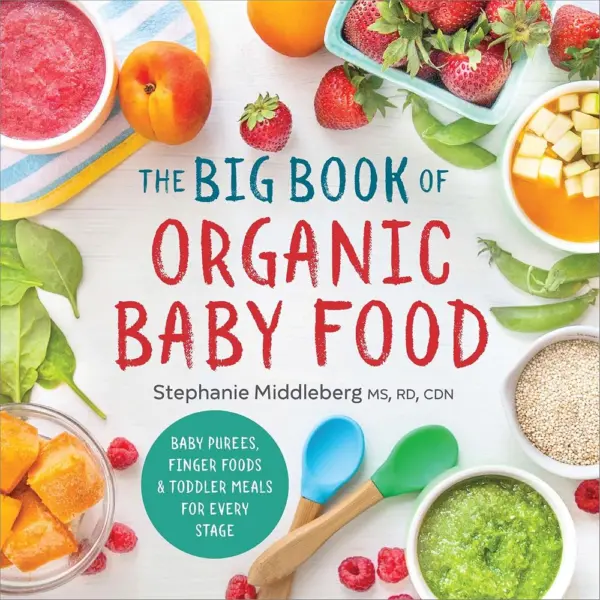
Big Book of Organic Baby Food – Best Overall
Key Features
- Print length: 296 pages
- Dietary focus: Organic
- Recipe coverage: Purees, finger foods, toddler meals
- Publication date: October 18, 2016
- Price: Budget
A baby food cookbook has to do more than collect purees, because the feeding job changes every few weeks. The Big Book of Organic Baby Food is the one we reach for first: its 296 pages move from smooth purees to finger foods and toddler meals, with recipes grouped by stage so you aren’t flipping around looking for what fits now. That range is why it earns the top spot in this group.
The tone of the guidance is another point in its favor: it explains nutrition and preparation without turning every page into a lecture, and the stage structure makes it easy to build a shopping list around what your baby is ready for. We also appreciated that it covers the basics of pureeing, storing, and thawing before the recipes get more involved. The organic angle is useful if that is how you shop, but the recipes are practical enough that you can use ordinary ingredients. For a first cookbook, that combination is hard to beat.
The book is built to be used, not admired. The stage structure keeps you moving from one texture to the next without second-guessing the order, and the recipes are practical enough for a weeknight. We still think the breadth justifies the shelf space, especially for a family that wants one reference from first bites through toddler meals.
Pros
- Covers purees, finger foods, and toddler meals
- Stage-based organization for easy planning
- Substantial 296-page reference
- Budget-friendly for its scope
Cons
- Text-heavy with fewer photos
Our default recommendation is this all-stage book: it covers purees, finger foods, and toddler meals in one thorough, affordable volume.
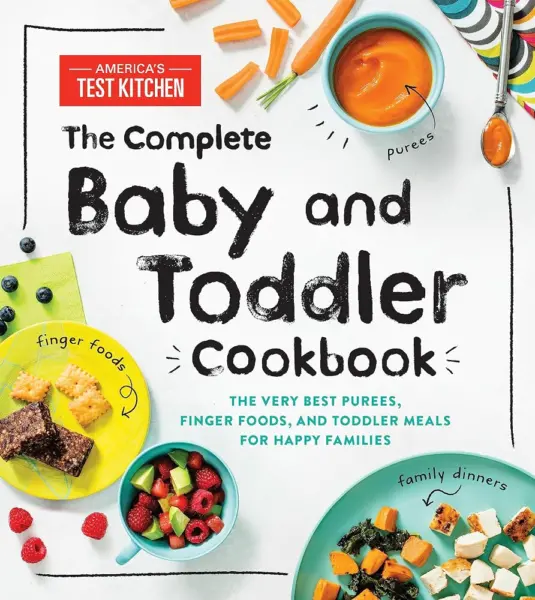
Complete Baby and Toddler Cookbook – Best for Toddler Meals
Key Features
- Print length: 304 pages
- Recipe coverage: Baby and toddler food
- Publication date: April 2, 2019
- Price: Budget
The Complete Baby and Toddler Cookbook is the one we hand to a family that is tired of making two dinners. It runs from baby food into toddler meals, and the recipes include notes for adapting a dish for kids versus adults. That family-meal thinking is the reason it sits near the top of this set.
America’s Test Kitchen brings a test-kitchen thoroughness to the directions, and the detail shows: every recipe has a photo, the steps are specific, and there are vegetarian options mixed in. The 304-page format gives you plenty to work through, from simple purees to dishes that feel like real dinners. We noticed the recipe selection reaches toddlerhood without abandoning the early stages, which is the gap in many books. The photos are especially helpful when you are learning a new texture, because you can see what the finished dish should look like.
The family-meal focus is the book’s personality, not a side section. If you want a single-baby puree manual, this is more book than you need; if you want recipes that keep working after the puree stage, it is a strong choice.
Pros
- Family meals with kid adaptations
- Detailed test-kitchen directions
- Photo for every recipe
- Vegetarian options included
Cons
- Heavy, countertop-bound volume
When dinner needs to work for the whole family, this is the book we reach for: detailed, photographed, and easy to adapt.
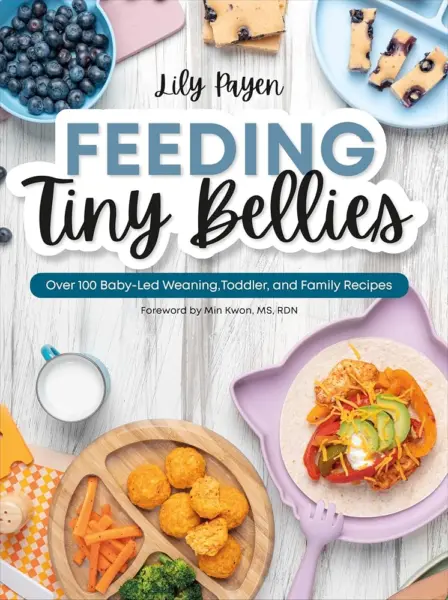
Feeding Tiny Bellies – Best for Baby-Led Weaning
Key Features
- Recipes: Over 100
- Print length: 256 pages
- Recipe coverage: Baby-led weaning, toddler, family
- Publication date: October 22, 2024
- Price: Midrange
Baby-led weaning can feel like a leap, and Feeding Tiny Bellies makes it look doable. The book collects more than 100 recipes for baby-led weaning, toddlers, and family meals, so it doesn’t become obsolete the moment your baby gets a good pincer grasp. That long arc is why it is our baby-led pick.
The modern, photo-forward layout is a pleasure to use. Every recipe has a picture, and the ingredients are mostly ordinary pantry and produce-aisle items rather than a specialty-shop list. The recipes are short and practical, with tips for textures and flavors that help a baby move from soft strips to more complex food. We also liked that the book keeps the adult portion in mind, so you are not cooking a separate meal after the baby goes to bed.
If you are ready to put food in front of your baby and let them explore, this is a generous, confidence-building place to start. It is the book we hand to parents who want a plan they can actually follow on a busy day.
Pros
- 100+ BLW, toddler, and family recipes
- Photo with every recipe
- Everyday ingredients
- Practical texture and flavor tips
Cons
- BLW focus leaves puree-first parents underserved
This is our first choice for baby-led weaning: 100+ recipes that carry through toddler and family meals.
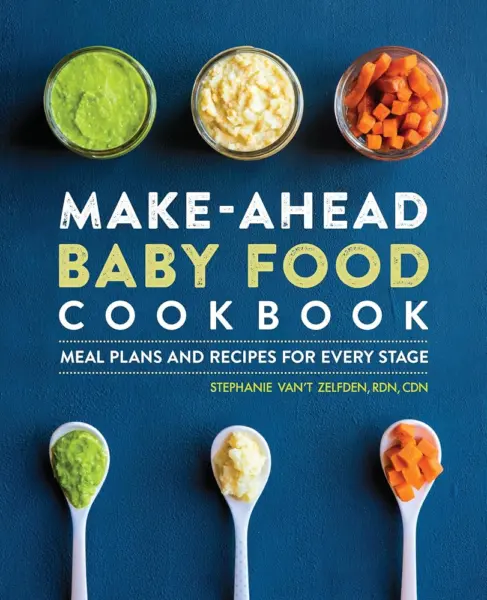
Make-Ahead Baby Food Cookbook – Best for Batch Cooking
Key Features
- Print length: 184 pages
- Recipe coverage: Meal plans for every stage
- Publication date: June 2, 2020
The freezer is the real hero of the Make-Ahead Baby Food Cookbook. It is built around meal plans and recipes for every stage, with grocery lists and prep schedules that turn a batch session into a week of baby food. We like that it treats cooking as a project you can plan, not a daily scramble.
What stood out to us was the storage guidance: the book explains how to make food ahead and store it, which is the part most cookbooks leave you to figure out. The stage structure keeps the recipes appropriate as your baby moves from purees to thicker textures, and the 184 pages stay focused on the job. The grocery lists are a small thing that saves a lot of midweek friction.
For a caregiver who wants to spend one block of time and be done, it is unusually practical. The plan does the remembering for you, which is exactly what makes it useful on a week when the baby changes the schedule.
Pros
- Meal plans and grocery lists
- Make-ahead and storage guidance
- Stage-based recipes
- Efficient weekly batch cooking
Cons
- Plan-first format feels structured
Batch cooks should start here: meal plans, shopping lists, and freezer instructions turn prep into a weekly routine.
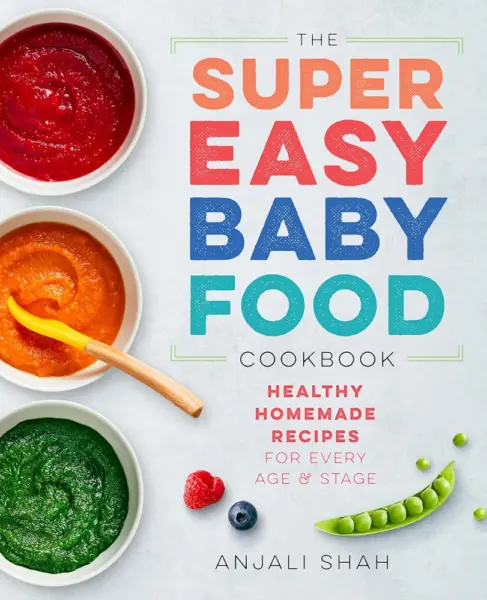
Super Easy Baby Food Cookbook – Best Budget Starter
Key Features
- Print length: 208 pages
- Recipe coverage: Every age and stage
- Publication date: April 10, 2018
- Price: Budget
First foods don’t need a 300-page epic, and the Super Easy Baby Food Cookbook keeps the barrier low. It walks through recipes month by month, with simple preparations and sample menus that help a tired parent decide what to make next. That straightforwardness is why it is our budget starter.
We appreciated the flavor help. The book includes spice suggestions and food-combination ideas, so you are not stuck in a plain-sweet-potato loop. The recipes are short, the 208 pages are easy to navigate, and the overall tone is calm rather than intimidating. It also includes a chart of compatible foods, which is the kind of quick reference you actually use with one hand.
For the first few months of solids, simple is a feature, not a shortcut. The recipes meet you where your energy is, and that is the point.
Pros
- Month-by-month recipe guidance
- Spice and food-combination ideas
- Simple, quick preparations
- Budget-friendly starter
Cons
This is the starter book we give new parents: simple month-by-month recipes and spice pairings build confidence without overwhelm.
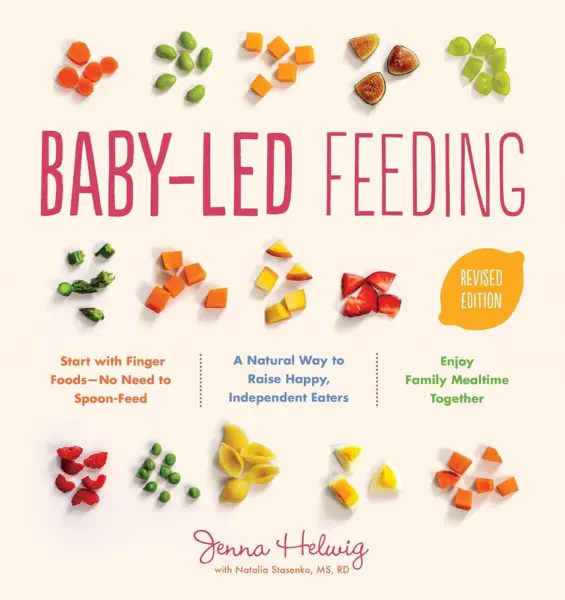
Baby-Led Feeding – Best Blw Guide
Key Features
- Recipes: 100
- Print length: 224 pages
- Recipe coverage: Baby-led weaning
- Publication date: March 13, 2018
- Price: Budget
The first half of Baby-Led Feeding is the reason to buy it. Before the 100 recipes start, the book explains how self-feeding works, what textures to offer, and how to read a baby’s readiness cues. We trust it as a manual, not just a recipe collection.
The visuals are the quiet strength. Serving-size photos by age make portions less abstract, and the feeding schedules help you see how milk and solids fit together. The recipes themselves are family-friendly and photographed, with enough variety to keep a baby interested without turning mealtime into a performance. We also appreciated the straightforward tone; it calms the urge to overcomplicate the first few weeks. The portion photos are especially useful for parents who are used to measuring purees and need a visual anchor for self-feeding.
This one is best when you want the why before the what, and it is the one we hand to a parent who is nervous about starting. The method sticks because it gives you a way to think, not just a list to follow.
Pros
- Clear baby-led feeding introduction
- 100 family-friendly recipes
- Serving-size photos by age
- Helpful feeding schedules
Cons
- More instruction than recipe variety
We trust this as a baby-led feeding manual: it explains the method, shows serving sizes, and adds 100 practical recipes.
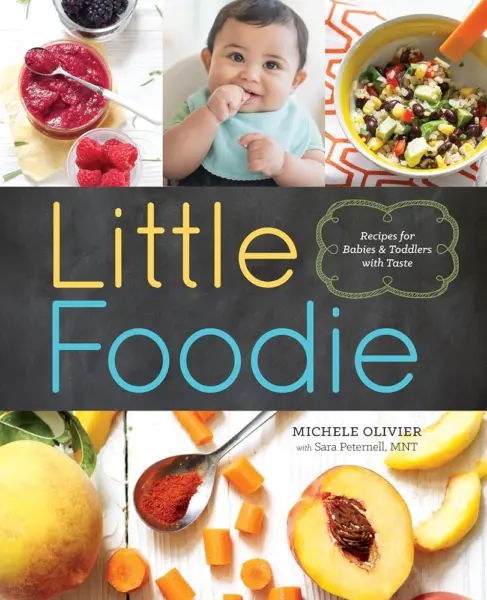
Little Foodie – Best for Adventurous Flavors
Key Features
- Print length: 228 pages
- Recipe coverage: Babies and toddlers
- Publication date: June 1, 2015
- Price: Budget
Babies can eat more than plain orange puree, and Little Foodie leans into that. The book is built around flavor combinations and spices, with recipes like mango with coconut milk and chia or roasted blueberry puree. It is a good fit for a baby who is already curious and a parent who wants to keep the food interesting.
The recipes are straightforward, and the book includes nutrition facts plus suggestions for adult versions of some dishes. That makes it more useful than a baby-only collection when you want to taste as you cook. The 228 pages are varied enough to keep you from repeating the same three purees, and the instructions stay short enough for a weeknight. The spice suggestions are the most useful part, because they give you a way to adjust a puree for an older baby without starting over.
It also assumes you are willing to shop for a few ingredients beyond the usual baby-food rotation. For a family that already cooks with spice and wants the baby to join the table, that is not a chore; it is the point.
What won us over is the balance: it is adventurous without becoming fussy. For a household that wants the baby to eat what everyone else is eating, it is a fun, practical step up from basic purees.
Pros
- Creative spice and fruit combinations
- Adult-version suggestions
- Nutrition facts included
- Simple, quick recipes
Cons
- Flavor-first approach may overwhelm cautious beginners
Adventurous eaters get our nod here: creative purees and toddler dishes that don’t taste like a compromise.
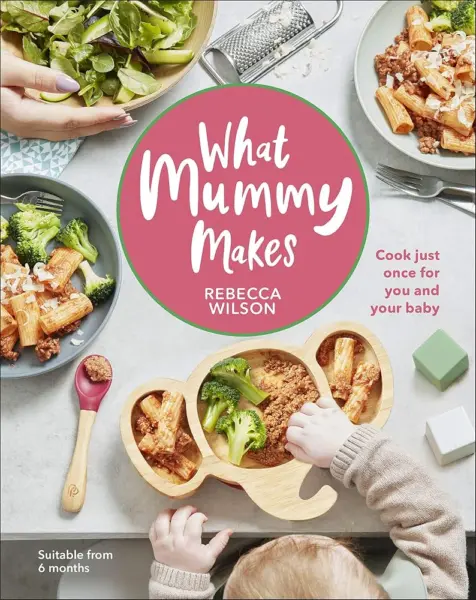
What Mummy Makes – Best for Family Meals
Key Features
- Print length: 224 pages
- Recipe coverage: One meal for parent and baby
- Publication date: November 10, 2020
- Price: Premium
Cooking once for you and your baby sounds like a gimmick until you are doing it at 6 p.m. What Mummy Makes is built around one family meal with a baby portion set aside, and the recipes are designed to be quick, easy, and freezer-friendly. That structure is the reason it earns a place here.
We appreciate the no-added-salt approach; it makes the family pot safer for a baby without requiring a separate saucepan. The freezer directions are useful, and the 224-page book is easy to dip into on a weeknight. It is a practical family cookbook first, with baby feeding worked in. The recipes also lean on inexpensive, everyday ingredients, which matters when you are cooking more than usual.
The book is at its best when dinner is the priority. It is a dinner solution, and it works alongside the rest of your kitchen routine rather than replacing it.
The result is a book we reach for when the goal is dinner, not a project. It gets one safe, family-friendly meal on the table with fewer pans, and that is the job it promises to do.
Pros
- Cook one meal for baby and parents
- No added salt
- Freezer-friendly directions
- Quick, easy recipes
Cons
- Some recipes lean bland
- Less baby-stage guidance
For one family meal with a baby portion set aside, we point you here: no added salt, freezer notes, and fewer pans.
How We Tested the Best Baby Food Cookbooks
I started by pulling together a shortlist from customer reviews, pediatric feeding forums, and recommendations from parents and dietitians, then narrowed it by stage coverage, approach (puree-led, baby-led weaning, or both), and whether the book included practical guidance on allergens, textures, and storage. That left 16 cookbooks, which my team and I cooked from over four months. We didn’t just read them; each book had to earn its place on the counter.
Our testing looked like real feeding life. We batch-cooked purees on Sunday afternoons, assembled freezer portions for the week, and cooked weeknight dinners with a baby on one hip and a toddler underfoot. For each book, we made at least three recipes: an early-stage puree or soft finger food, a toddler-friendly meal, and a family dish or make-ahead option when the book included one. We noted whether the instructions matched the timing, whether textures came out as described, and whether the ingredients were things we’d actually keep in the house.
Ease of use got the same scrutiny. We opened each book with wet hands, followed recipes while holding a spatula, and checked whether the index, stage labels, and layout let us find what we needed without rereading a page three times. We also tracked the informative content—allergen guidance, portion suggestions, storage times—and whether it was specific enough to act on. At the end, we asked the question that matters most: would we cook from this again, and would we recommend it to a friend just starting solids? The books that scored highest were the ones we kept reaching for after the testing period ended.
How to Choose a Baby Food Cookbook
The right baby food cookbook matches the way you actually feed your baby, not the thickest spine on the shelf.
Start With Your Feeding Approach
Puree-first, baby-led weaning, and a mixed approach are all valid, and the book you choose should not fight your plan. A puree book gives you smooth textures and storage guidance; a BLW book focuses on soft strips, serving sizes, and self-feeding skills. If you are unsure, an all-stage book like The Big Book of Organic Baby Food is the safer default because it covers both spoon-fed and finger-food stages. For a committed BLW household, Feeding Tiny Bellies and Baby-Led Feeding are more direct.
Look at Stage Coverage, Not Just Recipe Count
A big recipe count can include family dinners, adult portions, and snacks, so it does not tell you how well the book handles the stage your baby is in. We look for clear labels: first purees, thicker textures, finger foods, and toddler meals. That structure is what helps you shop and plan on a tired weeknight. A shorter book with strong stage organization can be more useful than a long collection that leaves you guessing.
Choose the Support You’ll Actually Use
Some cooks want a shopping list and a Sunday batch plan; others want a photo of every texture and a serving-size guide. Make-Ahead Baby Food Cookbook is the clear choice if freezer sessions are your routine, while Baby-Led Feeding earns its place with serving-size photos and schedules. If you mostly cook one meal at a time, those extras can add bulk without helping. Pick the support that matches your week, not the longest feature list.
Decide How Much Family Cooking You Want
If cooking a separate baby meal is the part that drains you, choose a book built around one family dish with a baby portion set aside. What Mummy Makes and The Complete Baby and Toddler Cookbook both work that way, with no-added-salt or kid-friendly adaptations. If you want baby food to be its own project, a dedicated puree book is simpler. The question is practical: do you want to cook once for everyone, or make a small batch just for your baby?
Treat Dietary Angles as a Lens, Not a Rule
Organic, gut-health, and traditional-foods labels each offer a useful lens, but a title is not medical advice. Use the book for recipes and structure, and check any feeding decision that affects safety with your pediatrician. A dietary angle is worth paying for only if it matches how your household already eats. If you are choosing between two books, the one with clearer stage guidance is usually the better long-term buy.
Frequently Asked Questions
Do I need a baby food cookbook if I can find recipes online?
Not if you only want a few puree ideas. A good cookbook earns its place with stage organization, freezer guidance, and a single reference you can flip through with one hand. For most families, one all-stage book is enough; add a BLW-specific book only if self-feeding is your plan.
When can I start using baby food recipes?
Most babies are ready around 6 months, when they can sit up with support, hold their head steady, and show interest in food. Start with soft textures and one new food at a time, and ask your pediatrician about timing if your baby was preterm or has feeding difficulties.
Can I freeze homemade baby food?
Yes, most purees freeze well. Freeze them in ice cube trays, transfer the cubes to labeled freezer bags, and reheat only the portion you need. Follow the storage times in your cookbook or a food-safety guide, and do not refreeze thawed purees.
How should I handle allergens when using these recipes?
Introduce one common allergen at a time, in an age-appropriate form, and watch for a reaction. Keep the baby supervised and avoid honey before the first birthday. If your baby has severe eczema, a known allergy, or a family history of food allergy, ask your pediatrician before starting.
Final Verdict
The Big Book of Organic Baby Food is our default because it covers the whole arc: purees, finger foods, and toddler meals in one readable 296-page volume. If you want a single book to grow with your baby, start there.
If you already know you want self-feeding, choose Feeding Tiny Bellies for its modern 100+ recipe collection; if batch cooking is the priority, Make-Ahead Baby Food Cookbook saves you the most planning time. The Complete Baby and Toddler Cookbook is the better family-dinner choice when you want test-kitchen detail.
