This post contains affiliate links. We may earn a small commission when you buy through our links — at no extra cost to you.
The first thing I learned about reusable nursing pads is that a leak rarely picks a convenient moment. It’s the 4 a.m. feed when you’re half asleep, or the meeting where you notice your shirt is damp mid-sentence. A pad worth owning holds a letdown, stays flat under a bra, and doesn’t show through a thin shirt — a tougher combination than drugstore multipacks suggest.
Softness matters more than most shoppers expect. My team has spent the past four months with 16 sets of washable pads, from thin bamboo velour to thicker organic cotton, wearing them through overnight feeds, workdays, and long stroller walks, then laundering them — bag and all — again and again. The comfortable ones were the ones that stayed soft, and that’s not a given after twenty washes.
Sizing is the quiet variable: too small and a pad shifts and leaks at the edge, too large and it shows under a fitted shirt. The picks below are the ones that stayed put and stayed dry through all of it.


Best for Everyday and Overnight
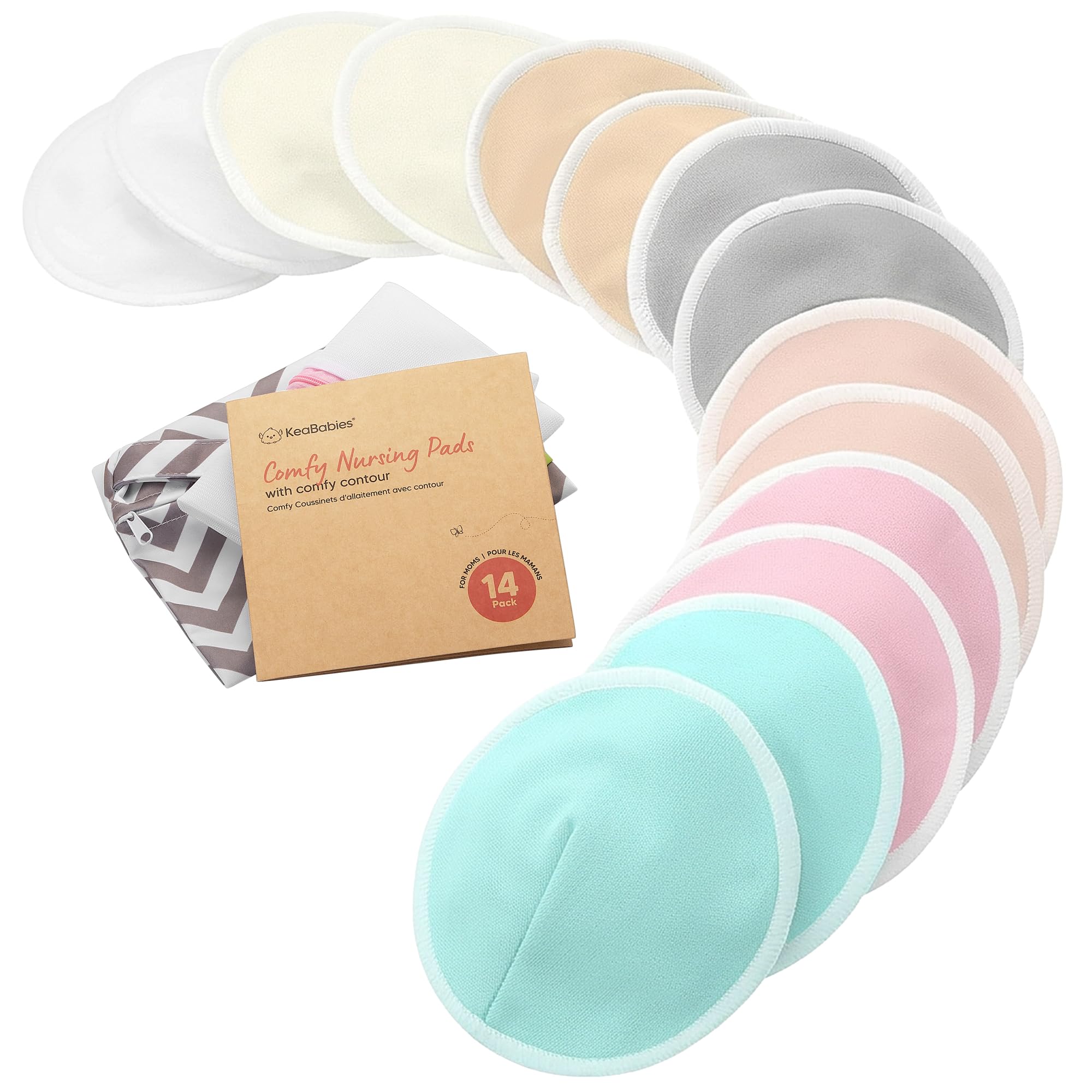
KeaBabies Organic Nursing Pads
Key Features
- Diameter: 5 inches
- Includes: Laundry bag and wet bag
- Material: Viscose from bamboo
- Pad count: 14
- Price: Midrange
A full week of clean pads without a midweek laundry run is the appeal of this 14-pack, and it is why it earns the default spot. Each pad is a 5-inch round with three absorbent layers and a waterproof outer layer, so there is more coverage than the 4.5-inch contoured pads here. The laundry bag and wet bag are small extras that make the routine easier: clean pads go in one, damp ones go in the other until wash day.
The bamboo-derived viscose face is the part we appreciate most on sore days. It feels soft rather than slick, and it did not stick to tender skin the way disposable pads can. Absorbency is strong enough for regular daytime leaking and typical night feedings, and the waterproof backing kept our clothes dry. The round shape also covers the nipple area without needing constant adjustment in a snug bra.
The 14-count suits a realistic wash schedule: with one pair in the bra, one in the wash, and a few clean spares, we are not running a special load every night. The wet bag is the detail that makes it easy to toss a used pair in the diaper bag without soaking everything else. We also like that the pads are machine washable and that the laundry bag keeps them from disappearing in a family load.
Pros
- 14 pads plus laundry and wet bags
- Soft bamboo-derived viscose face
- Wide 5-inch coverage
- Waterproof outer layer
Cons
- Noticeable under close-fitting tops
- Heavy overnight leaks can soak through
For most nursing moms, this 14-pack is our default: soft bamboo-derived viscose, wide 5-inch coverage, and wash bags that make a full week easier.
Best for Day and Night
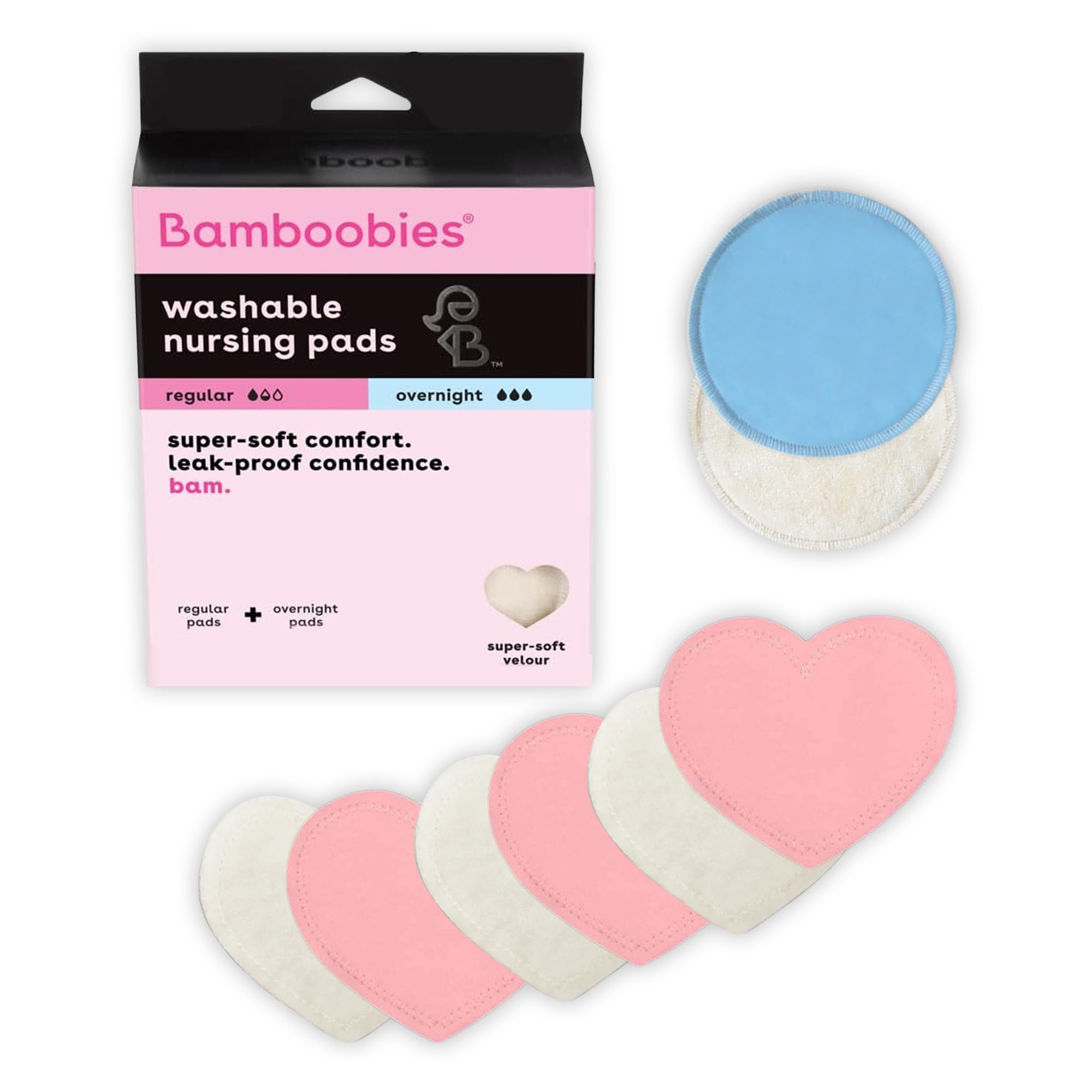
Bamboobies Nursing Pads
Key Features
- Shape: Heart-shaped ultra-thin
- Backing: Waterproof TPU
- Top layer: Bamboo rayon velour
- Pack contents: 6 ultra-thin and 2 overnight
- Price: Premium
Bamboobies splits the job: six ultra-thin heart-shaped pads for daytime and two thicker overnight pads for heavy leaking. The ultra-thins are designed to sit flatter under clothes, while the overnight pair adds absorbency for long stretches. Both use a bamboo rayon velour face and a waterproof outer layer, and the pack is small enough to keep in a diaper bag.
We like that split because it solves the usual compromise: you do not have to wear a bulky pad all day to be covered at night. The ultra-thins sat flat under a loose shirt in our testing, and the overnight pads handled the longer stretches. They stayed put in our padded bras and did not bunch at the edges.
The velour gets softer with washing, which we appreciate, and the pads came out of a machine load ready to wear. The overnight pair is the one we reach for on the nights after a cluster feed, when a thin pad is simply not enough.
Pros
- Two thicknesses for day and night
- Soft bamboo rayon velour
- Discreet heart-shaped daytime pads
- Overnight pair handles heavy leaks
Cons
- Only four pairs per pack
- Can slide in soft nursing bras
We like this two-thickness set for moms who want a thin daytime pad and a heavier overnight pair without buying two packs.
Best for Contoured Fit
Kindred Bravely Organic Pads
Key Features
- Backing: Waterproof
- Diameter: 4.5 inches
- Material: Organic viscose from bamboo
- Pad count: 10
The contoured shape is what sets this Kindred Bravely set apart from the flat rounds we tested. The 4.5-inch pad curves around the breast instead of folding across it, and the waterproof backing sits on the outside to keep milk off your bra. We found the organic viscose face soft enough for sensitive days, and the ten-pad count covers a reasonable wash cycle without the bulk of a 14-pack.
The contour is most useful under a structured nursing bra or one with some stretch; in a very loose bralette, any pad can shift, and this one is no exception. Absorbency is solid for daytime feedings and typical night leaks, and the pad stays fairly flat under clothes. The waterproof backing did its job in our daytime wear, and the pad did not stick to tender skin. We like it best as the set for leaving the house, when a smooth line under a shirt matters.
The care note is worth reading: skip fabric softeners and dryer sheets, because they can coat the fibers and work against absorbency. The pads are machine washable and dryable, and the carrying bag has earned a permanent spot in our diaper bag.
Pros
- Contoured organic viscose fit
- Waterproof backing protects bras
- Machine washable and dryable
- Carrying bag for clean spares
Cons
- Can feel damp between changes
This is the contoured organic set we choose for a smoother fit under structured bras, especially when pad count is secondary.
Best for Budget Stash
wegreeco Nursing Breast Pads
Key Features
- Diameter: 4.7 inches
- Includes: Laundry and travel bags
- Material: Polyester
- Pad count: 14
- Price: Budget
The budget pitch is easy to see: 14 pads, a laundry bag, and a travel bag, which is the largest count in the group alongside KeaBabies. Each pad is 4.7 inches across, with a microfiber middle layer and a TPU-laminated back to keep milk away from your bra. The flat round shape is simple to position, and the travel bag makes it easy to keep a clean pair separate in the diaper bag.
The flat round shape sits best in a snug nursing bra, and the pad is easy to position without folding. Absorbency is good for its size, and the TPU backing kept our clothes dry through a normal day. The polyester face is not as plush as the bamboo pads here, but it feels durable and handles frequent washing.
What we appreciate most is the practicality: 14 pads means fewer emergency washes, and the laundry bag keeps the set together in the machine. For a large stash without spending much, this is the route we take. The travel bag is the piece we use most, because it keeps a clean pair from rolling around the diaper bag.
Pros
- 14-pad stash at a budget price
- Absorbent microfiber middle layer
- Laundry and travel bags included
Cons
- Flat shape can bunch in soft bras
We reach for this 14-pack when we want a large backup stash without a premium price; it is the budget route here.
Best for Daytime Wear
Lansinoh Washable Nursing Pads
Key Features
- Shape: Contoured
- Includes: Wash bag
- Material: Microfiber 45%, Bamboo Terry Lining 33%, Waterproof PUL 22%
- Pad count: 10
- Price: Midrange
Where the KeaBabies pads are broad and substantial, these Lansinoh pads are trimmed closer to the breast. The contoured shape makes them a better fit for daytime under a structured bra, and the microfiber core is designed to wick moisture away from skin. The skin-facing layer is organic viscose, and the set includes a wash bag.
We prefer these for the hours when you want a pad that does not announce itself under a shirt. The contour follows the breast, and the waterproof PUL backing kept our bra dry during normal feedings. The trade-off is capacity: after a heavy letdown, the surface can feel damp until you change. For a light-to-moderate leaker, that is a fair exchange for the lower profile.
The machine-washable construction and the wash bag make the routine simple, and the pads held their shape in the wash. The wash bag is the detail that keeps the small pads from disappearing in a family laundry load. The contoured edge sits smoothly under a bra rather than folding over.
Pros
- Contoured low-profile fit
- Soft organic viscose skin layer
- Waterproof PUL backing
- Wash bag included
Cons
- Only ten pads per pack
For light-to-moderate daytime leaking, we prefer this contoured pad for its lower profile and soft organic viscose face.
Best for Large Coverage
PINOWU Reusable Nursing Pads

Key Features
- Diameter: 4.7 inches
- Includes: Laundry bag
- Material: 72.8%viscose,27.2%cotton
- Pad count: 10
- Price: Budget
At 4.7 inches across, the PINOWU pad covers more area than the contoured Kindred Bravely pad, and the flat round shape is simple to position. The 10-pack comes with a laundry bag, and the viscose-cotton face has a soft, brushed feel at first touch. It is a straightforward, low-cost pad for building a backup stash.
The pad absorbs well for its size, and the TPU backing does its job. The wide surface covers more breast than the 4.5-inch contoured pads here, which helps if you want a pad that reaches beyond the nipple area. For around the house or under a looser top, that coverage is the point.
The 10-pack and laundry bag make it easy to keep a full set in rotation, especially at this price. We see it as a backup-stash pad rather than the one we reach for under a fitted top. The laundry bag is a useful place to keep the set together in a shared laundry load.
Pros
- Wide 4.7-inch coverage
- Low-cost 10-pack with laundry bag
- Absorbent viscose-cotton face
Cons
- Can slide in soft bras
- Scratchy for sensitive skin
Our pick for a low-cost home backup: wide 4.7-inch coverage and a laundry bag, with a fit that is less tailored than the contoured pads.
How We Tested Reusable Nursing Pads
We started by rounding up every washable pad with a real following, then filtered by the things that actually decide whether one works: diameter, fabric, whether the backing was genuinely waterproof, and whether a laundry bag came in the box. Sixteen sets made the cut.
Over four months we wore them the way anyone would — two or three changes a night during cluster feeds, under a bra at a desk job, on stroller walks, and through one very sweaty 5K. Each pad got measured flat, then checked under a fitted light-gray T-shirt, where we looked for ridges, a visible circle, or a shadow line. We noted whether edges rolled or curled once a nursing bra shifted during the day, and whether the pad was still where we put it after a feed.
For absorbency, we piped two tablespoons of water onto the center of each pad — roughly a letdown — and timed how long the surface stayed wet to the touch. Five minutes later we pressed a tissue against the outside of the backing; anything that left a mark dropped down the list. The thicker overnight styles got a full-night test, and in the morning we checked the sheet, not just the pad.
Every set went through at least 20 wash cycles in its own laundry bag, hot water, no fabric softener, and we checked after each round for pilling, curled edges, separated backing, and a bag zipper that had given up. That’s where a lot of pads quietly fail — lovely on day one, rough by week six.
How to Choose Reusable Nursing Pads
Start with the leak you actually need to manage, then choose the pad thickness, fit, and laundry routine that make it easy to keep wearing them.
Match Thickness to Your Leakiest Feed
A pad thin enough to disappear under a shirt is rarely the one that handles an overnight letdown. Thickness buys absorbency and adds bulk, so the useful question is when you leak most, not which pad is thickest. A two-thickness set like Bamboobies lets a light daytime leaker wear the ultra-thin pair and switch to the overnight pair at bedtime; a uniform pack like KeaBabies is simpler if you want one pad for both.
If you wake up soaked, prioritize an overnight pad or a thicker 5-inch round and change before bed. If you only spot between feeds, a thinner 4.5-inch contoured pad is easier to wear under a structured bra.
Fit Is Coverage Plus Staying Put
Diameter matters, but so does the bra. A 4.5-inch contoured pad follows the breast, while a flat 4.7- or 5-inch round gives more coverage and more fabric that can bunch in a loose band. Check that the pad sits inside the cup without folding, and wear it with a bra that has enough hold to keep it there. A larger pad that slides is less protective than a smaller one that stays flat.
For a full bust, broad coverage is often worth the extra fabric; for a fitted shirt, a contoured shape is easier to keep smooth. The pad should cover the nipple and areola with a little margin, not extend halfway to the armpit.
Look at the Skin Layer and the Backing
The layer against your skin should feel soft when nipples are sore; bamboo viscose and cotton are common choices, while microfiber can feel more utilitarian. The outer backing is the leak barrier, so look for a waterproof layer or TPU or PUL backing. A breathable-feeling top layer helps, but moisture that sits against skin is the thing to notice; change when the pad feels damp.
If you have sensitive skin, start with a viscose or cotton face and save the thinner polyester pads for short trips. A waterproof backing is not optional for a pad you plan to wear outside the house.
Plan the Laundry Before You Buy
Count is a laundry decision. Ten pads sounds like a lot until you change twice a day; 14 gives more slack. A wash bag keeps the small pads from disappearing, and a travel bag separates clean from damp. Skip fabric softener and dryer sheets, which can coat fibers and reduce absorbency.
If you already run a baby load every couple of days, a 10-pack can work; if laundry is less frequent, choose 14. Two sets is often more useful than one oversized set, because you can keep one in the diaper bag and one in the wash.
Frequently Asked Questions
Are reusable nursing pads better than disposable ones?
They can be. You buy a set once, wash and reuse it, and avoid the late-night scramble for a fresh box. The trade-off is laundry, and a thin reusable pad may feel damper than a disposable during a heavy letdown. If you already run frequent baby laundry and want less waste, a reusable set is worth trying; if you want zero laundry, disposables are simpler.
Can I use nipple cream with washable nursing pads?
Yes, but some fabrics can stain. Kindred Bravely’s care note warns that nipple creams and ointments may discolor its pads, so keep a couple of older pads for heavy cream days and wash them as directed. Check the care instructions for whichever set you buy; discoloration is cosmetic, but you still want the pad to stay absorbent.
How do I keep reusable nursing pads from smelling sour?
Do not let damp pads sit in a closed bag for days. Rinse them after use if laundry is not happening that day, let them air-dry before zipping them into a wet bag, and wash with your baby’s load. Dry completely before stacking; trapped moisture, not a lack of detergent, is often what leaves the sour smell.
Final Verdict
For most nursing moms, the KeaBabies 14-pack is the easy recommendation: wide 5-inch coverage, soft bamboo-derived viscose, a waterproof backing, and enough pads to get through a week between washes. It is the one we reach for first for daytime and overnight use.
Choose Bamboobies if you want a thinner daytime pad and a heavier overnight pair in one pack, or Kindred Bravely if a contoured organic fit matters more than quantity.
