This post contains affiliate links. We may earn a small commission when you buy through our links — at no extra cost to you.
The day your child graduates from a harness seat to a booster is supposed to feel like a rite of passage—until you realize how much a bad booster can wobble, slip, or leave the seat belt cutting across their neck. A high-back booster is the bridge between a five-point harness and the adult seat belt, and its job is simple: keep that belt low on the hips and snug across the shoulder, every single trip. The right one also gives kids a comfortable place to nap, a cup holder for the inevitable snack, and a fit that doesn’t turn every car ride into a negotiation.
I’ve buckled enough boosters into enough back seats to know the differences aren’t cosmetic. Over the past six months, we’ve tested 10 high-back boosters on school runs, weekend road trips, and grandparent handoffs, paying close attention to installation (some clip in easily; others had us wrestling with seat-belt routing for twenty minutes), stability on leather seats, and whether cup holders survive a slammed door—plus which models skip LATCH anchors entirely. Here are the ones that earned a permanent spot in our back seat.



Best for Most Families
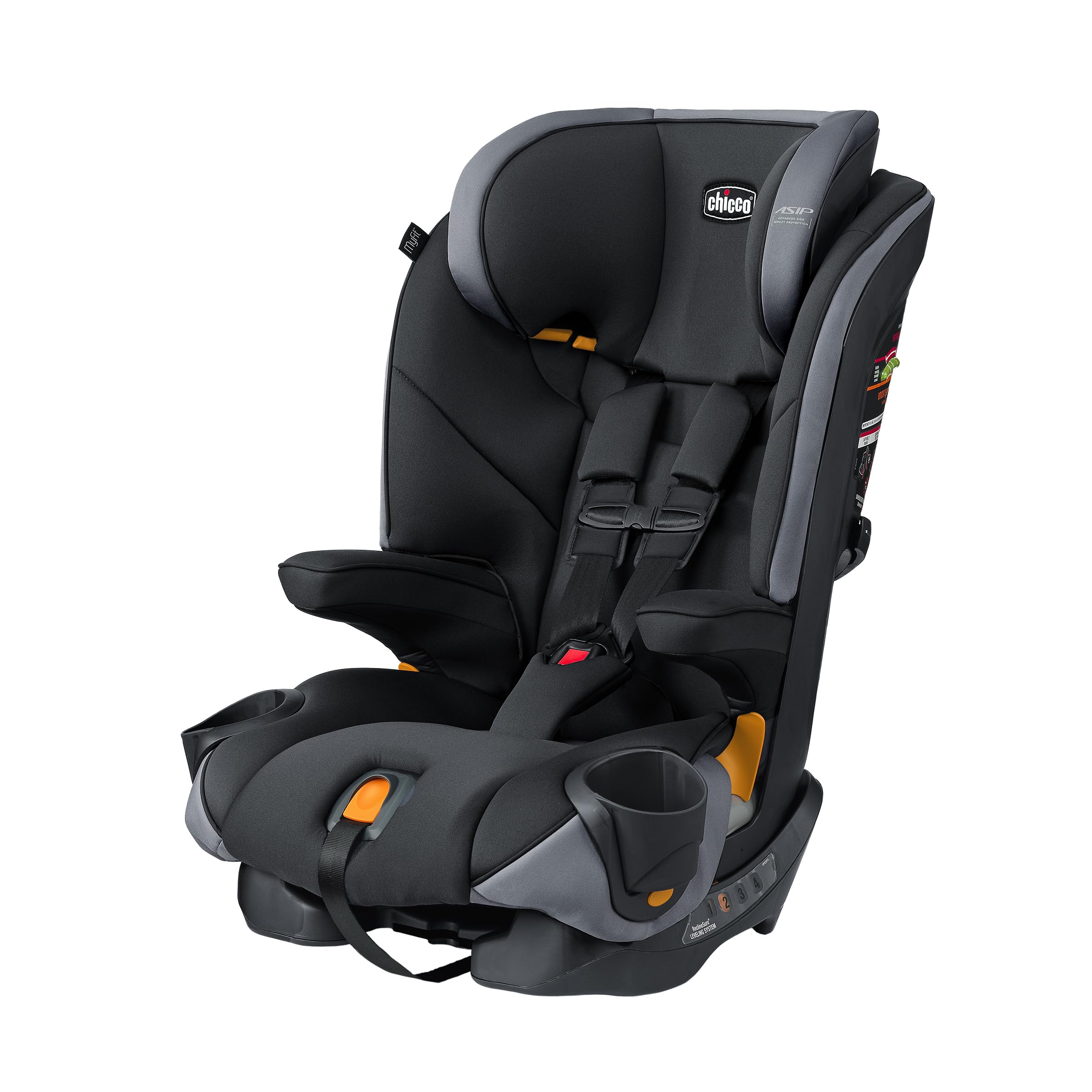
Chicco MyFit 2-in-1
Key Features
- Seat weight: 25 lb
- Height range: 38 to 54 inches
- Installation: LATCH or belt lock-off
- Weight range: 25 to 100 pounds
- Price: Premium
The moment a two-in-one booster stops earning its keep is the switch from harness to seat belt, so that’s where we started. The MyFit goes from a five-point harness at 25 pounds to a belt-positioning high back at 100, across a 38-to-54-inch height range, and Chicco doesn’t ask you to buy a second seat to make the handoff. Nine headrest positions and four recline positions are what turned it from a piece of equipment into a chair a kid settles into.
Comfort is where it separates from the cheaper picks here. The ErgoBoost foam is genuinely plush, the seat is contoured deeply enough that a sleeping head doesn’t flop forward, and the two CupFolders push in when the seat is empty and lift out for the dishwasher. On a long drive we noticed the small things — the armrests, the deep seat pan, a recline you can change without uninstalling — more than anything printed on the box.
Installation is the other half of the case. Premium LATCH connectors, the LockSure belt-tightening system, and bubble levels molded into the shell mean you can get it tight without guessing at the angle, and the 17.5-inch shell is narrow enough to sit three across. We paid attention to the width because two boosters and an infant seat is the reality in a lot of back rows.
What we don’t love: at 25 pounds it’s the heaviest seat in this guide, ten pounds heavier than the next one down, so it lives in one vehicle rather than shuttling between two. And the 54-inch height ceiling arrives well before the 100-pound weight limit does — a tall, slim seven-year-old runs out of head support while still pounds under the cap. Check height percentile, not the scale, before you assume this is the last booster you’ll buy.
Pros
- Harness to 65 pounds, then high back to 100
- Plush foam and a four-position recline
- LATCH, belt lock-off, and bubble levels
- 17.5 inches wide, fits three across
Cons
- 25 pounds, so it stays in one car
- 54-inch ceiling comes before the weight limit
The one we tell most families to buy: it carries a child from a five-point harness to a school-age booster, and it’s the easiest seat here to get truly tight.
Best for School-Age Kids
Chicco KidFit ClearTex Plus
Key Features
- Seat weight: 10 lb
- Height range: 44 to 57 inches
- Installation: Quick-release LATCH
- Weight range: 40 to 110 pounds
- Price: Midrange
This is the seat we point people to when the harness is already behind them. It’s the older-kid half of the Chicco lineup — 40 to 110 pounds, 44 to 57 inches, ten height positions — and it weighs about 10 pounds, roughly 15 pounds less seat than the MyFit. You give up the five-point harness and you gain something you can carry out of the car with one hand and a grocery bag in the other.
We liked it most for the school-age stretch, when a booster has to survive being moved, wiped, and sat on. The back separates from the base with a button instead of falling apart in the parking lot, the quick-release LATCH pulls free one-handed, and the ClearTex fabric is made without flame-retardant chemicals — a detail worth something in a seat a child sits in twice a day. Ten height positions is the most in this guide, so a tall kid stays supported longer than the raw numbers suggest.
The catch is at the bottom of the range. This is a 44-inch minimum seat, so a small four-year-old who has just crossed 40 pounds isn’t ready, and that child belongs in a harness. We also found the LATCH cinch strap needs a real pull to go from moves-a-little to doesn’t-move — if the seat is still walking when your kid climbs in, the strap is the thing to revisit, not the seat.
Pros
- Quick-release LATCH for one-hand removal
- ClearTex fabric with no flame retardants
- Ten height positions, the most here
- About 10 pounds, easy to carry out
Cons
- 44-inch minimum rules out small four-year-olds
- LATCH strap takes muscle to cinch tight
Our pick once the harness years are over: 10 pounds, quick-release LATCH, and a ten-position back that keeps a tall kid supported to 57 inches.
Best for Reluctant Riders
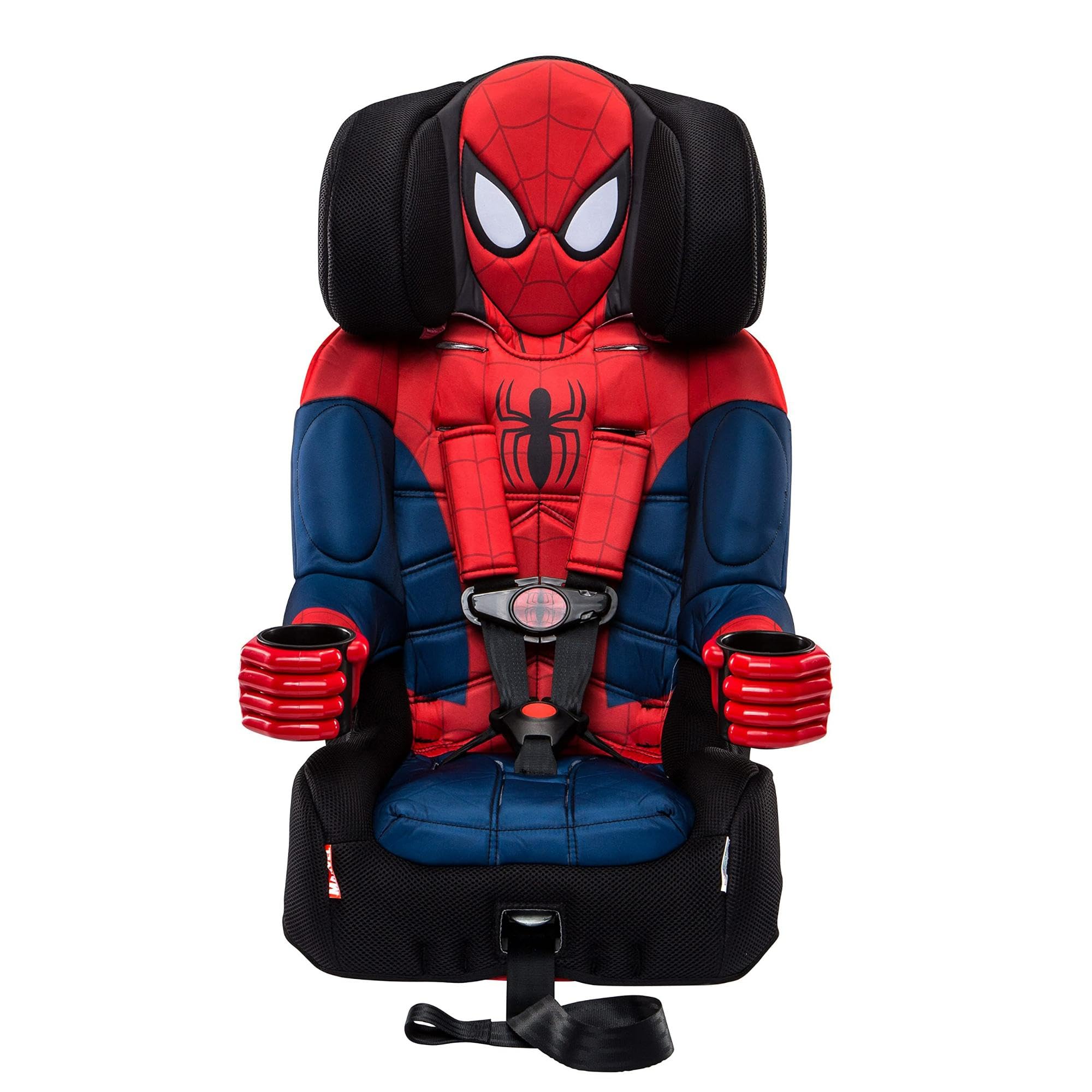
KidsEmbrace 2-in-1
Key Features
- Height range: 29 to 57 inches
- Installation: LATCH and top tether
- Weight range: 26.5 to 100 pounds
- Height positions: 3
- Price: Premium
There’s a version of this review where the Spider-Man shell is the whole story. It isn’t. Underneath is a proper two-in-one: a five-point harness from 26.5 to 65 pounds, belt-positioning to 100, a 29-to-57-inch height range, and LATCH plus top tether for the install.
A character shell does more for a reluctant five-year-old than any amount of padding, and this one is built to be looked at — high-density foam, a contoured seat pan, cup holders deep enough to survive a speed bump. It’s also 15 pounds, light enough to move between cars without a plan.
Where it gives ground is in the fit adjustments. The headrest and harness move through three height stops, against nine and ten on the Chicco seats here, so the fit changes in bigger jumps and a kid sitting between stops rides slightly wrong. Buckling takes more care than the rest of this group, too: the buckle sits close to the seat pan and can catch a thigh on the way in. We minded that more than the bulk, because you do it four times a day.
Pros
- Character shell that gets kids into the seat
- Harness from 26.5 to 65 pounds, belt to 100
- LATCH and top tether for the install
- Deep cup holders and dense foam padding
Cons
- Only three harness and headrest height stops
- Buckle can pinch a thigh on the way in
The pick for a child who fights the seat: the character shell does real work, and underneath it is a legitimate 26.5-to-100-pound two-in-one with a deep, padded seat.
Best for Tight Back Seats
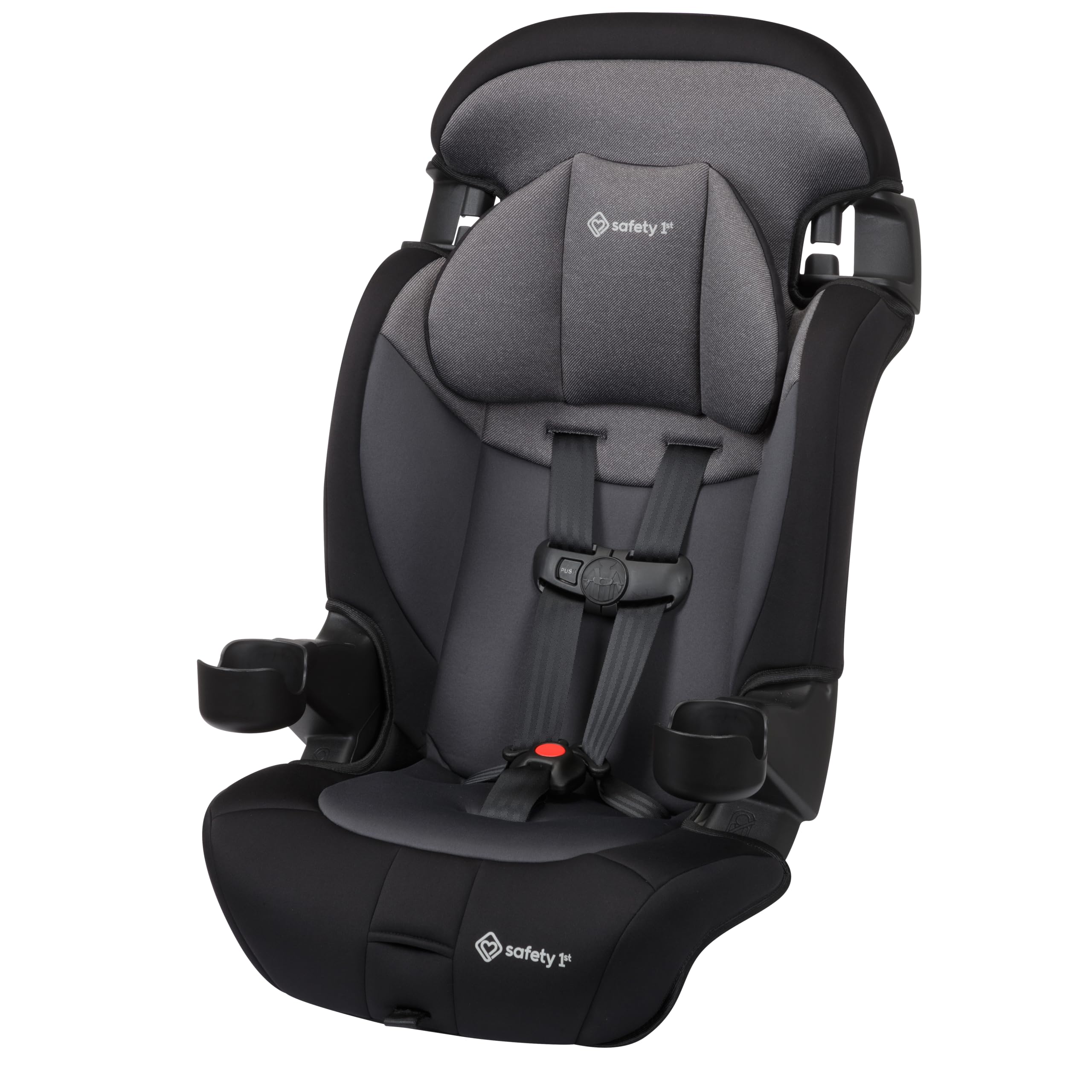
Safety 1st Grand 2-in-1
Key Features
- Seat width: 17.75 inches
- Seat weight: 8.8 lb
- Weight range: 40 to 100 pounds
- Height positions: 3
- Price: Budget
At 8.8 pounds and 17.75 inches across, this is the lightest and narrowest seat in the guide. If you’re the one doing the handoff between preschool pickup and a partner’s car, that combination is the entire argument.
Three-across is where it earns its place. This is the seat that lets a back row hold two boosters and an infant seat without anyone wedging a shoulder through the gap, and it’s light enough to lift out one-handed when you need the space. Harness mode covers 40 to 65 pounds and 43.4 to 49 inches, then it converts to a belt-positioning high back to 100 pounds. The pad is machine-washable and dryer-safe and the cup holders come out, which sounds like a small thing until a smoothie has been in the car for a week.
The trade-off is in how it’s held down. The lower anchors do their work in harness mode; once it becomes a booster, the vehicle belt is what keeps it in place, so it slides an inch when a child climbs in and out. That’s how a booster held by the belt alone behaves, not a defect, but if you want an anchored booster, the KidFit or the MyFit is the better call. Its harness also ends at 49 inches, so a tall four-year-old moves to the belt early — which the seat handles fine, since booster mode runs to 100 pounds.
Pros
- 8.8 pounds, the lightest seat here
- 17.75 inches wide for three across
- Washable, dryer-safe pad with removable cup holders
- Harness to 65 pounds, then booster to 100
Cons
- Booster mode is held by the vehicle belt alone
- Harness mode ends at 49 inches tall
The light, narrow one: 8.8 pounds and under 18 inches wide, which is what makes three across work in a back seat that was never designed for it.
Best for Tall, Heavy Kids
Britax Skyline 2-Stage
Key Features
- Modes: High back and backless
- Seat weight: 11 lb
- Weight range: 40 to 120 pounds
- Maximum height: 63 inches
- Price: Midrange
Sixty-three inches and 120 pounds is the tallest, heaviest ceiling in this guide, and it’s the whole case for the Skyline. If your seven-year-old is already the tallest in the class, this is the seat that won’t be outgrown by winter break — the belt guide still lands where it should at an age when most of the boosters here are done.
It’s comfortable in the plain way Britax does comfort: plush foam, built-in armrests, a cover that comes off for washing, and color-coded belt guides that take the guesswork out of where the belt goes. At 11 pounds it’s mid-pack here — light enough to move, heavy enough that you won’t do it daily.
The fits are what you have to check. Nineteen inches is the broadest shell in this guide, so in a narrow back seat it crowds the buckle next to it. And a high back needs the vehicle seatback to sit flat; if your car has a fixed headrest that angles forward, the booster’s back gets pushed out of position and no amount of adjusting fixes it. Look at your headrests before you order, not after.
Pros
- 120 pounds and 63 inches, the tallest here
- Plush foam with built-in armrests
- Color-coded belt guides and a removable cover
- Converts to a backless booster later
Cons
- 19-inch shell crowds tight back seats
- Shoulder belt can catch in the guide
The long-haul choice for a big kid: 120 pounds and 63 inches is the tallest ceiling here, so a tall second-grader won’t outgrow it the way they outgrow the rest.
Best for Three Stages
Graco Tranzitions 3-in-1
Key Features
- Modes: Harness, high back, backless
- Seat weight: 15.1 lb
- Weight range: 26.5 to 100 pounds
- Height positions: 9
- Price: Midrange
If your child is too small for a seat belt but too big for the convertible, this is the seat that stops the shopping. Forward-facing harness from 26.5 to 65 pounds, high back to 100, and a backless stage after that — three seats’ worth of transitions in one shell.
The no-rethread harness is the feature that makes those transitions livable: headrest and harness move together through nine positions in one motion, so going from a three-year-old’s fit to a six-year-old’s is a one-handed adjustment instead of a take-apart-and-rethread afternoon. Cup holders, a machine-washable pad, and 15.1 pounds — heavy for something sold as portable, but this seat isn’t really meant to travel.
Install it, then shove it. With the seat tightened down, this one can still shift on a smooth leather bench, and a seat that slides is a seat a child climbs into crooked. Give the base a hard push from the front and re-tighten before you call it done. Fifteen pounds and a few minutes of fiddling is a fair trade, we think, for a seat that’s still correctly sized when your child starts kindergarten.
Pros
- Three stages from 26.5 pounds to backless
- Headrest and harness adjust together
- Nine headrest positions for a growing kid
- Washable pad and built-in cup holders
Cons
- 15.1 pounds for a seat sold as portable
Buy it if your child still needs a harness and you don’t want to shop again: harness to 65 pounds, high back to 100, and a no-rethread adjuster that moves in one motion.
Best for Budget and Carpools
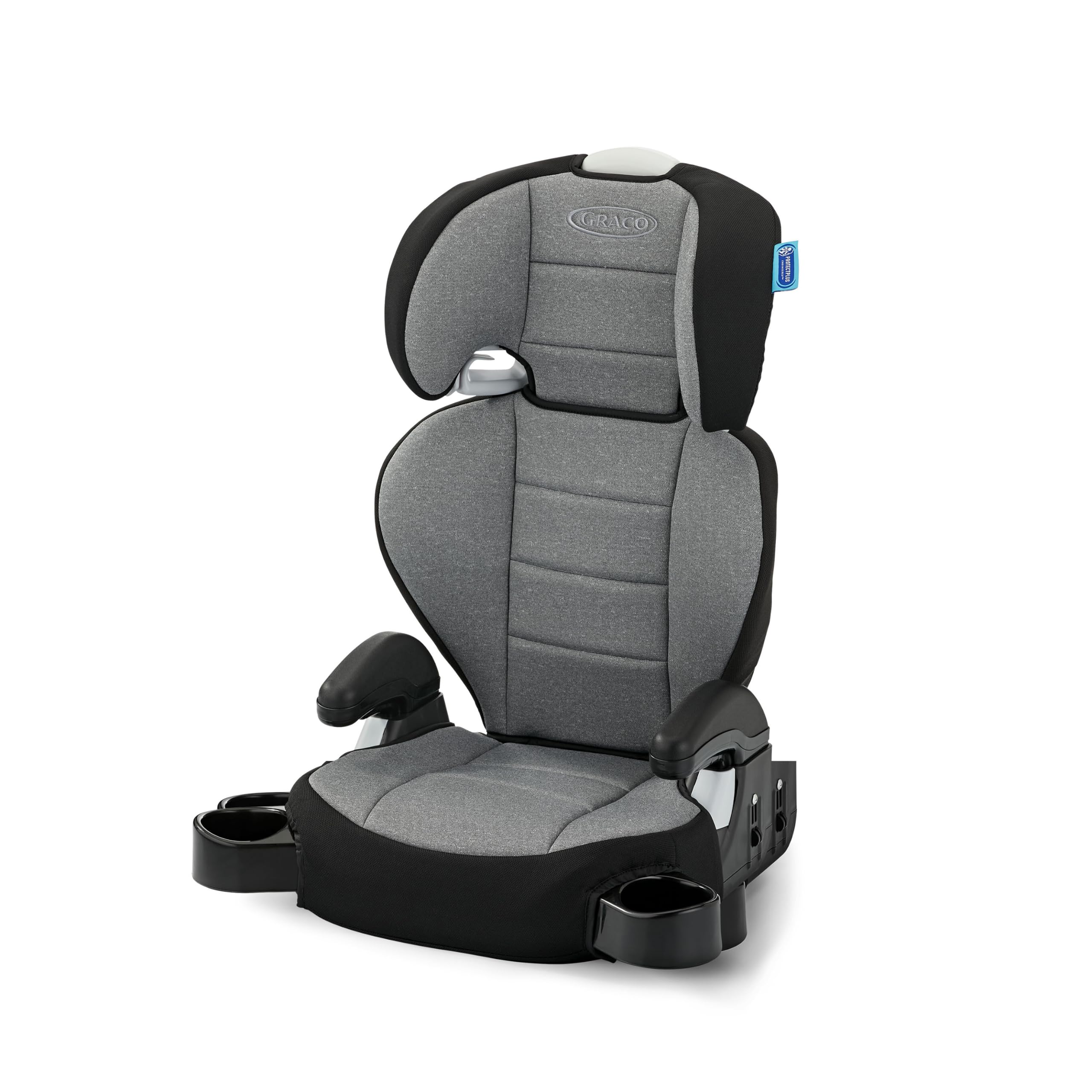
Graco TurboBooster 2.0
Key Features
- Seat weight: 7.7 lb
- Belt routing: Open-loop belt guides
- Height range: 43 to 57 inches
- Weight range: 40 to 100 pounds
- Price: Budget
Open-loop belt guides are a small strip of plastic with an outsized effect: they hold the shoulder belt out away from the seatback, where a six-year-old can reach it without a parent climbing into the back. In a carpool rotation, that’s the difference between a booster that gets used correctly and one that gets buckled crooked.
What it is: a 40-to-100-pound, 43-to-57-inch high back booster with no harness and no lower anchors. The vehicle belt does everything, the head support adjusts for height, and the cup holders hide away in the shell when they aren’t holding a juice box. Just under eight pounds, it moves with one hand.
The belt-only design has a visible consequence: with nobody in it, the seat slides on the cushion. That’s normal for a seat held by the belt alone, and the fix is the same as the problem — teach your child to push the seat back before climbing in. The back also comes off, converting it to a backless booster for the years when a high back no longer fits under a sloped roofline or beside a taller sibling.
For the second car, the grandparent’s sedan, or the carpool rotation, we think it’s the right amount of seat: light enough to move in one hand, simple enough that a kid buckles themselves, and useful for years after the back comes off. What it isn’t is a first seat — with a 40-pound, 43-inch floor and no harness, it’s for a child who is already booster-ready.
Pros
- Open-loop guides let kids buckle themselves
- Converts to a backless booster
- Just under eight pounds
- Hideaway cup holders save width
Cons
- No harness and no lower anchors
The budget pick, and the easiest for a kid to buckle alone: open-loop belt guides hold the shoulder belt out where a six-year-old can reach it.
Best for Second Cars
Evenflo Maestro Sport

Key Features
- Seat weight: 9.6 lb
- Harness mode: 30 to 50 pounds
- Booster limit: 100 lb
- Price: Midrange
The harness on this one tops out at 50 pounds, the narrowest harness window in this guide. Most kids cross 50 pounds somewhere around kindergarten, so if you’re buying for a three-year-old, plan on the belt conversion arriving while they’re still small.
What’s good is the everyday handling. The harness tightens from a central adjuster at the front, so you can snug it with a child already in the seat, the shoulder belt guide positions the vehicle belt for you, and the pad is machine-washable. At 9.6 pounds it’s one of the easiest seats here to move between vehicles.
Two things are thinner than on the Chicco seats: the padding, which is closer to foam than cushion, and the cup holders, which pop off under a hip or a hand. Neither changes how the seat holds a child; both change how much you like it in month eight.
What settles it for us is the shoulder belt guide. It puts the vehicle belt in the right spot automatically instead of leaving an adult to eyeball whether the belt is on the shoulder or under the armpit — and that’s exactly what goes wrong when a seat gets reinstalled by a different person every week. That’s the job this one does well.
Pros
- Front harness adjuster works with a child seated
- Shoulder belt guide positions the belt automatically
- 9.6 pounds and easy to install
- Machine-washable pad and dual cup holders
Cons
- Harness mode ends at 50 pounds
- Cup holders pop off easily
A sensible second seat for a forward-facing preschooler: it installs easily and weighs little, though the 50-pound harness ceiling ends the harness years early.
How We Tested High-Back Booster Seats
To build our shortlist, we started with the top-rated high-back boosters on the market, filtering for seats that convert from a harness to a belt-positioning booster, fit kids from roughly 40 to 100 pounds, and offered features like adjustable headrests and cup holders. We also made sure to include a mix of seats with and without LATCH, since many families switch between cars. From there, we narrowed it down to 10 models and spent six months living with them.
We installed each seat in a sedan, an SUV, and a grandparent’s car, then ran them through real-life scenarios: the morning school drop-off, a two-hour road trip, and the chaos of a weekend errand run. To judge installation, we timed how long it took one person to secure the seat using both the vehicle belt and LATCH (when available), then checked for movement at the belt path—anything more than an inch was a strike. For comfort, we asked our kid testers about padding and headrest support after long rides, and we watched how easily they could buckle themselves in. We also loaded the cup holders with water bottles and tested stability by taking corners and making sudden stops.
Finally, we washed every removable cover according to the manufacturer’s instructions and checked for fraying or shrinking, and we noted which seats lacked LATCH and how much they slid on leather upholstery without it. The seats that scored highest combined a secure fit, easy installation, and a price that felt fair for the quality—no wobbly bases or flimsy fabrics. We’ll keep using them as our kids grow and update this list if anything changes.
How to Choose a High-Back Booster Seat
The first decision isn’t the brand or the trim — it’s whether your child still needs a five-point harness, and that one answer narrows the field more than any other.
Start With the Harness Question
Half the seats here are belt-positioning boosters only, and they’re the right tool for a child who can sit upright for a whole trip without slouching or unbuckling. The other half carry a five-point harness that runs to 65 pounds. The trap is the minimum: a booster held by the vehicle belt usually starts at 40 pounds and 43 to 44 inches, so a four-year-old who is small for their age isn’t ready for one, however mature they are. Check your child’s height against the seat’s printed minimum before anything else.
What Actually Holds the Seat in the Car
Lower anchors matter more in harness mode than in booster mode, and that catches people out. Some seats — the KidFit ClearTex Plus and the MyFit here — use LATCH to hold the seat still even after the harness comes out. Others, like the Safety 1st Grand, are anchored in harness mode and then rely on the vehicle belt alone, which means the seat slides an inch when a child climbs in. That’s normal rather than a defect, but if it will bother you every morning, pay for the anchored version.
Width, Headrests, and Your Actual Back Seat
Nineteen inches of booster in a 47-inch back seat is the difference between three across and two. Measure the seating position before you fall for a seat. The second fit problem is less obvious: a belt-positioning booster’s back needs the vehicle seatback to sit flat, and a fixed headrest that angles forward pushes it out of position. Check whether your vehicle’s headrests raise or come out. This is the fit issue people blame on the seat.
Height Ends the Run Before Weight Does
Weight limits get the marketing; height is what retires a booster. Kids outgrow the shoulder belt guide before they hit the pound cap, and the ceilings in this guide run from 54 to 63 inches — roughly two years of growth for a school-age child. If your kid is tall for their age, the taller seat is worth the extra money even when the weight rating looks like overkill.
Comfort, Fabric, and Cleaning
A child who is uncomfortable slumps, and a slumped child ends up with the shoulder belt under an arm. Padding and a little recline are safety-adjacent, not luxuries. Look for a cover that comes off without a fight, cup holders that lift out for the dishwasher, and — if it matters to you — fabric made without flame-retardant chemicals, which is what the KidFit ClearTex Plus uses.
Frequently Asked Questions
Can I use a high-back booster on an airplane?
No. A booster depends on a lap-and-shoulder belt to position a child, and airplane seats don’t have one, so boosters aren’t approved for in-flight use. Check the seat as luggage and use it at your destination, or fly with a harnessed car seat that is approved for aircraft. If you’re renting a car on arrival, confirm a booster is actually reserved before you leave yours at home.
Do high-back booster seats expire?
Yes. There’s a date stamped into the shell, usually on the back, and it’s worth writing down the day the seat arrives. A moderate or severe crash retires a seat early too. That’s also the problem with a used booster: without a date stamp and a history, you have no way to check either one.
How do I check that the vehicle belt is fitting my child?
Have your child sit all the way back. The lap belt should cross the hip bones, low and touching the thighs, not the belly. The shoulder belt should cross the middle of the shoulder and chest, not the neck or the upper arm. If it sits against the neck, the belt guide is too low or the seat has been outgrown. Recheck every few months, because a growth spurt changes the fit.
Final Verdict
The Chicco MyFit is what we tell most families to buy, because it handles both halves of a booster’s life with fewer compromises than anything else here: a real harness to 65 pounds, a comfortable high back after that, and an install you can get genuinely tight in a driveway.
If your child is already out of the harness, the KidFit ClearTex Plus does the same job in a 10-pound shell for a lot less money. And if the seat is headed for a second car that only does school runs, the TurboBooster 2.0 is enough.
