This post contains affiliate links. We may earn a small commission when you buy through our links — at no extra cost to you.
The search for a kids Bible often starts with a baby shower gift, but many parents discover that a single book won’t carry a child from toddlerhood to independent reading. The category splits sharply between richly illustrated storybooks for ages 2–8 and full-text Bibles designed for readers 7 and up.
Even among storybooks, a quiet division emerges: some families prioritize simple, accessible retellings with bright art, while others want every story to explicitly point to Jesus. Both approaches serve, but they lead to very different reading experiences. This guide helps you match a Bible to your child’s current developmental stage and your family’s theological priorities—so you’re not replacing a book six months later.



Best for Toddlers & Preschoolers
The Beginner’s Bible
Key Features
- Format: Storybook
- Target Age Range: 2–6 years
- Illustration Quality & Quantity: Bright, detailed, diverse skin tones
- Readability & Language Level: Very simple sentences, early readers
- Theological Accuracy & Translation: General retelling, evangelical-friendly
- Price: Budget
More than any other children’s Bible storybook, The Beginner’s Bible proves its ability to hold a 2-year-old’s attention. Bold, cheerful artwork fills every page, and each story lasts just a few minutes—long enough to convey a biblical event without losing a wiggly toddler. The 512-page volume covers all the major Old and New Testament stories, providing a broad foundation for young learners. The revised edition includes skin tones that reflect a wider range of children, which parents value highly.
Even before they can read, many kids recognize the pictures and begin retelling the stories themselves. The language is simple enough that early readers can attempt it, and the short chapters make bedtime reading feel doable rather than dutiful. The reading age of 2–6 is spot-on; 3-year-olds can follow the pictures, while 6-year-olds gain confidence reading the short sentences aloud. Over years of use, the sturdy binding and thick pages withstand repeated handling from small, eager hands.
This is the starter Bible for families introducing toddlers to Scripture for the first time—ideal for baby showers, baptisms, or nightly read-alouds. However, it intentionally sidelines the cohesive Christ-centered narrative that runs through every story in The Jesus Storybook Bible; homes wanting that redemptive thread will find this one reads more like isolated accounts. And once a child reaches age 6 or 7 and is ready for a complete translation, a full-text Bible like the NIV Adventure Bible is the natural next step. This storybook is a gateway, not a replacement.
Pros
- Proven toddler engagement with short, visually anchored stories.
- Bright, diverse illustrations that draw children into every page.
- Simple language that enables early readers to follow along and build confidence.
- Broad story coverage across 500+ pages, giving a solid biblical foundation.
Cons
- The storytelling approach retells individual accounts rather than connecting them into a unified redemptive narrative.
- Contains a curated selection of stories, not the full biblical text; children will eventually need a complete translation.
For any toddler’s first encounter with Scripture, this is the safest and most broadly loved starting point—just plan to add a full-text Bible by first grade.
Best for Christ-Centered Families
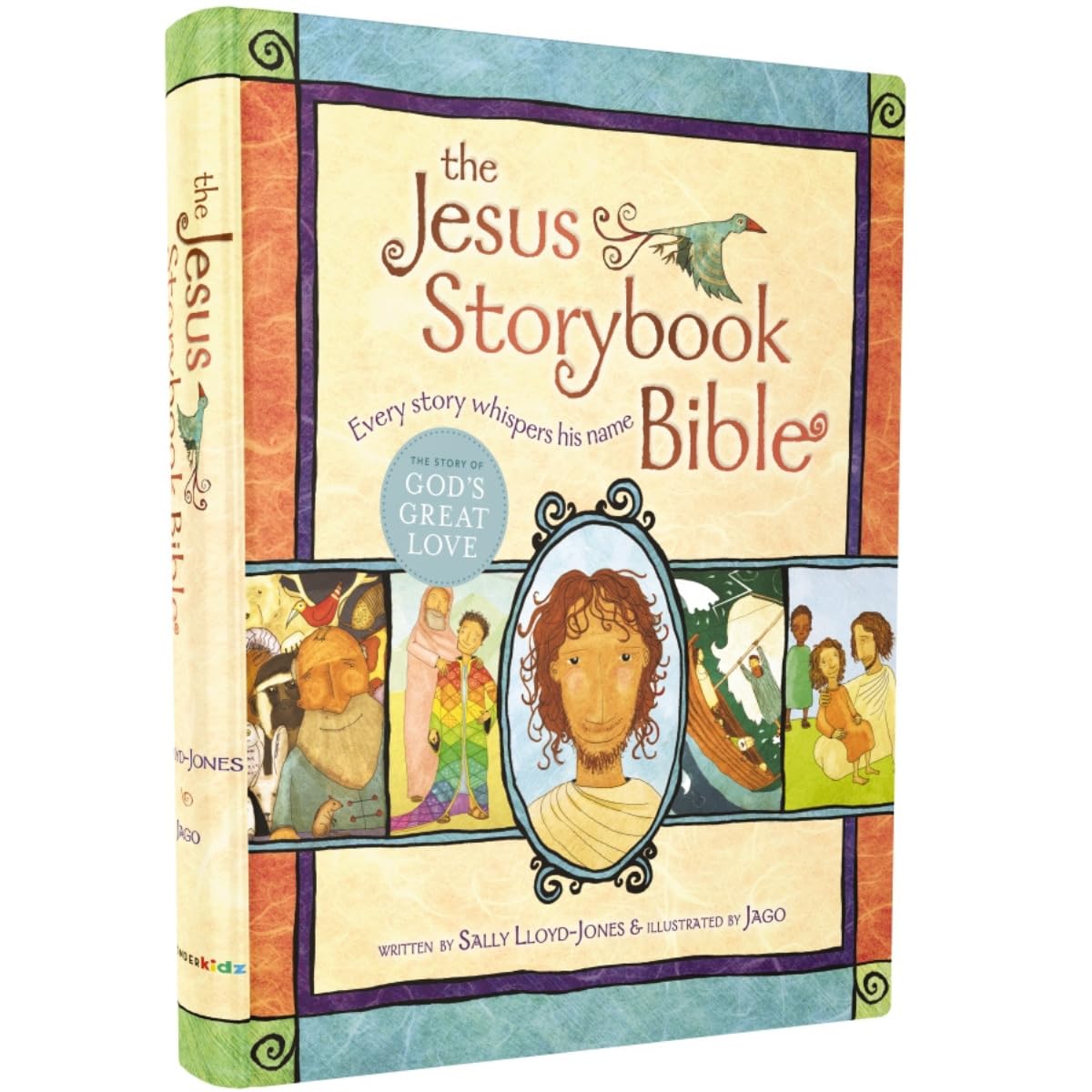
The Jesus Storybook Bible
Key Features
- Format: Storybook
- Target Age Range: 2+ years
- Illustration Quality & Quantity: Whimsical, acclaimed art
- Readability & Language Level: Lyrical, read-aloud friendly
- Theological Accuracy & Translation: Interpretive, Christ-centered thread
- Price: Budget
Where popular storybooks often present Bible tales as standalone moral lessons, this one weaves a continuous redemptive thread — every Old Testament narrative points forward to Christ, and every New Testament story points back. The lyrical writing and Jago’s distinctive illustrations create an immersive read-aloud experience that feels less like a children’s Bible and more like an invitation into a grand story.
This book fits families who want every story to explicitly anticipate Jesus, making it a favorite for bedtime reading with toddlers through early elementary kids. The tradeoff is clear: it’s a curated storybook, not a full-text Bible, so children will need a translation as reading skills develop. The interpretive retellings — though doctrinally grounded — may not align with parents who prefer a strictly literal, verse-by-verse approach.
Pros
- Every Old and New Testament story is connected to Jesus, giving children a unified gospel narrative rather than isolated moral tales.
- Lush, whimsical illustrations capture attention and imagination, drawing even non-readers into the stories.
- Clear, rhythmic prose suits read-aloud sessions, making it easy for adults and engaging for kids as young as 2.
Cons
- Interpretive retellings may not satisfy families who prefer a literal, verse-by-verse presentation.
- Contains curated stories only; children will need a full-text Bible later for a complete scriptural foundation.
For families who want their child’s first Bible to be less a collection of stories and more a singular, Jesus-centered epic, this book delivers a cohesive narrative with artistry that rewards repeated reading.
Best for Elementary Readers
NIV Adventure Bible
Key Features
- Format: Full Bible (NIV)
- Target Age Range: 7–10 years
- Illustration Quality & Quantity: Color inserts, maps, study aids
- Readability & Language Level: NIV at 4th–6th grade level
- Theological Accuracy & Translation: NIV translation, study notes
- Price: Mid-Range
The NIV Adventure Bible delivers the full biblical text in a translation that 7- to 10-year-olds can read on their own, enhanced by colorful maps, character profiles, and ‘Life in Bible Times’ callouts that explain cultural context. It’s the logical step up from storybooks for families who want their child to engage with complete books of the Bible without losing interest.
This Bible suits children who can handle chapter books comfortably—typically grades 4 to 6. It is not designed for preschoolers or early readers who still rely on pictures and short paragraphs. The hardcover binding is durable but heavy for small hands; it works best as a home reference rather than a carry-along Bible. Families who prefer a literal translation like the KJV or NKJV should look to the NKJV Adventure Bible instead.
Homeschoolers and Sunday school teachers will find the study aids especially useful for lesson planning and discussion. The text is complete, so it doubles as a reference for family devotions and personal reading.
Pros
- Full NIV text with colorful study helps that keep kids reading independently.
- Vibrant design and age-appropriate notes make Scripture accessible without dumbing it down.
- Durable hardcover and 1,472 pages offer excellent long-term value for the price.
Cons
- Requires a child who can read chapter books; not suitable for preschoolers or early readers.
- Heavy hardcover format can be cumbersome for small children to carry or hold for long periods.
The NIV Adventure Bible is the right choice for families whose child has outgrown storybooks and is ready to tackle the full Scripture with kid-friendly support.
Best for Comic Fans 8-12
The Action Bible
Key Features
- Format: Storybook (comic)
- Target Age Range: 8+ years
- Illustration Quality & Quantity: Comic-book style, full color
- Readability & Language Level: Conversational, action-driven
- Theological Accuracy & Translation: Curated overview, not full text
- Price: Mid-Range
The Action Bible recasts the entire biblical narrative as a dramatic graphic novel, with Sergio Cariello’s full-color, action-packed artwork giving reluctant readers ages 8–12 a reason to keep turning pages. Unlike a standard full-text Bible that can intimidate emerging readers, this format makes Scripture feel like an adventure, covering Creation through Revelation in a chronological flow that maintains forward momentum.
This is the go-to for visual learners who bounce off dense prose and parents who want a big-picture overview. It’s a curated storybook, not a complete translation, so families seeking a full children’s Bible will eventually need a different resource. The illustrations lean dynamic and cinematic, with some battle scenes that may unsettle children under 6; older elementary and middle school kids, however, find them riveting.
Pros
- Comic-book illustrations are vibrant and action-packed, drawing in reluctant readers who tune out traditional text.
- Fast-paced, panel-by-panel storytelling keeps kids engaged for long stretches, turning Bible reading into a daily habit.
- Spans the full biblical storyline from Genesis to Revelation in chronological order, giving a cohesive overview.
Cons
For families of visual learners or comic fans, this thick, full-color graphic novel delivers more engagement per page than any standard storybook — just plan to graduate to a complete translation later.
Best for Daily Devotions
365 Bible Stories & Prayers
Key Features
- Format: Storybook
- Target Age Range: 2–7 years
- Illustration Quality & Quantity: Colorful, padded hardcover
- Readability & Language Level: Short, simple entries
- Theological Accuracy & Translation: Retelling; some inaccuracies reported
- Price: Budget
Where The Beginner’s Bible offers 90+ stories for flexible reading, this padded treasury structures a full year of faith conversations with one story and one prayer per page. Each entry takes under a minute to read, helping busy parents maintain a consistent bedtime rhythm without extra planning. The padded cover and bright illustrations survive frequent toddler handling, which explains why it’s a go-to gift for baptisms and baby showers.
Parents who want a zero-prep daily devotional will appreciate the bite-sized format. The stories run just a few sentences, keeping wiggly 2- to 5-year-olds engaged, while the simple prayers model how to talk to God. This is not a resource for families needing precise scriptural accuracy; some retellings, particularly in Genesis, take creative liberties that may not align with a literal translation. Sampling a story or two before gifting can clarify whether the approach fits your teaching goals.
Pros
- Short stories and prayers fit neatly into a nightly bedtime routine for toddlers.
- Frequently chosen as a baptism, baby shower, or religious milestone gift.
- Padded cover and colorful illustrations hold up to little hands and daily use.
Cons
- Retellings in Genesis may take interpretive liberties that conflict with a literal reading.
A strong choice for families prioritizing daily story-and-prayer habits over doctrinal precision, provided they can live with occasional interpretive retellings.
Best for Art-Loving Kids
Illustrated Children’s Bible
Key Features
- Format: Storybook
- Target Age Range: 4+ years
- Illustration Quality & Quantity: Full-color art on every page
- Readability & Language Level: Simple text, early independent reading
- Theological Accuracy & Translation: Brief summaries, broad appeal
- Price: Mid-Range
Where the top pick relies on simple, friendly cartoons, this Bible fills all 608 pages with lush, gallery-worthy artwork that parents consistently call stunning. The hefty hardcover feels substantial, and the vibrant colors hold attention during bedtime reading in a way simpler illustrations often can’t.
The stories themselves are intentionally short — often just a single paragraph — keeping the focus on the visuals. This suits visual learners ages 4–7 who thrive on pictures and need bite-sized introductions. The large, clear text also lets early readers practice independently, and self-contained stories make for quick, no-fuss reading sessions. For older children or parents seeking fuller retellings, the brevity becomes a limitation rather than a strength.
Pros
- Gorgeous full-color illustrations on every page capture attention and make Bible stories come alive.
- Large, readable text supports early independent reading without overwhelming new readers.
- Short, self-contained stories fit easily into bedtime routines and help young kids grasp one main idea.
Cons
- Stories are intentionally short, which leaves older children wanting more narrative detail.
For families with visual learners ages 4–7, this storybook offers an unmatched art experience that holds attention during bedtime reading. Plan to add a more text-rich Bible as children grow.
Best for Budget First Bible
A Child’s First Bible

Key Features
- Format: Storybook
- Target Age Range: 2–6 years
- Illustration Quality & Quantity: Bright, simple pictures
- Readability & Language Level: Very short sentences
- Theological Accuracy & Translation: Basic retelling, some vagueness
- Price: Budget
A Child’s First Bible introduces Scripture to the youngest listeners with bright pictures and end-of-story comprehension questions. Retellings are intentionally brief—perfect for short attention spans—but that brevity limits its shelf life once children reach age 5 and want more detail. The Beginner’s Bible offers greater longevity for a modest price increase; this one fits best as a nursery or first-birthday gift that bridges the gap before a more complete storybook.
Pros
- Simple comprehension questions after each story promote learning and discussion.
- Bright, appealing hardcover at a budget-friendly price.
Cons
- Stories are extremely simplified, which can leave older preschoolers wanting more detail.
For parents wanting a first introduction to Bible stories for a baby or young toddler on a tight budget, this hardcover fills the role well—just expect to graduate to a more detailed storybook by kindergarten.
Best for Wiggly Preschoolers
Laugh and Grow Bible

Key Features
- Format: Storybook (52 stories)
- Target Age Range: 4–7 years
- Illustration Quality & Quantity: Vibrant, playful graphics
- Readability & Language Level: Humorous, 5-minute reads
- Theological Accuracy & Translation: Lighthearted retelling
- Price: Mid-Range
With laugh-out-loud storytelling and bright, energetic art, the Laugh and Grow Bible transforms story time into a joy-filled activity for restless young kids. The 52-story format does mean it covers far fewer narratives than the top pick, The Beginner’s Bible, so children will eventually need a more comprehensive storybook. For families who want short, funny sessions that spark questions, though, this cheerful introduction earns its place on the shelf.
Pros
- Fun, humorous tone that makes Bible stories enjoyable for young kids
- Perfect length for short attention spans, with discussion prompts
Cons
- The comedic tone may not align with families seeking a reverent, solemn presentation of Scripture
For families with energetic preschoolers who need brief, engaging story sessions, this book turns Bible time into a laughter-filled activity — just expect to supplement with a fuller storybook later.
Best for Tween Girls
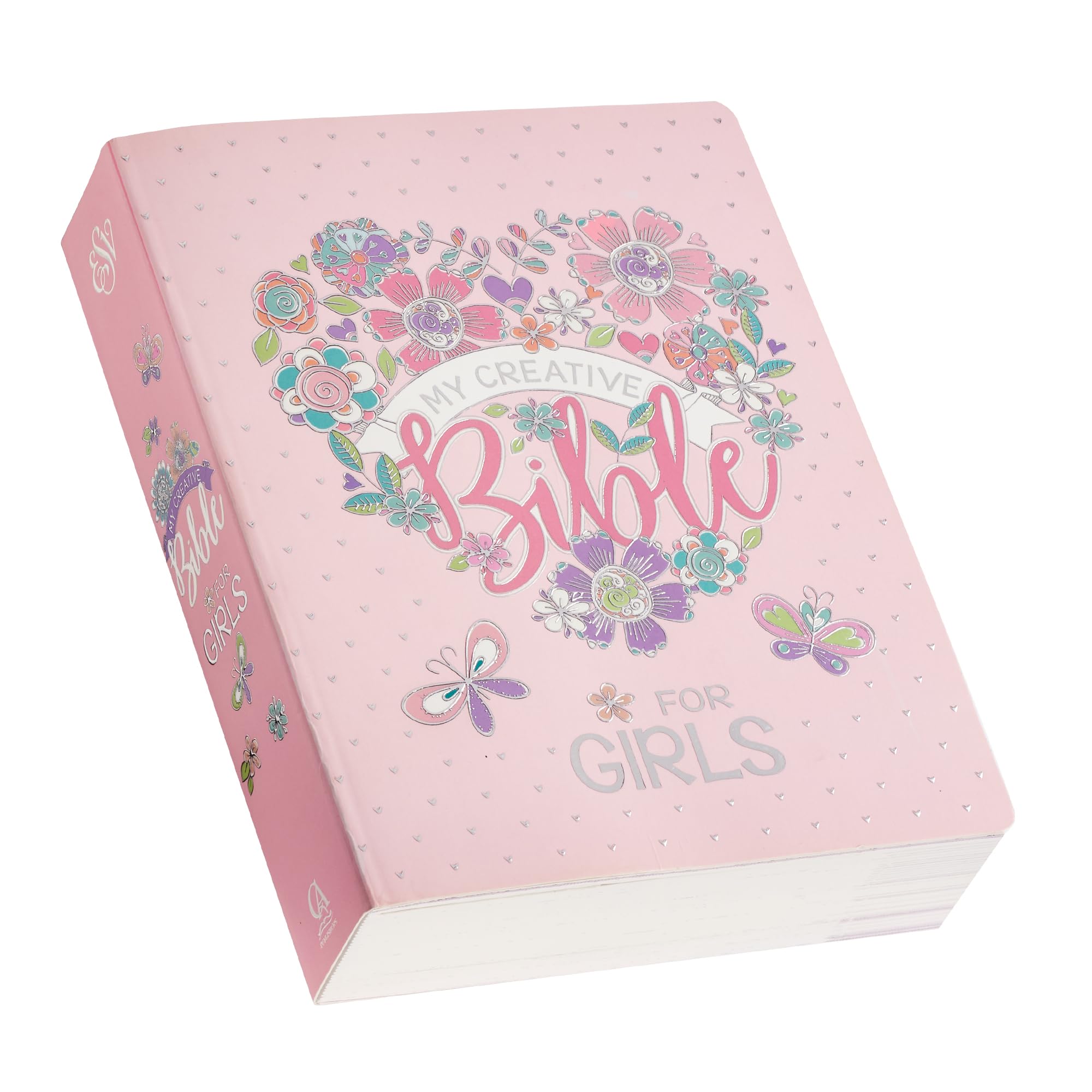
ESV Creative Bible for Girls
Key Features
- Format: Full Bible (ESV)
- Target Age Range: 8+ years
- Illustration Quality & Quantity: Coloring pages, devotional art
- Readability & Language Level: ESV text, girl-focused prompts
- Theological Accuracy & Translation: ESV translation
- Price: Mid-Range
This Bible integrates coloring, journaling, and devotional prompts into the full ESV text, transforming reading into a hands-on creative habit for artistic tween and teen girls. The illustrations and reflection spaces invite deep personal engagement with Scripture. Its heavily pink and floral design and girl-centered devotions, however, mean it only suits a narrow audience — families with boys or children under 8 will need a different Bible from this set.
Pros
- Creative coloring and journaling spaces make Bible reading interactive for artistic tweens.
- Solid ESV translation paired with girl-centered devotions that resonate with the target audience.
Cons
- Gendered design and devotional content limit use to tween/teen girls — not suitable for boys or younger children.
For a creative tween or teen girl who loves to doodle and journal, this Bible offers a personalized, engaging way to encounter Scripture; families with boys or younger kids should look at the full-text study Bibles in this set.
Best for Nkjv Fans
NKJV Adventure Bible

Key Features
- Format: Full Bible (NKJV)
- Target Age Range: 8+ years
- Illustration Quality & Quantity: Full-color study features
- Readability & Language Level: NKJV for 8+; some archaic phrasing
- Theological Accuracy & Translation: NKJV translation
- Price: Mid-Range
This NKJV edition packs the Adventure Bible’s signature full-color maps, “Did You Know?” callouts, and character profiles into a durable Leathersoft cover that stands up to daily use. The translation’s formal tone will resonate with families who prefer word-for-word rendering. The main tradeoff: the print size is noticeably smaller than in many children’s Bibles, which can lead to eyestrain for independent readers under 10. The NIV version offers larger text and may be a better first full Bible for those not set on the NKJV.
Pros
- Engaging full-color study features — maps, facts, and profiles hold kids’ attention
- Durable Leathersoft cover that withstands heavy use by preteens
Cons
- Smaller print than expected may strain young eyes during independent reading
For families committed to the NKJV translation and willing to accept the compact font, this Adventure Bible delivers a sturdy, feature-rich study Bible that grows with kids through the preteen years.
How to Choose
The single most important decision is whether your child needs a storybook Bible or a complete translation, a choice that hinges on reading ability and attention span.
Format
Storybook Bibles retell key events with simple language and abundant pictures, perfect for children who can’t yet read independently. They omit large sections of Scripture and condense narratives, which means a child who starts reading chapter books will quickly outgrow them.
A full-text Bible, even one with kid-friendly notes, demands the ability to read paragraphs and follow chapter structures. Give one to a child who isn’t ready, and it ends up on a shelf instead of being opened.
Target Age Range
Age labels are starting points, not guarantees. A Bible stamped "ages 4–8" may hold a 4-year-old’s attention through short stories but bore an 8-year-old who craves depth. Conversely, a full Bible marked for 8+ can overwhelm a child who is still building reading fluency. Base your choice on your child’s real-world reading stamina and curiosity, not just the number on the cover.
Illustration Quality & Quantity
For toddlers and preschoolers, illustrations carry the story. Bright, detailed art on every page turns reading time into an event. However, some Bibles pack in so many pictures that narrative text shrinks to a few lines per page, leaving stories feeling like summaries. For older children, a balance of engaging art and sufficient text keeps interest without sacrificing the arc of Scripture.
Readability & Language Level
A Bible’s language directly impacts whether a child sticks with it. Modern translations like the NIV or ESV use everyday English that 7- to 10-year-olds can read without constant help. The King James Version, while treasured by some traditions, poses a genuine barrier—its archaic phrasing often forces an adult to translate on the spot.
In storybooks, the risk flips: extreme simplification can strip stories of nuance, leaving older preschoolers asking for more detail. Choose a readability level that matches your child’s true reading ability, not your aspirations.
Theological Accuracy & Translation
Storybook Bibles are interpretations. Each author decides what to emphasize or omit, and sometimes those choices introduce small errors. If exact scriptural fidelity is what your family values, seek a storybook that hews closely to a trusted translation or ask your pastor for guidance. Full-text Bibles remove the retelling variable, but their study notes still reflect a particular theological lens.
FAQ
What’s the difference between a children’s storybook Bible and a full-text kids Bible?
A storybook Bible retells key events in simplified language with lots of illustrations, covering a curated set of stories. A full-text Bible contains the complete Old and New Testaments in a standard translation, often with age-appropriate study notes. Storybooks suit ages 2–6, while full Bibles fit confident readers around age 7 and up.
Why do some children’s Bibles get criticized for being inaccurate?
Inaccuracies often arise because authors condense complex narratives into a few sentences, occasionally blurring details or adding creative elements not found in Scripture. For example, some storybooks alter the sequence of Genesis or modernize dialogue in ways that change the meaning. Families who prioritize word-for-word accuracy should choose a full-text Bible or a storybook vetted for doctrinal soundness.
Is The Beginner’s Bible good for a 2-year-old?
Yes, its short, simple stories and bright, engaging illustrations make it one of the best choices for toddlers. The text holds short attention spans, and many parents report that 2-year-olds enjoy the pictures even before they can follow the story. The oversized pages and durable binding stand up to rough little hands.
Can a 7-year-old read the NIV Adventure Bible independently?
Generally yes. The NIV translation sits at a 4th–6th grade reading level, and the colorful inserts and study helps break up the text so it feels less daunting. However, some 7-year-olds still benefit from a parent reading alongside to explain unfamiliar words or concepts. For a confident chapter-book reader, independent use is very achievable.
Is a KJV Bible too hard for my child to read?
The King James Version uses 17th-century English, including words like ‘thee’ and ‘thou,’ which can frustrate early readers. Most kids under 10 need frequent adult help to understand it. If your church uses the KJV, consider an audio Bible or pair it with a modern translation until your child builds reading confidence.