This post contains affiliate links. We may earn a small commission when you buy through our links — at no extra cost to you.
The first weeks after birth are not a time to wrestle with a stiff waistband. You want soft, stretchy, easy-on clothes that make room for a changing body, a healing incision, and a baby who eats around the clock. That was my bar when I went looking for postpartum pieces that earn a place in the daily rotation—not just the ones that photograph well in a hospital bag.
Over six months, a panel of new mothers and I wore and washed 14 pieces through night feeds, stroller walks, and endless laundry. We noted how each felt against sore skin, whether it stayed soft after washing, and if it looked put-together enough for a doorstep visitor—and worth reaching for again the next day. The keepers were cut for nursing, recovery, and the in-between sizes no one warns you about. The ones that made the list are below.



Best for First Weeks Home
Frida Mom Postpartum Underwear
Key Features
- Style: Disposable underwear
- Pack size: 8 pieces
- Intended stage: Postpartum recovery
- Price: Budget
The hospital’s mesh underwear runs out around day two, and the first week home is no time to be improvising. Frida Mom sells these in packs of eight, and the design does one job well: it behaves like underwear while doing the work of a recovery garment. A pad stays exactly where you placed it, the waist stretches over a belly that is still deflating, and nothing rustles or bulges under pajama pants.
We think it’s the most useful piece of postpartum clothing in this guide, and the reason is comfort. The fabric feels closer to ordinary underwear than to absorbent paper, and the rise sits high enough to clear a C-section incision instead of pressing across it — the difference between wearing a pair all day and taking it off the moment you can. They stay supportive without digging in, which is a harder balance than it sounds in something this stretchy.
Two practical notes before you order. The absorbency comes from your pad rather than the underwear, so plan on pairing them instead of trusting them alone overnight. And treat the pack as a disposable layer for the heaviest stretch, not a permanent addition to the drawer — an eight-pack covers a limited number of changes, so a second one is worth having on hand before you need it.
Pros
- Holds a pad securely in place
- Stretch clears a C-section incision
- Feels like normal underwear, not a diaper
Cons
- Can tear at the crotch before the pack is used up
We tell every expecting parent to pack these before the due date: they hold a pad where you put it, sit above a C-section incision, and feel like underwear rather than a diaper.
Best for Labor and Delivery
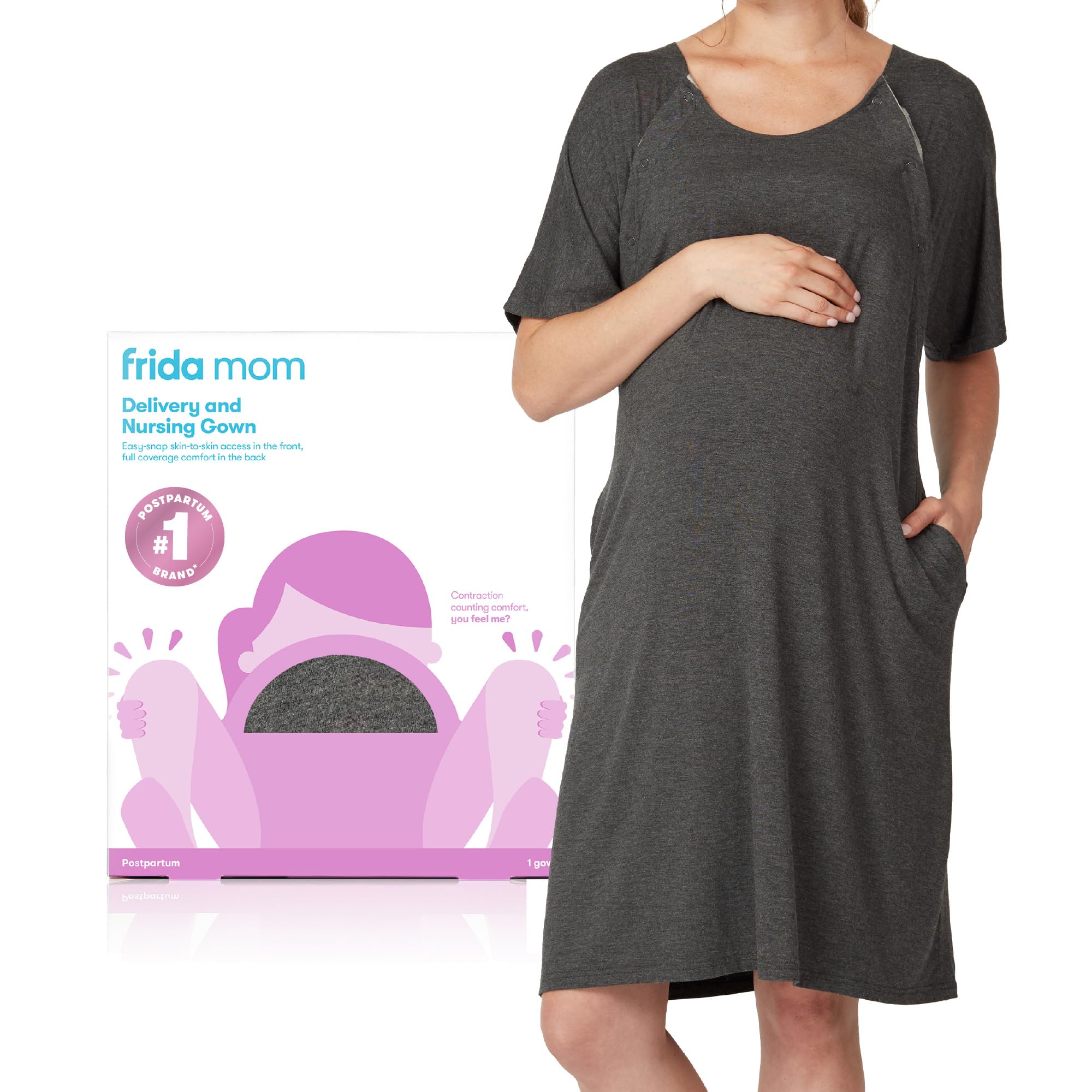
Frida Mom Delivery Gown
Key Features
- Fabric: 100% viscose
- Sizing: One size
- Closures: Snaps at shoulders and back
- Price: Midrange
Snaps are the whole idea here, and they’re what separates this from a nightgown you happen to throw in the bag. Closures run at both shoulders and down the back, so a monitor lead or an epidural line can stay attached while the gown comes off one shoulder — nobody has to undress you to check anything. We worked the snaps one-handed, the way you will at three in the morning, and they opened without a fight.
The fabric is 100% viscose, and it drapes around you instead of standing up the way hospital linen does. It’s built for the postpartum stretch too: the front opens for nursing and skin-to-skin, so the gown keeps earning its place after the delivery rather than becoming a one-hour purchase. It also makes a decent nightgown at home, which is more than most hospital bag items manage.
The trade is coverage. There’s no robe here, so if you want a layer to pull on for a walk down the corridor, the Ekouaer gown-and-robe set is the one to look at. What this gown gives you instead is access a pull-over can’t match, plus fabric that stays soft against a body that has just done a lot of work.
Pros
- Shoulder and back snaps keep monitors accessible
- Soft 100% viscose, not stiff hospital fabric
- Front opens for nursing and skin-to-skin
Cons
- One size only, and it runs large on smaller frames
We recommend this gown for a monitored vaginal delivery: the shoulder and back snaps make checks easy, and the soft viscose is a relief after hospital linen.
Best for Night Feeds at Home
Ekouaer Nursing Pajama Set
Key Features
- Style: Two-piece lounge set
- Waist: Button-adjustable
- Set includes: Top and bottoms
- Price: Budget
The detail we didn’t expect to care about is the row of buttons at the waist. They let you tighten the bottoms as your belly shrinks, so a set bought at 38 weeks still fits a month later, and that small adjustment is what turns a maternity purchase into something with a second life.
The fabric does the rest. It’s soft against skin that is healing, it doesn’t press anywhere tender, and the top opens for nursing without a wrestling match in the dark. It also looks like ordinary loungewear rather than recovery gear, which matters more than you’d think the first time someone knocks on the door.
Set against the gowns here, this is the piece with the longest useful life and the value pick of the group. We wear it for night feeds at home rather than saving it for a hospital stay, and it keeps working once the newborn stage is behind you and the rest of the postpartum drawer has been packed away.
Pros
- Button waist tightens as the belly shrinks
- Soft fabric that doesn’t press on tender skin
- Quick nursing access for night feeds
Cons
- Fabric is thin
- Bottoms run large and the top runs short
We treat the Ekouaer pajamas as the everyday pick: soft, easy to nurse in, and the set that stays in rotation long after the hospital bag is unpacked.
Best for Hospital Stays
Ekouaer Gown and Robe Set
Key Features
- Style: Labor and delivery set
- Length: Below the knee
- Set includes: Gown and robe
- Price: Premium
The robe is what makes this set the one to pack for a hospital stay. You get a gown for sleeping and feeding and a robe to throw over it for the walk to the bathroom or an hour with visitors, and that second layer does more for how the whole experience feels than it has any right to. It’s the difference between being seen in a nightgown and being seen dressed.
The fabric is soft and stretchy, with enough room for a full-term bump and then a shrinking one, and the gown hangs below the knee, which keeps it clear of the floor in a corridor. Nursing access is easy, the set comes in real sizes rather than one, and the two pieces work separately — the gown alone on a warm night, the robe over a tank on a cool one. One thing to know: the fabric marks easily, so a nursing bra or tank underneath saves it from milk stains.
Compared with the Frida gown, you give up the shoulder and back snaps, since this one pulls over your head with a robe on top. You gain the second layer, a size that follows you instead of a single fit, and a set that looks like something you chose. If the hospital bag has room for one outfit you’ll want in photographs, this is it.
Pros
- Robe adds coverage for corridors and visitors
- Soft stretchy fabric fits during pregnancy and after
- Gown and robe work separately or together
Cons
- Fabric snags easily
The set we pack when we want to feel less like a patient: soft, roomy, and the robe gives coverage the single gowns here can’t match.
How We Tested Postpartum Clothes
We built the shortlist by researching size-inclusive postpartum brands, reading fabric content and care labels, comparing price points, and filtering out anything that required special washing or didn’t come in a useful range of sizes. From that pool, we tested 14 pieces—nursing tops, dresses, leggings, and recovery-friendly layers—over six months.
Testing happened where postpartum life actually happens: on the couch at 2 a.m., in the pediatrician’s waiting room, on short stroller walks, and through the first weeks of night feeds and cluster feeds. We noted whether necklines opened one-handed, waistbands sat above or below a C-section incision, and how each fabric felt against sore skin. We tracked fit at week one versus week eight, since bodies change fast, and washed every piece at least ten times to check for pilling, stretched necklines, fading seams, and whether the material stayed soft or turned scratchy.
We also judged appearance—whether a piece looked presentable for a video call or an unexpected visitor—and value based on how often it got pulled from the drawer, not just the tag. By the end, the pieces that survived had stretch that recovered, seams that held, and sizing that made room without swimming. The ones that didn’t either lost shape, pilled at the waist, or made nursing feel like a two-person job.
How to Choose Postpartum Clothes
The clothes you’ll live in for the first two weeks are not the ones you’ll want six months later, so buy the recovery layer first and let the rest follow.
Buy the Recovery Layer First
Postpartum clothing splits into two purchases. One is the recovery layer — underwear that holds a pad and sits above an incision — and you need it within hours of getting home. The other is sleepwear you’ll wear for months of night feeds. We put the recovery layer first because there is rarely a substitute for it in an existing wardrobe, while a loose T-shirt and pajama bottoms can stand in for a nursing set for a night or two.
If you’re buying ahead, one pack of disposable underwear and one gown or set covers the hospital and the first days. Everything else can wait until you know what you actually reach for at 3 a.m.
Check How Far the Front Opens
The word nursing on a label tells you very little about what a garment does in the dark. What matters is how far the front separates: a gown that opens only partway is awkward for a feed and no use at all for immediate skin-to-skin after birth, while snaps at the shoulders and back let monitoring lines stay attached during labor.
Buttons down the front are fine at home; a crossover or pull-aside top is quickest one-handed. Before you commit, find a photo of the garment fully open — that single image answers the question the description dodges.
Order Your Usual Size, Then Check the Rise
Order your normal size rather than sizing up for the bump. These fabrics stretch and are cut roomy, and the most common regret in this category is a garment that hangs off you once the baby arrives.
Two measurements are worth checking against a size chart: the rise at the waist, which should sit above a C-section incision rather than across it, and the length, since a gown that clears the knee stays off the floor when you’re up in the night. In two-piece sets, watch the length of the top too — a cropped top defeats the point of a roomy waist.
Wash Dark Colors Alone, and Keep It Soft
These pieces get washed constantly and stained often, so care decides how long they last. Dark dyes can bleed for the first several washes and mark bedding, so run new navy or black garments through alone before they meet your sheets, and keep a stain treatment near the machine for milk.
Drapey fabrics like viscose feel cooler against healing skin than cotton but snag and hold marks; cotton is more forgiving in the wash. If you want a piece to stay in the drawer after the newborn stage, buy it in a color that hides what a newborn does to fabric.
Frequently Asked Questions
Do I really need postpartum-specific clothes, or can I wear what I already own?
Your loosest pajamas will get you through a lot of it, but two things are hard to fake: a waistband that clears a C-section incision instead of sitting on it, and underwear that keeps a large pad exactly where you put it.
If you buy one thing, buy the underwear — it’s the piece with no real substitute in your drawer. Sleepwear can come from what you own as long as it’s loose and soft.
Can I wear my own nightgown during labor and delivery?
Often yes for a vaginal birth, but policies vary by hospital and many require their own gown if you end up in a C-section. Ask at your pre-registration visit rather than packing on assumption.
If you get the go-ahead, take something that opens without being pulled over your head, and keep the hospital’s gown as the backup rather than the other way around.
Is nursing sleepwear worth buying if I’m not breastfeeding?
The openings are wasted on you, but the rest isn’t: a roomy waist, soft fabric and a gown that opens wide still help in the first days.
If you’re formula feeding, put the budget into the recovery layer and one comfortable two-piece set, and skip anything sold mainly on its nursing access.
Final Verdict
If you’re assembling a postpartum wardrobe and want one starting point, start with the Frida Mom underwear. It’s the piece that changes the first week, holding a pad where you put it and clearing an incision without feeling like a diaper.
Then let the stay decide the sleepwear: the Frida gown for a monitored vaginal delivery, the Ekouaer gown-and-robe set for corridor walks and visitors, and the Ekouaer pajama set for the months of night feeds once you’re home.
