This post contains affiliate links. We may earn a small commission when you buy through our links — at no extra cost to you.
A travel car seat only earns the name if it’s still light enough to carry through a terminal at 5 a.m. — and still installs tight enough in a rental car that you’re not second-guessing it at the curb. That’s the real tension: the seat has to be easy to lug, quick to buckle in, and steady enough that your child looks comfortable rather than folded into a corner. I’ve wrestled with seats that looked fine on paper and turned into a wrestling match in the parking lot.
Over the past seven months, my team and I tested eight travel car seats in the places they actually get used: airport pickups, taxi lines, grandparents’ back seats, and the trunk of a compact car. We weighed installation, ease of use, comfort, safety, build quality, and what you get for the money, because a seat that’s a hassle to tighten or too heavy to carry can sour the whole trip. The picks below are the ones that made travel feel less like a packing puzzle and more like a normal car ride.


Best for Flying with a Baby
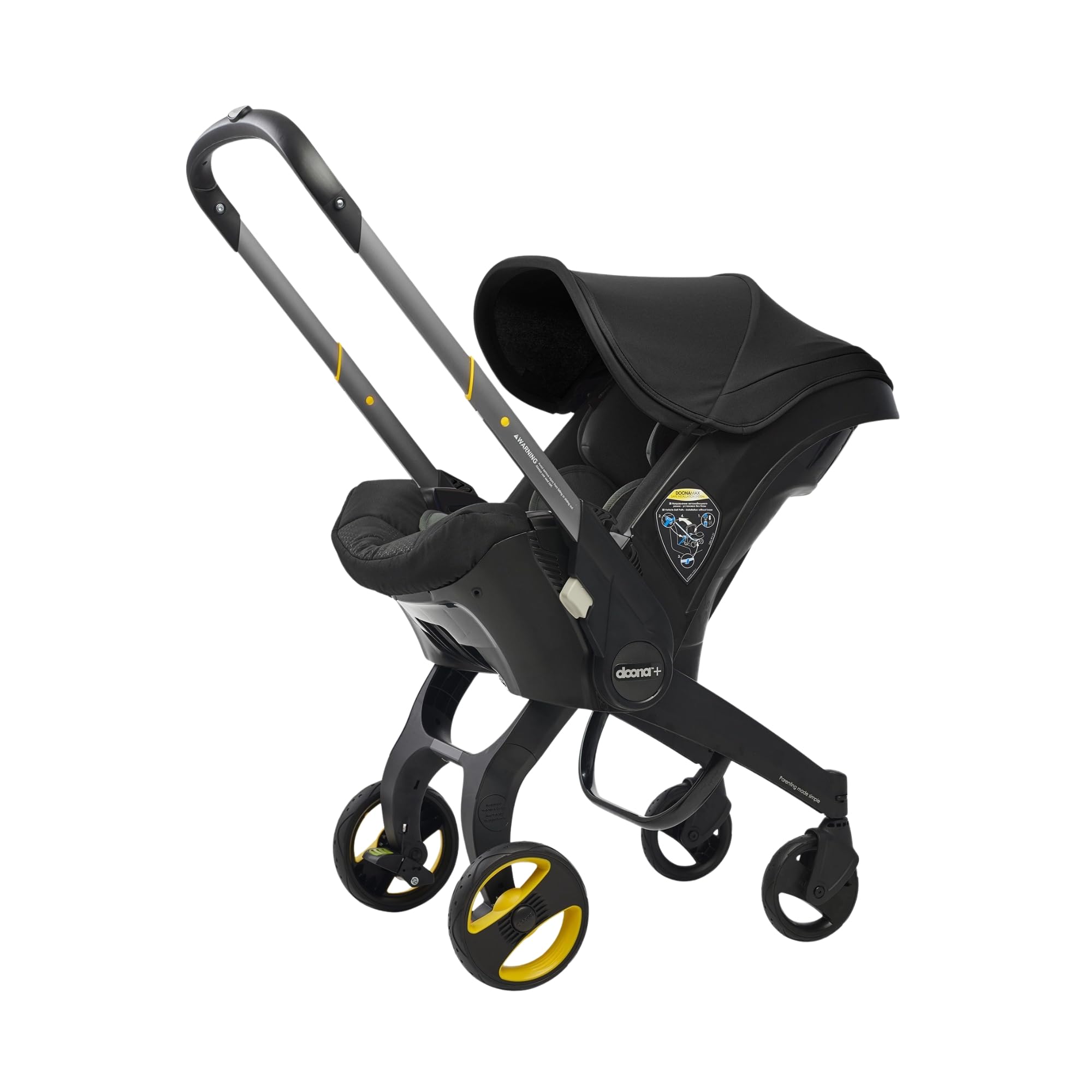
Doona Car Seat & Stroller
Key Features
- Folded Size: 26L x 17.4W x 22.4H inches
- Aircraft Approval: FAA approved
- Car Seat to Stroller: One-click conversion
- Rear-Facing Height Limit: 32 inches
- Price: Premium
The curb outside arrivals is where a travel car seat either earns its keep or turns into one more bag. The Doona collapses that problem: the seat your baby rode in from the airport unfolds into the stroller you push through the terminal, and the switch happens with the baby still strapped in.
That single move is why it takes the top spot for flying with a baby. The included LATCH base gives you a repeatable install at home, the seat is approved for aircraft use, and the structure — an anti-rebound bar plus three layers of side impact protection — is what we want from something that also serves as a stroller in a crowded gate area.
Folded, it measures 26 by 17.4 by 22.4 inches, roughly the trunk space a stroller would have taken, except there is no stroller to pack alongside it. The infant insert and head support are shaped to keep a newborn’s upper and lower body supported, and the canopy is water-repellent with UPF 50+ for the walk from the parking garage.
Our habit after every install is a firm tug on the handle once the seat clicks into the base. It takes a second, and it is the difference between trusting the car-to-stroller trick and thinking about it at highway speed.
Pros
- Replaces a stroller on the trip
- FAA approved for aircraft use
- One-click switch with baby in it
- Water-repellent UPF 50+ canopy
Cons
- 17.2 lb to lift into the car
- Infant stage only
If you’re flying with a baby, this is the seat we recommend: it becomes the stroller, so the airport stops being a packing problem.
Best for Infants and Taxis
Graco SnugRide Lite LX
Key Features
- Base Recline: 4 positions
- Height Limit: 32 inches
- Carrier Weight: 7.2 lb
- Rear-Facing Range: 4–30 lb
- Price: Midrange
Carrier weight is the first thing we check on an infant seat, and at 7.2 pounds the SnugRide Lite LX is the lightest carrier in this guide — light enough to swing out of a taxi with one hand while the other deals with the door. It is rated from 4 to 30 pounds and up to 32 inches, and it releases from its base in one motion.
The base does the quiet work. Four recline positions and a level indicator you can read without crouching mean an install in a strange parking garage never turns into guesswork, which is the part of traveling with a baby nobody warns you about. The carrier also clicks onto a stroller, so a quick errand does not require waking anyone.
It is also the least expensive infant seat here, which matters for a seat your baby will outgrow in about a year. If you want a carrier you can lift without thinking about it and you are not fussed about extras, this is the sensible buy.
Pros
- 7.2 lb carrier is easy to carry
- Level indicator removes install guesswork
- Four-position adjustable base
- Clicks onto a stroller
Cons
- Base is another piece to pack
The infant carrier we recommend for travel: 7.2 pounds in one hand, a level indicator for unfamiliar cars, and a base that installs the same way every time.
Best for One Seat, All Stages
Safety 1st Grow and Go
Key Features
- Modes: Rear-facing, forward-facing, booster
- Seat Weight: 13.2 lb
- Weight Range: 5–100 lb
- Height Positions: 5
- Price: Midrange
Three seats in one usually means three compromises, but the Grow and Go covers real ground: rear-facing from 5 pounds, forward-facing with a five-point harness, then a belt-positioning booster to 100 pounds. One seat to learn instead of three is worth a lot when the car it goes into isn’t yours.
The travel-friendly details are the cleanup ones. The seat pad unclips and lifts off without pulling the harness out, and it is machine-washable and dryer-safe; both cup holders go in the dishwasher. After a drive full of crackers, that matters more than another inch of foam.
At 13.2 pounds it is the lightest convertible in this guide by a wide margin, which is why it earns a runner-up slot: this is a seat you can move into a rental car without treating it as a permanent fixture. Installation rewards patience. The rear-facing belt route is the fussy part, so run it once in your own driveway before the trip rather than at the rental counter after dark.
The QuickFit harness moves the headrest and shoulder straps together in one motion, so a growth spurt does not mean rethreading in a parking lot. What you are buying here is range and convenience rather than plushness — a workmanlike seat that covers a lot of childhood for the money.
Pros
- Covers 5 to 100 lb in three stages
- Pad unclips without removing harness
- Headrest and harness adjust together
- Dishwasher-safe cup holders
Cons
- Harness tensioner is stiff to pull
Our pick when one seat has to cover a rear-facing baby and a booster-age kid: 13.2 pounds, three stages, and easy cleanup.
Best for Rental Cars
Chicco GoFit Plus
Key Features
- Attachment: Quick-release LATCH
- Cup Holders: 2, fold-away
- Seat Weight: 5.5 lb
- Weight Range: 40–110 lb
- Price: Midrange
The GoFit Plus does something neither of the cheaper backless boosters here can: it clips into the car’s lower anchors. That is not what holds your child — the vehicle belt does that — but it keeps the seat from sliding around while a kid climbs in, and it means an empty booster isn’t loose in the back seat.
The release is the good part. Lift one tab and both hooks let go, so moving the seat between your car and a rental takes seconds instead of skinned knuckles. It weighs 5.5 pounds, has a built-in carry handle, and is rated 40 to 110 pounds. The contoured foam and the two fold-away cup holders are details a child notices on a long drive, and it sits a little higher than the other backless seats here, which helps a smaller kid see out.
If your third row buries its anchors under a deep seat bight, hooking it in takes patience the first few times; the seat still works as a belt-positioning booster, so that is an annoyance rather than a dealbreaker. For rental cars and carpools, though, this is the booster we reach for.
Pros
- LATCH keeps it from sliding
- One-tab quick release
- 5.5 lb with a carry handle
- Contoured foam padding
Cons
- Costs more than the plain backless boosters here
The booster we take to rental counters: it anchors into the car, releases with one tab, and stays put while a kid climbs in.
Best for Budget Backup
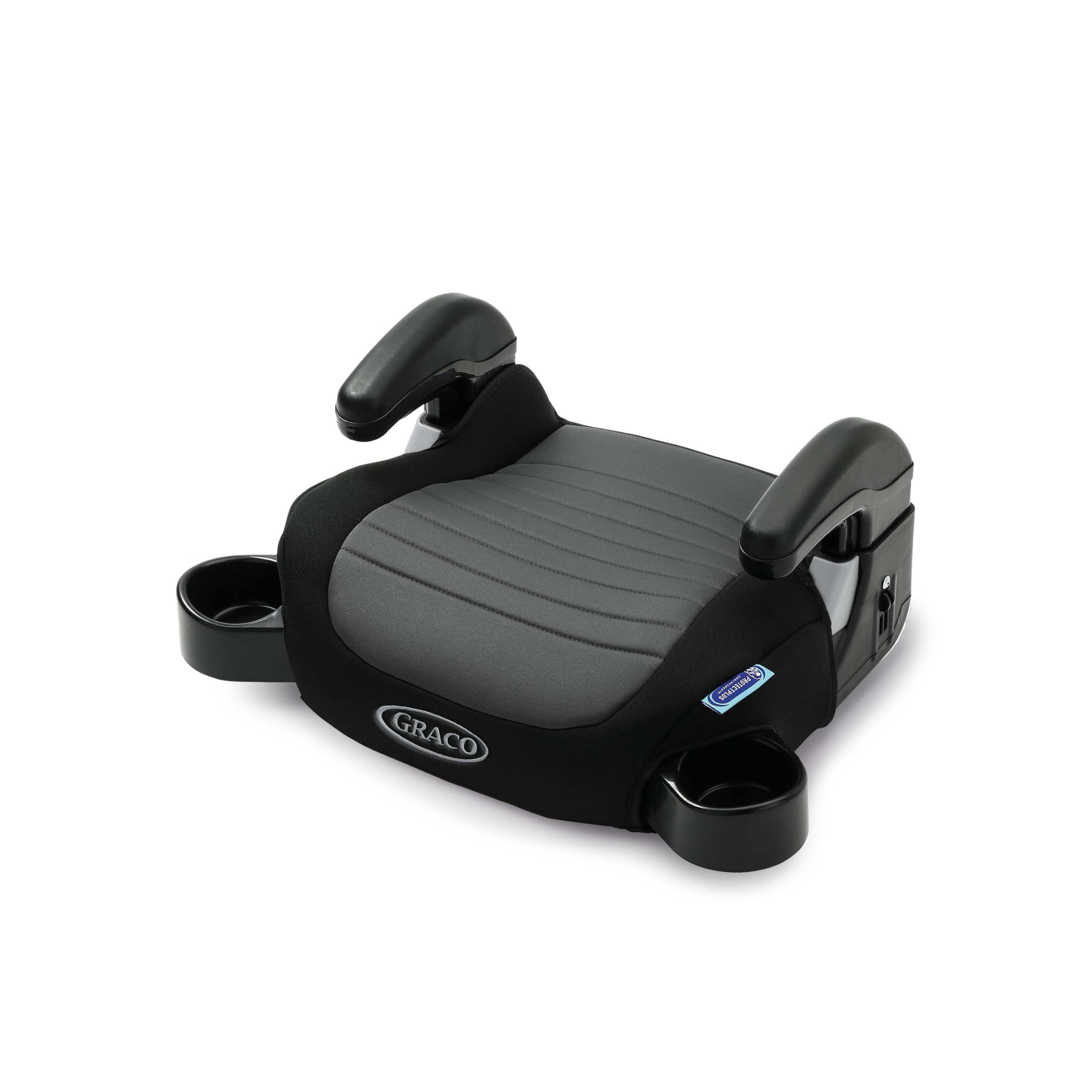
Graco TurboBooster 2.0
Key Features
- Cup Holders: 2, hideaway
- Seat Weight: 4.4 lb
- Height Range: 43–57 inches
- Weight Range: 40–100 lb
- Price: Budget
Near the bottom of this group’s price range sits the TurboBooster 2.0, and it is the seat we suggest for a rental car, a grandparent’s back seat, or any car that only carries a kid occasionally. It weighs 4.4 pounds, fits children from 40 to 100 pounds and 43 to 57 inches, and measures 17 inches square, so the middle seat survives.
What lifts it above a plastic perch is the adjustment. The armrests raise and lower, which changes where the lap belt crosses a growing child, and the cup holders retract into the seat instead of hanging off the sides where they get kicked. We have not come across another backless booster here that adjusts this much for the money.
The boundary is sleep. A backless booster gives a sleeping head nowhere to go, so a child who still naps on the highway needs a highback instead. For a kid who stays awake and can buckle themselves, this is the least fuss of anything here.
Pros
- 4.4 lb and easy to move
- Height-adjustable armrests
- Cup holders tuck into the seat
- Cover comes off for washing
Cons
- No LATCH; buckle it in when empty
The budget pick for a big kid who buckles themselves: light enough to move between cars and adjustable enough to keep the belt in place.
Best for Napping Kids
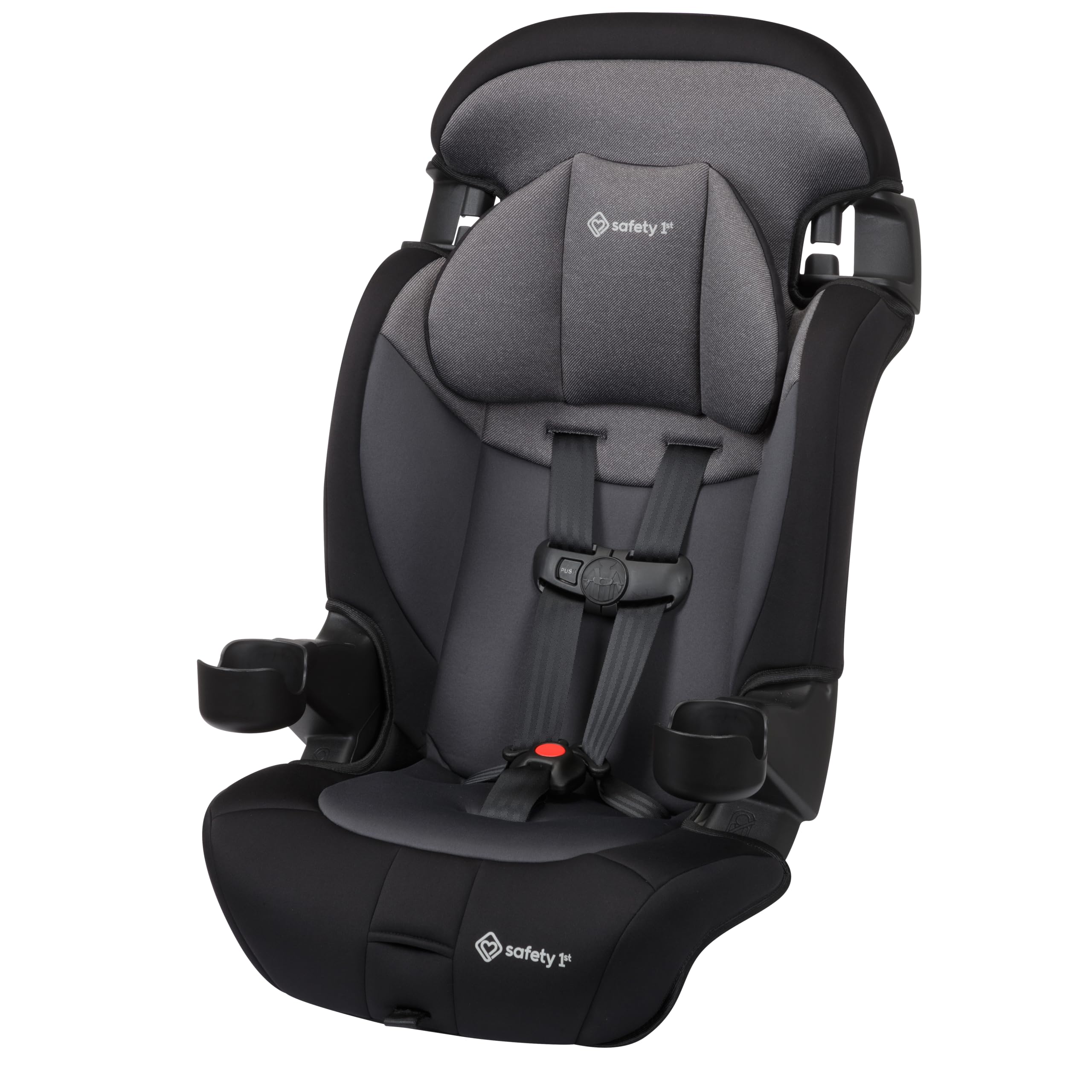
Safety 1st Grand 2-in-1
Key Features
- Width: 17.75 inches
- Seat Weight: 8.8 lb
- Booster Range: 40–100 lb
- Harness Range: 40–65 lb
- Price: Midrange
A backless booster is a perfectly good travel seat right up until your kid falls asleep in it. The Grand 2-in-1 answers that with a high back that gives a lolling head somewhere to land, then converts to a backless booster once the naps stop.
It runs forward-facing with a five-point harness from 40 to 65 pounds, then as a belt-positioning booster from 40 to 100 pounds, with three headrest positions in between. At 8.8 pounds and 17.75 inches wide it is light enough to carry out to the car with the groceries and slim enough to sit three across in a pinch. The seat pad is machine-washable and dryer-safe, and both cup holders come out.
The harness mode is what makes it useful for a four- or five-year-old who is not ready to be trusted with a seat belt alone. That is a stage the backless boosters here skip entirely, and it is the reason this seat earns a place rather than being a compromise between two others.
Where it lands: it is the travel seat for a kid who still sleeps in the car, or for the vehicle that only does weekend duty. You carry more than you would with a backless booster and less than a convertible, and for plenty of families that is exactly the gap that needs filling.
Pros
- High back supports a sleeping head
- Converts from highback to backless
- 8.8 lb and 17.75 in wide
- Washable, dryer-safe seat pad
Cons
- Heavier to carry than a backless booster
For a kid who still falls asleep in the car, this is the travel booster: a high back for the nap, a backless seat for later.
Best for Spare Seat
Cosco Topside

Key Features
- Width: 15 inches
- Seat Weight: 2.2 lb
- Height Range: 43–57 inches
- Weight Range: 40–100 lb
- Price: Budget
Two point two pounds is close to nothing, and it is the whole argument for the Cosco Topside. At 15 inches square and 6.5 inches tall it drops into a duffel or the trunk footwell and stays out of the way until you need it.
The range matches the other backless boosters here: 40 to 100 pounds, 43 to 57 inches. What is different is the width. At 15 inches it is the narrowest seat in this guide, so three across is realistic in back seats where the others crowd, and the low profile means it can stay in the car between trips without anyone noticing it is there.
This is the spare, the carpool seat, the one that goes in the bag for a trip with a rental car at the other end. It is not the seat for a four-hour drive with a napper or a kid who wants thick padding, but nothing here disappears into a trunk more completely.
Pros
- 2.2 lb, packs into a bag
- 15 in wide for three across
- Same 40-100 lb range as the others
Cons
- Hand-wash-only cover
- Thin padding
The spare-seat pick: 2.2 pounds, 15 inches wide, and happy to live in a duffel until the next rental car.
How We Tested the Best Travel Car Seats
We started by narrowing the field to seats marketed as travel-friendly or compact, then checked each one’s safety certification, aircraft approval where claimed, weight, folded dimensions, harness range, and what came in the box. Price mattered, but only as part of value: we asked whether the seat felt like a fair purchase once you factored in carry bags, extra bases, and the pieces you’d actually use on a trip. From that list, we tested eight seats over seven months, using them the way a traveling family would.
The test scenes were airport curbs, rental-car lots, taxi and rideshare pickups, grandparents’ back seats, and the trunk of a compact car. We installed each seat with the vehicle belt and with lower anchors when available, then checked tightness at the belt path with a firm pull and rechecked after a short drive. We also watched for secure fit and stability once the seat was in place, including whether it shifted or tipped when a child climbed in.
For ease of use and safety, we timed solo installation, adjusted the harness with a wiggly kid, and noted whether buckles, labels, and belt paths were obvious in dim parking garages. We carried each seat through a terminal and up stairs, weighed it packed in its travel bag, and logged whether one adult could manage it alongside a stroller. Comfort got a real-world check on longer rides: we looked for slumped heads, sweaty backs, and whether kids fussed or settled. Quality showed up in the small stuff — padding that stayed put, buckles that didn’t stick, covers that came off for washing without a fight.
How to Choose a Travel Car Seat
The best travel car seat is the one you can install correctly in a car you have never seen before, then carry through a terminal without needing a hand you do not have.
Match the seat to the stage, not the trip
Age and size decide far more than itinerary. A baby under about a year belongs in a rear-facing infant carrier or a rear-facing convertible, a three- or four-year-old in a forward-facing harness, and a child past 40 pounds and 43 inches who can sit still for the whole ride can use a belt-positioning booster. Buying a booster for a two-year-old because it packs small is the most common mistake in this category.
Work out the stage first, then shop for the lightest, simplest seat that meets it. Each pick here states its weight and height range, and those limits are the ones that matter — a seat your child has outgrown is not a travel seat, whatever its footprint.
Weight is the number you will feel
Carrying weight decides whether a trip feels manageable. The infant carriers here start at 7.2 pounds, the light convertible is 13.2 pounds, and the backless boosters run from 2.2 to 5.5 pounds. We put that figure near the top of our list because everything else about a travel seat is easier to live with than a heavy one.
One trap: compact in a product listing usually means it fits a car’s back seat, not that it fits an overhead bin. Car seats do not go in bins — they ride in a seat the child has paid for, or they get checked. Pack accordingly.
Practice the install before you leave
Every seat here installs with the vehicle belt or with lower anchors, and the belt route is the one that works in any car you rent. Do both once in your own driveway before the trip, so the belt path and the recline are familiar when you are tired and the light is bad.
A loose install is the failure that actually matters, and it happens most often in a rental lot after dark. Ten minutes at home buys confidence for the whole trip, and it is the difference between a seat you trust and a seat you keep checking in the mirror.
Know what the seat can do on a plane
An infant seat or convertible needs an FAA approval statement before it can be used in an aircraft seat; look for that wording on the label before you fly. Boosters work differently. Aircraft seats have lap belts only, so a belt-positioning booster cannot be used in flight — it travels as luggage or tucks under the seat in front of you and does its job in the car at the other end.
If you are flying with a booster-age child, that is a packing decision rather than a seat decision. Plan where the booster goes before you get to the gate.
Check the cleanup details
On a trip, a washable seat pad matters more than an extra inch of foam. The setup we look for is a pad that unclips without pulling the harness out and can go in the dryer, plus cup holders that survive a dishwasher. A hand-wash-only cover is acceptable in a spare seat that lives in the trunk; it is the last thing you want to deal with in a hotel sink.
Frequently Asked Questions
Is a travel car seat worth buying for just one trip?
For a child old enough for a backless booster, yes. A light one packs flat, costs little, and becomes the spare seat at home afterward — the Cosco Topside is the version of that idea that disappears into a duffel.
For a baby or toddler in a harness seat, take the seat you already own and know how to install. A familiar seat with a practiced install beats an unfamiliar rental every time.
How do I stop an empty booster seat sliding around the back seat?
Buckle the seat belt across the booster whenever nobody is sitting in it, so it does not become a projectile in a sudden stop. It takes the same two seconds as buckling a child in.
A booster with LATCH, like the Chicco GoFit Plus here, anchors to the car’s lower bars and stays put without the belt.
Can you install an infant car seat without the base?
Usually yes, by routing the vehicle belt through the carrier’s own belt path, which is the setup that makes taxis and rideshares workable. Check your seat’s manual for the belt path and the required recline angle, and practice it once at home.
Not every carrier permits a base-free install in every seating position, so confirm it in the manual rather than assuming.
Final Verdict
With a baby, the Doona is the recommendation, and the reason is simple: it removes the stroller from the trip. You install it on a base you already know, use it in an aircraft seat, and push it through the terminal — one object to manage instead of three.
Past the infant stage the answer follows your child’s size. The Safety 1st Grow and Go covers a rear-facing toddler through booster age in a 13.2-pound seat, and once your child is 40 pounds and can sit still, the Chicco GoFit Plus is the booster we take: it anchors, releases with one tab, and stays put in an empty back seat.
