This post contains affiliate links. We may earn a small commission when you buy through our links — at no extra cost to you.
Somewhere around your toddler’s second birthday, the stroller that got you through the first year stops earning its keep. The seat gets tight, the fold gets fussy with a 30-pound kid squirming under one arm, and suddenly you’re doing math on whether a curb ramp is worth the trouble. A toddler stroller is meant to fix exactly that: a roomier seat, a fold you can manage one-handed, and a frame that still turns on a dime in a narrow grocery aisle.
Over the past eight months, my team and I have pushed six of these through school drop-off lines, crowded farmers markets, and a gravel path that no stroller enjoyed, and the differences show up fast. Weight matters more than the spec sheet suggests — you feel an extra two pounds by the third block — and the folded footprint is usually what decides whether a stroller lives in your trunk or your front hallway. Appearance and build quality get a vote too, since this is the thing parked in your kitchen every night. Below are the ones we’d happily load into the car again.


Best for Everyday and Travel
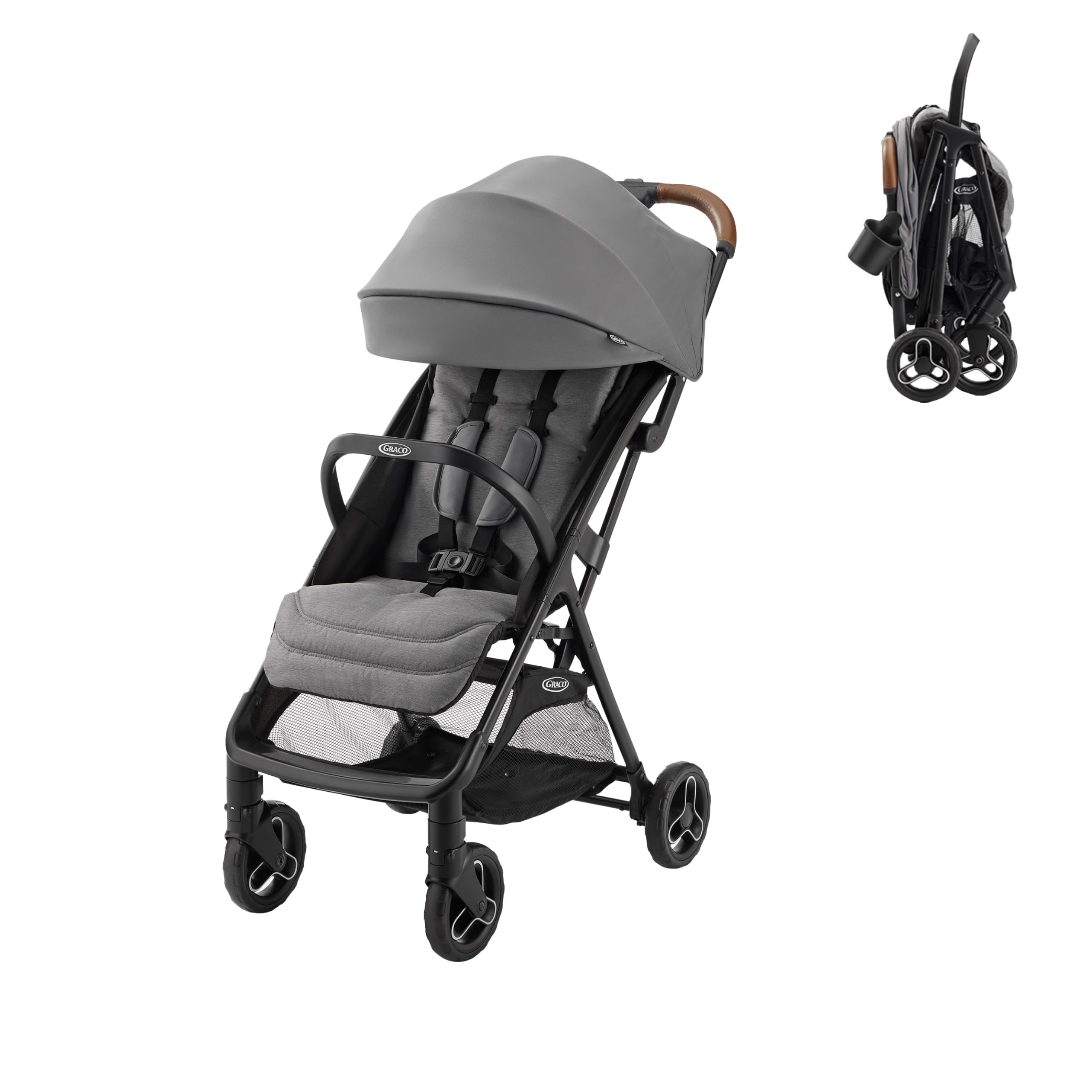
Graco Ready2Jet
Key Features
- Fold: One-hand automatic
- Folded size: Under 43.5 x 12 x 8 inches
- Weight limit: 50 lb
- Stroller weight: 13.2 lb
- Price: Premium
The fold is the whole argument. Picture a rainy parking lot, a toddler on one hip and a bag on the other shoulder: the Ready2Jet opens and closes on a single pull with one hand and stands upright once it’s down. That’s the test we kept setting for every stroller here, and this is the one that passed it most often.
At 13.2 pounds it lifts into a trunk without a second trip, and the seat is rated to 50 pounds, so a tall 3-year-old still has room under the canopy. All-wheel suspension takes the edge off paving slabs, and the adjustable calf support stops longer legs from dangling, which is a small thing that makes a real difference to a toddler on a 40-minute walk. The seat reclines for naps and the canopy carries a UV 50 rating.
The basket is where it disappoints. It’s shallow, and a full diaper bag eats most of it, so plan on carrying more than you want to. Canopy coverage is modest too: fine for a morning errand, thin when the sun sits low ahead of you.
Two details kept winning us over. The belly bar pops off and doubles as a carry handle, which is how we moved it up and down stairs, and the folded stroller stands on its own in a closet instead of lying in a heap. For a stroller that lives in a car, that’s the difference between using it and leaving it at home.
Pros
- One-hand automatic fold, even with a child on your hip
- Stands on its own once folded
- 13.2 pounds with a 50-pound weight limit
- Reclining seat with adjustable calf support
Cons
- Shallow basket struggles with a diaper bag
- Canopy coverage is on the short side
Our default recommendation for toddler parents: it folds with one hand, stands on its own, and carries a 50-pound child without needing a second person.
Best for Budget Everyday Use
Kolcraft Cloud Plus
Key Features
- Cup holders: 4
- Folded size: 18 x 12 x 34 inches
- Weight limit: 50 lb
- Stroller weight: 11.8 lb
- Price: Budget
Nothing else in this guide gives you as much stroller for the price. The Cloud Plus pairs a 50-pound seat with a genuinely large under-seat basket, a parent tray with two drink holders and a center compartment, a removable child tray, and four cup holders in total, which is the sort of kit that usually comes on strollers twice the size. It’s also just under 12 pounds, so it goes up stairs without a fight.
We recommend it to families who want one stroller that lives in the car, handles errands and doesn’t need thinking about. What you give up is polish. The fold is a two-handed job on some days and takes a firm shove before the latch catches, and the seat is flatter and less padded than our top pick’s.
The rest is better than the money suggests. The three-tier canopy with a peek-a-boo window is genuinely useful in a queue, and it’s listed as theme-park size approved. It isn’t the stroller for gravel or tree roots, but for pavement, shops and the walk to nursery it does the job and asks nothing of you.
Pros
- Deep basket plus a parent tray and child tray
- Under 12 pounds but rated to 50
- Self-standing compact fold
- Theme-park size approved with a three-tier canopy
Cons
- Front casters can jam and drag
- Long 34-inch fold crowds small trunks
We think it’s the value pick here: a 50-pound seat, a huge basket and a parent tray for less than almost anything else in this guide.
Best for Small Car Trunks
Jeep Altitude
Key Features
- Fold: One-hand auto fold
- Folded size: 12.5 x 19 x 29 inches
- Weight limit: 50 lb
- Stroller weight: 16.6 lb
- Price: Midrange
Folded, the Altitude is 12.5 inches through its shortest side and 29 inches tall, numbers that matter when the trunk already holds a week of shopping. The one-hand auto fold leaves it standing, and the carry handle is built into the frame, so getting it out of the car with a toddler on your hip is one motion instead of three. At 16.6 pounds it’s mid-pack here, and the leatherette bar wipes clean after a snack. We rate it the best of the compact folders for a small car.
Open, it doesn’t feel like a stripped-down umbrella stroller. Four-wheel suspension and puncture-proof tires cope with sidewalk seams and curb cuts, the canopy extends with a mesh window for a check on a sleeping child, and the footrest adjusts as legs grow. The frame is light, though, and a child who leans hard over the side rail can make it feel tippy, so keep the harness snug, keep bags off the handlebar, and push the seat down until both latches click before you load it.
Pros
- One-hand auto fold with a built-in carry handle
- Compact 12.5 x 19 x 29 inch fold
- Extendable canopy with a mesh peek-a-boo window
- Adjustable footrest as legs grow
Cons
- Light frame feels tippy when a child leans out
Our compact pick: it folds to 12.5 by 19 by 29 inches, opens one-handed, and still takes a 50-pound toddler.
Best for Theme Park Days
Dream On Me Coast Rider
Key Features
- Modes: Stroller, ride-on, scooter
- Folded size: 24.41 x 16.14 x 10.63 inches
- Weight limit: 45 lb
- Stroller weight: 12.8 lb
- Price: Budget
Most strollers stop earning their place around the time a child turns four. This one has a second act: it converts from a stroller into a ride-on board and then a scooter, and each mode is tested to the same standard as the first. For a 3-year-old who wants to walk half the time and be pushed the other half, that’s a genuinely useful trick.
At 12.8 pounds it’s among the lightest here, and it folds to roughly 24 by 16 by 11 inches, so car, bus or hall closet, no drama. We choose it over a conventional toddler stroller for theme parks and airports, partly because it’s listed as theme-park approved, and partly because the open, upright seat lets a bigger child climb in without being lifted.
The folding is where it tests your patience. The guard rail and the seat cushion have to line up before the frame collapses, so it’s a two-step job rather than a one-hand flick, and there’s no under-seat basket, so a diaper bag rides on your shoulder. Neither matters much if this is the second stroller in the garage for park days, which is how we treat it.
Pros
- Converts to ride-on and scooter as your child grows
- 12.8 pounds and compact when folded
- 45-pound limit covers the toddler years
- Upright open seat a bigger child can climb into
Cons
- No under-seat basket for a diaper bag
We recommend it for a toddler who would rather ride than sit: it’s the only stroller here that turns into a ride-on board and then a scooter.
Best for Carrying Gear
Baby Trend Passport Cargo
Key Features
- Folded size: 22.5 x 30.75 x 16.38 inches
- Rear wheels: 12.81 inches
- Weight limit: 50 lb
- Stroller weight: 19.8 lb
- Price: Midrange
The Passport Cargo is the stroller you take when the day needs supplies. There’s a basket big enough for a diaper bag and a purse, a pouch on the back of the seat, a parent tray with two cup holders and a center compartment, and a child area with its own cup holder and snack space. Nothing else here carries as much.
The seat is the other half of the case for it. It lays back flat with a leg rest that raises, so naps and diaper changes happen without lifting a toddler out, and the padding and fabric are plusher than anything else in this guide. Rated to 50 pounds, it stayed roomy for a tall 3-year-old, and the canopy is UPF 50+ with a decent overhang.
On a sidewalk it rolls smoothly on 12.8-inch rear wheels and feels planted rather than skittery. The front end can stick on tight turns, the fold takes a few tries before it becomes one motion, and at 9 kilograms it’s the heaviest pick here to lift into a car. For a family that treats the stroller as the day’s supply depot, that’s the trade we accept.
Pros
- Large basket plus a pouch on the seat back
- Flat recline and a raising leg rest
- Roomy seat rated to 50 pounds
- Parent tray and child tray with cup holders
Cons
- Around 20 pounds to lift into a car
- Front end can stick on tight turns
Our pick when the stroller has to carry the day: a huge basket, a flat recline and a roomy 50-pound seat that suits a big toddler.
Best for Rough Sidewalks
Graco Outpace LX
Key Features
- Wheels: 3-wheel, never-flat rubber
- Folded size: 32 x 17 x 11 inches
- Weight limit: 50 lb
- Stroller weight: 19 lb
- Price: Premium
Our top pick skips over tree roots; this one rolls through them. Three wheels, never-flat rubber tires and in-seat suspension smooth out broken pavement, gravel paths and the lip of a curb in a way none of the compact strollers here manage. If your daily walk is a park loop rather than a parking lot, that’s a difference you’ll feel every day.
The size is the price. At 19 pounds and 25 inches across, it’s a two-hand lift into a hatchback and it takes a bigger bite out of a sidewalk than a compact folder. The one-hand self-standing fold helps, and the foldable belly bar keeps the whole thing tidy enough to stand in a hallway.
The details are what make it pleasant: a magnetic buckle that snaps shut without a wrestle, a no-rethread harness that moves up as shoulders grow, and trays for both parent and child. The reservation is stability, because on cambered ground it can wobble. That’s why we treat it as a walking stroller, whatever the three-wheel shape suggests.
Pros
- Never-flat rubber tires with in-seat suspension
- Magnetic buckle and no-rethread harness
- One-hand self-standing fold
- Snack tray and parent tray included
Cons
- 19 pounds to lift into a car
- Can wobble at speed on uneven ground
We reach for this one on rough ground: bigger wheels and real suspension, at the cost of 19 pounds and a wide footprint.
Best for Storage and Shade
Ingenuity 3Dquickclose CS+

Key Features
- Fold: One-hand quick close
- Folded size: 20.5 x 17.3 x 7.1 inches
- Weight limit: 50 lb
- Stroller weight: 17 lb
- Price: Midrange
Two features stand out the moment it’s open: the basket, which is the largest here, and the canopy, which is among the longest and shades a sleeping toddler’s legs as well as their head. Add the phone pocket by the handle and the child’s cup holder and you have one of the best-equipped strollers in this guide for a long day out.
It’s 17 pounds with a 50-pound seat, and it folds to 7.1 inches deep, flat enough to slide behind a car seat or stand in a closet. The quick-close fold works one-handed, and the removable bumper bar comes off so a bigger toddler can climb in without help.
One thing to know before you buy: if the frame isn’t fully locked open, it can fold with a child in the seat. It needs a firm push down until it clicks, every time, and that has to become a habit rather than a hope.
With that habit in place, this is the stroller we pack for a trip. The basket swallows the day’s gear, the canopy handles a nap in the sun, and it stows flat in a rented trunk. Nothing else here balances storage, shade and folded size so well.
Pros
- Extra-large basket plus a phone pocket
- Extra-long canopy with great coverage
- Folds to 7.1 inches deep
- 17 pounds with a 50-pound limit
Cons
- Frame can fold if the latch isn’t fully engaged
- 90-day warranty is the shortest here
- Small front wheels catch on cracked pavement
Our travel pick: the biggest basket and longest canopy here, folded to 7.1 inches, as long as the frame clicks open every time.
Best for Naps and Snacks
Mamazing Umbrella Stroller
Key Features
- Recline: Near-flat
- Folded size: 19 x 12.2 x 34 inches
- Weight limit: 50 lb
- Stroller weight: 13.7 lb
- Price: Midrange
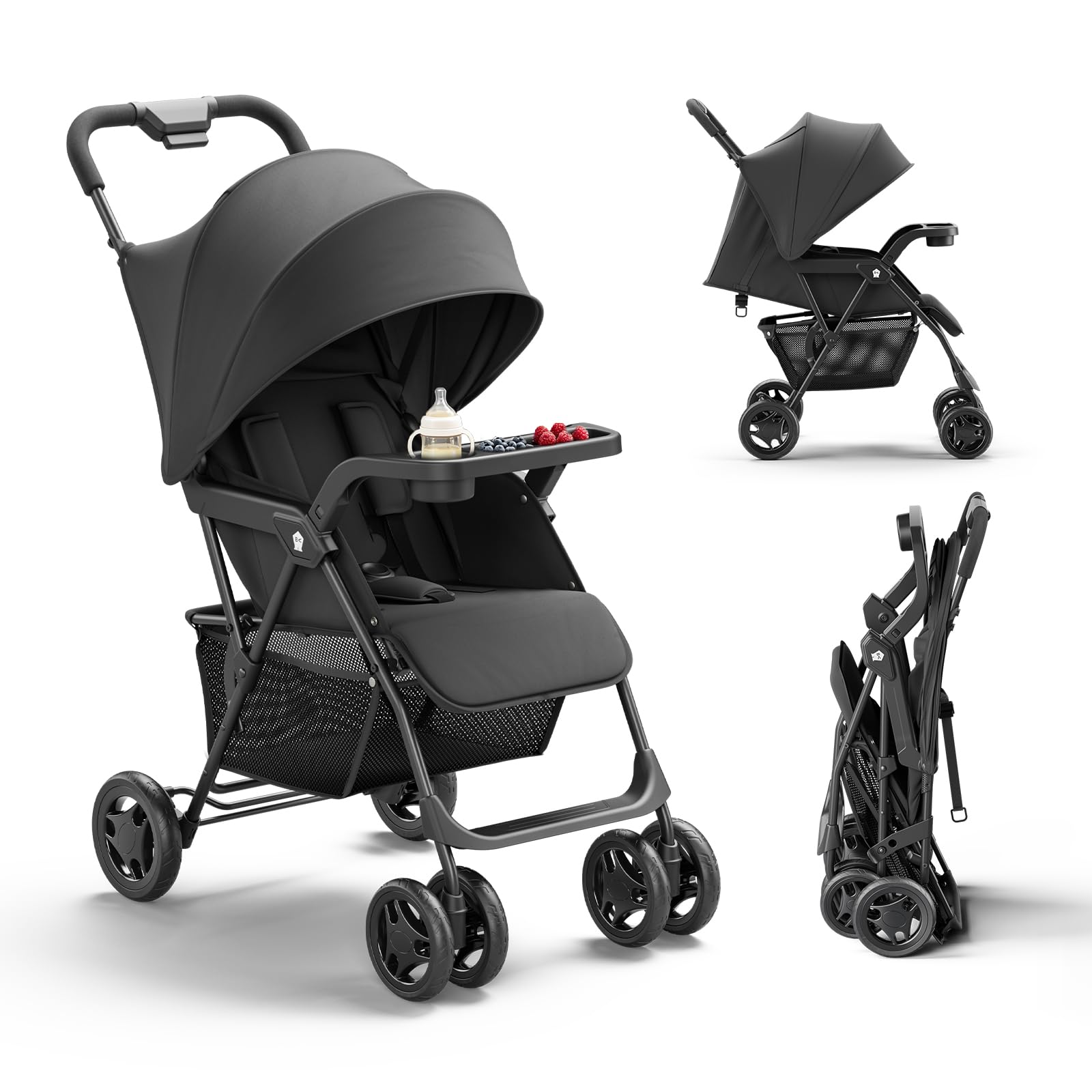
A near-flat recline normally turns up on strollers that cost considerably more. Here it comes with a removable child tray, a UPF 50+ canopy that expands with a mesh window, and a seat rated to 50 pounds, in a stroller that weighs 13.7 pounds. That cluster of features is why it earned a place despite being the least familiar name in the group.
The tray is the detail we appreciate most. A cup holder and a snack area within a toddler’s reach buys you twenty quiet minutes in a queue, and it lifts off for cleaning. The near-flat seat means a nap doesn’t require going home, and the harness adjusts in height without rethreading.
It pushes well for the money: a padded one-hand steering handle, swivel front wheels and 6-inch casters that handle store aisles and smooth sidewalks. Gravel and tree roots will stop it, so keep it on pavement. It’s rated 0 to 36 months even though the seat takes 50 pounds, so a tall 3-year-old is worth checking against the canopy before you commit.
Where it falls down is the latch that holds it folded. It catches as the frame comes up, and you’ll want two hands for the first few weeks. That isn’t a reason to walk away, just something to expect on a wet afternoon. Otherwise this is the value pick for a family whose toddler still naps on the go.
Pros
- Near-flat recline for on-the-go naps
- Removable child tray with a cup holder
- UPF 50+ expanding canopy with mesh window
- 13.7 pounds with one-hand steering
Cons
- Unfold latch sticks and catches
- Only one cup holder
We point napping toddlers’ families here: near-flat recline, a snack tray and a 50-pound seat for less than most of this group.
How We Chose and Tested Toddler Strollers
The shortlist started as a spreadsheet, not a store visit. We gathered every toddler stroller we could find with a seat rated to at least 50 pounds, filtered out models that needed two hands and a foot to fold, and cut anything whose folded dimensions wouldn’t clear a standard sedan trunk. That left six strollers spanning the price range, from compact umbrella styles to full-size frames with reversible seats.
Each one logged eight months of real use: the morning walk to daycare, the Saturday market, a few flights of apartment stairs, and the gravel trail behind my neighborhood park. We weighed every model on a luggage scale rather than trusting the listing, then timed the fold one-handed while holding a 30-pound toddler on the opposite hip — the only fold test that matters.
Stability got its own check. We hung a fully loaded diaper bag from the handlebar, let go, and watched how close the frame came to tipping with a child climbing in. We ran the harness and handlebar through adjustments between a 5-foot-2 parent and a 6-foot-1 one, clicked an infant car seat into every model that advertised compatibility, and noted what came in the box versus what cost extra — the quiet reason two strollers at the same price can feel very different by month three.
How to Choose a Toddler Stroller
The right toddler stroller is the one you can fold, lift and steer while your hands are already full, so start with the fold and the weight, then check the seat.
Start with the seat, not the canopy
By the time a child is walking, the seat has one job: keeping a 25-to-40-pound person comfortable enough to stay in it. Look for an upright back that isn’t permanently reclined, a leg rest that adjusts, and a harness that moves up as shoulders grow. A flat, thinly padded seat is the fastest way to a toddler who wants out after ten minutes.
The trap is the weight limit. A 50-pound rating doesn’t guarantee a tall 3-year-old fits, because the seat back and the canopy can be too low. Check the height between the seat and the canopy before you buy, not the number on the box.
Fold and weight decide how often you use it
Strollers here run from roughly 11 to 20 pounds, and that spread is the difference between lifting it out of the trunk one-handed and going back for a second trip. A one-hand fold that leaves the stroller standing is worth paying for when it lives in a car; a two-hand fold is fine when it lives by the front door.
Compact means it fits a trunk, not that it flies in a cabin. Check your airline’s carry-on dimensions rather than trusting a badge, and measure your trunk’s opening before you assume a long folded stroller will slide in.
Four wheels or three
Four small swivel wheels are easier in shops, queues and tight aisles. Three larger wheels with rubber tires roll over roots, gravel and broken pavement, and suspension does more for a sleeping toddler than a thicker seat pad.
If you plan to run, buy something designed for it and lock the front wheel. None of the swivel-front models here is built for running, and a wobble at speed is not something to push through.
Storage, trays and what tips
Basket size matters more with a toddler than with a newborn, because you’re carrying snacks, a water bottle and often a change of clothes. A deep basket under the seat beats a parent tray, though the two often arrive together.
Watch the handlebar. Hanging a heavy bag on the back of a light stroller is how they go over, and a child leaning hard over the side rail can do the same. Keep the harness snug and the load underneath.
What holds up by month six
Fold latches, front casters and fabric take the wear on a light stroller. Warranties among these picks run from 90 days to a year, so read that line before you buy, and push the seat down until it clicks every single time you open it.
Front casters collect grit; a wipe every few weeks keeps them swiveling. If you’re buying one stroller to last two years of daily use, this is where the cheapest option starts to show its price.
Frequently Asked Questions
Can I take a toddler stroller on a plane?
Yes. Most airlines let you gate-check a stroller at no charge and hand it back on the jet bridge. The part that matters at security is how it folds, so a one-hand fold saves time with a toddler in your arms.
A few compact models here fold small enough that parents have carried them into the cabin, but that is the crew’s call on the day. Check your airline’s carry-on dimensions and ask at the gate before you count on it.
Do I still need a stroller for a 3-year-old who wants to walk?
For a full day out, yes. A preschooler who insists on walking at ten in the morning is often asking to be carried by two in the afternoon, and a light stroller is a lot easier than a tired child in your arms.
For a twenty-minute errand, a stroller that stays in the car costs you nothing. If your child wants to walk half the time, a ride-on board or a convertible model earns its keep.
Is a more expensive toddler stroller worth it?
It buys three specific things: less weight, a fold you can work with one hand, and suspension that keeps a napping toddler asleep over curbs. If the stroller comes out of the car five times a day, those are worth paying for.
If it stays by the front door for walks around the block, a budget pick with a deep basket is the better buy. Spend on the fold, not the fabric.
How do I clean a stroller seat?
Wipe the frame with a damp cloth and spot-clean the seat with mild soap and cold water. Several seats here have covers that come off for washing, and one allows a low tumble dry, so follow the care note for your model rather than guessing.
Never fold a damp stroller. Trapped moisture in the canopy and the seat seams is what turns into mildew between trips.
Final Verdict
Buy the Graco Ready2Jet if you want one stroller to do everything. At 13.2 pounds it lifts with one hand, folds and stands on its own in a parking lot, and the seat takes a 50-pound child, which is more than most toddlers will ever need.
Spend less and the Kolcraft Cloud Plus gives you a deeper basket and a parent tray for errands; spend more and the Graco Outpace LX is the one for long walks on bad pavement. The family that should look elsewhere is the one whose toddler would rather ride than sit, and for them the Coast Rider is the answer.
