This post contains affiliate links. We may earn a small commission when you buy through our links — at no extra cost to you.
Night lights for toddlers walk a fine line: bright enough to banish shadows, dim enough that your kid doesn’t treat 2 a.m. as a playdate. I’ve learned that the hard way with my own two kids, and over the past three months my team and I have lived with 14 different night lights in real toddler bedrooms—during nap time, midnight wake-ups, and the occasional power outage.
We paid attention to brightness and how gradually you can dim it, whether the glow feels warm and relaxing or harsh, and if the built-in sounds are actually soothing or just noise. Appearance matters more than you’d think—some look like toys, others blend into the wall—and we noted size, build quality, durability, reliability, and whether the price felt fair. Remote control was a bonus we tested with sleepy, one-handed fumbling. The picks below are the ones that earned a permanent spot on the nightstand.


Best for Sleep Routines
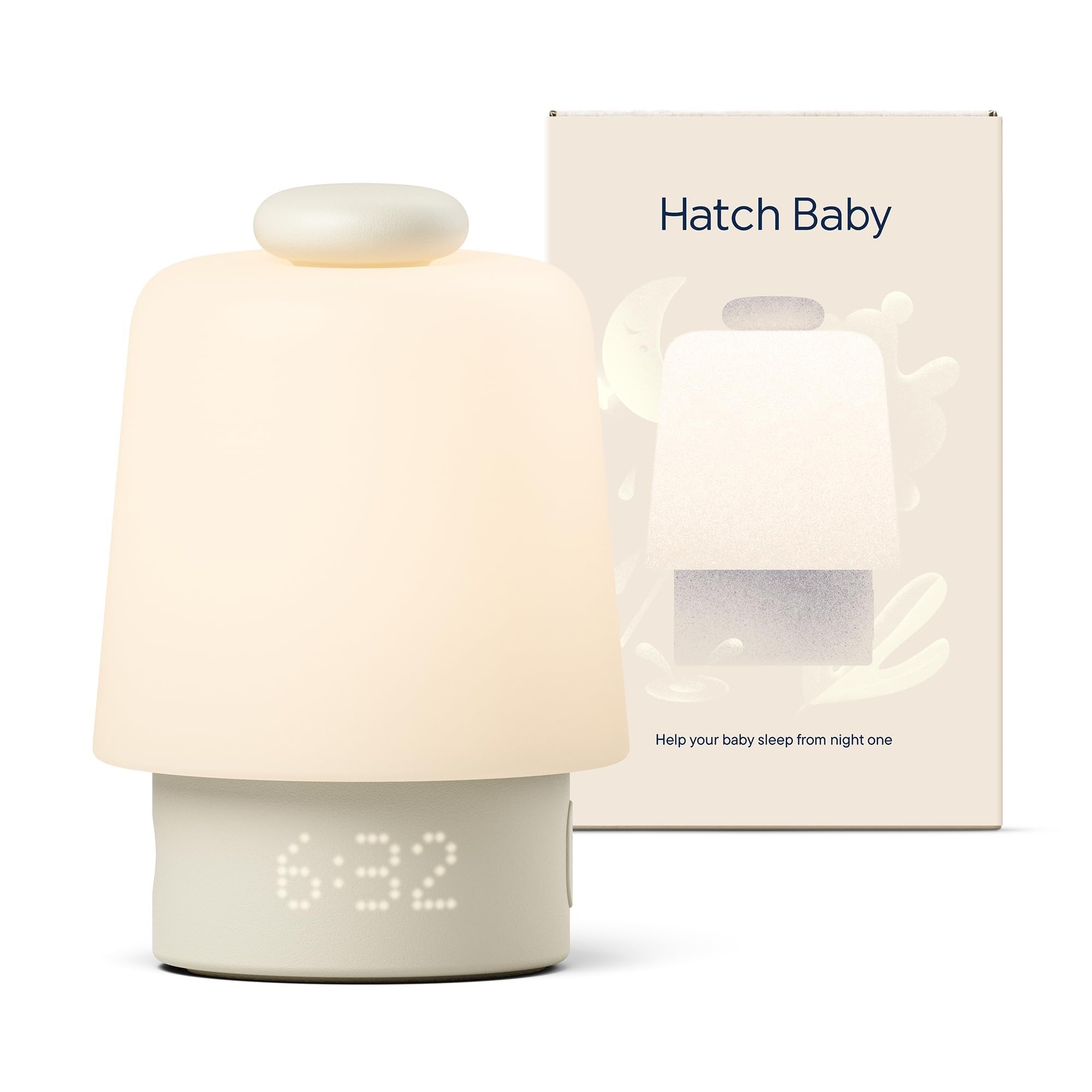
Hatch Baby Night Light
Key Features
- Power: Corded electric
- Controls: App, push button
- Dimensions: 6 x 4 x 5 in
- Connectivity: Wi-Fi
- Price: Premium
The Hatch earns its place because it does more than glow: it turns light and sound into a repeatable bedtime sequence. We like setting a dim color for sleep and a brighter one for morning, then letting the app carry the same cue from bath time to bed. For a toddler learning that dark means sleep and morning means get up, that is more useful than another decorative lamp.
In use, the app is the part that matters. You can adjust the light and sound without opening the door, which is exactly what you want when a toddler is nearly asleep. The sound choices are broad, the matte putty finish looks at home on a dresser, and the light goes dim enough for a middle-of-the-night check. At its brightest, though, it is closer to a small room light than a night light.
The manual top controls are worth keeping within reach, and the unit’s footprint is small enough for a dresser without disappearing. The Hatch asks you to build an app habit, and that is the trade-off.
What sold us is the handoff. The same device can carry a toddler from a feed-and-settle baby to a preschooler who needs a stay-in-bed color cue, so it stays useful longer than a single-purpose lamp.
Pros
- Turns light and sound into a bedtime routine
- App control without entering the room
- Color cues for sleep and wake-up
- Dim enough for middle-of-night checks
Cons
- App and Wi-Fi can drop out
For parents who want light, sound, and a bedtime routine in one device, the Hatch is the one we choose; its app control and color cues justify the premium, though the top buttons should stay handy.
Best for Sleep-Friendly Plug-In
YUNLEX Amber Night Light
Key Features
- Power: 0.5W
- Sensor: Dusk-to-dawn
- Light color: 1500K amber
- Brightness levels: 3
- Price: Budget
The YUNLEX makes a convincing case for keeping the night light boring. Its 1500K amber light is warm and low-blue, and the dual-layer diffuser hides the LEDs so you get an indirect glow rather than a row of bright dots. At 0.5W, it is also cheap to leave on every night.
We like the three-step slider more than a touch control here. It gives a toddler-limited range: low for a room that needs just enough light to see the dresser, medium for a hallway, high for a diaper change. The trade-off is that it is still a plug-in with a sensor, so placement decides performance. Put it low and angled away from the crib, and check that the outlet is not blocked by furniture.
The two-pack is the practical bit. One can sit in the nursery and one in the hall, which is where a toddler actually needs a light at 2 a.m. The auto sensor means no one has to remember a switch, though a dark outlet corner can make it come on later than you expect.
Pros
- Warm 1500K amber glow
- Indirect diffuser hides the LEDs
- Three easy brightness steps
- Two-pack covers nursery and hall
Cons
- Requires an open outlet
- Only three brightness steps
The YUNLEX is our pick for a simple sleep-friendly plug-in: its amber glow, hidden LEDs, and three-step dimming make midnight check-ins easier without waking the room.
Best for Hallways and Multi-Rooms
MAZ-TEK 4-Pack
Key Features
- Power: 0.5W
- Sensor: Dusk-to-dawn
- Pack size: 4
- Brightness: 0–15 lm
- Price: Budget
Four night lights for the price of one ordinary lamp is the headline, but the useful part is the range. The MAZ-TEK slides from effectively off to 15 lumens, so you can set a hallway glow that does not turn midnight into a squint. Warm white is the right call for a house full of people who need to see the stair edge, not a show.
There is no character, no color cycle, and no app. The slide switch is small and the light is designed to sit flush in a wall outlet. That makes them best for the hallway, bathroom, or landing outside a toddler’s room, where the point is safe navigation rather than a child-controlled bedtime gadget.
We tested them in a dark hallway and found the low setting is genuinely low. The auto sensor is a good fit for a family that does not want another routine to remember. Just check the outlet layout: the compact body leaves the second socket free, but a low outlet behind a dresser is still a low outlet behind a dresser.
If you need one light for a toddler’s bedside, this is not the set. Four small glows along the landing do more for night safety than one bright night light at the bedside.
Pros
- Four lights in one pack
- Slides down to a very low glow
- Automatic dusk-to-dawn sensor
- Slim body leaves second outlet free
Cons
- Not designed for child operation
We like the MAZ-TEK four-pack for hallways and the path to the bathroom; its broad dimming range and automatic sensor make it a practical safety light, not a bedside toy.
Best for Night Feeds
G Keni Portable Night Light
Key Features
- Power: USB rechargeable
- Height: 4.72 in
- Runtime: 15–65 hrs
- Controls: Touch, dimmable
- Price: Budget
The G Keni is the light we reach for during a middle-of-the-night feed: small enough to sit on a nightstand, dim enough not to wake a partner, and light enough to carry to the changing pad. The touch top is simple, and the memory function means it comes back at the brightness you left it on.
We like the rechargeable format for a nursery because it removes one cord from the floor. The listed range is 15 hours at the brightest setting and 65 hours at the dimmest, so a low overnight glow can go a week or more between charges. That range is the reason it earns a place over a plug-in for middle-of-night feeds.
The hanging handle is a nice detail for travel or for hooking it near a chair, though the light is still a tabletop lamp at heart. It is not the toddler’s own toy: the touch control is easy for an adult, but a curious child can also switch it on. Keep it on a high shelf if that becomes a game.
What we appreciate most is the restraint. There is no color show, no app, and no sound; it gives a warm pool of light, then goes back on the shelf before morning.
Pros
- Touch top with brightness memory
- 15–65 hours per charge
- Cordless and easy to carry
- Hanging handle for travel
Cons
- Small glow, not room-filling light
- Needs regular USB recharging
The G Keni is our portable pick for night feeds and small bedside tasks; it is dimmable, simple, and easy to carry, though it will not light a whole room.
Best for Color-Changing Rooms
MediAcous Egg Night Light
Key Features
- Power: USB rechargeable
- Timer: 1 hour
- Colors: 8
- Runtime: 5–100 hrs
- Price: Midrange
The MediAcous egg is the one we reach for when a toddler wants a say in the bedtime light. Tap the top to cycle through the colors, or long-press to dim; the one-hour timer on the bottom is the useful part, because it lets the light fade out of the bedtime routine without a parent creeping back in.
We like the low end. The stepless dimmer goes genuinely dim, and the warm light setting is calm enough for a child who needs reassurance without a bright blue-white glare. The color cycle is fun but can become a toy; fix a favorite color and use the timer if your toddler treats the egg like a remote control.
Battery life is a mixed bag in practice. The dimmest setting is claimed at 100 hours, but the brightest runs down in about five, so the way you use it changes how often it needs a charge. The touch controls are simple, though the top can be activated by a toddler’s hand, so place it on a shelf if the novelty becomes a game.
The egg earns its place because it bridges a toddler’s desire for control and a parent’s need for a low, sleep-friendly light. It is not the most rugged-feeling light here, and the timer button on the bottom is easy to forget; use it deliberately.
Pros
- Stepless dimming down to a low glow
- Eight colors and a one-hour timer
- USB rechargeable with long dim runtime
Cons
- Brightest setting drains battery fast
Our pick for toddlers who want color control is the MediAcous egg; the stepless dimmer and one-hour timer make it a sleep tool, not just a novelty.
Best for Cuddly Companionship
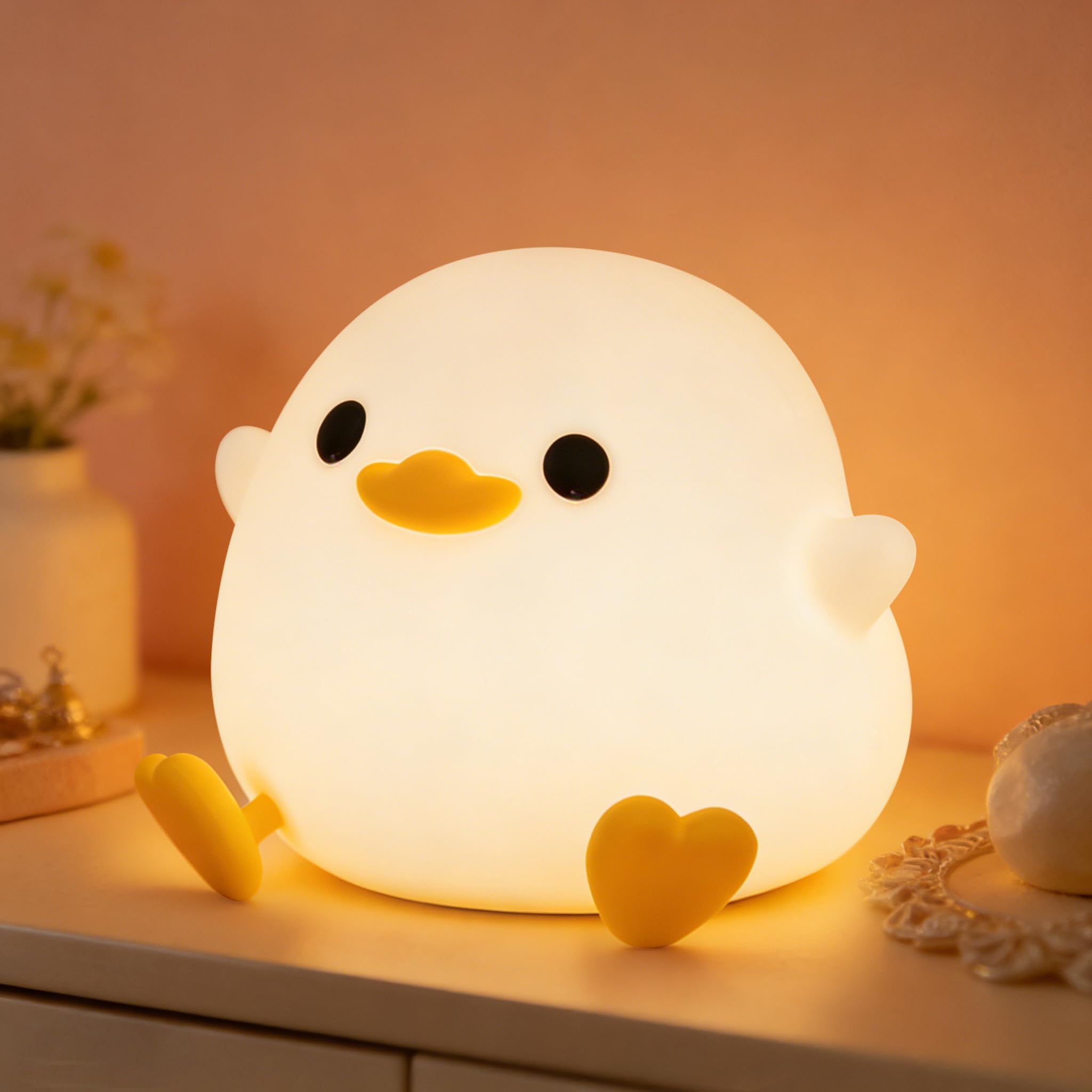
FAMIDUO Duck Night Light
Key Features
- Timer: 20 minutes
- Runtime: Up to 85 hrs
- Material: Food-grade silicone
- Age rating: 3+ years
- Price: Midrange
The duck is the night light a toddler is most likely to reach for in the morning, because it is soft, squishy, and shaped like a toy. The food-grade silicone cover is the reason we picked it over the harder plastic animals: it feels gentle in the hand and gives a warm, diffused glow through the body rather than a bare LED.
We like the 20-minute timer for bedtime. Tap through the two brightness levels, set the timer, and the duck goes dark without a fuss. The listed 85 hours of runtime on a charge is generous for a small light, and USB-C charging is one less cable to hunt for.
The trade-off is that it is a companion, not a room light. The glow is soft and localized, and the two brightness levels do not go very high. The 3+ age rating is worth checking if your toddler still mouths everything, and the timer is short enough that a child who wakes at 3 a.m. will find a dark duck unless you leave it on.
That is fine by us: the duck is for comfort at bedtime, not for lighting the whole room. It gives a toddler something friendly to hold and a parent a gentle light for the last story.
Pros
- Soft food-grade silicone body
- 20-minute timer and two dim levels
- Up to 85 hours per charge
Cons
- 20-minute timer is short for all-night use
- Two brightness levels only
For a toddler who wants a cuddly bedside companion, we choose the FAMIDUO duck; its soft body and timer make bedtime friendlier, not brighter.
Best for Color-Changing Plug-In
DORESshop Color Night Light

Key Features
- Modes: Solid, warm, multicolor
- Sensor: Dusk-to-dawn
- Lifespan: 20,000 hrs
- Pack size: 2
- Price: Budget
The DORESshop is the plug-in for a toddler who wants to pick a color every night. One round button cycles through solid color, warm white, and a multicolor fade, so the child gets a sense of control without a screen or an app. We like that simplicity for a room where the adults are often carrying a sleepy child in the dark.
Three lighting modes are enough, and the warm-white setting is the one we leave it on for sleep. The auto sensor is supposed to turn it on at dusk and off at dawn, but it is the weak point: the light can stay on in a bright room or fail to switch cleanly. Test it in the outlet you plan to use before you rely on it.
The two-pack is useful for a nursery and a hallway, and the acrylic bubble design is more attractive than a bare plug-in. The light is bright enough to see by but not a spotlight. It is not dimmable in the way the amber models are, so if your toddler needs a very low glow, this is the wrong pick.
What we appreciate is the hand-off: a toddler can choose a color, and the parent can still keep the room dim enough for sleep. It is a good second light, not the one we choose when a child needs the dimmest possible glow.
Pros
- One-button color control kids can use
- Warm-white and multicolor modes
- Two-pack for nursery and hall
Cons
- Auto sensor can be inconsistent
- No fine dimming control
Color-loving toddlers get a fun, low-cost plug-in in the DORESshop, which we prefer as a hallway or second light rather than the only night light in a sensitive sleeper’s room.
Best for Space-Loving Kids
Mooyran Astronaut Projector

Key Features
- Power: USB corded
- Control: Remote, timer
- Effects: 8 nebula effects
- Adjustment: Magnetic head
- Price: Midrange
The astronaut projector is less a night light than a small planetarium, and that is exactly why some toddlers love it. It throws eight nebula effects and breathing green stars across a ceiling, and the astronaut’s head is magnetic, so you can angle the show without moving the base. For a child who is afraid of the dark, that can be more reassuring than a plain glow.
We like the timer and the remote for the same reason: you can start a calm starfield, dim it, and let it shut off without climbing onto a dresser. The remote is the weak link. Treat it as a bonus, not the main control, and set the projector within reach or use the buttons on the unit.
The bigger caveat is overstimulation. The projector is engaging, and a toddler who is already wound up may watch the colors instead of settling. Use a single nebula color, low brightness, and the timer; skip the rotation if your child gets pulled in. It is also corded, so the placement needs a safe outlet and a cable out of reach.
For a space-obsessed preschooler, the trade-off is worth it. It is not the plain, boring light we recommend for every toddler, but it is the one that turns a dark ceiling into something worth looking at.
Pros
- Eight nebula effects and star fields
- Magnetic head adjusts projection angle
- Remote and timer for easy shutoff
Cons
- Remote can be unreliable
- Engaging effects can overstimulate
Space-loving older toddlers who need a friendly distraction at bedtime are the right fit for the astronaut projector; we keep the settings low and treat the remote as a bonus.
How We Tested 14 Night Lights for Toddlers
We started by gathering 40 night lights from parent forums, sleep consultant recommendations, and our own past testing, then narrowed the list to 14 based on price, size, and whether they offered adjustable brightness or sound. Over three months, those 14 lived in real toddler bedrooms—mine and two colleagues’—handled by kids aged 18 months to 4 years. They were used during nap time, bedtime routines, 2 a.m. wake-ups, and one memorable power outage.
For brightness, we dimmed each light to its lowest setting in a fully dark room and noted whether it cast enough glow to see a sippy cup without waking a sleeping partner. We counted the number of brightness steps and whether the jump from low to high was smooth or jarring. To judge the glow, we noted whether the color was warm amber or cool blue and whether it felt calming or clinical. For sound, we played every built-in lullaby and white noise track at the lowest volume and listened for crackle or tinny edges.
We set each light on a dresser and asked three parents to guess which looked like a toy and which disappeared into the decor. Size mattered too—we measured how much of a standard outlet each one covered and whether it blocked the second socket. Durability got a real workout: a 2-year-old and a 4-year-old handled each light for a week, dropping and dragging them, and we checked for cracks or loose parts. We left each one on for 12 hours straight for seven nights to spot flicker, heat, or dead LEDs. Remote controls were tested from across a dark room, one-handed, while holding a toddler. Finally, we compared price against the features that actually worked.
How to Choose a Toddler Night Light
The right toddler night light is the one that stays dim enough to keep sleep going, not the one with the most colors or the loudest feature list.
Start With the Lowest Setting
A night light’s maximum brightness tells you very little about how it will work at 2 a.m.; the minimum does. We put the lowest setting first. Look for a light that dims to a low glow, or one with a very low first step, and choose a diffused design that hides the LED rather than shining it straight into your child’s eyes. The MAZ-TEK’s 0–15 lumen range and the YUNLEX’s three-step amber settings are useful because they let you start low. Place the light below eye level and bounce it off a wall or ceiling so the room is navigable without becoming bright.
Decide Between Plug-In and Portable
Plug-in models are set-and-forget, but they tie you to an outlet and put the light where the wall is, not where your toddler is. Portable lights are better for night feeds, travel, and a bedside table, at the cost of another charging routine. We keep a plug-in in the hallway and a portable at the bedside; the G Keni’s 15–65 hour range is the sort of runtime that makes the portable useful rather than another device to charge. Check the outlet before you buy: a low plug behind furniture is hard to use and easy for a toddler to reach.
Use Timers and Sensors Deliberately
Sensors are convenient, but they work best in hallways and bathrooms, where coming on at dusk is the whole job. In a toddler’s room, you want control: a timer that turns the light off after a story, or a dim setting that stays on all night because your child needs the reassurance. App routines are worth it only if you will actually set them; otherwise a top tap or a slide switch is faster at 3 a.m. Test the sensor in the outlet you plan to use before you rely on it.
Put Safety and Sleep Cues First
Keep cords and plug-in bodies out of reach, and check the age rating on toy-like silicone lights; many are listed for ages 3 and up, so a younger toddler should not have one in the crib. A night light is not a sleep trainer on its own. Use a consistent color or position as a cue, keep the room boring, and choose a warm or amber light over a bright color show. The Hatch earns its place here because its color cues can mean sleep or morning, not just decoration.
Frequently Asked Questions
Do I need a night light for my toddler at all?
No, not every toddler needs one. If your child settles in the dark and sleeps through, adding a light can create a habit you have to undo. A night light earns its place when your toddler fears the dark, wakes confused, or needs a safe path to the bathroom. Start with a dim plug-in in the hallway, not a bright light beside the bed.
Will a night light make my toddler dependent on it?
It can, in the same way any bedtime prop can. Keep the light dim, put it on a timer, and avoid making it the only thing that gets your child back to sleep. If you want to fade it out, lower the brightness or move it farther from the bed every few nights. A plug-in with a sensor is easier to leave alone than a touch lamp your toddler can switch on.
How much does it cost to run a night light?
Very little. The plug-in LEDs here run at 0.3 to 0.5 watts, which is negligible next to a room light. Rechargeable lights use such small amounts of power that the real cost is remembering to charge them. Choose a plug-in for all-night use and a rechargeable model when portability matters.
Final Verdict
For most toddler bedrooms, we recommend the Hatch Baby. It is the one that turns light and sound into a routine, with color cues that mean sleep and morning rather than just decoration. The app makes it easy to adjust without opening the door, and the manual top controls are the backup when the connection stumbles.
If you want a simple amber plug-in instead, the YUNLEX is our pick; if you need a light that moves with you for night feeds, choose the G Keni.
