This post contains affiliate links. We may earn a small commission when you buy through our links — at no extra cost to you.
A booster seat has one job: put the car’s shoulder belt across a kid’s collarbone and the lap belt low on their hips, not their neck or belly. Anyone who has buckled a wiggly kid into the back seat knows that a poorly fitting booster turns every trip into a negotiation. We’ve spent six months with 12 booster seats, through school drop-offs, weekend road trips, and the grandparents’ car, and the right one makes the belt fit obvious and the seat feel planted.
Installation separated the field quickly. Some seats attached with lower anchors; plenty didn’t have LATCH, so I paid attention to belt-only setups and whether the booster stayed put after a week of kids climbing in and out. Comfort, quality, and value showed up in smaller ways: padding that didn’t flatten, a seat pan deep enough for growing legs, and buckles a kid could reach without help. The picks below are the ones that earned a permanent spot in our cars.


Best for Most Families
Chicco KidFit ClearTex Plus
Key Features
- Child weight: 40-110 lb
- Height range: 44-57 in
- Lower anchors: Quick-release LATCH
- Height positions: 10
- Price: Midrange
Height adjustment is the quiet workhorse of any booster, and the KidFit Plus does it from the waist: ten positions that move as your child grows rather than a headrest you crank at the neck. That’s the detail that made it our top pick, because the shoulder belt keeps landing on the collarbone instead of sawing at a neck, from the 44-inch minimum all the way to the 57-inch ceiling.
The lower anchors are the second reason. A one-pull SuperCinch tightener pins the seat to the vehicle, and a trigger underneath releases it one-handed when you need the space back. Ten pounds is heavy for a booster, and we think that’s the right trade for a seat that lives in one car: it doesn’t skate across the upholstery while a kid climbs in, and it doesn’t slide forward into the back of the front seat when the car is empty.
Chicco’s ClearTex fabrics skip flame-retardant chemicals, and every fabric panel, armrest covers included, comes off for the machine. The CupFolders are the small feature we got the most use from — they fold flat into the shell so the middle seat stays usable for a passenger, and they’re dishwasher-safe when a juice box leaks.
Two things to know before you order. There’s no harness here, so this is a belt-positioning seat for a child who is at least four, 40 pounds and 44 inches — a big four-year-old qualifies, a small one doesn’t. And the anchors take a few pulls to get truly tight against a soft, deep seat, and the seat can still shift a little once it’s in, so check it at the belt path each time rather than trusting the first yank.
Pros
- Ten height positions adjusted from the waist
- Quick-release LATCH with a one-pull tightener
- Fabrics without flame-retardant chemicals, all machine washable
- Cup holders fold away and go in the dishwasher
Cons
- Anchors need several pulls to tighten fully
- No harness — booster mode only
Our default pick for most families: ten height positions that move from the waist, quick-release anchors that keep it steady, and a back that comes off when your child outgrows it.
Best for Switching Cars
Chicco GoFit Plus
Key Features
- Seat weight: 5.5 lb
- Child weight: 40-110 lb
- Height range: 44-57 in
- Lower anchors: Quick-release LATCH
- Price: Midrange
The GoFit Plus is the seat that leaves the car. Clip it to the lower anchors, lift the release tab, and it’s out — one hand, no rethreading, no kneeling on the rear floor. At 5.5 pounds with a built-in handle, it’s light enough to pass through a window at school pickup, and it’s the seat that turns a two-car family into a one-booster family.
What we noticed first is how little it asks of the child. The contoured ErgoBoost padding is genuinely soft rather than token, and the lap belt guides sit where a six-year-old’s hands naturally go, so self-buckling stops being a negotiation. Chicco rates it to 110 pounds, the highest booster-mode limit among the backless seats here, and the shell is shaped enough that a narrow kid doesn’t rattle around inside it.
The connector hooks are stiff when the seat is new — expect to shove them firmly onto the anchor bars the first few times before they loosen up. The other boundary is the obvious one: with no back there is no head or neck support, so the vehicle headrest has to reach at least the top of your child’s ears. Two dishwasher-safe cup holders fold away, the armrest covers pop off, and the pad goes in the machine, which is why this one stays in rotation long after the cheap seats get demoted to the trunk.
Pros
- Quick-release LATCH for one-handed removal
- 5.5 pounds with a built-in carry handle
- Double foam padding and a machine-washable pad
- 110-pound booster limit, highest of the backless picks
Cons
- Anchor hooks are stiff on first fitting
- No head or neck support
We keep this one for the second car and the carpool: it clips in, comes out one-handed, and the padding is a step above the cheap backless seats.
Best for Three Across
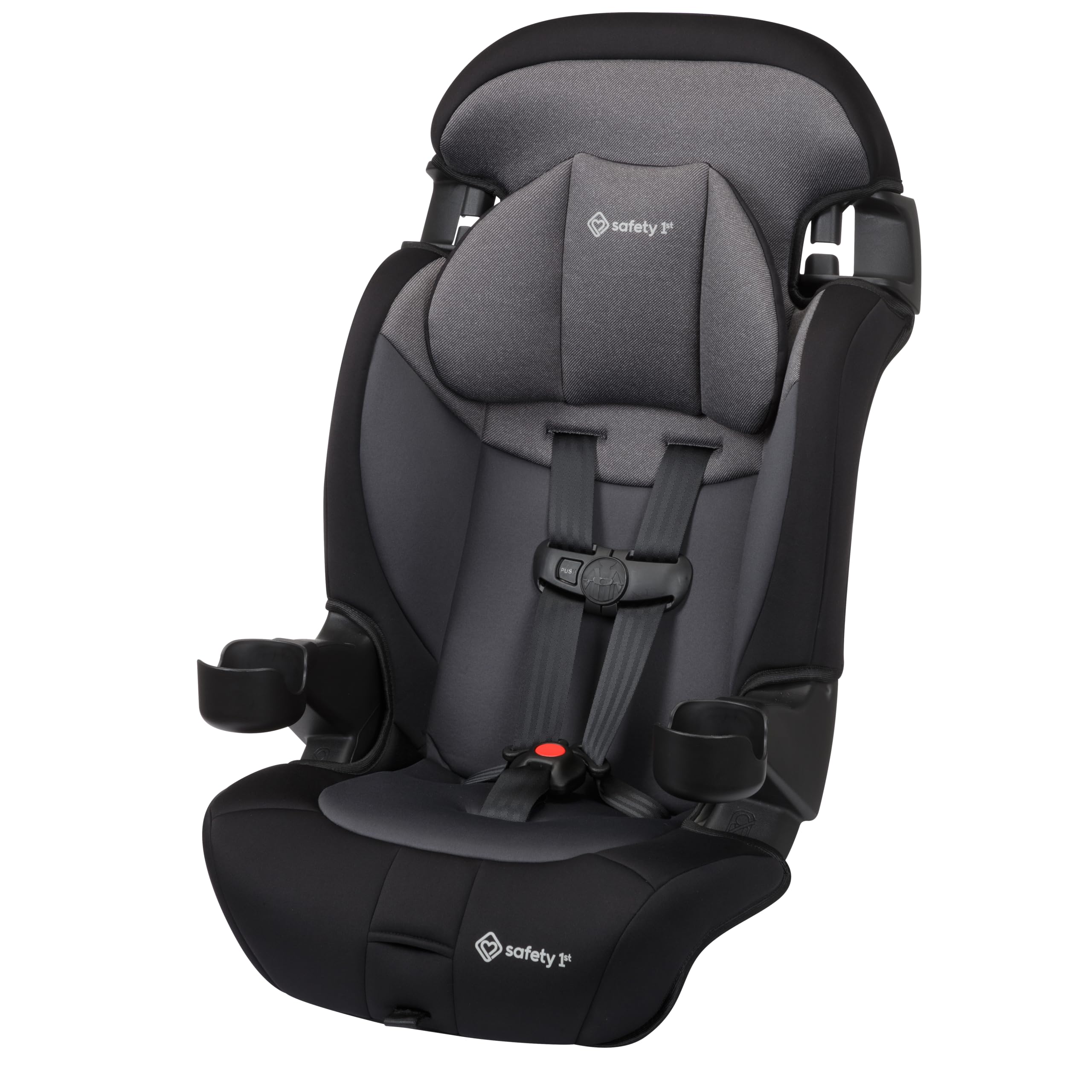
Safety 1st Grand 2-in-1
Key Features
- Seat width: 17.75 in
- Seat weight: 8.8 lb
- Booster mode: 40-100 lb
- Harness mode: 40-65 lb, 43.4-49 in
- Price: Midrange
Seventeen and three-quarter inches is the number that gets the Grand 2-in-1 into a back row that already holds two other seats. It is a hair narrower than anything else here with a back attached, and at 8.8 pounds it moves between vehicles without a grunt. In a carpool or a three-kid row, that width does more for daily life than any padding upgrade.
It is two seats in sequence: a five-point harness from 40 to 65 pounds and 43.4 to 49 inches, then a belt-positioning booster to 100 pounds once the harness comes out. The headrest has three positions to grow through, and the seat pad is machine-washable and dryer-safe — a small thing until the first spilled hot chocolate, after which it’s the feature you tell other parents about.
The compromise is in the hardware. The lower anchors hold the seat in harness mode; as a booster, the vehicle belt is the only thing holding it, so it slides on the upholstery when your child climbs in. The harness tensioner also wants several pulls to come up even on both sides. Neither matters much if the seat stays in one car and your child is still in the harness, and for a packed back row the width is worth the trade.
Pros
- 17.75-inch shell fits three across
- Harness to 65 pounds, then a booster to 100
- 8.8 pounds with a dryer-safe cover
Cons
- Slides in booster mode without anchors
- Harness tensioner needs repeated tugging
We take the Grand when a back row has to hold three: it’s the narrowest way here to keep a 40-pound child in a harness and still have a booster for the years after.
Best for Budget Highback
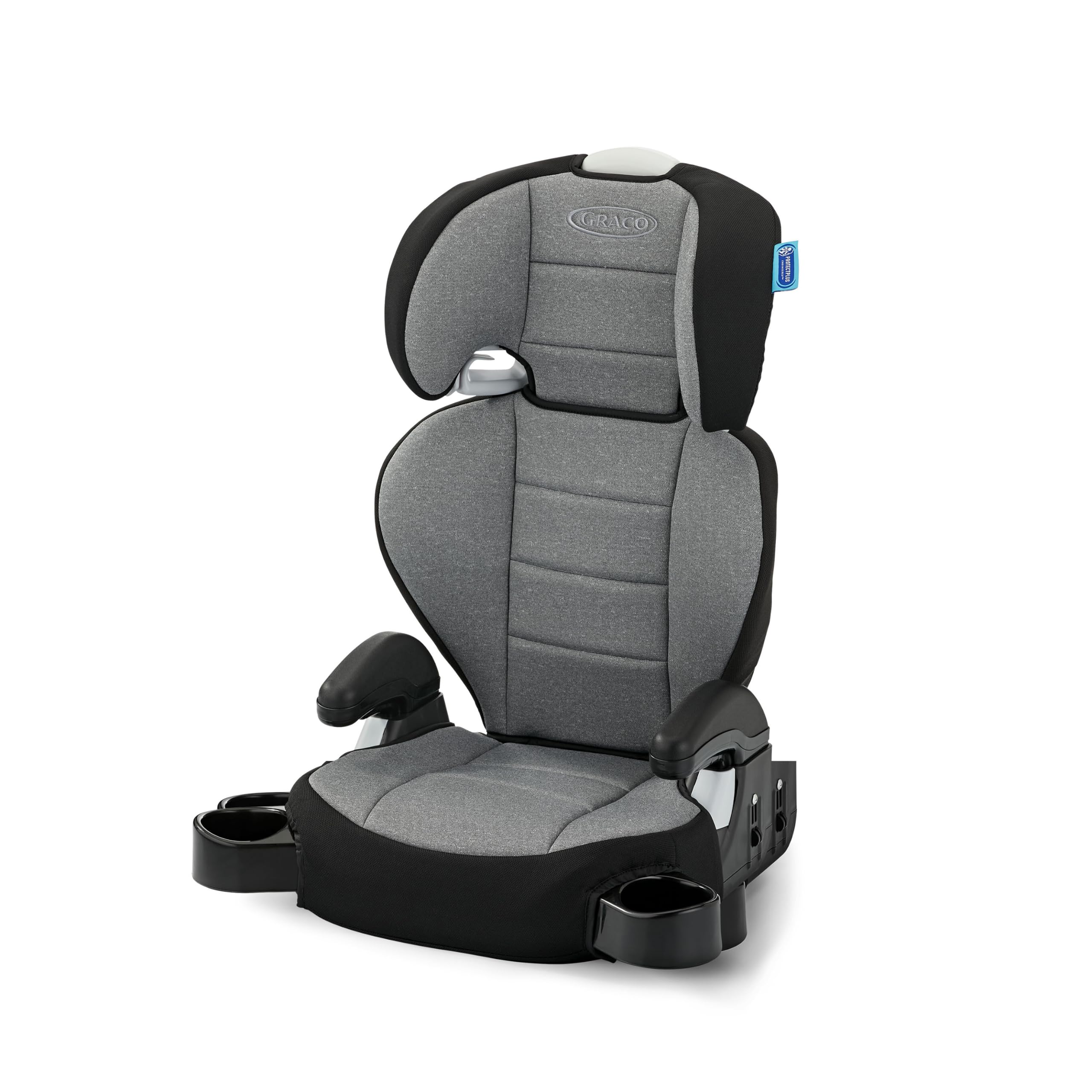
Graco TurboBooster 2.0 Highback
Key Features
- Seat weight: 7.72 lb
- Child weight: 40-100 lb
- Height range: 43-57 in
- Converts to backless: Yes
- Price: Midrange
Spend less on a highback and the money comes out of the hardware. The TurboBooster 2.0 has no lower anchors at all — it rides on the vehicle belt, so it shifts when your child climbs in and slides forward when the seat is empty. What you get in exchange is a tall back with adjustable head and arm supports, a shell that converts to a backless booster when your child outgrows the wings, and 3.5 kg of seat that lifts out with one hand.
The belt path is where this one earns its place. The open-loop guides sit wide and shallow, so a seven-year-old can drop the belt in without an adult hovering, and the shoulder guide keeps it off the neck on the way to the buckle. We think self-buckling is the most underrated booster feature there is: a seat a child can work alone is a seat that gets used correctly on the school run, every run.
The padding is thin and the plastics feel like what they are, so a tired kid on a three-hour drive will be happier in the plusher KidFit. But the Declan covers the essentials — head support, a correct belt path, two hideaway cup holders, and a back that comes off when it’s no longer needed — for a child who is already around 43 inches and rides mostly in one car.
Pros
- Converts from highback to backless
- Open-loop belt guides for self-buckling
- Light enough to lift out one-handed
Cons
- No lower anchors, so it slides when empty
- Thin padding and basic-feeling materials
We like the TurboBooster for a tall four-year-old on a budget: it’s the least expensive way here to get head support and a workable belt path.
Best for Carpools and Travel
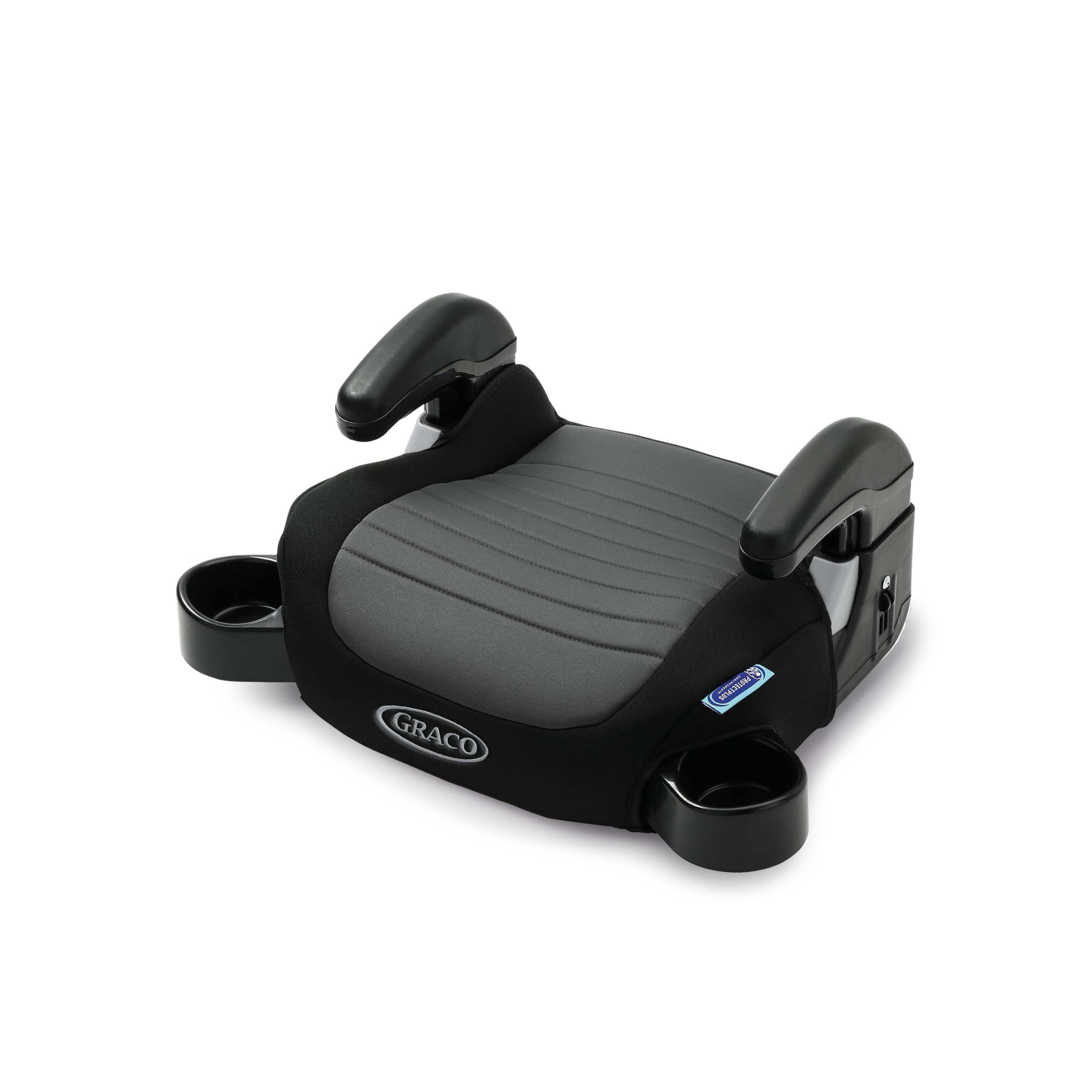
Graco TurboBooster 2.0 Backless
Key Features
- Cup holders: Two, hideaway
- Seat weight: 4.4 lb
- Child weight: 40-100 lb
- Height range: 43-57 in
- Price: Budget
A backless booster is a shaped cushion with two jobs: raise the child so the lap belt crosses the hip bones, and route the shoulder belt away from the neck. The TurboBooster 2.0 does both with less fuss than anything else here — 4.4 pounds, a 17-inch footprint, height-adjustable armrests, and two cup holders that push back into the shell when they aren’t holding a juice box. It’s the kind of seat you buy two of without thinking about it.
What it doesn’t do is support anyone. There’s no back and no headrest, so the vehicle’s headrest has to reach at least the top of your child’s ears, and the eight-inch-tall shell adds height and nothing else. For a seven- or eight-year-old in a modern back seat that’s all you need; for a five-year-old who still falls asleep on the way home, it isn’t. The pad comes off for machine washing, which matters on a seat that ends up on the floor more often than in the car.
Pros
- 4.4 pounds, easy for a kid to carry
- Two hideaway cup holders
- Cover comes off for washing
Cons
- No anchors, so it slides on the seat
- No head or neck support
Our pick for the second and third car: light enough for a kid to carry, cup holders that hide away, and a cover that comes off for washing.
Best for Tight Back Rows
Cosco Topside

Key Features
- Seat width: 15 in
- Seat weight: 2.2 lb
- Child weight: 40-100 lb
- Height range: 43.4-57 in
Two point two pounds and fifteen inches wide. Those two numbers are the whole reason the Topside exists: it’s the only seat here that will slot between two others in a genuinely tight row, and it’s light enough that a seven-year-old can carry it in from the garage themselves.
Everything else is deliberately basic. The shell stands 6.5 inches tall, so it lifts and positions the belts and nothing more. There are no cup holders, and the cover is hand-wash only, which is the one place we’d push back on a seat that spends its life catching crumbs. It installs with the vehicle belt in seconds and comes out just as fast, and the 40-to-100-pound window matches the rest of this group.
One detail to watch: the armrests sit low, and a low armrest makes it easy to route the lap belt over the top of it instead of beneath. Thread the belt under the armrest and flat across the thighs, then run your hand along it every time the seat gets moved. Do that and the Topside is the best spare seat here — the one that lives in the trunk, the grandparent’s car, or the third row of a van that already has two seats bolted in.
Pros
- 15 inches wide for tight three-across rows
- 2.2 pounds, easy to hand between cars
- Simple seat-belt install, in and out fast
Cons
- No cup holders
- Hand-wash-only fabric cover
For tight rows and spare seats, we haven’t found anything here that beats fifteen inches and two pounds: narrow, quick to move between cars, and plain by design.
Best for Two Vehicles
Diono Solana (2-Pack)

Key Features
- Child weight: 40-120 lb
- Height range: 38.2-63 in
- Seats included: 2
- Price: Budget
Two backless boosters in one box is the pitch, and for a family with two cars it’s a good one: no moving seats on a Sunday night, no booster left behind at daycare. The Solana also carries the highest limits in this guide, 40 to 120 pounds and up to 63 inches, so it’s the pair that lasts longest for a tall kid who would otherwise age out of a 57-inch seat.
The padding is contoured and the covers are machine-washable, and the elastic cup holders squash flat when they’re empty — a nicer solution than a hard cup holder that eats shoulder room. The shoulder belt positioner adjusts, which is what keeps the belt off the neck as a child grows.
Fit is where the Solana gets contentious. At 16.9 inches wide it is not the three-across answer the shelf copy implies; in plenty of back rows it won’t sit beside two other seats, and the cup holders won’t swallow a full-size water bottle. There are no lower anchors either, so each seat shifts when a child climbs in and needs repositioning.
The pair still makes sense for two cars. Buying two forgives the thing a single seat can’t — being in the wrong vehicle when you need it — and the 63-inch ceiling keeps a tall child in a booster longer than most of these will. Just measure the row before you count on three across, and buckle the empty seat through the vehicle belt so it isn’t loose between trips.
Pros
- Two seats in one purchase
- Tallest limits here at 120 pounds and 63 inches
- Machine-washable covers and flattening cup holders
Cons
- No anchors, so seats shift when empty
- Cup holders too small for larger bottles
We take the pair when two cars need boosters and the kids are tall: these have the highest height and weight limits here, and back-row width is the one thing to measure first.
Best for Younger Riders
KidsEmbrace 2-in-1
Key Features
- Seat weight: 15 lb
- Booster mode: 40-100 lb
- Harness mode: 26.5-65 lb, 29-49 in
- Lower anchors: LATCH and top tether
- Price: Premium
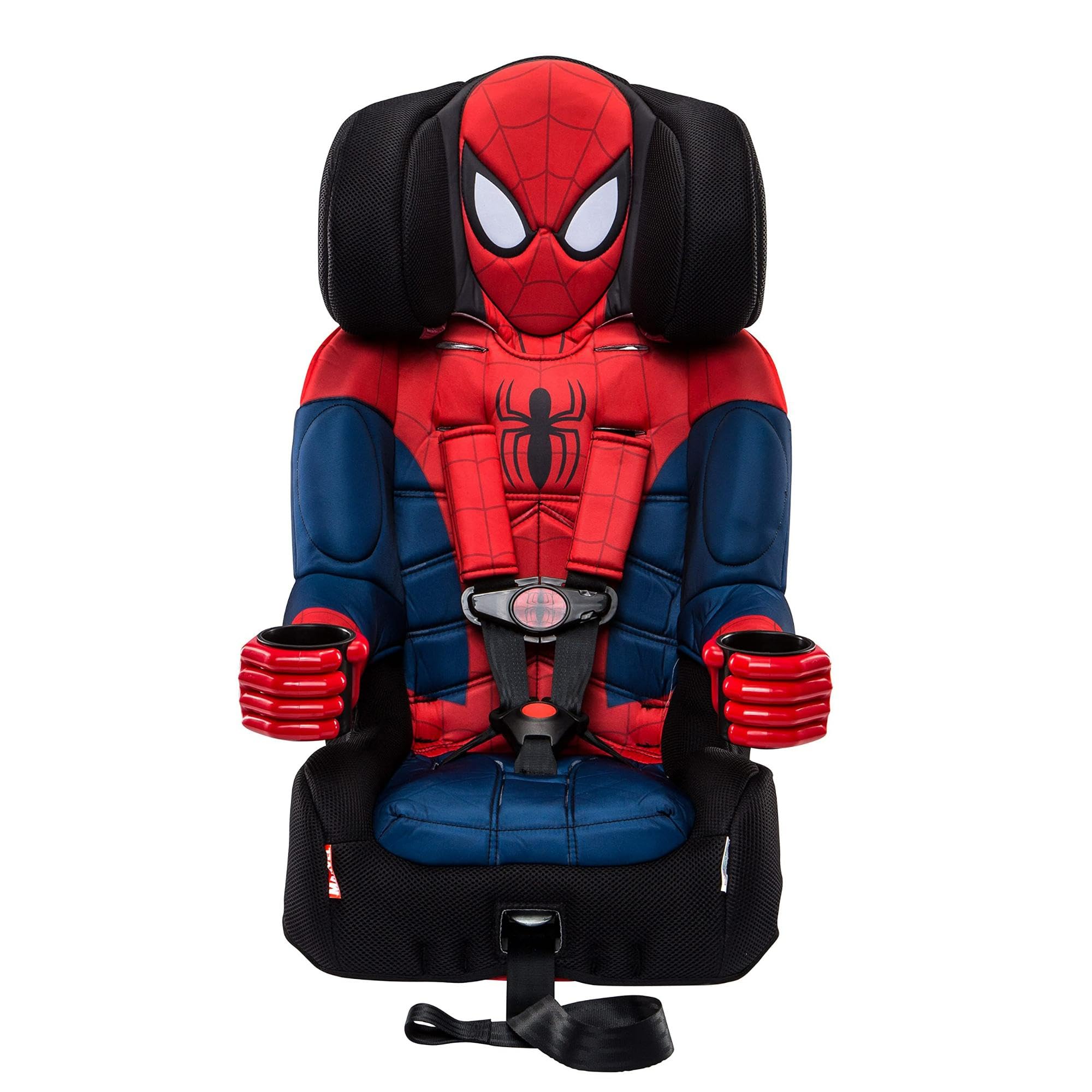
A character shell is not a gimmick when it’s the reason a four-year-old stops fighting the buckle. The Spider-Man version is a legitimate two-stage seat underneath the costume: a five-point harness from 26.5 to 65 pounds, then a belt-positioning booster to 100. That 26.5-pound harness floor is the lowest here, which makes this the seat that works for a big two- or three-year-old who isn’t ready for a belt.
It is large. Fifteen pounds, 20 inches wide and 30 inches tall, with LATCH connectors and a top tether that hold it steady in harness mode. This is a primary seat in a family car, not something you move twice a day, and if it’s going into a tight three-across row, measure before you commit.
The comfort work is real: high-density foam, a three-position headrest, deep cup holders that take a real sippy cup plus a snack, and a shell kids genuinely ask to sit in. Installation with the LATCH connectors and tether is a straightforward job that doesn’t need a second adult.
The buckle is the part to watch. It sits close to the crotch strap, and a child who rushes can catch a thigh in it — worth a slow first week of buckling until the habit sets. And the price is premium by the standards of this group, which is the honest trade: you’re paying for a harness that starts younger, plus a seat a reluctant kid will actually climb into.
Pros
- Five-point harness from 26.5 pounds
- LATCH plus top tether for a steady install
- Deep cup holders and a character shell kids like
Cons
- 15 pounds and bulky to move
- Buckle can pinch a thigh
We point parents here when a child is under 40 pounds and needs a harness they’ll be excited about: nothing else in this guide starts at 26.5 pounds.
How We Tested Booster Seats
We started by researching current booster seats and filtering for belt-positioning design, height and weight limits, lower-anchor availability, seat dimensions, and price. From that list, we brought in 12 booster seats and tested them for six months.
Each seat went into a compact sedan, a three-row SUV, and a minivan. We installed every model with the vehicle belt, then again with lower anchors where the seat had them. For belt-only installs, we pulled the seat side to side at the belt path, checked that the lap belt sat low across the hips, and marked where the shoulder belt crossed the child’s collarbone. A seat that slid on leather or pushed the belt into a kid’s neck came out of the running quickly.
Daily use told us the rest. Kids climbed in with backpacks, buckled themselves for school runs, napped on weekend drives, and spilled juice in the cup holders. We watched whether they could reach the buckle without help, whether the padding flattened after a month, and how easy the covers were to remove and wash. We also noted which seats had no LATCH and whether that made moving them between cars a chore.
At the end, we compared what each seat cost against how it held up, how often we had to reinstall it, and how comfortably it fit kids of different heights. The finalists were the seats that stayed secure, fit the widest range of kids, and didn’t make the morning routine harder.
How to Choose a Booster Seat
The right booster is the one that fits your back row and lets your child buckle themselves, so start with the car’s headrests and belts rather than the seat’s color options.
Highback or backless: let the car decide
A backless booster only positions the lap and shoulder belts. The vehicle’s seat back and headrest do all the head and neck work, so if the rear headrest sits below the top of your child’s ears, or the seat back is short, a backless leaves a gap that a highback fills itself. Highbacks also tend to route the shoulder belt more cleanly on small frames.
Three picks here convert from highback to backless — the KidFit, the TurboBooster 2.0 highback and the Safety 1st Grand — which means one purchase covers both stages. Sit your child in the seat and look at where the headrest lands before you decide.
What lower anchors actually do on a booster
Lower anchors don’t restrain your child; the vehicle belt does. What LATCH buys you is a seat that stays where you put it: no sliding across the upholstery while a kid climbs in, and no loose shell skidding forward when the seat is empty. That matters most on a backless, which has no back to brace against anything.
Check the vehicle manual for which positions have anchors, and note that some combination seats, like the Safety 1st Grand, use their anchors in harness mode only — once it becomes a booster, the vehicle belt is all that holds it.
Width, three across, and the belt path
Seats here run 15 to 17.75 inches wide, and in a full row that difference decides whether three fit at all. The trap is that a slim claim usually describes the seat’s base, not its armrests or belt guides, so measure the row and the seat’s widest point rather than trusting the label. Low armrests also make it easy to thread the lap belt over the top instead of underneath.
With your child seated, check that the lap belt lies flat across the thighs and the shoulder belt crosses the collarbone rather than the neck.
Harness first, then the belt
A five-point harness keeps doing its job until your child reaches the harness limit — 65 pounds on the combination seats here, with the KidsEmbrace starting as low as 26.5 pounds. A belt-positioning booster is for a child who is at least four, at least 40 pounds, tall enough for that seat’s minimum, and able to sit still for the whole ride.
That last condition is the one parents skip. A 40-pound four-year-old who is short of the seat’s height minimum isn’t ready for that seat, whatever the age on the box.
Weight, washing, and the second car
Seat weight runs from 2.2 pounds on the Topside to 15 on the KidsEmbrace, and it predicts whether a seat actually moves between cars or just lives in one. Cleaning terms vary too: covers here are machine-washable, dryer-safe on the Safety 1st, and hand-wash only on the Cosco, and the Chicco cup holders go in the dishwasher.
If two vehicles need a booster, two inexpensive backless seats usually beat carrying one seat out to the driveway every morning.
Frequently Asked Questions
Can my child use a backless booster in the middle seat?
Only if that spot has a lap-and-shoulder belt. Plenty of middle seats are lap-only, and a booster needs the shoulder half to hold the upper body, so a lap-only position rules the booster out there.
Pull the belt across the seat and look: if there’s no shoulder section, move the booster to a window seat with a three-point belt.
When can my child stop using a booster altogether?
When the vehicle belt fits without one: lap belt flat across the thighs, shoulder belt over the collarbone and not the neck, back against the seat back, and knees bent at the edge of the seat with feet flat on the floor.
For most kids that lands around 4 feet 9 inches, which is the 57-inch ceiling on most seats here. Test the fit in your own car before you retire the booster.
Can I use a booster seat on an airplane?
No. Aircraft seats have lap belts only, and a booster works by routing a shoulder belt, so there is nothing for it to do in flight.
It travels as luggage instead: a backless like the GoFit Plus or the Topside is light enough to bag and small enough to slide under the seat in front of you. Fit it in the car at the other end.
Final Verdict
For most families the Chicco KidFit ClearTex Plus is the seat to buy. Ten height positions that adjust from the waist keep the shoulder belt in the right place from a 44-inch four-year-old to a 57-inch nine-year-old, the quick-release anchors keep it steady for self-buckling, and the back comes off when your child outgrows it. Washable fabrics and cup holders that fold away are the extras that make it easy to live with.
Outfitting a second car for an older kid? The Chicco GoFit Plus clips in and comes out one-handed. And if your child is still 40 pounds and short of 44 inches, start with the Safety 1st Grand and its harness instead.
