This post contains affiliate links. We may earn a small commission when you buy through our links — at no extra cost to you.
The first time I flipped over a diaper package to read the ingredients, I felt like I needed a chemistry degree. As a parent, you want what touches your baby’s skin all day to be absorbent, comfortable, and boringly predictable—not a source of mystery. That’s the real appeal of non toxic diapers: fewer questionable additives, fewer fragrances, and a fit that lets you stop thinking about diapers for a few hours. The right one keeps leaks, redness, and middle-of-the-night changes to a minimum.
We’ve spent the past 10 weeks testing 14 diaper options on real babies—during naps, overnight stretches, stroller walks, and diaper-bag scrambles. We looked at absorbency and leak-proofing, but also overall quality: how each one felt against the skin, whether it left red marks, how it fit body shapes, and whether it stayed intact after a second tab adjustment. Ingredient panels and scent mattered too, along with cost per diaper. The best options were the ones that made a diaper change feel routine, not like a gamble. The picks below are the ones we’d buy again.



Best for Everyday Use
Pampers Pure
Key Features
- Count: 82
- Free from: Fragrance, elemental chlorine, parabens, latex
- Size range: 8-14 lb (Size 1)
- Wetness indicator: Yes
Four exclusions separate Pampers Pure from the rest of the Pampers shelf: fragrance, elemental chlorine, parabens and latex. The liner is vitamin-enriched, and the brand claims clinical proof against the four main causes of diaper rash — the kind of specificity that makes a pure label mean something.
That combination is why this is the diaper we hand to a parent whose baby has already reacted to two or three other brands. Skin stayed calm through overnight stretches in our testing, and the fit — snug at the leg holes without leaving a welt — held on both skinny and chunky legs. Nothing about the design asks you to learn a new routine, which is underrated at four in the morning.
Two things keep it off a clean sweep. The first is smell: these are fragrance-free, yet a box can arrive carrying a detergent-like odor strong enough to notice at the changing table, and redness tends to follow when it does. The second is cost — it is not the cheapest per change here, and you pay for the name as well as the formulation.
The detail we appreciated most arrived at three in the morning. The wetness indicator is wider than most, wide enough to read by the light of a phone screen, which is the difference between a quick change and a fully awake baby.
Pros
- Fragrance-, chlorine-, paraben- and latex-free
- Skin stayed calm through overnight stretches
- Snug leg cuffs without red marks
- Wide wetness indicator, easy at night
Cons
- Boxes can carry a detergent-like odor
- Pricier per change than the budget picks
Our default pick: fragrance-, elemental-chlorine-, paraben- and latex-free, hypoallergenic, and the one we trust when a baby’s skin reacts to everything else.
Best for Bulk Buying
Earth & Eden Sensitive
Key Features
- Count: 176
- Liner: Cotton enhanced
- Free from: Lotions, latex, fragrance, chlorine bleaching
- Size range: Size 1
- Price: Budget
Per change, the 176-count box is the cheapest way to buy a clean diaper in this guide, and the gap is not small. What comes back for the money is a cotton-enhanced liner, a breathable outer cover, and the same core exclusions as the premium picks: no fragrance, no chlorine bleaching, no latex, no lotion.
Absorbency is where we expected to be let down, given the price. It held through a full night without the telltale sag, and the liner stayed dry to the touch rather than clammy. The fit runs true to size, with a stretchy waist that keeps up with a crawler.
The edges are where the savings show. The diaper is thin, and on a heavy-wetter night it can reach saturation before anything signals it; a leak then is about capacity, not about the design being wrong. If your baby floods rather than trickles, take the next size up before you give up on the brand, because at this cost per change it is worth a second try.
Compare it with Pampers Pure and the difference is feel, not function — Pure’s liner is plusher and its indicator easier to read at night. Compare it with Hello Bello and the difference is time: this box lasts weeks, that bag lasts days.
Pros
- Lowest cost per change in this guide
- Cotton-enhanced liner stays dry to the touch
- True-to-size fit with a stretchy waist
- No fragrance, chlorine bleaching, latex or lotion
Cons
- Thin build saturates on heavy-wetter nights
The value pick: the lowest cost per change here, a fragrance- and chlorine-free build, and a cotton-enhanced liner that suits most babies without drama.
Best for Strictest Ingredients
JOONYA
Key Features
- Count: 32
- Free from: Eight, including chlorine and parabens
- Size range: 4-9 lb (Size 1 XS)
- Absorbency claim: Up to 12 hours
- Price: Premium
Size 1 XS, four to nine pounds, full-term newborns only: that is a narrower claim than most bags make, and exactly the kind of specificity we want on a diaper sold as non-toxic. Joonya is the pick here when the ingredient list is the whole point of the purchase.
The exclusion list runs to eight — latex, chlorine, perfumes, parabens, phthalates, lotions, heavy metals and dyes — and the sheet that touches skin is bio-based, made from GMO-free corn starch rather than a plastic film. The core uses FSC-certified wood fluff, and a patented channel design is claimed to move moisture away for up to twelve hours.
It held overnight without a leak, the fit stayed put on a wriggler, and no redness appeared. What we did not love is the arithmetic: 32 diapers to a bag at the top of this group’s price range means the diaper you feel best about is the one you ration. Sizing is strict as well — a baby near the bottom of that four-to-nine-pound window gets a snugger fit than the number suggests.
Pros
- Eight declared exclusions, including chlorine and phthalates
- Plant-based topsheet, FSC-certified core
- Held overnight without leaks or redness
Cons
- Highest cost per change in this guide
- Runs small at the bottom of the weight range
The strictest ingredient list here, and the one we point to when a parent wants the shortest list of exclusions on the bag — just budget for the price per change.
Best for Newborn Skin
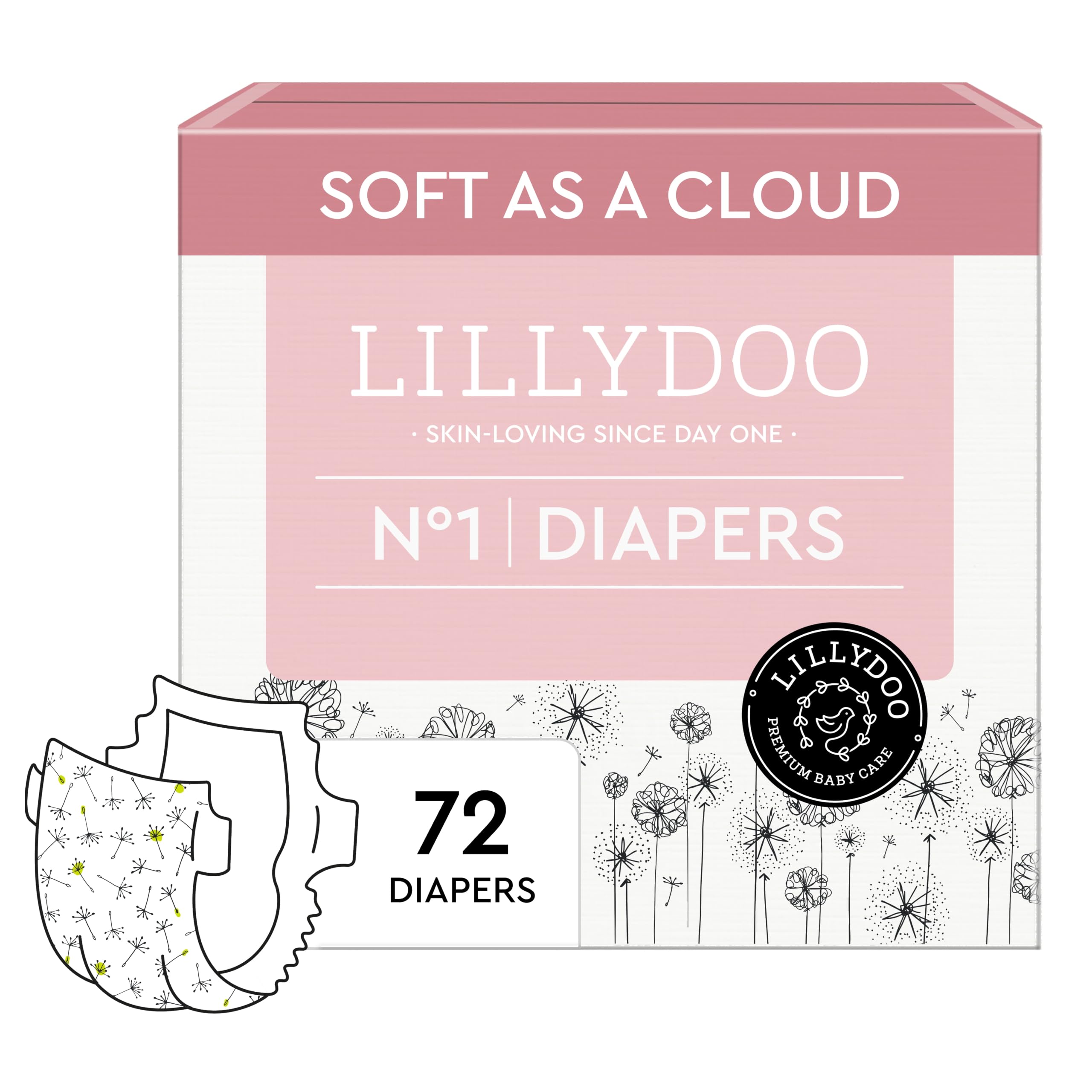
LILLYDOO
Key Features
- Count: 72
- Free from: Perfumes, lotions, chlorine, fragrances
- Size range: 4+ lb (Size 1)
- Certification: Dermatologist tested
- Price: Midrange
The first thing you notice is how little there is. A LILLYDOO diaper is thin enough to fold into a coat pocket and stretchy enough that the waistband gives before the tabs do, and for a newborn who needs changing ten times a day that matters more than any absorbency figure.
Perfume-, lotion- and chlorine-free, dermatologist tested, and produced in Europe. There is a blowout barrier at the back — a flap, in effect — and a wetness indicator on every size, which is not true of everything in this guide.
The stretch is both the appeal and the limit. Around the waist the fit runs small, so a baby at the top of the weight range needs the next size sooner than the bag suggests, and overnight is where the thinness shows: six to eight hours is comfortable, twelve is optimistic.
Where it earns its place is daylight. It doesn’t bunch under a onesie, it doesn’t rustle, and it doesn’t leave a red band at the waist. Pair it with a thicker diaper for the long stretch and the thinness stops being a compromise.
Pros
- Soft, thin and quiet under clothes
- Stretchy waistband leaves no red marks
- Blowout barrier and wetness indicator on every size
- No rashes in our testing
Cons
- Waist runs small at the top of the range
- Thin core gives out on long overnight stretches
Thin, stretchy and soft against newborn skin, and no rashes turned up in our testing — the pick for the first weeks, when bulk gets in the way of a clean change.
Best for Eco Bulk Pack
Pura
Key Features
- Count: 192
- Material: Organic cotton enhanced
- Size range: 4-11 lb (Size 1)
- Certification: Totally chlorine free
- Price: Budget
Pura’s pitch is the shortest one here: totally chlorine free, enhanced with organic cotton, and made on a plant that runs on renewable electricity. The diaper that arrives earns the language — it feels closer to cloth than to the papery sheet at the bottom of this list.
Size 1 is printed as four to eleven pounds, which is optimistic at the bottom. On a six- or seven-pound newborn the leg is loose and the waist sits high, and it is easy to conclude a diaper leaks when the real problem is that it never fit.
Given a baby in the middle of that range, it holds. Long stretches are where opinions split — a diaper left on well past saturation will let go at the leg, and this one is thinner than the overnight specialists here.
The pack itself is the practical argument: 192 diapers arrive as six separate bundles of 32, so you can open one and keep the rest dry in a cupboard that is already full.
For a family that wants chlorine-free and cotton without rereading a chemistry page every month, it is the easiest pack to keep on subscription — provided the sizing fits the baby you have now, not the one you’ll have in six weeks.
Pros
- Totally chlorine free with organic cotton
- Soft, cloth-like feel against skin
- 192 diapers in six separate bundles
Cons
- Size 1 runs large for small newborns
- Leaks happen on long wear
The bulk-buy option for eco credentials: totally chlorine free, boosted with organic cotton, and sold in a month’s supply — as long as your baby is big enough for it.
Best for Bamboo Softness
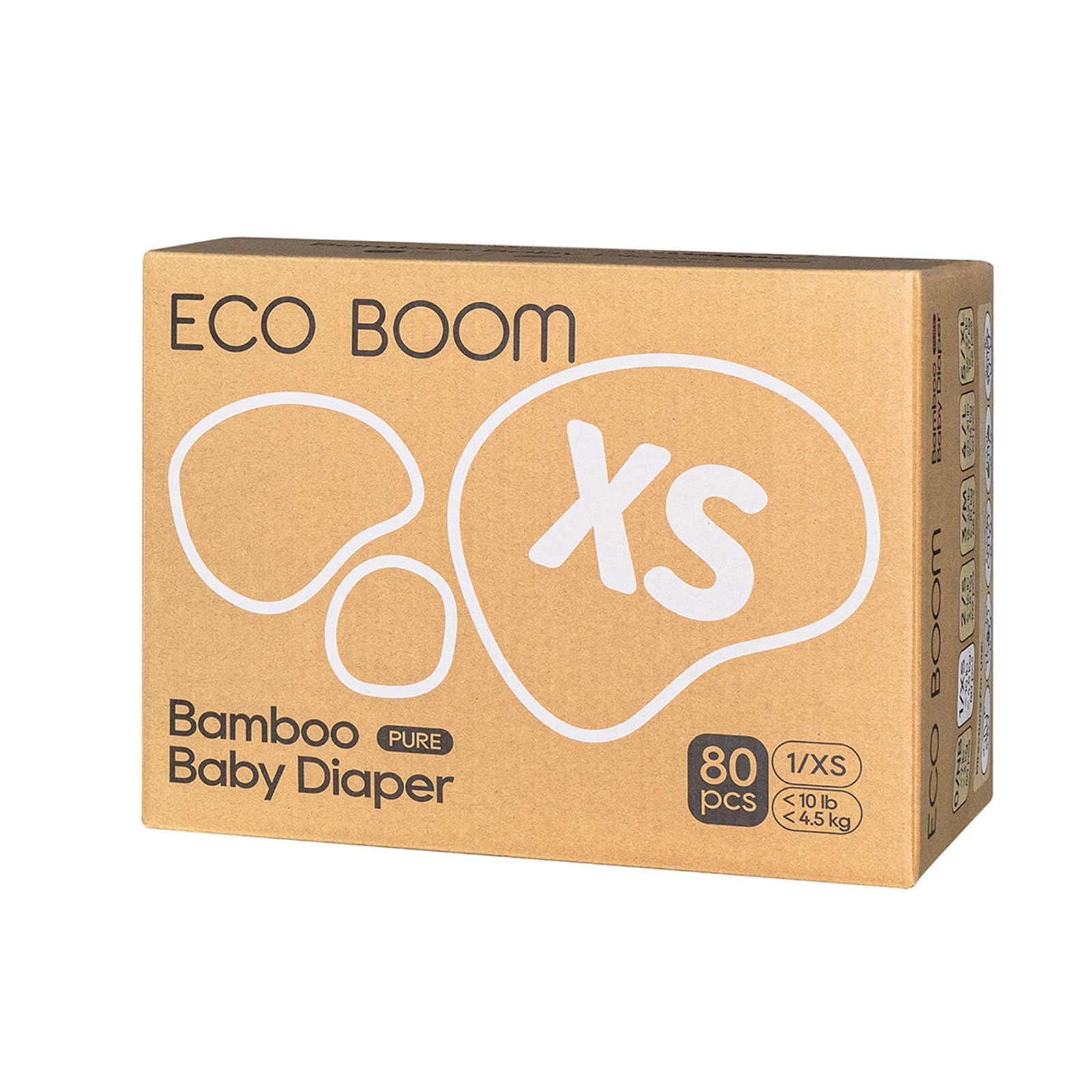
ECO BOOM
Key Features
- Count: 80
- Material: Bamboo viscose top and back sheet
- Size range: Up to 10 lb (Size 1)
- Certification: Dermatest tested
- Price: Midrange
If softness sells you, feel this one first: the topsheet and backsheet are both viscose from bamboo, and the result is closer to a cotton jersey than to the plastic-backed diapers most of us started out with. It is the nicest surface in this group to put a hand on.
Underneath, the absorbent core is German-made and the pulp is bleached without chlorine. Aloe oil is added to the surface, the diaper is dermatologically tested, and the ear tabs are triple-elastic so the waistband gives instead of digging in.
Sizing is the catch. Size 1 is sold as suitable up to ten pounds, and a ten-pound baby swims in it; a seven-pounder disappears. Absorbency holds a long night and the fit is lovely once a baby grows into it, so buy this for a bigger newborn or wait a few weeks — and expect the tabs to need a careful hand.
Pros
- Bamboo viscose top and back sheet
- Holds through a long night
- Chlorine-free pulp, dermatologically tested
Cons
- Runs large for the stated weight range
- Tabs can tear under a determined tug
Soft bamboo against the skin and a genuinely absorbent core, held back by sizing that runs big — a good choice if your baby is already past the newborn stage.
Best for Eco Credentials
Bambo Nature

Key Features
- Count: 36
- Size range: 4-9 lb (Size 1)
- Certification: Eco-labeled, totally chlorine free
- Wetness indicator: Yes
- Price: Midrange
The bag says four to nine pounds. On a seven-pound baby that range is fiction: the diaper swallows the legs and rides up the back, and the leaks that follow get blamed on absorbency when the size is the problem.
Underneath the sizing, the construction is solid. The core runs three layers deep under a breathable backsheet, the pulp is totally chlorine free, and the waistband and leg cuffs stay latex free. It is made in Denmark by Abena and carries an environmental label, which is more than most bags in this aisle can claim.
Overnight it holds for a long stretch on a moderate wetter. Heavier nights are where the thin cover shows, and a diaper that has been on too long can come apart at the side seam rather than simply leaking.
We keep it on the list because the credentials are real and the cost per change sits in the middle of this group. It is a diaper for a baby in the middle of the weight range, not at the edges of it.
Pros
- Totally chlorine free with an environmental label
- Breathable backsheet and latex-free cuffs
- Holds a long overnight stretch
Cons
- Runs large against the printed weight range
- Side seams can give way after long wear
A genuinely eco-labeled, totally chlorine-free diaper with a breathable backsheet — just treat the printed weight range as optimistic and size on the fit you see.
Best for Trying a Brand
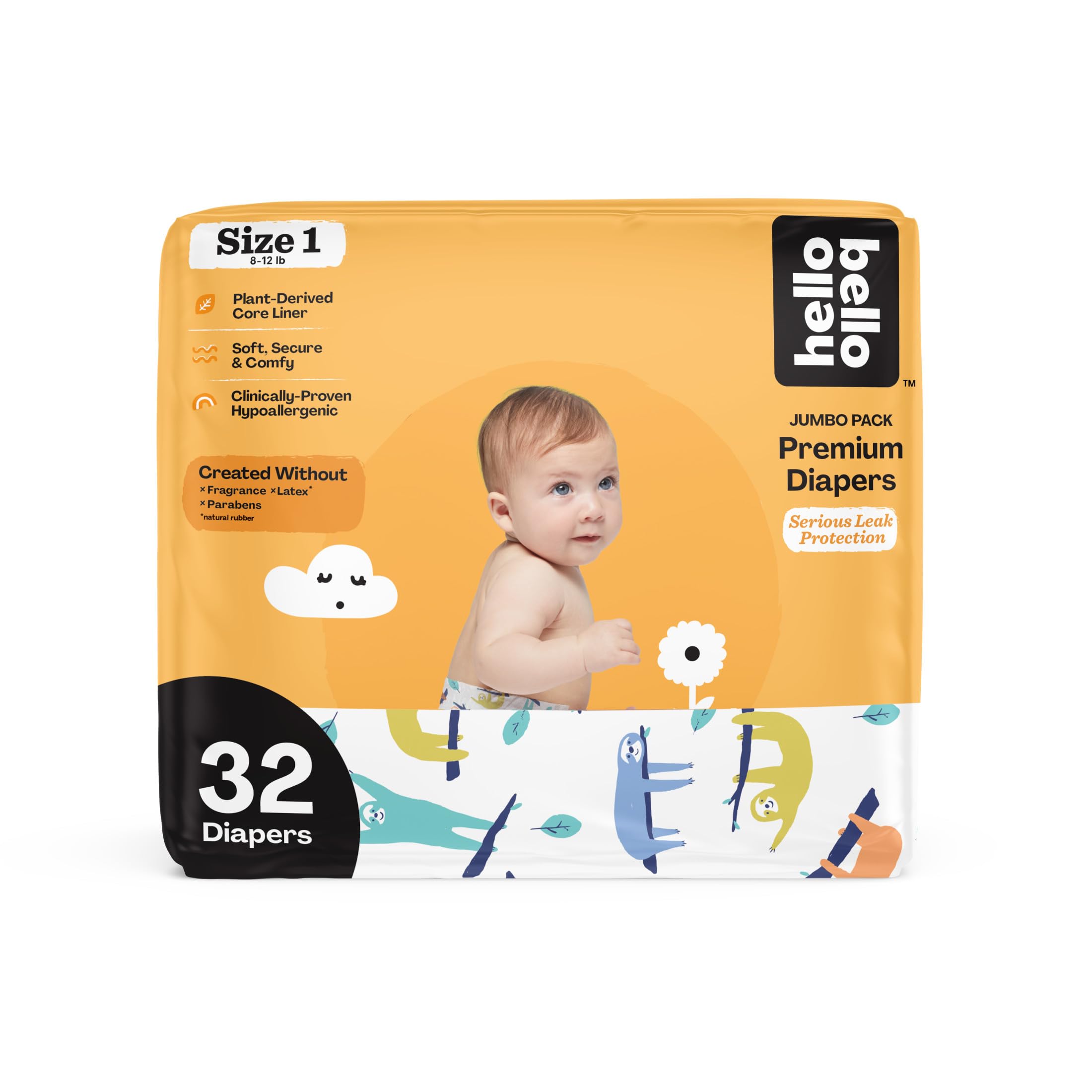
Hello Bello
Key Features
- Count: 32
- Print: Sleepy Sloth
- Free from: Chlorine processing, artificial fragrance, phthalates, parabens, latex, lotion
- Size range: Size 1
- Price: Midrange
Thirty-two diapers to a bag makes this the easiest one here to try without committing a shelf to it. The formula is the same short story as the rest — no chlorine processing, no artificial fragrance, no phthalates, parabens, latex or lotion — and the prints are why a toddler lies still for a change.
We liked it for daytime on a baby who is changed often. It is thin, noticeably so, and thin is fine at two-hour intervals and not fine at ten.
The long stretch and the bigger baby are where it runs out. Absorption tops out early, and the fit runs generous, so a heavy wetter needs the next size up sooner than the weight range implies. As a spare in the diaper bag or a trial of a brand you’re unsure about, it does the job for very little.
Pros
- Low entry price for a small bag
- No chlorine processing, fragrance or parabens
- Prints a toddler will tolerate
Cons
- Thin core saturates quickly
The low-commitment buy: a small, inexpensive bag of a clean-formula diaper with prints worth showing off, best treated as a trial rather than a workhorse.
Best for Certification Check
Naty

Key Features
- Count: 25
- Fragrance: Fragrance free
- Size range: 4-11 lb (Size 1)
- Certification: Oeko-Tex Standard 100
- Price: Premium
The line worth reading on the Naty bag is the certification: Oeko-Tex Standard 100, tested against more than a thousand substances, on top of FSC-certified pulp and a fragrance-free build. If you want a third party’s screen rather than an adjective, this is where to find one.
It is soft — genuinely soft, the sort that makes other diapers feel like paper — and the Scandinavian forest prints are a change from pastel animals. The wetness indicator is there, and the fit follows the size chart on a chunky baby.
The bag is the catch. Twenty-five diapers is two or three days in the newborn stage, which makes this a trial rather than a supply, and the price per change reflects it. Buy it to find out whether the certification and the softness matter to you, then move to a bigger format.
Pros
- Oeko-Tex Standard 100 certification
- Unusually soft, plant-based materials
- Fragrance free with a wetness indicator
Cons
- Small 25-diaper bag
- High cost per change
The certification pick: Oeko-Tex Standard 100 screened against more than a thousand substances, fragrance free, and softer in the hand than most diapers here.
How We Chose and Tested Non Toxic Diapers
We began by reading ingredient panels and independent certification lists, then filtered out diapers with added fragrance, lotions, or dyes—or with vague material disclosures. We also weighed cost per diaper, size range, and availability, since a diaper that is hard to reorder is not much of a value. That left 14 diaper options, which parents on our team used for 10 weeks on babies ranging from newborn to toddler sizes.
In real use, that meant overnight sleep, naps, long stroller walks, tummy time, and the diaper bag. We noted how quickly each diaper absorbed during changes and whether the surface felt damp afterward, then checked clothing and sheets for leaks after overnight stretches. We also watched for blowout containment and whether the fit held up when a baby kicked, crawled, or was carried in a carrier.
For comfort and skin compatibility, we tracked red marks around the waist and legs, how stiff or soft the material felt, and whether babies with sensitive skin showed irritation after consecutive days in the same option. We checked scent out of the package and after use—unscented doesn’t mean odor-free, but it shouldn’t smell like perfume or chemicals. Quality showed up in the small stuff: tabs that refastened without tearing, seams that stayed put, and a diaper that didn’t clump or sag after a few hours.
How to Choose a Non-Toxic Baby Diaper
Non-toxic on a diaper bag is a marketing phrase rather than a standard, so the useful skill is knowing which exclusions are worth paying for and which are decoration.
Read the exclusion list, not the badge
The four exclusions that come up most are fragrance, elemental chlorine, parabens and latex; phthalates and lotions appear on some bags and not others. Wording matters: chlorine free can mean the pulp was bleached another way, while totally chlorine free covers the whole diaper, as Pura and Bambo Nature claim. Third-party testing tells you someone outside the company looked — Oeko-Tex Standard 100 on Naty, Dermatest on ECO BOOM, environmental labels on Bambo Nature.
One honest limit: every diaper here still relies on a super-absorbent polymer in the core, so a clean label describes what touches skin and how the pulp was bleached, not a polymer-free design. Pick the two exclusions that matter for your baby, usually fragrance and chlorine, and don’t pay a premium for a list you can’t evaluate.
Size 1 is not a measurement
In this group alone, size 1 covers 4 to 9 pounds on Bambo Nature’s bag, 4 to 11 on Pura and Naty, up to 10 on ECO BOOM, and 8 to 14 on Pampers Pure — four different diapers wearing the same number. Buy the smallest bag of your first choice and check the leg cuff: it should sit flat in the crease with no red mark and no gap. Leaks that run up the back are almost always a sizing problem before they are an absorbency problem.
Daytime and overnight are different jobs
A diaper that is pleasant at ten in the morning can be the wrong one at two. Thin, stretchy designs such as LILLYDOO shine in daylight and give up somewhere after six to eight hours; thicker cores such as ECO BOOM’s hold a long night but feel like more diaper under a sleepsuit. The twelve-hour claims on the bag assume a moderate wetter and a correct fit, so if your baby floods, keep a thicker diaper for the night and don’t read a morning leak as a flaw in the daytime one.
Cost per change, not per pack
Pack size moves this more than any ingredient. A small bag is the most expensive way to buy diapers per change and the cheapest way to find out whether a brand suits your baby — Earth & Eden’s large box is the least expensive per change here, while the trial bags from Naty and Hello Bello sit at the other end. Start with one small bag, then buy the largest box of whatever survives a week.
Frequently Asked Questions
Are non-toxic diapers worth it if my baby has never had a rash?
If rashes aren’t the problem, you’re buying ingredients you can’t see rather than performance you can measure — a legitimate preference, not a fix. Try one small bag of a fragrance-free, chlorine-free diaper, use it for a week, and judge on smell, skin and leaks. If nothing changes, go back to what already works.
How many diapers will I go through in the newborn stage?
Plan for eight to twelve changes a day in the first weeks, easing as your baby settles. That means a 32-diaper bag lasts about three days and a 176-diaper box roughly two and a half weeks, which is why the large formats pay off once you’ve settled on a brand. Buy one small bag per candidate before committing to a box.
Can I compost or flush a plant-based diaper?
No disposable diaper here belongs in a toilet — plant-based or not, the core swells and blocks the trap. Composting needs an industrial facility, so check whether your municipal or commercial service accepts soiled diapers; most don’t, and a home bin never should. Otherwise it goes in the trash, which is the honest cost of the convenience.
Final Verdict
Pampers Pure is the diaper we recommend to most families: the four exclusions that matter, a hypoallergenic build, and the calmest skin through our testing of any pick here. If cost per change decides it, Earth & Eden does most of the same job for the least money per diaper.
And if you started this search because of what’s in the diaper rather than what it costs, Joonya’s eight exclusions and plant-based topsheet are worth the premium — inside that four-to-nine-pound window.
