This post contains affiliate links. We may earn a small commission when you buy through our links — at no extra cost to you.
The first weeks of breastfeeding can make you flinch at the sound of a hungry cry. A good nipple cream is not a cure-all, but it can give sore, cracked skin a chance to recover between feeds. What matters is a formula that stays put, feels comfortable under a nursing pad, and does not make every latch a debate about whether you remembered to wipe it off.
I tested 12 nipple creams over four months, through night feeds, pumping breaks, cluster-feeding marathons, and the kind of shower where you suddenly notice residue in places you forgot. The best had a consistency that spread easily, felt soothing and moisturizing without a greasy finish, and stayed comfortable under a nursing pad. They were easy to remove or safe enough to leave on before nursing, and the ones that earned their price were not always the priciest — though a few left stains on cotton pads and white bra straps. The picks below are the ones I would reach for again, for cracked skin and for prevention.


Best for Everyday Default
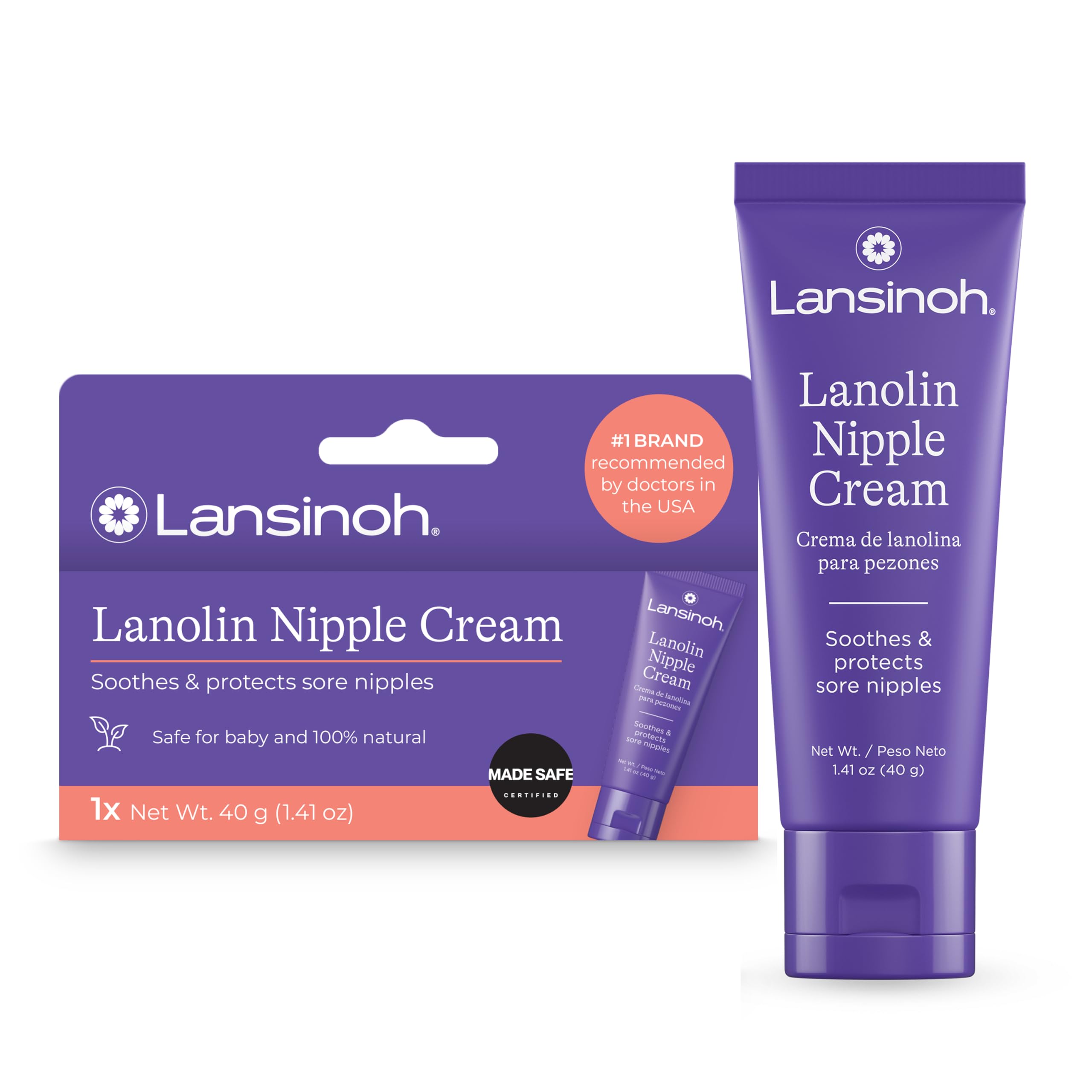
Lansinoh Lanolin Nipple Cream
Key Features
- Size: 1.41 oz
- Formula: 100% lanolin
- Container: Tube
- Wipe off before feeding: No
- Price: Budget
One ingredient is the whole pitch, and it is why we point every expectant friend to this tube first. Lansinoh’s cream is 100% lanolin — no fragrance, no preservatives, nothing to decode on the label — and it stays where you put it through a feed instead of soaking away. At 3 a.m., with a baby who has been cluster feeding for two hours, one ingredient and no wiping is the entire argument.
It does the job it is sold for. The flinch at the start of a latch eased faster with this than with the lighter balms we tried, and the barrier lasts long enough that we were not reapplying mid-feed. It moonlights well, too: a dab on chapped lips or ragged cuticles in February does the same work as a dedicated salve, which is why the tube never made it back into the bathroom cabinet.
The trade-off is texture. Lanolin is thick and slightly tacky, and on cracked skin the first touch stings before it soothes; warming a pea-sized amount between clean fingers fixes most of that. It is the one thing we hold against an otherwise straightforward product, and it buys a barrier that survives a twelve-feed day.
Pros
- Single ingredient, nothing to wipe off
- Fast relief on sore, cracked nipples
- Doubles as lip balm and cuticle cream
Cons
- Lanolin-based, so wrong for a known sensitivity
We hand this to every friend who is about to deliver: one pure ingredient, real relief on cracked nipples, and nothing to wipe off before a feed.
Best for Lanolin-Free Nursing
Earth Mama Organic Nipple Butter
Key Features
- Size: 2 fl oz
- Formula: Organic herbs and oils, lanolin-free
- Container: Jar
- Made without: Lanolin, petroleum, preservatives
- Price: Midrange
This is the lanolin-free balm we reach for first. Earth Mama builds it from organic herbs and oils rather than a single wax, and the result spreads like soft frosting: you can cover a cracked nipple in one pass without dragging, which is more than we can say for the firm lanolin tubes.
It holds up as more than a consolation prize for lanolin avoiders. The relief lasts past the first minute, the balm stays put instead of sliding off, and there is nothing to wipe away before the next feed. That combination is why it stayed in our rotation well after the sore stage passed.
It is rich, so a little covers a lot, and the 2-ounce jar outlasts the small jars here by a wide margin. We also ran it over cuticles and a wind-dried patch without thinking twice, and it never left the greasy film we expected from something this buttery.
Pros
- Lanolin-free organic herb and oil blend
- Spreads without dragging on sore skin
- No need to wipe off before nursing
Cons
- Pricier per ounce than the other plant balms
The lanolin-free balm we recommend first — rich, organic, and gentle enough that you do not have to wipe it off before nursing.
Best for Pumping Mothers
Motherlove Nipple Cream
Key Features
- Size: 2 oz
- Formula: Olive oil, beeswax, shea, calendula
- Container: Jar
- Extra use: Pump-flange lubricant
- Price: Midrange
The detail that earns Motherlove its place is buried in the fine print: it is the only cream here whose label suggests using it as a pump-flange lubricant. Anyone who has winced through a session with a dry flange knows that is not a marketing footnote — a thin smear around the tunnel turns a grinding twenty minutes into a manageable one.
As a nipple balm it is lovely. The base is olive oil, beeswax, shea, marshmallow root and calendula, all organic and unscented, and it is light enough to glide over tender skin without pulling. Texture is where it leads this group: nothing else here goes on this smoothly, and the ingredient list is short enough to read out loud.
A thin layer is enough, it does not need removing before a feed, and the 2-ounce jar keeps going long after the sore stage ends. We kept using ours on cuticles and dry knuckles for months afterward.
Pros
- Doubles as a pump-flange lubricant
- Smoothest application in this group
- Short certified-organic ingredient list
Cons
- Highest price per ounce of the plant balms
Buy it if you pump: it is the only cream here labeled for flange lubrication, and it is the smoothest balm on raw skin in this group.
Best for Very Raw Skin
Medela Tender Care Lanolin
Key Features
- Size: 2 oz
- Formula: Lanolin with oat beta glucan
- Container: Tube
- Wipe off before feeding: No
- Price: Premium
Anyone who has pressed a stiff lanolin balm onto cracked nipples knows the worst part is not the cream — it is the dragging. Medela’s Tender Care is built around that problem: the lanolin is softened with caprylic/capric triglycerides and oat beta glucan, so it comes out of the tube closer to a soft gel than a wax.
It spreads in one stroke, sits still long enough to do its work between feeds, and does not need removing before nursing. Application is where it clearly leads the lanolin creams here — no warming between fingers, no wincing, no second pass to cover a patch you missed.
We point anyone whose skin is too raw for a thick balm toward this one, and anyone who tried plain lanolin and hated the texture. The tube is generous, so it splits nicely between the changing table and the pump bag, and a little goes a long way.
Pros
- Glides on instead of dragging
- Lanolin softened with oat beta glucan
- No need to remove before feeding
Cons
- Costs the most of the lanolin picks
Our pick for raw, painful skin: the lanolin that goes on like a cream instead of a wax, with none of the drag.
Best for Affordable Lanolin-Free
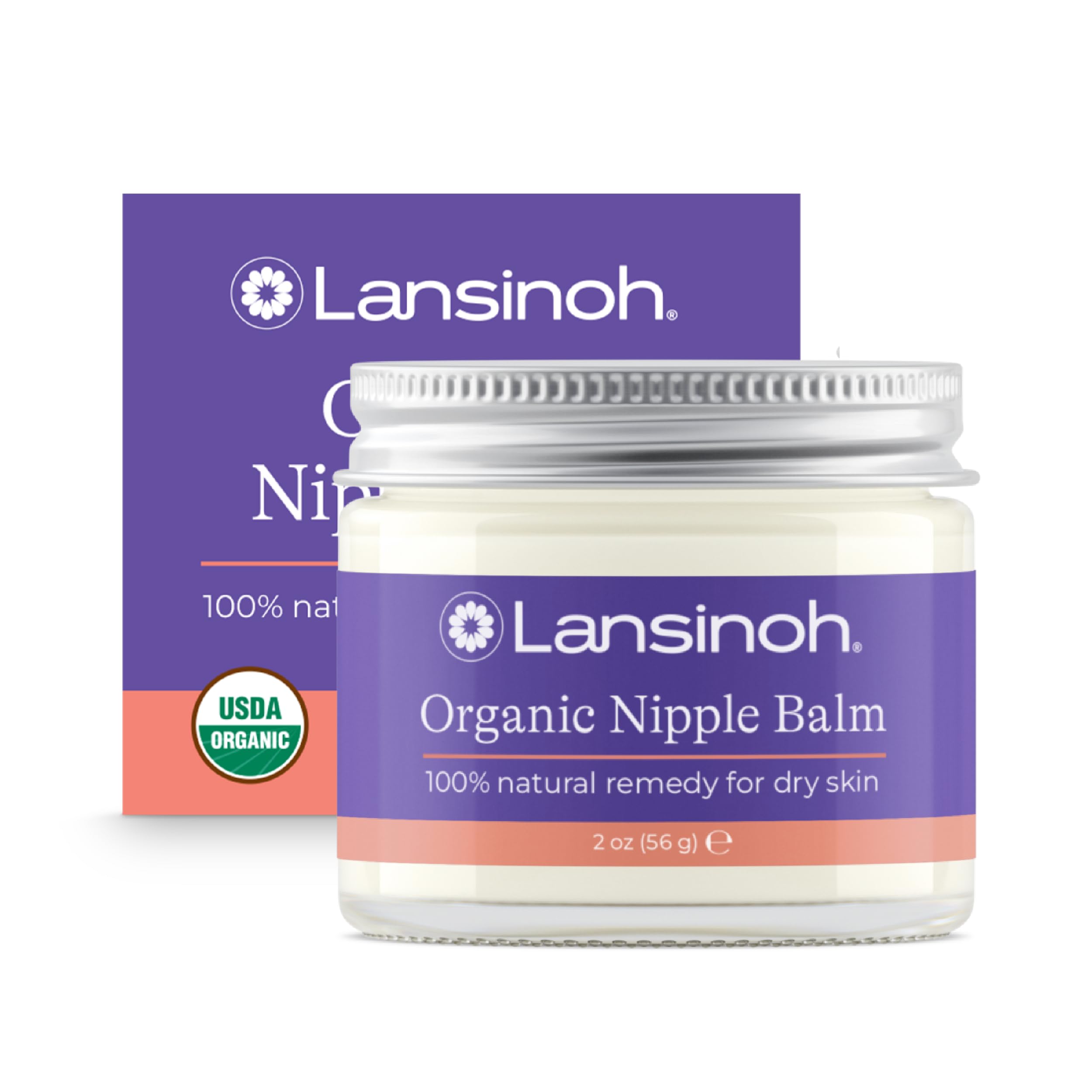
Lansinoh Organic Nipple Butter
Key Features
- Size: 2 oz
- Formula: 7 organic plant oils and waxes
- Container: Glass jar
- Certification: USDA organic
- Price: Budget
Among the plant-based balms here, this is the one that goes easiest on a baby budget. Two ounces of certified organic oils and waxes — sunflower, olive, beeswax, coconut, shea, calendula and argan — come in a glass jar with a metal lid for less than the smaller jars in this group cost.
Texture is the reason to choose it. It melts on contact and spreads in a thin, silky film that does not tug, and it is essentially unscented, which matters when everything else in your day already smells like milk and laundry.
The packaging is a small pleasure: a glass jar and tin lid that feel a step nicer than the plastic tubs here, with a seal that survives a diaper bag. It is dermatologist tested and hypoallergenic, and there is no need to wipe it off before a feed.
As a first plant-based balm, this is the one we suggest: cheap enough to keep one at home and one in the pump bag, gentle enough for an every-feed routine, and light enough that you will actually reapply it.
Pros
- Lowest cost per ounce of the plant balms
- Silky, fast-melting texture
- Glass jar with a secure tin lid
Cons
- Lighter barrier than a lanolin balm
Start here if you want lanolin-free care without paying a premium: two organic ounces that melt into skin and never need wiping off.
Best for Diaper Bag Backup
Bamboobies Organic Nipple Balm

Key Features
- Size: 1 oz
- Formula: Olive oil, beeswax, shea, calendula
- Container: Jar
- Certification: USDA certified organic
- Price: Premium
One ounce is small — small enough that this jar disappears into a diaper bag pocket and stays there. That is the point: it is the balm we leave in the bag rather than on the nightstand, so there is something on hand at a pediatric appointment or a first trip to the grocery store.
The formula is the familiar organic quartet — olive oil, beeswax, shea and calendula, plus marshmallow root — and it behaves the way that blend should: soft, quick to melt, easy to spread thin. It is unscented, needs no wiping before a feed, and pairs sensibly with nursing pads since the oils can mark clothing.
We treat it as a second balm rather than a first one. Kept in the bag alongside a bigger jar at home, it is the one that actually travels, and the screw lid has not leaked onto a burp cloth yet.
Pros
- Fits a diaper bag pocket
- Soft organic balm that spreads thin
- No need to wipe off before nursing
Cons
- Smallest jar here, at the highest cost per ounce
The balm we keep in the diaper bag: a small organic jar that spreads easily and saves you when soreness hits away from home.
Best for Chapped, Rough Skin
Tiny Human Nipple Crack Balm

Key Features
- Size: 1.8 oz
- Formula: Coconut, sunflower, olive, shea, aloe
- Container: Jar
- Wipe off before feeding: No
- Price: Midrange
Buttery is the right word. Nipple Crack is built on coconut, sunflower and olive oils with shea, aloe and calendula, and it spreads like a soft salve rather than a wax — one swipe covers the areola and a second is not needed.
We reach for it when skin is chapped rather than cracked. It is moisturizing enough to soften rough patches, slippery enough to make a pump flange comfortable, and unscented, so there is no smell attached to the sorest weeks. For a brand this small next to Lansinoh and Medela, it was the balm in this group that surprised us most.
What it does to laundry is the catch. The oils are generous, and a balm this rich can leave marks on a nursing bra or a light T-shirt, so it is worth pairing with pads and darker layers while you are applying it after every feed.
Pros
- Rich, buttery balm for chapped skin
- Works as a pump-flange lubricant
- Unscented organic oil base
Cons
- Grainy rather than smooth in some jars
Our pick for chapped, tender skin: a buttery organic salve that doubles as a pump lubricant and goes on in one swipe.
Best for Mild Soreness
Honest Company Nipple Balm

Key Features
- Size: 1.75 fl oz
- Formula: Coconut oil, beeswax, shea
- Container: Tube
- Wipe off before feeding: No
- Price: Budget
This one comes out of the tube runny. The Honest balm is a coconut oil, beeswax and shea blend with a thin, oil-like consistency, so it covers sore skin in a couple of seconds and never drags the way a thick lanolin does.
That lightness is a real convenience at 4 a.m. — one squeeze, one swipe, done — and it is lanolin-free, dermatologist tested, and does not need wiping off before a feed. It also works as a pump lubricant, which is the job we ended up using it for most.
One practical note: the oils mark light fabric, so pair it with nursing pads or dark bras during the weeks you are applying it every couple of hours.
For mild tenderness and pump friction, that is a fair trade at the low end of the price range here. For the raw, cracked first weeks, it is the wrong tool.
Pros
- Thin balm that spreads in one swipe
- Lanolin-free and dermatologist tested
- Doubles as a pump lubricant
Cons
- Too thin to protect cracked nipples
- Separates and turns runny in the tube
A light, inexpensive balm for mild soreness and pump friction, and the one we kept next to the pump.
How We Tested Nipple Creams
We started by reading ingredient labels and filtering out heavily scented formulas, anything with a long preservative list, and textures that sounded more like a body butter than a nursing balm. From that longer list, we narrowed to 12 tubes and jars across lanolin, plant-oil, and balm formats, then used each one for four months. That meant applying them after 3 a.m. feeds, between pumping sessions, and on cluster-feeding days, noting how skin felt at the next feed and whether cracked patches looked calmer by morning.
A pea-sized squeeze went between our fingers first, so we could feel whether it spread easily or dragged and whether it left a heavy film. We wore each under a nursing pad and a cotton bra for a full day to judge comfort and stickiness, then checked the label and our own experience to see whether it needed wiping before nursing. For staining, we pressed a dab into a white cotton pad and a bra cup, left both overnight, washed them as usual, and looked for rings. Removability got the shower test: did warm water take it off, or did it leave a film that needed a wipe?
We kept a rough tally of how many applications each tube or jar gave us and whether a little went far enough to justify the price. The ones that stayed in rotation soothed and moisturized sore skin without making the next feed feel like a chore, and they were easy to live with between feeds.
How to Choose a Nipple Cream
Start with the ingredient, not the marketing: whether a balm is built on lanolin or on plant oils decides how thick it is, how it smells, and how much work it is at 3 a.m.
Lanolin or plant-based?
Lanolin is a single-ingredient, waxy fat that sits on the skin as an occlusive barrier and barely needs reapplying. Plant balms combine oils, butters and beeswax, go on lighter, and often need topping up between feeds. If you want the fewest steps and the fewest ingredients, choose lanolin — Lansinoh’s plain cream or Medela’s softer version. If you want organic or simply lighter, choose a plant balm such as Earth Mama or Motherlove.
Our own order of operations is a heavy balm for the raw first two weeks, then a lighter one once skin settles. Buying one of each is not extravagant here: the jar lasts, and you will use both.
Thickness matters more than you think
When nipples are cracked, the moment of application is often the worst moment of the day, and a stiff balm drags exactly where you do not want it to. Thick lanolin needs warming between clean fingers before it behaves; softer formulas in tubes glide on straight from the package.
If you flinch at the thought of touching the area at all, pick a cream-textured formula — Medela Tender Care is the one here built for that — and save the waxier balms for skin that is intact but uncomfortable.
Check what it does to fabric and pump parts
Anything oil- or beeswax-based can leave a mark on a nursing bra or a light shirt, and the richer balms are the usual suspects. That is a reason to keep pads and dark layers in rotation for the weeks you are applying after every feed, not a reason to skip the balm.
If you also want to use it on pump flanges, check the label first. Only some balms, Motherlove among them, are sold for that job.
Jar or tube, and where it will live
A jar gives you control over the amount and lets you scrape out the last of it; a tube is faster one-handed and cleaner to carry. Most mothers end up wanting both — a tube by the chair where you feed at night, a jar wherever you change and pump.
Buy the format that fits the room rather than the one that photographs better. A jar that is a hassle to open in the dark is a jar that stays closed.
Frequently Asked Questions
Do I have to wipe nipple cream off before breastfeeding?
No. Every balm in this guide is labeled safe to leave on, so you can apply after a feed and pick the baby up again without washing. If skin feels so slick that the latch slides, blot the excess with a tissue rather than scrubbing — soap and water on cracked skin undoes the barrier you just put down.
Is nipple butter different from nipple cream?
Not in any way that matters. Cream, butter, balm and salve are marketing words for the same thing: a leave-on emollient for sore nipples. What separates them is the first ingredient — lanolin, olive oil, coconut oil, beeswax — so read that line rather than the name on the front. A butter can be pure lanolin and a cream can be entirely plant-based.
Will nipple cream help with engorgement or a clogged duct?
No. These products treat skin — soreness, cracking, chafing — and do nothing for the breast tissue underneath. A hard, tender lump or general fullness needs a different plan: feed frequently, use cold packs between feeds, and bring in a lactation consultant or clinician if it does not ease. The balm is only there to keep the surface comfortable meanwhile.
How much should I buy before the baby arrives?
Sizes here run from 1 ounce to 2 fluid ounces, and a pea-sized amount per feed goes a long way. Start with the small jar — 1 to 1.5 ounces is enough to learn whether you like the texture — and size up only if you will also use it on pump flanges, lips and cuticles.
Final Verdict
Lansinoh’s lanolin cream stays our default: one ingredient, a barrier that survives a feed, and nothing to wipe off at 3 a.m. If you want lanolin-free, Earth Mama’s organic butter is the closest straight swap, and Motherlove is the one to buy if you also want a flange lubricant.
And if applying anything at all makes you wince, Medela Tender Care’s tube is the lanolin that glides. That is the whole decision: how raw your skin is, and how much touching it can take.
