This post contains affiliate links. We may earn a small commission when you buy through our links — at no extra cost to you.
You learn pretty fast that a 2 a.m. feed is a one-handed job. The baby is in one arm, the room is dark, and whatever clever closure your pajamas have becomes a puzzle you solve by feel — usually with a panel that has already bunched, twisted, or given up entirely. Good nursing pajamas fix that small, repeated misery: they open without a fight, they’re soft enough to actually sleep in, and they look enough like clothes that you’re not hiding when the doorbell rings.
I spent my first month in the same two stretched-out nightgowns, and the lesson was that fabric matters more than design — a pretty set that pills by the fourth wash is a worse buy than a plain one that survives a year of them. Over the past three months, we’ve slept in, washed, and fed in 14 sets, and the differences showed up fast. Fit is the other thing nobody warns you about, since your body is a different shape in week one than in week twelve, so below we’ve flagged who each pick suits best.


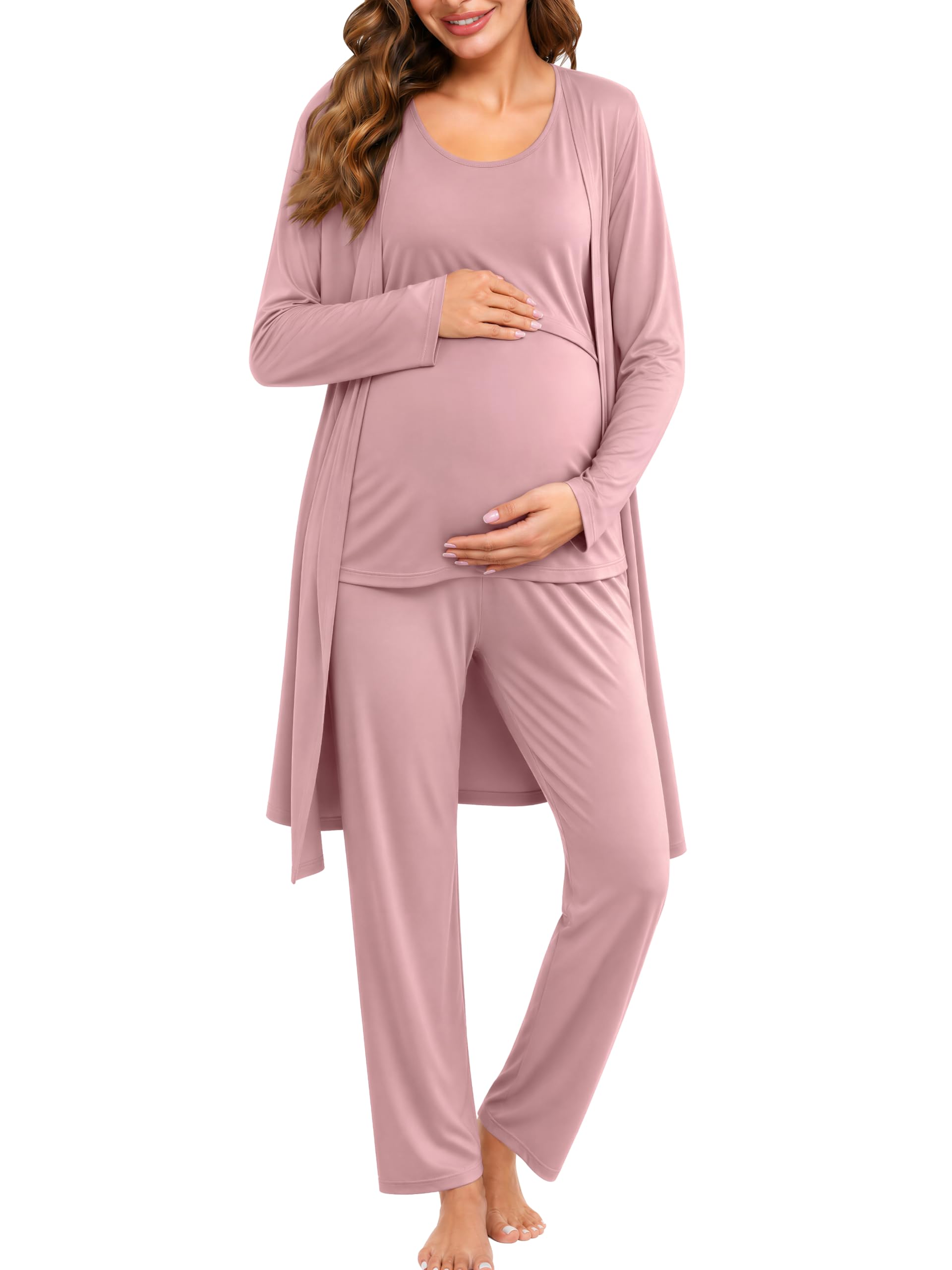
Best for Everyday Night Feeds
Ekouaer Nursing Pajama Set
Key Features
- Waist: Adjustable waistband
- Fabric: Lightweight stretch knit
- Set includes: Nursing top and bottoms
- Nursing access: Top made for feeding and pumping
- Price: Budget
The waistband on these bottoms is the detail we keep pointing out to people: a row of buttons lets you cinch them in after delivery, so the pair that cleared a nine-month belly still sits snug a week later. It’s a small piece of sewing that earns its keep at three in the morning, when nothing you own fits the way it did last week.
The rest of the set handles the two jobs nursing pajamas actually have. The top opens and closes one-handed in a dark room, and the knit is light enough that sleeping in the pants is comfortable rather than a compromise. Soft, stretchy, and cool is the short version; nothing here feels stiff or hospital-issued.
Of the four sets and gowns here, this is the one we recommend first. It’s the least expensive, which matters because you want two of them — one in the hospital bag and one on the bed — since the first fortnight is a laundry problem as much as a sleep problem.
Sizing is the weak spot. The top and bottoms don’t run to the same measurements, so the shorts can be generous while the top skims over a bump. Order before your third trimester ends, try both pieces on, and swap before the bag gets packed. That’s one errand this set creates, and the price makes it easy to forgive.
Pros
- Waistband cinches down after delivery
- Top opens one-handed for night feeds
- Light knit that’s comfortable to sleep in
- Least expensive of the four, so buy two
Cons
- Thin knit with little structure
- Deep blue colorways can bleed
We tell anyone building a hospital bag to start here: soft, easy to nurse in, and the waistband tightens as the bump goes down.
Best for Hospital and Recovery
Ekouaer 3-in-1 Nursing Nightgown
Key Features
- Style: 3-in-1 nursing nightgown
- Fabric: Lightweight, cooling knit
- Nursing access: Full front opening and shoulder slip
- Price: Midrange
Slip the shoulders down and the entire front comes away, which is the difference between a nightgown that works for feeding and one that just has buttons on the chest. That full opening is what makes skin-to-skin and the first checks easy without undressing, and it’s why a gown beats a set for the first two days.
This is the gown we point to for the hospital and the week after. The fabric is light and cool against the skin, the shoulders stay where you put them when you’re not feeding, and it’s the least fiddly garment in this group to get on and off when you’re sore and running on nothing.
It runs large, and it runs short. If you’re between sizes, size down; if you’re tall, expect the hem to sit above the knee rather than at it. Worth knowing before you pack it, because a gown that rides up is the kind of thing you notice at four in the morning.
Buy it in black if it’s going in the delivery bag. It’s the colorway that gets through the first 48 hours without showing what the first 48 hours involve, and it’s the version that still looks like something you chose rather than something you were handed.
Pros
- Front opens fully for feeding and skin-to-skin
- Shoulders slip down but stay put
- Light, cooling fabric for night sweats
Cons
- Elastic under the bust can sit tight
- Colors can arrive off from the photos
We recommend this gown for delivery and the first week home: the front opens fully, it stays cool, and it’s the least fiddly thing here to get on and off.
Best for Visitors and Pumping
SWOMOG Maternity Robe Set
Key Features
- Waist: Adjustable waistband
- Pockets: Pants pockets
- Set includes: Robe, top, and pants
- Nursing access: Discreet top that works with pumps
- Price: Midrange
The robe is the piece that earns this set its place. Three pieces — robe, top, and pants — sound excessive until you’re walking a hospital corridor at two in the morning and want something that closes properly in front of strangers.
The top underneath is the discreet one of the four: it opens enough to feed without gaping, and it works with a breast pump rather than fighting it. The waistband adjusts, so the pants can be let out in the days after delivery and taken in again later, and there are pockets — a bigger deal than it sounds when your phone has nowhere to live but the bed.
The fabric is thin. Genuinely thin, which is why it works in a warm ward and through night sweats, and why it won’t do much for you in a cold house; the robe adds a layer rather than real warmth. It washes well, the color holds, and nothing about it needs special handling.
For the hospital bag, this is the set we hand over first: it covers the corridor walk, the visitor at the door, and the pump on the nightstand, and it’s the only one here with a robe in it. Once you’re home and sleeping lighter, the robe stays out and the rest gets folded away.
Pros
- Robe, top, and pants in one set
- Discreet, pump-friendly nursing top
- Adjustable waistband and roomy pockets
Cons
- Thin fabric adds almost no warmth
Our pick if you want a robe in the bag: discreet enough for visitors, easy to pump in, and the pants have pockets.
Best for Warm-Weather Due Dates
SUNNYBUY 3-Piece Nursing Set

Key Features
- Fabric: Stretchy knit
- Pieces: 3
- Nursing access: Wide pull-aside slit
- Price: Premium
The slit under the top is the best single piece of design on any set here: wide enough to feed from without gaping, narrow enough that you’re not cold for the rest of the night, and there are no buttons to line up one-handed at four in the morning.
The rest of it is a three-piece set in a stretchy knit that’s pleasant in a warm room and packs down to nothing in a bag. The cut is closer to the body than the Ekouaer sets, which makes it the most put-together of the four and the least forgiving if you wanted something to swim in.
The shorts are cut short, and the whole set runs close, so there’s no slack to borrow if you’re between sizes — order your true size and check the length before you commit. If you want three in the morning to feel like nothing at all, this isn’t the set. If you want to feel like a person, it is.
It’s the most expensive of the four, and we can see where the money went: the shape is neater, the seams sit where they should, and it photographs like clothing rather than sleepwear. On a warm-weather due date with a hospital that runs hot, that’s an easy trade to make.
Pros
- Wide pull-aside slit, no buttons to manage
- Neatest cut of the four
- Stretchy and light for warm rooms
Cons
- Thin knit offers little warmth
- Priciest of the four
Choose this set if you want the neatest cut here and a wide pull-aside opening, and your due date lands in a warm month.
How We Tested the Nursing Pajamas
We started with about 40 sets — dedicated maternity labels alongside the sleepwear sections of brands we already buy — and cut the list down by fabric content, size range, and how the top actually opens. Pull-aside panels, wrap fronts, and snap plackets behave very differently at 3 a.m., so we made sure each type was represented. That left 14 sets, which my team and I wore for three months: through overnight feeds, cluster feeding on the couch, a nap whenever one was on offer, and the every-other-day wash cycle these pajamas really live in.
The first thing we did with each set was open it in a dark room, one-handed, while holding a seven-pound weight in the other arm. We noted whether the panel gaped, whether the front had to be repositioned mid-feed, and whether the neckline stretched out after the tenth pull and stayed that way. Comfort got judged the same way: whether the waistband dug in when lying on your side, whether the fabric trapped heat by 4 a.m., whether the cuffs stayed where they were put.
Then we washed them — repeatedly, in the same load as everything else — and checked for pilling at the underarms and inner thighs, seam twist, and color fading after the fifth and tenth cycles. A deep navy that goes grey in a month is not the buy it looked like. Because bodies change fast in this stretch, we tested small through XXL on wearers from 5-foot-2 to 5-foot-10, some at 38 weeks pregnant and some six months postpartum, and recorded where each set ran small or long. Softness and looks we left half to the sleeper and half to the doorbell: if you’d answer the door in them, they passed.
How to Choose Nursing Pajamas
Access and fit decide nursing pajamas long before fabric or color does — if you can’t open the front one-handed in a dark room, nothing else about the set matters.
Start with how the top opens
The four mechanisms you’ll meet are buttons, a wrap, a pull-aside slit, and a nightgown that slips off the shoulder, and they trade speed against coverage. A pull-aside slit is fastest at three in the morning. Buttons take two hands but keep you covered in front of a visitor. A gown that opens all the way down is what you want for the first hours of skin-to-skin.
Test any candidate the way you’ll actually use it: in the dark, one-handed, holding something against your chest. If it takes two hands or bares your whole torso, it’s the wrong top, however soft the fabric.
Buy for two bodies, not one
Nursing pajamas have to fit a third-trimester belly and a body that changes again within days, which is why an adjustable waistband, a drawstring, or button tabs on the bottoms are worth more than a size chart. The most common complaint in this category is sizing, and it usually isn’t one bad cut: tops and bottoms in the same set often run to different measurements.
Order by 34 weeks, try both pieces on with the tags still attached, and keep the receipt. If you’re recovering from a caesarean, a nightgown avoids a waistband across the incision altogether for the first week.
Choose thin fabric, and plan for the trade
Almost every set here is a thin knit, and that’s the right call: postpartum night sweats are real, and a heavy cotton that stays damp is worse than a light fabric that dries. The cost is coverage — pale colors show leaks and a thin knit clings where you’d rather it didn’t.
We take thin over thick and plan around the coverage instead of pretending it isn’t a problem. A robe over the top solves most of it, which is why the robe set earns its place.
Cover the walk down the corridor
The thing people forget is the two-in-the-morning walk past a nurses’ station. A robe earns its keep there, and a knee-length gown beats a short set for the same reason. Dark colors hide what the first two days produce, and a loose cut keeps a hospital pad out of sight.
If you’re buying one thing, buy the robe or the longer gown rather than another pair of shorts. The sets are what you sleep in; the layer is what gets you down the hall.
Frequently Asked Questions
Can I just wear my regular pajamas while nursing?
You can, and it works for the first few days. The trouble shows up at night: a pullover means lifting your whole top, and a button-front shirt that isn’t cut for feeding gapes in all the wrong places.
Test the set you already own in a dark room, one-handed, holding something against your chest. If you need both hands, it isn’t a nursing top, and you’ll want one before the baby arrives rather than after.
Do nursing pajamas work with a breast pump?
Most do, but not all of them well. A narrow pull-aside slit is fine for latching a baby and awkward with flanges, so look for a front that opens fully or a robe you can drop over a pumping bra.
The easiest test: hold the top open with one hand and imagine holding two flanges with the other. If the answer is no, keep that set for direct feeds and pump in something else.
How do I keep a light-colored set from staining?
Milk and blood both set with heat, so rinse in cold water the same day and keep the set out of the dryer until the mark is gone. A small lidded bucket in the bathroom makes that realistic at four in the morning.
Keep one dark set for the first month, when the stains come fastest, and save the pale ones for when feeding settles down.
Final Verdict
The Ekouaer pajama set is where we start: the top opens one-handed in the dark, the waistband tightens as the bump goes down, and it’s inexpensive enough that buying two is the sensible move rather than a splurge.
Pack the nightgown instead if you’re building a hospital bag — the full front opening earns its keep for the first two days. And if you want one set that covers the corridor, the visitor, and the pump, the SWOMOG robe set is the one to add.
