This post contains affiliate links. We may earn a small commission when you buy through our links — at no extra cost to you.
The biggest surprise in the kids sandbox aisle isn’t which toy truck breaks first – it’s how little sand arrives in the box and how quickly rain turns a "waterproof" lid into a sponge. Manufacturers sell sandboxes packed with colorful accessories and promises of hours of dry play, but the actual experience often falls short: the sand quantity barely covers the bottom, and the lid lets in water within the first storm.
The real decision for parents is whether to buy a smaller, contained set that actually works as advertised or a larger outdoor box that demands extra sealing and more sand from the start. Both paths have trade-offs – the contained option restricts group play and traditional digging, while the outdoor option turns into a weekend project. Understanding which compromises matter most for your space and child’s age is the only way to avoid a sandbox that spends more time collecting rain than collecting kids.


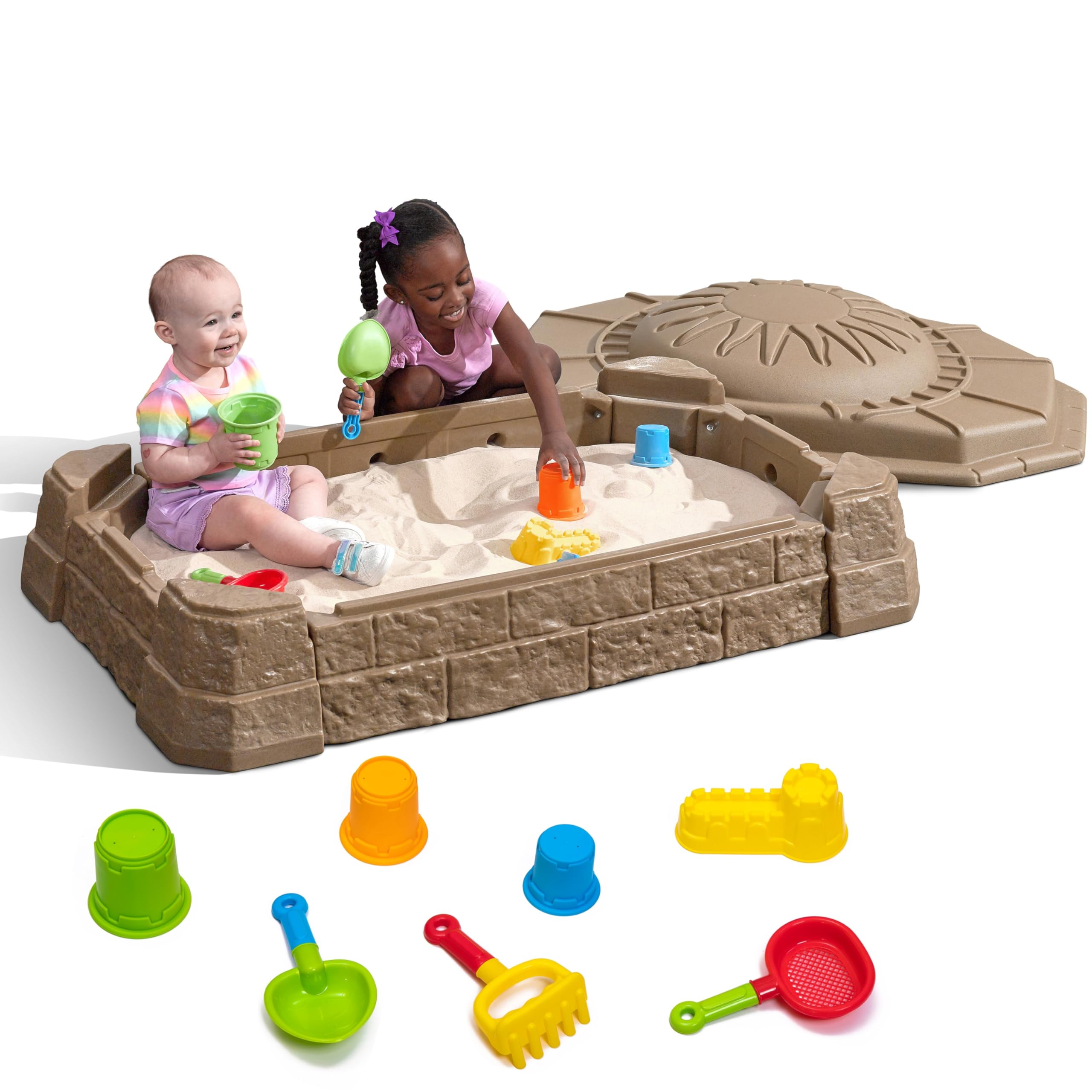


Best for Indoor sensory play
Kinetic Sand Construction Site
Rating: 4.7 ★ | Price: $22.49 | Sand Type: Kinetic | Sand Quantity: 2 lbs | Lid/Storage: Folding box, no lid | Durability: Plastic, sturdy | Play Space Size: Compact
Folding sandbox with 2lbs kinetic sand and a working crane, dump truck – all packed into a portable bin.
The folding sandbox itself is the key feature: the 2 lbs of kinetic sand stays clumped together, so spills stay inside the bin and cleanup takes minutes. The included crane and dump truck give construction-themed kids a reason to scoop, lift, and dump without stray sand scattering across the floor. Over 19,000 buyers consistently report that the sand holds shape and doesn’t stick to hands or surfaces.
This set works best for one or two children ages 3–5 who want indoor sensory play without the mess of traditional sandboxes. The crane attachments require adult help for younger kids to lock on, and the sand quantity is just enough to cover the bottom – many buyers add a separate 1 lb bag for deeper digging. Parents expecting a full sandbox depth will need to budget for extra sand.
Pros
- Sand stays together and cleans up easily from hard floors
- Folding bin keeps play contained and stores flat
- Working crane and dump truck add construction role-play
Cons
- Sand amount is only 2 lbs; box looks fuller in product images
- Crane hook and wrecking ball are tricky for small hands to attach
Buy this if you want a contained, mess-free indoor sandbox for a construction-obsessed preschooler. Skip it if you expect enough sand for deep burying or need a toy that works independently for very young kids.
Best for Budget intro
Kinetic Sand Purple Set
Rating: 4.7 ★ | Price: $7.79 | Sand Type: Kinetic | Sand Quantity: 1 lb | Lid/Storage: Tray, no lid | Durability: Plastic tray | Play Space Size: Small
At $7.79, the cheapest way to try kinetic sand with 1lb of purple sand and four basic molds.
This set is for budget-conscious parents or anyone wanting a mess-free indoor sand experience without committing to a larger kit. The 1lb of purple sand stays together like wet sand but leaves no residue, and the included tray and tools make cleanup simple — sand vacuums up easily. Unlike the more elaborate construction-themed set, this one skips the crane and extra sand to keep the price low. However, the tray has no lid, and some units arrive with the sand already hard and unusable, so inspect immediately on delivery.
Pros
- Affordable entry point for kinetic sand: 1lb of sand plus four molds for under $8
- Easy to store and clean up: sand stays together and vacuums right up
Cons
- No lid for the storage tray, so sand can spill and dry out faster
- Some batches arrive with sand already hard and unusable
Buy this if you want a low-cost, no-commitment way to introduce kinetic sand to a toddler in a small space.
Best for Standing toddlers
Step2 Naturally Playful Sand Table
Rating: 4.6 ★ | Price: $69.99 | Sand Type: Traditional or water | Lid/Storage: Snap-on lid, leaks | Durability: Plastic, double-walled | Play Space Size: 36×26 in
Elevated sand/water table for toddlers to stand and play, but the lid lets in rain.
Unlike larger seated sandboxes that fit multiple toddlers, this table is raised to standing height, making it ideal for small backyards and water play. The double-walled plastic holds up well over time, but the lid fails to keep rain out—water seeps through strap holes. Best for a single toddler in climates where you can bring it under cover or use an extra tarp.
Pros
- Sturdy double-walled plastic that stands up to outdoor use and frequent assembly/disassembly
- Raised to the right height for toddlers to stand and play without bending
Cons
- Lid not waterproof; rain leaks in through the strap holes
- Some leg holes have excess plastic that makes snapping legs in difficult
Buy this if you need a sturdy sand/water table for a standing toddler with a small backyard. Skip it if you need weatherproof storage or expect multiple children to use it.
Best for Multiple toddlers
Step2 Sandbox II
Rating: 4.6 ★ | Price: $109.99 | Sand Type: Traditional | Lid/Storage: Secure lid, some leaks | Durability: Plastic, durable | Play Space Size: 50×31 in
Large sandbox with built-in seats fits 2–3 toddlers and holds up to 200 lbs of sand — lid stays on in wind.
The Step2 Sandbox II gives you a 50×31-inch play area with integrated seats, so multiple toddlers can dig side by side without crowding. The lid secures well in windy conditions, keeping sand contained when not in use. But assembly requires drilling holes yourself — no predrilled points — and water can sneak in through lid gaps after rain. This is best for families with 2+ toddlers who have a yard and are willing to spend time on setup, rather than those looking for a quick no-tool option or a fully watertight storage box.
Pros
- Fits up to three toddlers with built-in seating and generous play space
- Lid stays securely in place even during strong winds
- Includes 7 sand tools so you don’t need to buy accessories separately
Cons
- Assembly requires drilling holes — no predrilled points, which adds time and effort
- Lid gaps allow water to seep in during rain, requiring extra sealing or drainage planning
Buy this if you have multiple toddlers, a yard with space, and don’t mind drilling during assembly. Skip it if you want a no-tool setup or a fully waterproof lid.
Best for Construction lovers
Little Tikes Excavator Sandbox
Rating: 4.5 ★ | Price: $72.99 | Sand Type: Traditional | Sand Quantity: 100 lbs capacity | Lid/Storage: Attached lid, leaks | Durability: Plastic, sturdy | Play Space Size: 29×28 in
Compact construction-themed sandbox with a working excavator and ramp that fits patios, but its small size and leaky lid limit it to solo play in dry climates.
The working excavator arm and ramp are the main draw — toddlers obsessed with construction trucks will happily scoop and dump sand for long stretches. But the 29×28 inch footprint and 100 lb sand capacity make this a single-child box; two kids quickly crowd each other. The lid is difficult to snap on and water seeps through, so it needs extra protection in rainy climates. Best for a solo child on a small patio or balcony who wants a hands-on digging experience without needing space for friends.
Pros
- Working excavator and ramp captivate construction-obsessed toddlers
- Sturdy plastic construction fits tight spaces like patios and balconies
- Includes 6 accessories and a lid for basic coverage
Cons
- Small size limits play to 1-2 small children; not suitable for groups
- Lid is difficult to attach and allows water seepage; requires extra cover in wet climates
Buy this if you have a single construction-loving toddler and a small patio or balcony. Skip it if you need space for multiple kids or live in a rainy area without extra covering.
Best for Creative sensory
Asoxt Sensory Bin 43pc
Rating: 4.7 ★ | Price: $28.04 | Sand Type: Kinetic (colored) | Sand Quantity: 4 lbs (4 colors) | Lid/Storage: Storage bin, no lid | Durability: Plastic bin | Play Space Size: Compact
A large sensory kit with 4 lbs of colored kinetic sand and 17 molds – best for artsy indoor play.
This 43-piece sensory bin from Asoxt offers four pounds of colored kinetic sand in four colors and 17 molds — far more sand and mold variety than the construction-themed top pick. The included storage bin and tools make it a self-contained indoor activity for preschoolers. However, some units emit a vinegar-like chemical smell on opening, and the sand tends to dry out and become crumbly after repeated use, shortening its lifespan. It’s a solid budget option for kids ages 3-8 who enjoy molding, scooping, and pouring over structured construction play.
Pros
- Extensive mold selection and four pounds of sand keep children engaged for extended periods.
- Value pricing with more sand per dollar than many competitors.
- Self-contained storage bin reduces mess and simplifies cleanup indoors.
Cons
- Potential chemical smell (vinegar-like) on first opening from some batches.
- Sand quality degrades over time, becoming dry and crumbly after repeated use.
Buy this if you want a large, low-cost indoor sensory kit for creative play and are willing to accept possible odor and sand degradation. Skip it if you need long-lasting sand or are sensitive to smells.
Best for Aesthetic yards
Best Choice Wooden Sandbox
Rating: 4.3 ★ | Price: $119.98 | Sand Type: Traditional | Sand Quantity: Large capacity | Lid/Storage: Bench lid, gaps | Durability: Cedar wood, splits | Play Space Size: 47×47 in
Natural cedar appearance with bench lid for moderate outdoor use – but requires sealing and reinforcement against splitting and water ingress.
The Best Choice Wooden Sandbox brings a natural cedar look to the backyard with benches that fold into a lid – a step up from plastic bins. Unlike contained, mess-free kinetic sand sets, this is a traditional outdoor sandbox that demands maintenance. The wood is thin and prone to splitting, hinges break under regular use, and the lid leaves gaps that let in debris and rainwater. Additional sealing and reinforcement are necessary for longevity. This box is best for budget-conscious parents in mild climates who want the aesthetic and are willing to do some DIY prep.
Pros
- Large surface (47.25 inches square) with an attractive cedar wood appearance that fits well in a yard.
- Benches convert to a lid, allowing quick covering and seating for kids during play.
Cons
- Wood quality is poor – splits easily and hinges break, requiring reinforcement and sealing before regular use.
- Lid does not close completely, leaving gaps that allow debris and rainwater into the sandbox.
Buy this if you want a large wooden sandbox with a clean look and are prepared to seal the wood and reinforce the hinges. Skip it if you need a durable, weather-resistant box straight out of the box.
How to Choose
Most sandboxes arrive with far less sand than the box art suggests, and lids that claim waterproofing often leak within weeks.
Sand Type
Kinetic sand stays together and vacuums easily, making it ideal for indoor use. Traditional sand requires outdoor space and a cover to stay dry and clean. Activity tables that double as water tables add versatility but require drainage.
Sand Quantity
Manufacturers often list sand weight in pounds, but the area it covers depends on box depth. For kinetic sets, expect to buy an extra 1-2 lb bag to fill the bin. For outdoor boxes, a 50 lb bag of play sand is the minimum for decent depth.
Lid/Storage Design
A lid that seals fully is rare. Most plastic lids leave gaps or have strap holes that let in rain. Wooden box lids often warp or fail to close flush. Plan to store the sandbox under a tarp or bring it inside if moisture protection is critical.
Durability
Plastic outdoor sandboxes resist rust and splinters but can crack in extreme cold. Wooden sandboxes look better but require annual sealing and hinge reinforcement. Hinges on budget wood models commonly fail within 12 months.
Play Space Size
Compact sandboxes fit on small patios but limit group play to one child. Larger boxes (47 inch+) can hold 2-3 toddlers but require a dedicated yard area. Consider how many children will use it and whether you need seating built in.
FAQ
How much sand comes with kinetic sand sets?
Most kinetic sand sets include 1 to 2 pounds of sand, which is enough to cover the bottom of the included bin but not to fill it for deep digging. Many buyers end up buying an extra 1-pound bag separately to make play feel less sparse.
Are Step2 sandbox lids waterproof?
No, Step2 lids are not fully waterproof. The snap-on designs have gaps around the edges and strap holes that allow rainwater to seep in. For outdoor use, plan to store the sandbox under a covered patio or use a separate waterproof tarp.
Do wooden sandboxes need to be sealed?
Yes. Most wooden sandboxes, including cedar models, arrive untreated. Without sealing, wood absorbs moisture, splits, and the hinges rust. A coat of outdoor sealant and regular inspections can extend the lifespan from one year to three or four.
Which sandbox is best for toddlers who put things in their mouth?
For toddlers who mouth toys, kinetic sand is safer because it sticks together and doesn’t create airborne dust like traditional play sand. However, no sand is food-safe, so supervision is essential. Plastic outdoor sandboxes with a secure lid keep sand cleaner than open wooden boxes.