This post contains affiliate links. We may earn a small commission when you buy through our links — at no extra cost to you.
The first pair of shoes lands at an awkward moment: your baby has just worked out walking, and now you need to cover the feet that were doing so well barefoot. A stiff, clunky shoe can turn a confident cruiser back into a crawler, because new walkers balance with their toes and read the floor through a thin sole. What a good first shoe does is protect without interfering — enough structure to handle pavement and a daycare parking lot, little enough that your baby forgets it’s there.
Over the past four months, my team and I have put 12 pairs on the feet of genuine toddlers, from pre-walkers pulling themselves up on the couch to a 16-month-old who now sprints at drop-off. The gaps between them are not subtle. Weight, sole flexibility, and how fast you can get a shoe onto a foot that is actively trying to escape separate the keepers from the rest. Here are the pairs that earned a second wear — and the situations each one handles best.


Best for New Walkers
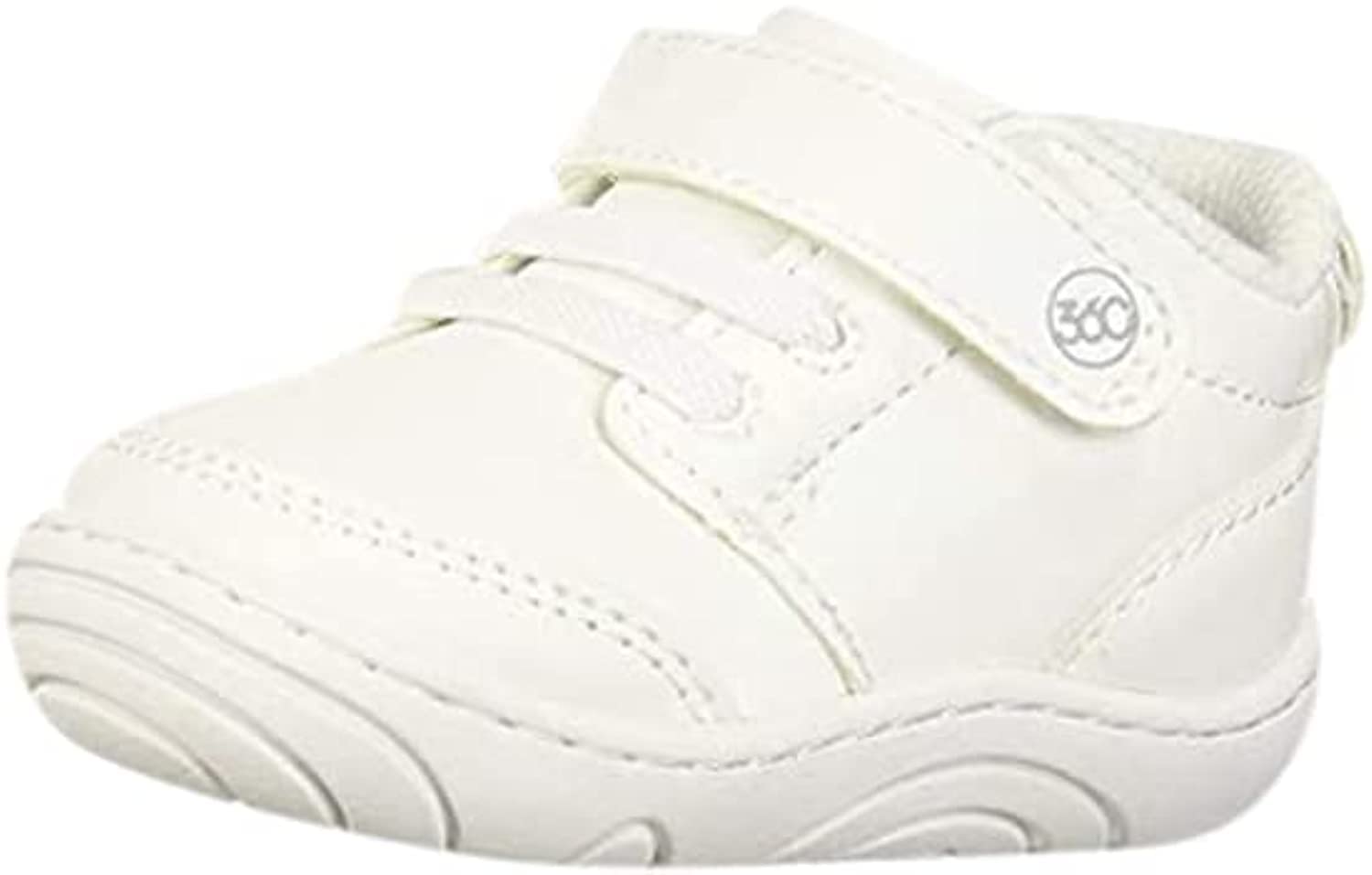
Stride Rite Taye 2.0
Key Features
- Style: First sneaker
- Insole: Removable
- Closure: Adjustable strap
- Department: Unisex baby
- Price: Premium
The Taye 2.0 is the pair we keep coming back to for a baby’s first real shoe: the sole is rounded and flexible, the opening is wide enough to get a wriggling foot in, and the strap holds the heel down without a fight. That combination is why it is our top pick.
What we appreciate most is how much support it gives without feeling stiff. The rounded sole helps a wobbly walker roll through a step, and the toe box leaves room for toes to spread. We also like the removable insole: on a wider or chunkier foot, taking it out buys a little extra room before you need the next size.
It is not the cheapest first shoe, and it is not the most minimal either. It sits in the everyday sneaker slot: more structure than a sock shoe, less fuss than a dress shoe. For a baby who is cruising and starting to take independent steps, that balance is useful. The adjustable strap is easy to manage one-handed, and the shoe stays on through crawling and pulling up.
If you want a first pair that can handle daycare, errands, and the park without looking like a bulky boot, this is it. We do not size up just to stretch the wear time; a first shoe that is too long is harder to walk in.
Pros
- Rounded, flexible sole supports a natural step
- Adjustable strap keeps the shoe on
- Removable insole adds room for wide feet
- Easy to get on a wriggling baby
Cons
- Durability can be mixed with heavy use
Our default first shoe for new walkers: flexible, secure, and easy enough to put on that you will not dread leaving the house.
Best for Wide Feet
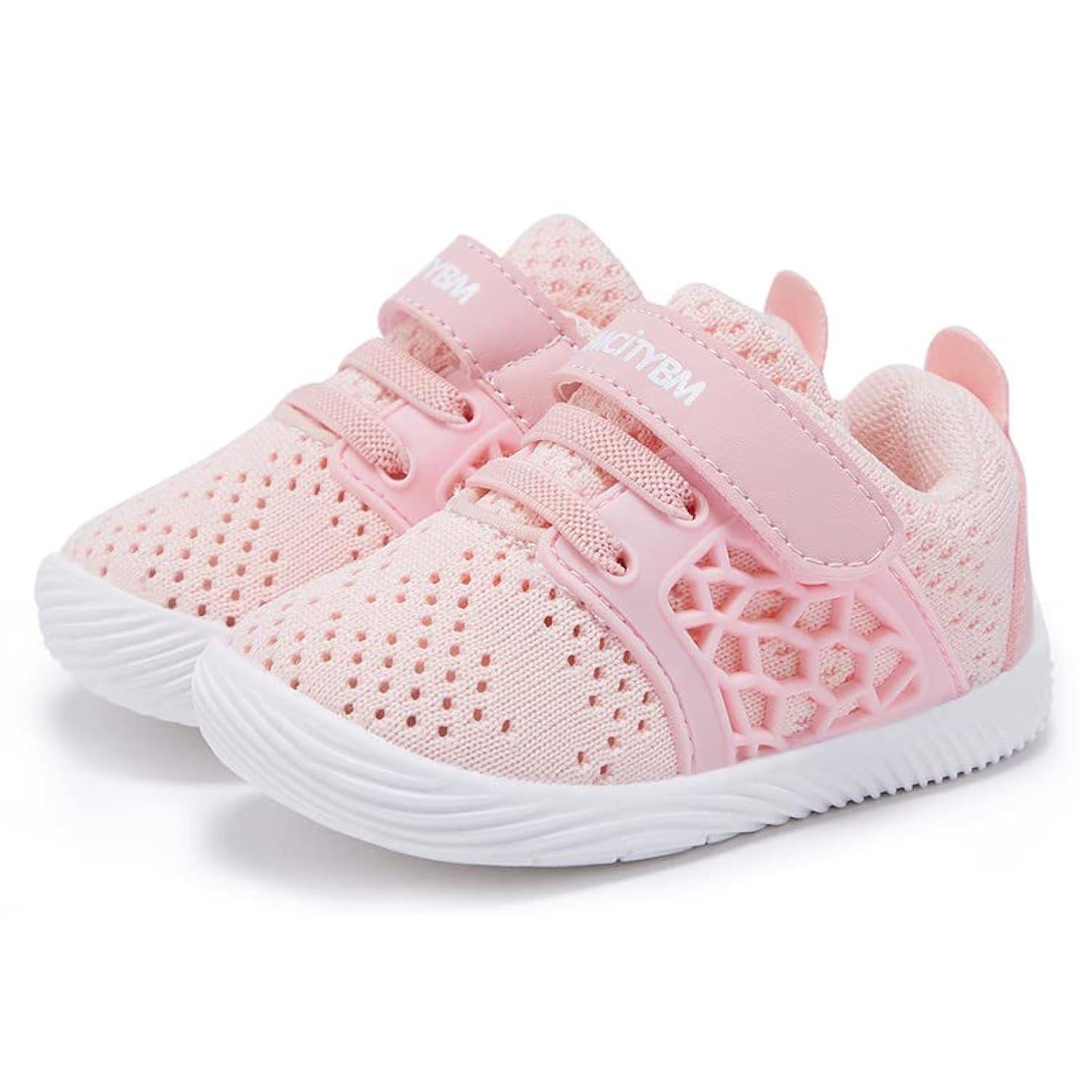
BMCiTYBM Walking Sneaker
Key Features
- Size: 6-12 months
- Color: Grey
- Style: Walking sneaker
- Toe box: Wide
- Price: Midrange
The first thing we noticed about this BMCiTYBM pair is the toe box: it is roomy enough that a wide or chunky foot does not look pinched, and the soft sole bends instead of fighting the foot. For a baby who is already pulling up and charging across the floor, that makes it an easy everyday choice.
We prefer it to more structured sneakers when we want something light and forgiving. The opening is wide, the tongue pulls back, and the shoe slips on without a wrestling match. It also has enough shape to stay on during crawling, which is not true of every soft shoe.
The trade-off is that it is not a dressy shoe, and the grey variant is plain. That is fine by us for daycare and park days. It sits in the middle of the group on price, and it feels better finished than the cheapest sock styles. If your baby has wide feet, start here before you size up; the extra room is in the width, not just the length.
Pros
- Roomy wide toe box
- Soft, flexible sole
- Easy to slip on
- Washable for messy days
Cons
The best choice here for wide baby feet: a roomy, washable sneaker that bends with the foot and goes on without a fight.
Best for Dressy Occasions
Stride Rite Cheyenne
Key Features
- Fit: Wide-foot friendly
- Style: Mary Jane
- Insole: Removable
- Sizing: Infant/toddler
- Price: Premium
A Mary Jane can be a costume rather than a shoe, but the Cheyenne is the rare dressy pair we are comfortable putting on a baby who is still finding her balance.
The rounded sole and supportive shape are the reason. It gives more structure underfoot than a soft-sole crib shoe, but the edges are curved enough that a wobbly walker can still roll through a step. The wide fit and removable insole also help on chubby or wide feet; we prefer to adjust the insole rather than jump a whole size.
It is a dress shoe, so it is not the pair we reach for every day. The Mary Jane style looks old-fashioned in the best way, and it works with tights, dresses, and holiday outfits. The sizing is the thing to watch: some babies need to go up, and the shoe can feel small before the length looks wrong. Measure the foot and check the toe room before you commit; once the fit is right, the wide insole and secure strap do the rest.
Pros
- Supportive rounded sole for wobbly walkers
- Wide-foot friendly with removable insole
- Easy on and off
- Dressy Mary Jane look
Cons
For a dressy first shoe that still supports a cruising baby, the Cheyenne is the pair we choose, provided you measure carefully.
Best for Sock-Style Comfort
Hstyle Sock Shoes
Key Features
- Sole: Non-slip rubber
- Style: Sock shoe
- Upper: Sock-like
- Closure: Slip-on
- Price: Budget
Sock shoes are not for every baby, but the Hstyle pair is the one we hand to a baby who treats shoes like a personal insult.
The upper is soft and stretchy, so it feels closer to a sock than a sneaker, and the rubber sole gives just enough protection for pavement and playground. We found the non-slip bottom useful on smooth floors, and the shoe is light enough that it does not change the way a new walker moves.
The fit is where it gets fussy. The stretch helps, but these can run big, and a loose sock shoe can be pulled off or left behind. We check the heel first: if it lifts easily, go down or wait. The upside is that a baby who refuses stiff shoes will often tolerate these, which makes them worth trying before a more expensive pair.
Pros
- Sock-like upper is soft and flexible
- Non-slip rubber sole
- Lightweight for new walkers
- Easy to slip on
Cons
The sock-style pick we use for shoe-resistant babies: soft, light, and grippy, as long as you get the size right.
Best for Budget Everyday
FEETCITY First Walker
Key Features
- Sole: Flexible
- Style: First walking sneaker
- Weight: Lightweight
- Department: Unisex baby
- Price: Budget
The FEETCITY pair is the one we pack as a spare. It is light enough to toss in the diaper bag and flexible enough that a new walker does not clomp around in them.
The opening is wide and the upper is soft, so it goes on quickly. The shoe does not add much bulk to a small foot, and the simple look works with most outfits.
Traction is the part to check. On some smooth floors the sole feels less planted than a proper rubber first walker, and the fit can run inconsistent from pair to pair.
That is why it is our budget everyday pick rather than the top one. For quick errands and a backup pair, the low weight and easy on/off are worth it; for a slippery hallway or a very wobbly walker, choose a grippier shoe.
Pros
- Lightweight and flexible
- Easy to slip on and off
- Budget-friendly spare pair
- Soft upper with a wide opening
Cons
A light, flexible spare pair for quick errands; we keep a grippier shoe for slick floors.
Best for Occasional Outfits
LAFEGEN Mary Jane

Key Features
- Sole: Non-slip soft sole
- Style: Mary Jane
- Upper: Soft PU leather
- Detail: Bow
- Price: Budget
The LAFEGEN Mary Jane is the pair that makes a baby look dressed up without asking much of a budget. The soft PU upper, little bow, and simple shape look more expensive than they are.
We like it for photos, birthdays, and holiday outfits. The sole is soft enough that a baby can still feel the floor, and the Mary Jane shape stays put better than a plain ballet flat. It is a dress shoe, though, not the pair we reach for on a busy daycare day.
The fit can run big and wide, and the age range on the listing is a rough guide at best. Measure the foot, leave a little room, and do not size up just because the label says so. For occasional wear, it is charming; for a baby who lives in one pair, choose the Cheyenne or the Taye instead.
Pros
- Cute Mary Jane dress shoe
- Soft flexible sole
- Budget-friendly for occasional wear
Cons
- Uppers can separate with regular wear
A charming, inexpensive dress shoe for photos and occasions, with a soft sole that lets a baby still feel the floor.
Best for Steady Toddlers
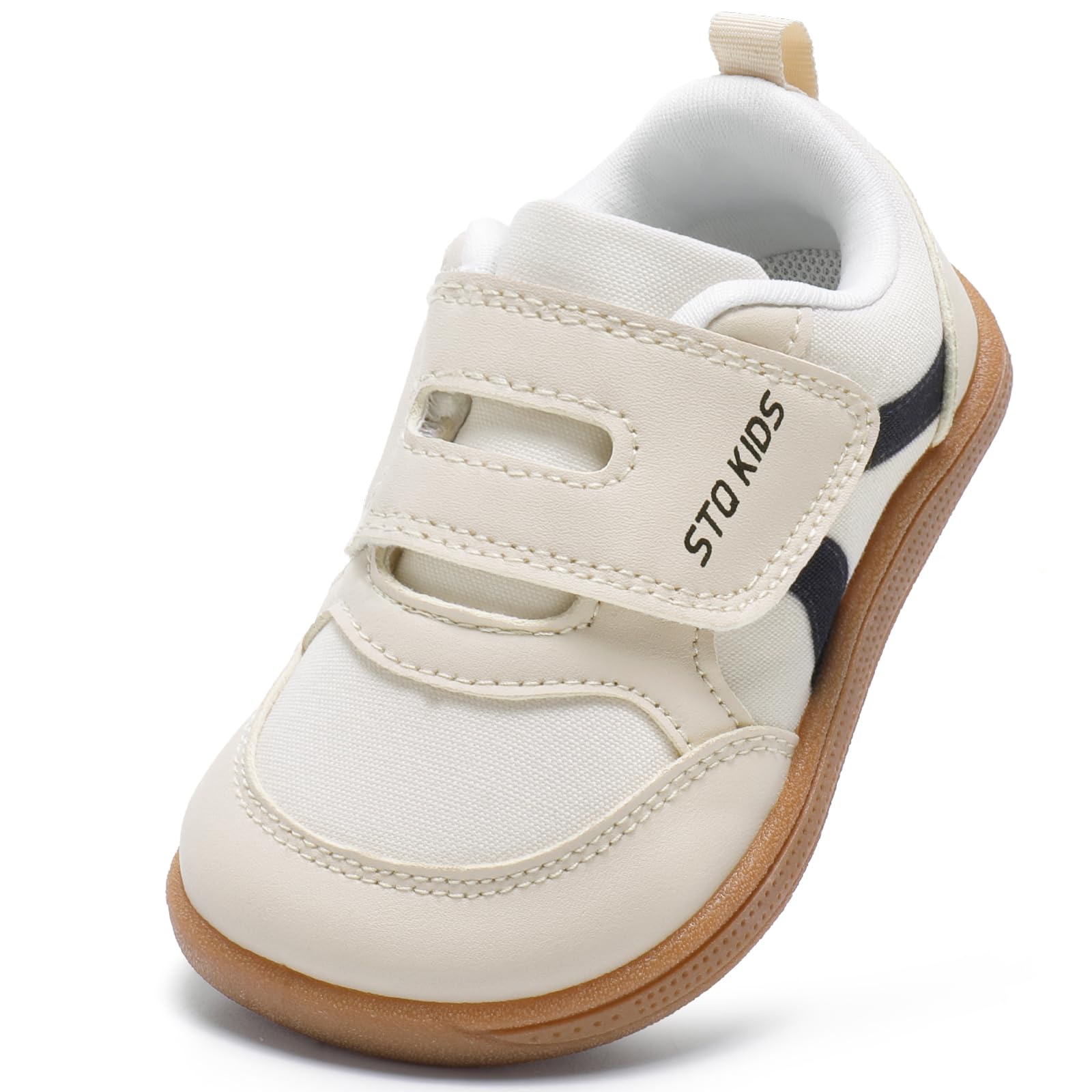
STQ Wide Toe Sneaker
Key Features
- Sole: Flexible
- Style: Barefoot sneaker
- Sizing: Toddler
- Toe box: Wide
- Price: Midrange
The STQ sneaker has the widest toe box in this group. It is a barefoot-style toddler sneaker, not a soft prewalker, with a flexible sole and a roomy front that lets the toes spread.
The ankle opening is generous, and the shoe is easy to get on and off. That roominess is useful for a wide-footed toddler or a child in orthotics, but it can feel like a bigger kid’s shoe on a baby who is still wobbly.
We see it as the next pair for a wide-footed toddler who has already outgrown a soft first sneaker, not the pair we start with for a cruising baby. If your baby needs extra toe room and is steady on their feet, this is the one we try next.
Pros
- Wide toe box for wide feet
- Flexible barefoot-style sole
- Easy for a toddler to put on
- Room for orthotics or chunky feet
Cons
For a wide-footed toddler who has moved past the first wobbly steps, the STQ gives toes room to spread.
How We Tested First Shoes on Newly Walking Feet
We started with a list of about 40 pairs, built from recommendations by pediatric physical therapists, bestsellers, and the brands parents in our own lives kept bringing up. From there we cut to 12 based on price, whether the style came in whole and half sizes down to an infant 3, whether wide widths existed, and whether the sole could bend in half in the first place. Twelve pairs went onto twelve sets of feet over four months.
Most of the testing happened where shoes actually get used: the living-room rug during pull-up practice, the sidewalk on the walk to daycare, the park, and one grandmother’s hardwood floors. We timed how long it took to get each pair onto a wriggling 13-month-old and off again at the end of the day, then let each child wear a single pair for a full morning and checked for heel slip, shoes that had rotated sideways, and red marks above the ankle. Every sole got bent in half, twisted, and pressed with a thumb to see how much ground feel came through, and we weighed each shoe, since a heavy first walker drags the foot rather than lifting it.
Sizing got its own log. We measured each child’s foot every six weeks to see how fast they outgrew a pair, and whether the shoe still fitted well at the end of a size rather than only at the start. Durability meant scuffing toes along pavement, machine-washing the pairs that allowed it, and inspecting seams, stitching, and closure straps after four months of daily wear. We also asked parents which pairs they actually reached for on the way out the door, which answered the appearance question more honestly than any photo — the ones that got grabbed were usually the ones that went with everything and took five seconds to put on. Value came down to cost per week of wear, not price on the box.
How to Choose First Shoes for a Baby
The right first shoe protects without taking over the job of walking; it should bend with the foot, stay on, and leave the toes room to move.
Start With the Sole, Not the Style
A first shoe should bend where the foot bends, near the ball, and feel thin enough that a baby can still sense the floor. Flex the sole in one hand before you put it on; if it feels like a stiff board, it is not a prewalker. A rounded sole helps a wobbly walker roll through a step, which matters more than a decorative upper. Our top pick, the Stride Rite Taye 2.0, gets that balance right. Sock-style shoes are softer still, but they give up some structure on rough ground.
Fit the Foot You Have, Not the Age on the Box
Measure the foot and size from that length, not from the month range on the listing. Leave about a thumb’s width at the toe, and check that the heel does not lift when the baby walks. A wide, rounded toe box matters because baby feet are pudgy and spread out; the BMCiTYBM and STQ are the roomiest picks here. A removable insole can buy width, but do not use it to make a too-long shoe fit.
Closure, Heel Hold, and Staying On
A first shoe that slips off is a trip risk and a lost-shoe risk. We prefer an adjustable strap or a secure hook-and-loop closure over a plain slip-on, especially outdoors. Sock-style shoes can work well for a baby who fights shoes, but check the heel: if it lifts easily, size down or wait. The Hstyle is the sock-style pick we trust most, while the FEETCITY is lighter and less expensive but needs a careful fit check.
Dress Shoes, Daily Shoes, and When to Switch
A dressy Mary Jane can be a first shoe, but it should not be the only one. The Cheyenne has enough support for a cruising baby, while the LAFEGEN is better for photos and occasions. For daily wear, choose a shoe that can handle crawling, pavement, and a wash. A dress pair can be a fun extra, but it should not be the only shoe in the rotation.
Frequently Asked Questions
Do babies need shoes before they can walk?
Not indoors. Bare feet give the best grip and feedback for cruising and first steps. Shoes become useful outside on pavement, playgrounds, or cold ground, and then a flexible, thin sole is the right compromise. Use them for protection, not to teach walking.
How long will a first pair of shoes last?
Usually only a few months, sometimes less, because baby feet grow quickly and first shoes are outgrown before they wear out. Check toe room every few weeks by pressing a thumb across the front while the baby stands. If the toe touches the end or the heel slips, size up. Do not buy several sizes ahead; a shoe that is too long is hard to walk in.
Can first shoes go in the washing machine?
Some fabric and sock-style first shoes can, but leather and PU Mary Janes should be wiped clean instead. Check the care label before washing, use a mesh bag and cold water, and air-dry; heat can warp the sole. If the shoe has a removable insole, take it out first. When in doubt, spot clean.
Final Verdict
For most families, the Stride Rite Taye 2.0 is the first pair we recommend. It bends with the foot, holds the heel, and goes on without a wrestling match, which is exactly what a new walker needs. If your baby has wide feet, the BMCiTYBM is the roomier, washable alternative. For a dressy day, the Cheyenne gives a Mary Jane look with real support; keep the LAFEGEN for occasional outfits. The Hstyle sock shoe is the fallback when a baby refuses anything stiffer.
