This post contains affiliate links. We may earn a small commission when you buy through our links — at no extra cost to you.
The two-week wait has a way of turning a drugstore aisle into a decision. What you want is a straight answer early; what you often get is a second line so faint you end up holding the stick up to a bathroom window at 6 a.m. trying to decide if it’s there. An early detection test is meant to fix that by reading lower levels of hCG, days before a missed period, but the tradeoff is built in: the earlier a test can detect, the lighter that line tends to be. My team has been testing 14 early detection tests from nine brands for three months, and the differences showed up fast.
The practical stuff mattered as much as the chemistry. Some tests gave a line you could read from the sink; others left three of us squinting at the same stick and disagreeing about whether anything was there. Price per test mattered too, since early testing rarely means one test — it means testing, waiting two days, testing again. The picks below earned their spot on readable lines, ease of use, and cost per answer.


Best for Earliest Stick Testing
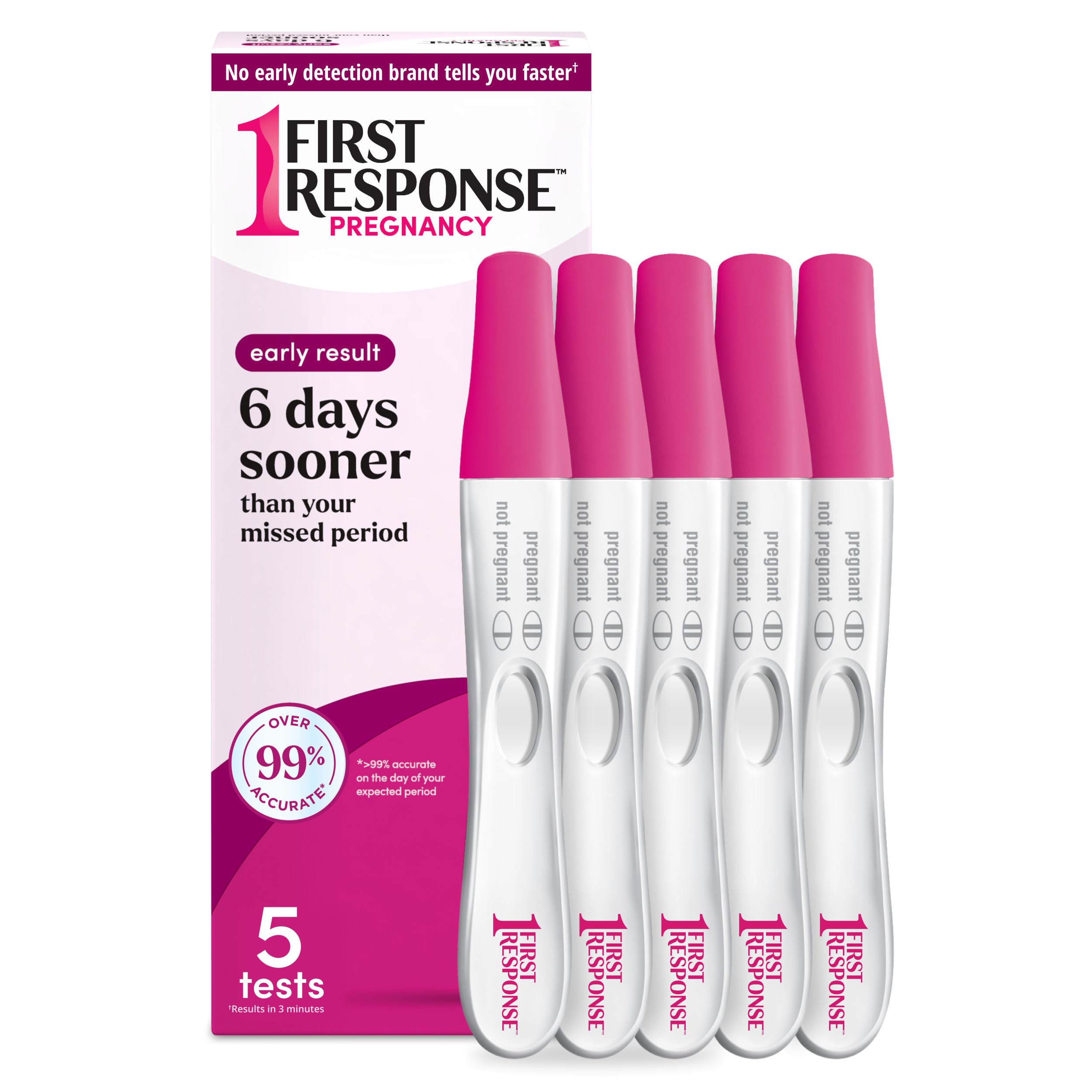
First Response Early Result 5 ct
Key Features
- Pack count: 5 tests
- Read method: Two pink lines
- Result time: 3 minutes
- Early window: Up to 6 days before missed period
- Price: Midrange
Six days before a missed period is the claim that makes this the default early test for us. The pack gives you five individually wrapped sticks, and each one reads in three minutes. The over-99% figure applies from the day your period is due, not necessarily on those earliest days, so the six-day window is the part to weigh. That combination is why it earns the top spot.
The stick format is the other reason it stays at the top. You hold it in the urine stream for five seconds, cap it, and read two pink lines. No cup, no dipping, no separate timer. Before a missed period, that simplicity matters: fewer steps mean less chance of an ambiguous result caused by the way the test was used.
Accuracy is the caveat, and it is the same caveat that comes with any test used this early. A faint line is not a clear answer; it is a reason to test again in a day or two, when hCG has had time to rise. We think the five-count pack is what makes that advice practical. If you want words rather than lines, this is not the test for you; if you want the earliest read with the least fuss, it is.
Pros
- Six-day before-missed-period claim
- Results in three minutes
- Five individually wrapped tests
- Direct-stream stick, no cup
Cons
- No digital readout
We recommend First Response Early Result for the earliest at-home answer: a six-day window, a three-minute read, and five sticks so you can confirm a faint line.
Best for Line-Based Early Test
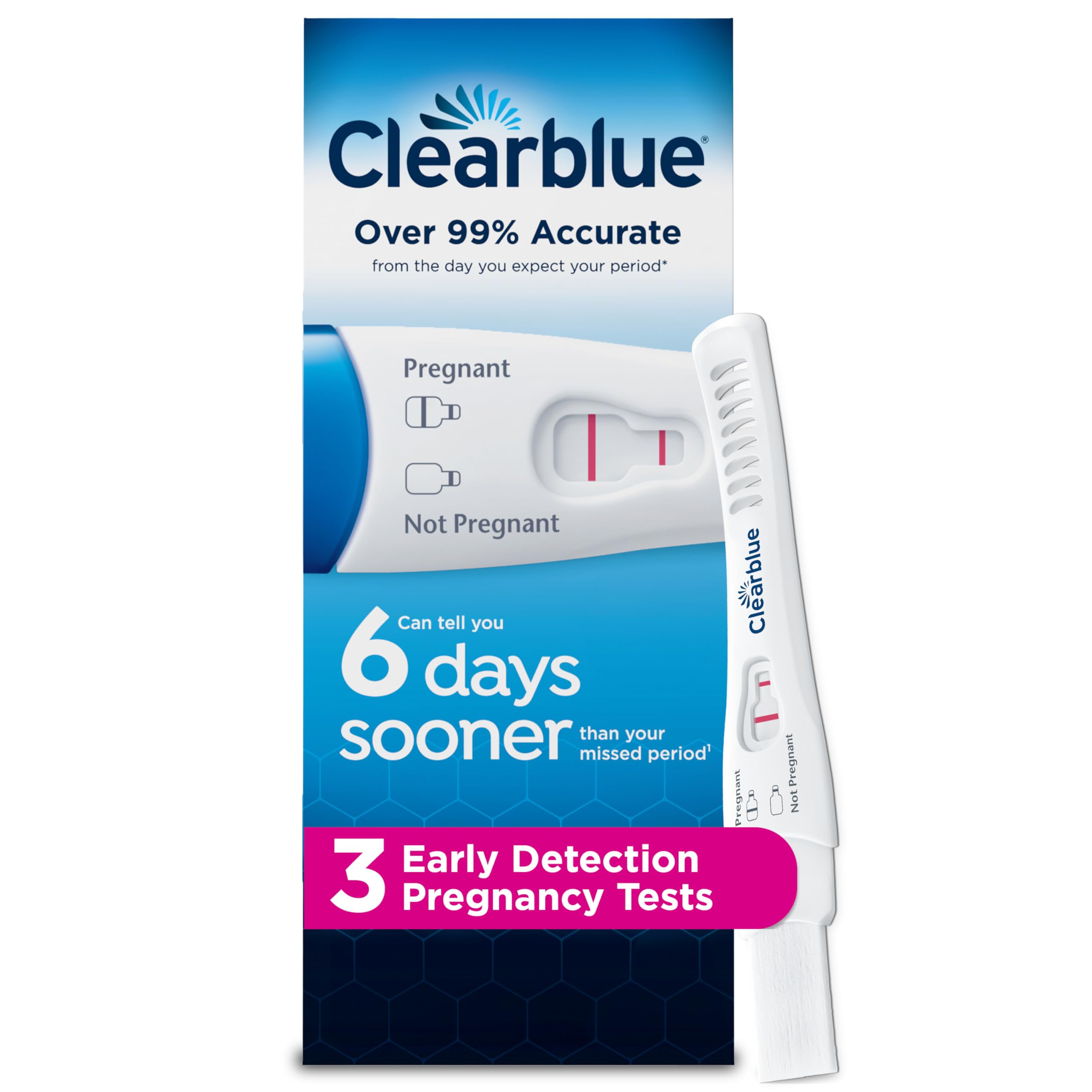
Clearblue Early Detection 3 ct
Key Features
- Pack count: 3 tests
- Read method: Two lines
- Early window: 6 days sooner (5 days before expected)
- Sample collection: Direct urine stream
- Price: Midrange
Clearblue’s early test makes a useful promise for anyone who has squinted at a faint second line: two lines mean pregnant, and the instructions say it does not matter how faint or dark they are. The box also states results six days sooner than a missed period, and the test detects low levels of hCG. That is the same early window our top pick claims, in a smaller three-test box.
This is the strongest line-based alternative here. The read is simple, the instructions are built around the faint-line problem, and three tests cover a first check plus a confirm two days later. We prefer it for someone who wants to test before a missed period, because the line instructions are built for exactly that.
Three tests cover a first check and a confirm; daily testers will want strips. For a single early check with a line result, this is the cleaner, less fussy box. The five-stick top pick still wins on value per test; Clearblue wins on the confidence its line instructions give a faint result.
Pros
- Same six-day early window
- Line instructions account for faint results
- Detects low hCG levels
Cons
- No digital readout
We recommend Clearblue Early Detection if you want the same six-day window with line instructions that treat faint and dark results the same.
Best for Multi-Format Cycle Testing
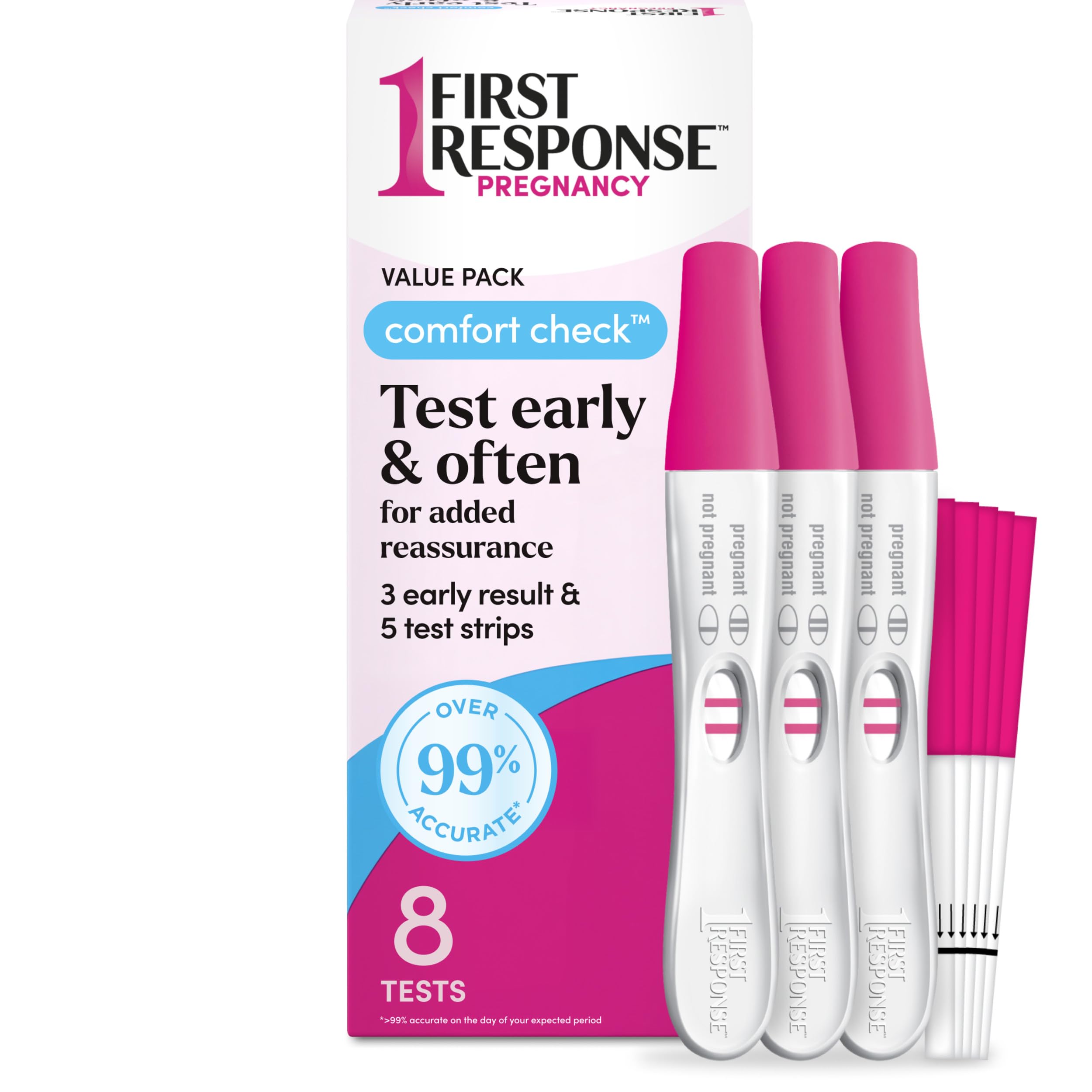
First Response Comfort Check 8 ct
Key Features
- Test mix: 3 sticks and 5 strips
- Pack count: 8 tests
- Read method: Two lines
- Early window: Up to 6 days before missed period
- Price: Midrange
A box with three early-result sticks and five strips is a different proposition from a box of one test type. The three sticks carry the six-day before-missed-period claim. The five strips are for the days after your period is due, when you want a cheaper way to keep confirming. It is a testing kit for a cycle, not just a single answer.
We found the split useful for the way testing actually goes: one early result, then two or three checks over the next week to see whether the line is progressing. The strips are individually wrapped, so you can keep a couple in a bag, and the sticks are there when you want the earliest possible read. Having both means you are not buying a second product mid-cycle.
This is the pick for someone who wants to test early and then keep testing, not someone who wants one definitive answer. The post-missed-period confirmation phase is where the extra strips earn their place. If your main goal is repeated early testing, a dedicated early pack is the better fit.
Pros
- Eight tests in two formats
- Three early-result sticks
- Five individually wrapped strips
- Covers a full cycle of checks
Cons
- Only three early-result sticks
- No digital readout
We like First Response Comfort Check for testing across a whole cycle, with three early sticks and five strips for confirmation.
Best for Bulk Strip Testing
Pregmate Pregnancy Test Strips 50 ct
Key Features
- Pack count: 50 strips
- Read method: Two lines
- Sensitivity: 25 mIU/mL
- Sample collection: Dip strip
- Price: Midrange
Fifty strips in one pack changes how you test. Instead of rationing a single stick, you can dip on the days you are most uncertain, lay the strips side by side, and see whether the line is getting darker. The strips list 25 mIU/mL sensitivity and are read as two lines. We give it the bulk-pick nod because the volume makes a testing habit affordable without turning every check into a decision.
The line is easy enough to read, and the strip is easy to dip. You dip it in urine, lay it flat, and wait for the result. That manual routine is the main difference from a stick, and it is the step to practice before the morning you care about.
What you get in return is permission to test again. A faint line on a strip is still a faint line, so read it within the stated window and confirm with another test in a day or two rather than comparing shades across brands. For frequent testers, that repeatability is the point. For someone who wants one early answer with no manual dip, a stick is the simpler buy.
Pros
- 50 strips for frequent testing
- 25 mIU/mL sensitivity
- Easy two-line read
- Low cost per test
Cons
- Requires a separate collection cup
We recommend Pregmate’s 50-strip pack for frequent testers who want a low-cost, repeatable way to watch a faint line progress.
Best for Budget Strip Testing
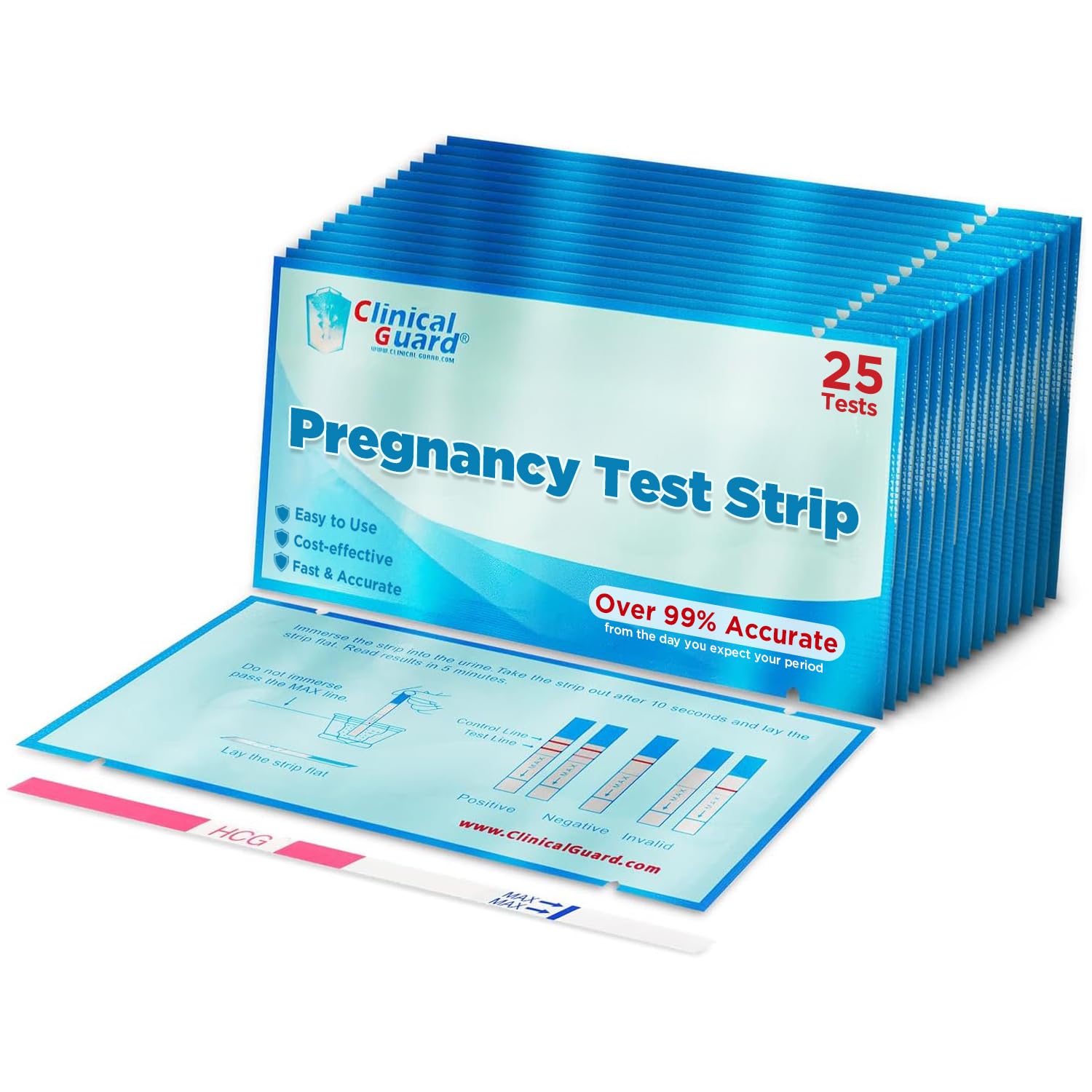
Clinical Guard Pregnancy Test Strips 25 ct
Key Features
- Pack count: 25 strips
- Result time: Under 5 minutes
- Sensitivity: 25 mIU/mL
- Sample collection: Dip strip
- Price: Budget
Clinical Guard’s 25-strip pack is the low-cost route into frequent testing. Each strip lists 25 mIU/mL sensitivity, takes a dip and a few minutes, and reads as one line or two. There is no plastic stick and no app, which is exactly why the pack costs less per test than the stick options here.
That low-stakes repetition is the case for it as the budget pick. You can test on several mornings without feeling like you are wasting a test. The strip is easy to dip, and the instructions are simple enough to follow when you are half awake. If you are trying to conceive and testing often, that repetition is more valuable than a fancy handle.
For daily testing, the volume is the feature. It is also a sensible backup pack to keep alongside a stick for the days that matter most. If you want one test with the clearest possible early read, the top pick is the better spend; if you want to test every morning, this is the box that lets you.
Pros
- 25 strips for frequent testing
- 25 mIU/mL sensitivity
- Simple dip-and-read routine
- Low-cost way to test often
Cons
- Requires a separate collection cup
- Faint early lines can be hard to read
We recommend Clinical Guard as the budget strip pack for daily testing, as long as you are comfortable reading a faint line.
Best for Testing with Cups
Healcheck Pregnancy Tests 25 ct
Key Features
- Included: Disposable cups
- Pack count: 25 strips
- Sensitivity: 25 mIU/mL
- Strip width: 5 mm
- Price: Budget
The disposable cups are the reason this kit stands out. A dip strip needs a sample, and a clean cup is the step people forget; Healcheck includes cups with its 25 strips, so the whole routine is in the box. The strip is also a little wider than some at 5 mm, which gives the line area more room.
The listed sensitivity is 25 mIU/mL, results arrive in under five minutes, and each strip is individually sealed. We found the cup size handy for a small sample, and the wider strip easier to line up than a narrow one. For anyone who has ever balanced a strip on the edge of a bathroom cup, the included cups are a real convenience.
It is the best pick here if you do not want to hunt for a container. The caveat is that a cup solves collection, not interpretation: early lines can still be faint, and the strip still has to be read within the window. If you want the clearest early read, a stick is less fiddly. If you are testing repeatedly and want a self-contained kit, this is the one.
Pros
- Includes disposable cups
- Wider 5 mm strip
- 25 mIU/mL sensitivity
- Individually sealed strips
Cons
We recommend Healcheck when you want strips and disposable cups together, making repeated collection one less thing to arrange.
Best for App-Guided Strip Testing
Easy@Home Pregnancy Test Strips 50 ct

Key Features
- Packaging: Individually pouched
- Pack count: 50 strips
- App support: Premom app
- Sensitivity: 25 mIU/mL
- Price: Midrange
The Premom app is what makes this pack more than a box of strips. The 50 tests are tied to the app, so if you already log cycles there, the results have a place to live instead of disappearing into a bathroom drawer. Each strip is sealed in its own pouch, which makes it easy to keep a few in a bag.
The strips list 25 mIU/mL sensitivity and read as two lines after a dip. Fifty tests is enough to test often without rationing, and the individual pouches keep the unused ones tidy. The strip itself is a plain dip strip, so the routine is the same as the other strips here: cup, dip, lay flat, read.
The app link is also the limit. If you do not use Premom, this is just another 50-strip pack, and Pregmate is the bulk pick we prefer for line clarity. If you do use the app, the combination is convenient: one place for the cycle, one place for the tests, and enough strips to keep testing.
It is the app-connected alternative rather than the default. The strips work on their own, but the reason to choose this box over another bulk pack is the tracking. Buy it if the app is already part of your routine; otherwise, the Pregmate pack is the simpler buy.
Pros
- 50 individually pouched strips
- 25 mIU/mL sensitivity
- Premom app integration
- Bulk volume for frequent testing
Cons
- Requires a separate collection cup
We recommend Easy@Home’s 50-strip pack for Premom users who want bulk strips and a place to log results.
How We Tested Early Detection Pregnancy Tests
We started by pulling every early detection test we could find that claimed a sensitivity of 10 to 25 mIU/mL, then cut the list by what was actually buyable — a few brands only sold in eight-packs through a website, which is a hard sell when you want one answer tonight. That left nine brands and 14 tests, which we used over three months.
Testing happened the way it actually happens: early morning urine, bedside table, phone timer. Each tester ran the same sample against multiple brands on the same day, so we compared line darkness side by side instead of from memory. We photographed every test at three, five, and ten minutes under the same lamp, then looked again an hour later to catch the evaporation lines that masquerade as faint positives — the most common way people talk themselves into or out of a result. Line quality was judged cold by a second person who hadn’t seen the box.
For ease of use, we timed each test from wrapper to result, noted whether the cap snapped back on for disposal, and watched whether the absorbent tip flooded when held midstream. Value came down to cost per test rather than box price, so we worked out what each answer actually cost across singles and multipacks. Purchase was its own category: which brands you can grab at a drugstore at 10 p.m. and which only ship. Where a tester went on to have bloodwork, we checked whether the home result matched.
How to Choose an Early Detection Pregnancy Test
The useful question is not which test claims the most sensitive number, but how early you plan to test and how you will read a faint line when you get one.
Start with the testing window
A six-day claim means six days before your missed period, not six days after ovulation. The headline accuracy figure often applies from the day your period is due, so a test can be over 99% accurate and still be less reliable on the earliest day you use it. If you are testing before a missed period, choose a test that explicitly states that window. If you are already late, a standard rapid test is enough. We don’t pay extra for an early claim you will not use.
Sticks, strips, and the cup question
A midstream stick is the easier routine: unwrap, hold in the stream, cap, and read. A dip strip needs a clean cup and a flat surface, but it usually costs less per test, which matters if you test every morning. The collection step is where most of the fiddliness lives. Healcheck includes disposable cups with its strips; for the other strip packs here, check the box for a cup or plan to supply your own clean container. If you test once or twice, choose the stick. If you test daily, choose the strip and treat the cup as part of the kit.
Read the line, not the shade
Early hCG levels are low, so a positive can be faint, and faint lines are the hardest part of home testing. Read the strip or stick only within the stated window; a line that appears later can be an evaporation line. The sensitivity number helps you compare strips, but it does not guarantee a visible line on a given morning. Clearblue Early Detection explicitly says faint or dark lines both count, which is useful if you tend to over-read the shade. Confirm a faint positive with another test in a day or two rather than comparing brands side by side.
Count the tests you will actually use
A five-test stick pack and a 50-strip bulk pack solve different problems. The stick pack is for a single cycle with a few confirmations; the bulk pack is for daily testing, tracking line progression, or a long trying-to-conceive period. Check the expiry date before buying a large box, especially if you test only occasionally. A mixed box such as First Response Comfort Check gives you three early sticks and five strips, which suits a first early result followed by later confirmation. Buy for the way you test, not for the biggest box.
Frequently Asked Questions
What time of day should I take an early pregnancy test?
Use the first urine of the morning when you are testing before a missed period. It is the most concentrated sample, so it gives a low level of hCG the best chance of showing up. If you test later, keep fluids normal rather than drinking a lot beforehand, and follow the test’s instructions on how long to hold urine. A negative early result is still provisional; retest in a day or two.
Can I use the six-day window if my periods are irregular?
The six-day claim is counted from the day your period is expected, so an irregular cycle makes that date harder to pin down. If you track ovulation, count from ovulation instead of the calendar. If you do not, wait until you have missed a period or use a sensitive test and repeat it in 48 hours. The test can still work; the timing is what becomes less predictable.
Do pregnancy tests expire?
Yes. Each test has an expiry date on the wrapper or box, and an out-of-date test can give a weak or unreliable result. Check the date before you rely on a strip, especially with a large bulk pack that may sit in a drawer. Buy a pack size you can finish before the date, and store the strips dry and at room temperature.
Final Verdict
First Response Early Result is the early test we recommend first: it tests up to six days before a missed period, reads in three minutes, and gives you five sticks for a confirm. Clearblue Early Detection is the alternative if you want the same early window with line instructions built around faint results. For daily testing, Pregmate’s 50-strip pack is the better habit; for a self-contained strip kit, Healcheck’s included cups are the practical choice.
