This post contains affiliate links. We may earn a small commission when you buy through our links — at no extra cost to you.
Bedtime is not when my kids are at their most cooperative, and dental hygiene is where that shows up first. Getting floss between a squirming seven-year-old’s back molars while they narrate their entire day is a two-person job, which is why a plastic-handled flosser earned a permanent spot in the cup by the sink. The right one reaches where fingers can’t and lets a kid do the job alone — which is the whole point, because the alternative is a nightly negotiation.
We’ve cycled through plenty of these over the past few months — 15 different flossers, used nightly by kids from toddler through early elementary and by two adults with tight contact points. What separated them wasn’t obvious from the packaging: it came down to whether the floss was thin enough to slip between back teeth without snapping, and whether the handle was small enough for a small hand to angle. Plenty of them look fine in the package and shred on the first molar. The picks below are the ones that made it through the routine.



Best for Daily Use for Kids
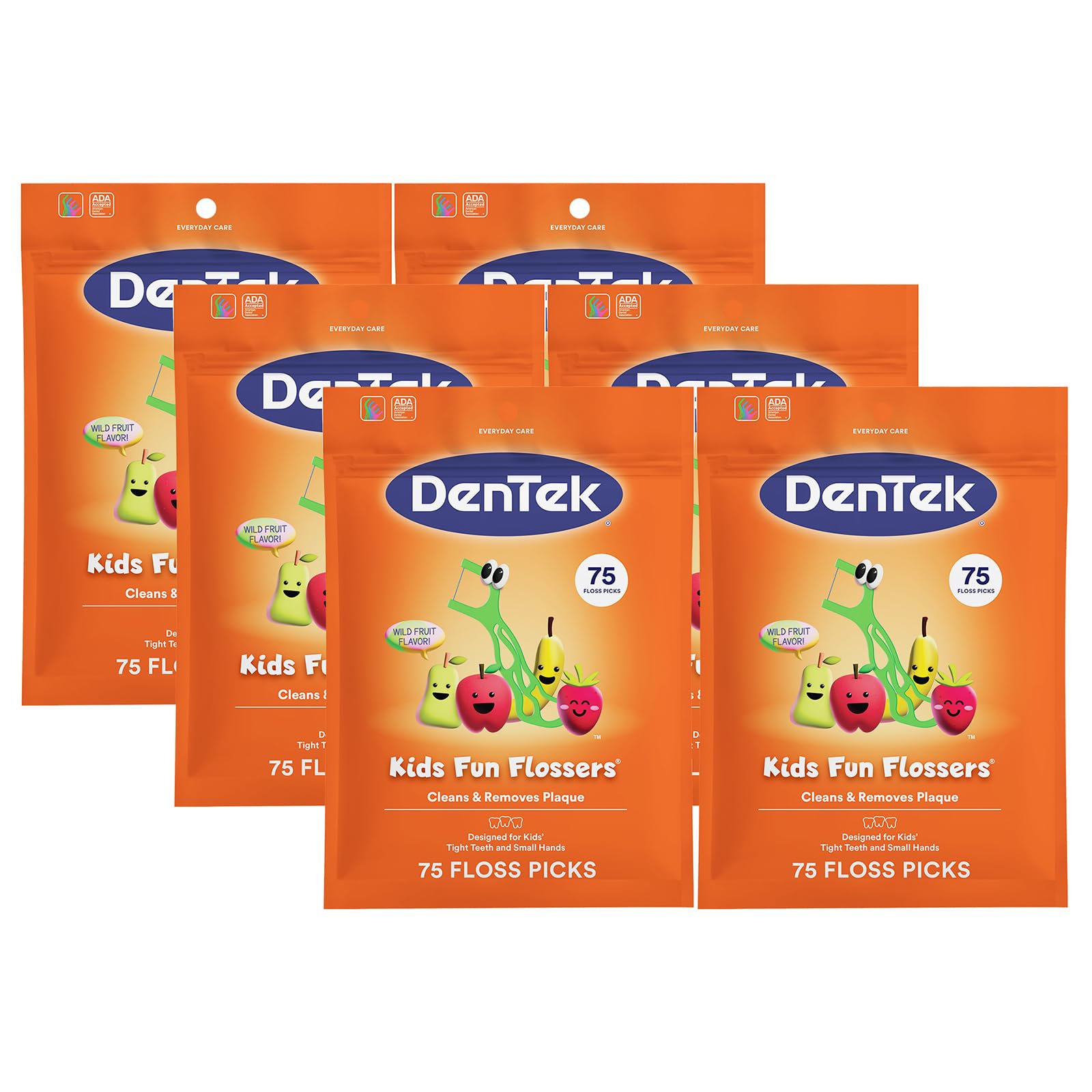
DenTek Kids Flossers
Key Features
- Count: 75 count, 6 pack
- Flavor: Wild Fruit
- Fluoride: Fluoride-coated floss
- Floss head: Smaller kids’ head
- Price: Budget
The head is where a kids’ flosser earns or loses the job. DenTek’s is narrower and shorter than a standard adult pick, and the floss is finer, which matters because the contacts between a five-year-old’s molars are tighter than the ones in your mouth. A bulky pick saws at those gaps instead of slipping through, and that is the moment a child clamps down and decides flossing is a punishment.
We made this the top pick because it solves that first problem and then stays out of the way. The floss is coated with fluoride, the handle is stubby enough for a small fist, and the box holds six pouches of 75, so a family is not reordering every few weeks. Nothing about it is fussy or over-designed.
Durability is the dimension that separates these picks from each other, and this one comes out strongest. A floss pick that snaps halfway through turns a two-minute routine into a negotiation, and the floss here holds for a full session — that is what the no-break assurance on the box is promising. The flavor is mild and fruity rather than sharp, and the pouch reseals, which keeps 450 picks from ending up loose in a drawer.
Six pouches of 75 works out to more than a year of nightly flossing for one child, which is part of the recommendation: you buy it once, put a pouch where the toothbrushes are, and stop thinking about it.
Pros
- Smaller head fits between kids’ back teeth
- Finer floss slips through tight contacts
- Floss holds through a full session
- Fluoride-coated floss on every pick
Cons
- Fluoride-coated only — no fluoride-free option
Our default for most families: the smaller head and finer floss get between kids’ tight back teeth, and the floss holds up better here than with anything else we compared.
Best for Reluctant Flossers
GUM Crayola Kids Floss Picks
Key Features
- Count: 75 count, 6 pack
- Flavor: Grape
- Fluoride: Fluoride-coated floss
- Age range: 3+
- Price: Midrange
Mint is the reason a lot of children refuse floss, and GUM’s answer is grape — a sweet, fruity grape rather than a medicinal one. That flavor is the whole pitch, and it works: this is the pick we hand to a kid who has decided flossing is a punishment, because the flosser tastes like something they want in their mouth. The three shapes and colors finish the argument. A child who gets to choose the pink one has already agreed to the transaction.
The handle is short and easy for small hands to grip, the floss is fluoride-coated, and the box is a six-pack of 75 — the same shape of supply as our top pick. Where it gives ground is durability: the floss shreds or snaps on a tight contact more readily than DenTek’s does. Work the pick in slowly at the back molars rather than forcing it, and swap to a fresh one at the first sign of fraying, which is a habit worth teaching anyway.
What you cannot count on is grape landing the same way twice. It is a strong opinion in either direction, and a household that ends up with 450 picks of a flavor nobody likes has wasted a purchase. If grape is untested territory, split a box with another family before committing to six pouches.
Pros
- Grape flavor motivates reluctant kids
- Three shapes and colors to choose from
- Short handle sized for small hands
- Fluoride-coated floss
Cons
- Floss shreds or snaps on tight contacts
If your kid has decided floss is a punishment, the grape flavor and the three bright shapes are the argument that gets them to the sink — and the pick itself is genuinely gentle.
Best for Back-Teeth Reach
GUM Crayola Twistables
Key Features
- Count: 90 count, 4 pack
- Handle: Longer twisted handle
- Flavors: Watermelon, grape, apple
- Fluoride: Fluoride-coated floss
- Price: Midrange
The last two molars are usually where flossing goes wrong. A standard kids’ pick puts the floss head barely past the first knuckle, so reaching back there means a child’s hand is wedged against their cheek. Twistables stretches the handle out and twists it, which buys the inch that makes the difference — and the reach comes from the arm rather than from levering the pick against a tooth.
That extra reach is why this one holds a place in the guide. It suits the five-to-eight range best, where a child has the coordination to steer but not the wrist angle to get around the corner. Three flavors ride on three colors — watermelon, grape and apple — the floss is fluoride-coated, and the pouch holds 360 picks across four packs, which is a long run for one child.
The catch is the floss itself, which is thicker than a standard kids’ pick; a child with close-set teeth can feel it as a tight squeeze. If your kid’s contacts are tight, or they have complained about floss catching before, start with DenTek’s narrower head and come back to this one when the back teeth have more room.
Pros
- Longer twisted handle reaches back molars
- Three kid flavors in one box
- Fluoride-coated floss
Cons
- Flavors are color-locked, so favorites need sorting
The longer twisted handle is the whole point: it gets the floss head to the back molars where kids usually stall, and three flavors keep the routine from going stale.
Best for Learning to Floss
Plackers Kids Floss Picks
Key Features
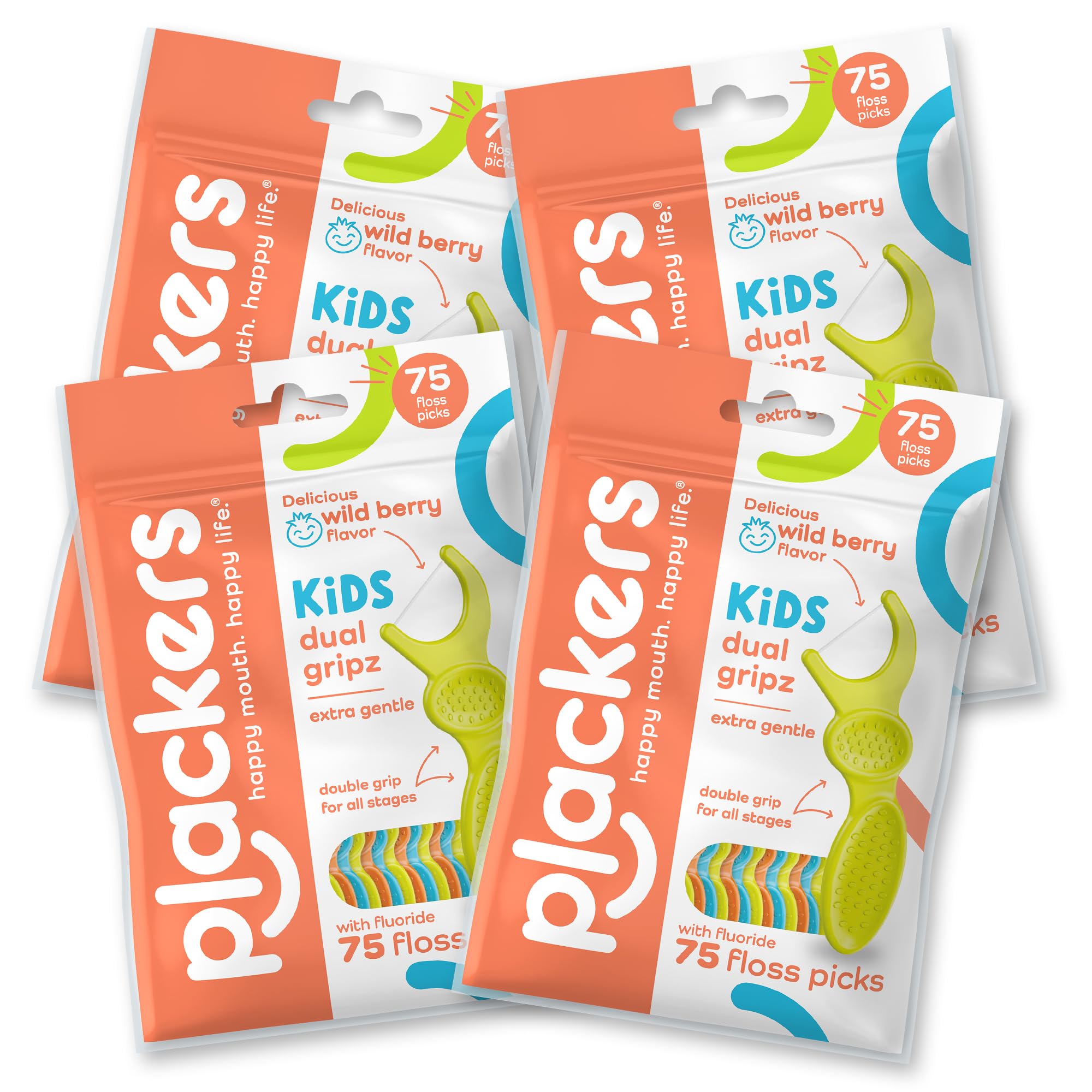
- Grip: Dual Gripz double grip
- Count: 75 count, 4 pack
- Floss: Tuffloss, PTFE-free
- Fluoride: Fluoride-coated floss
- Price: Midrange
Dual Gripz is a simple idea done well: a second grip section lower down the handle, so there is somewhere to hold that is not the same narrow neck every other pick uses. On a pick this short, that extra hold changes how steady the head sits against a tooth.
The floss is Plackers’ Tuffloss, made without PTFE, and it is fluoride-coated. Four boxes of 75 — 300 picks — is a serious supply, and the colors are bright enough that a child will claim one. On size it sits mid-pack here: not as narrow as DenTek’s head, not as long as the Twistables handle, but sized for kids rather than toddlers, and an older child can manage it without help.
Where it earns its place is the teaching stage. An adult can take the lower grip and steady the pick while a child takes the top, then hand the whole thing over once the angle is right. That hand-over-hand stretch is short, but it is the part most picks make awkward, and this design does not.
Pros
- Second grip point steadies small hands
- 300 picks across four boxes
- Fluoride-coated floss
Cons
- Floss can fray before a session ends
Two grip points give a small, unsteady hand somewhere to hold, which makes this the pick we reach for when a child is flossing without help for the first time.
Best for Fluoride-Free Routines
GRIN Kiddo Flossers
Key Features
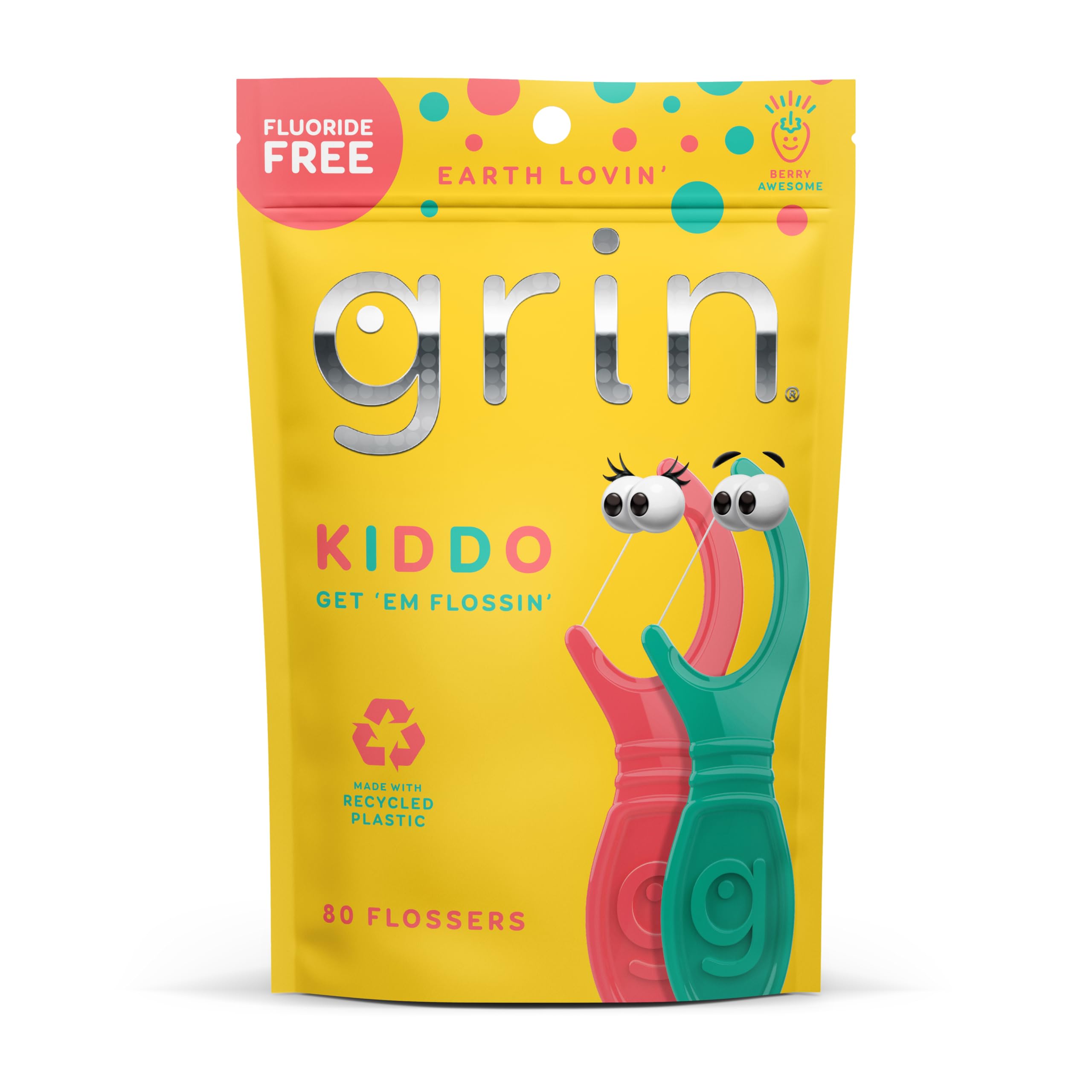
- Count: 80 count
- Flavor: Berry Awesome
- Handle: Jumbo grip
- Fluoride: Fluoride-free
- Price: Budget
Fluoride-free is not a bonus here, it is the reason to buy. If your child’s toothpaste already carries fluoride and you want the floss to stay out of it, GRIN’s Kiddo picks are the ones to put in the drawer — and unlike the other fluoride-free pick here, they still taste of something.
The jumbo grip is the other half of the appeal: deliberately chunky, so it works in a three-year-old’s fist and in an adult’s hand when you are doing the flossing for them. The floss head is larger than the smallest picks here, which suits a mouth with a little space between the teeth; if your child’s contacts are tight, DenTek’s narrower head is the better tool.
Berry Awesome is mild — closer to a hint than a punch — and the floss holds up without shredding, which is what you want from a pick a child uses alone. Eighty to a box, made from recycled plastic, which counts for something when a daily habit generates this much single-use waste.
Pros
- Fluoride-free with berry flavor
- Chunky jumbo grip for small hands
- Handles made from recycled plastic
Cons
- Mild berry flavor fades quickly
For a household that has deliberately kept fluoride out of the floss, this is the easy choice: berry flavor, a jumbo grip, and a head sized for small mouths.
Best for First Trial Box
GuruNanda Giraffe Floss Picks
Key Features
- Count: 90 count
- Flavor: Mixed berries
- Handle: Extra-long giraffe handle
- Age range: 3+
- Price: Budget
Ninety picks is the smallest box here, and that is the point of it. Nobody wants to buy a year’s supply of a flosser a three-year-old may reject on sight, and a small box lets you test the shape, the flavor and the whole idea before committing.
The giraffe neck is design rather than decoration. The handle runs long — long enough to reach a molar without the hand crowding the cheek — and the grip is textured, so it does not rotate in a wet fist. Mixed berries is the flavor, mild rather than sharp, and the floss is built not to shred.
This is the box we point a family at first, while they are still finding out whether their kid is a flosser. Two things to know before you order: the fluoride labeling has not always matched the fluoride-free description, so read the box if that is why you are buying, and 90 picks go quickly once a child flosses nightly — treat it as a trial, not a supply.
Pros
- Long giraffe handle reaches molars
- Textured non-slip grip
- Small box for a low-commitment trial
Cons
- Fluoride labeling has not matched the fluoride-free claim
- 90 picks run out quickly with nightly use
A small box with a long, textured giraffe handle that reaches back molars — the low-commitment way to find out whether your kid will floss at all.
Best for Flavor-Sensitive Kids
Piico Kids Floss Picks

Key Features
- Count: 80 count
- Floss: Dual-line, unwaxed
- Flavor: Unflavored
- Fluoride: Fluoride-free
- Price: Midrange
Some children do not want grape, berry or mint. They want nothing, and a flavored pick is the exact reason they will not floss. Piico’s picks are unflavored and unwaxed, which sounds like a downgrade until you have watched a four-year-old spit out a grape flosser and refuse the next one.
What you get instead is a twin-line floss — two strands rather than one — and that is the detail that keeps it from feeling flimsy. The strands hold their shape through a session, the pick does not bend under pressure, and the floss span is shorter than a standard pick’s, so a small hand does not have to reach as far.
The zoo animals do the persuading. Eighty picks in a box across several colors and animal shapes, so a child picks their dinosaur and gets on with it — and in a household with two kids, that choice is worth more than it sounds.
That is why it earns a spot here rather than the top one: it is excellent at the plain, unflavored job and it is the right answer for a flavor-sensitive child, but it gives a hesitant kid nothing to look forward to. If flavor is what gets yours to the sink, a flavored pick will do more for the habit than a better-made plain one.
Pros
- Unflavored and unwaxed for picky kids
- Twin-line floss holds its shape
- Animal shapes and colors to choose from
Cons
- No fluoride in the floss
For the kid who rejects every flavor, an unflavored, fluoride-free pick with a twin-line floss that holds its shape — and zoo animals to make it theirs.
How We Tested Kids Flossers (in the Middle of Bedtime)
We started on pharmacy shelves and online listings, reading labels before we ever opened a package. Out of the dozens available, we narrowed to 15 based on stated floss thickness, handle dimensions, whether the floss carried a fluoride coating, and whether the shape looked slim enough to reach a back molar. Anything that looked too bulky to fit behind a second-grader’s molars got cut before testing.
Those 15 lived in our bathrooms for three months as part of the regular brushing routine, with kids ages three through nine and two adults who have tight contact points and served as the hard case. Each night we watched whether a child could angle the flosser to the back teeth alone or needed a hand. After popcorn, sticky fruit snacks, and corn on the cob, we checked the strand for shredding, snapping, and whether it slid through or had to be forced.
Two things thinned the field fast. Floss thickness: strands that were too thick made us shove, and shoving made kids flinch, while the thinnest ones broke on a tight contact. Handle quality: we flexed the arms, tugged the floss where it joins the handle, and noted which ones survived being chewed on. We also tracked flavor and color — whether kids reached for a particular flosser on their own, how long the coating lasted past the first tooth, and whether the label actually listed fluoride. Ease of use got the final word: if a kid couldn’t manage it solo, it didn’t matter how well it flossed.
How to Choose Kids Flossers
Fit comes before flavor. A kids’ flosser earns its place by slipping between small, tight contacts without hurting, and everything else on the box is motivation.
Start With the Head, Not the Handle
The head does the work, so judge it first. An adult floss pick has a wider head and thicker floss than a child’s mouth wants; forced between close-set molars it saws instead of sliding, and the child learns that flossing hurts. Look for a narrow head paired with a fine floss, which is the combination DenTek builds its kids’ pick around.
The practical test is the back molars on the first night. If the pick stalls and needs real pressure, it is the wrong pick for that mouth — try a finer one before you try a different flavor. A pick that slips through is one a child can eventually learn to use alone.
Reach and Grip Decide Who Does It Alone
A short handle is fine for the front teeth, but the last two molars need length. That is the case for the longer twisted handle on GUM’s Twistables and the giraffe neck on GuruNanda’s picks: the reach comes from the handle rather than from jamming a hand against the cheek.
Grip matters just as much. A chunky handle like GRIN’s jumbo grip suits a toddler’s fist, and Plackers’ second grip point gives an adult somewhere to hold while a child steers. A useful rule: a child is ready to floss unsupervised once they can reach their own last molar and keep the pick steady without help.
Flavor, Fluoride, or Neither
Flavor is motivation, not dentistry. A grape or berry pick gets a reluctant child to the sink, and that is worth more than a better-made pick they refuse. The catch is that flavors are strong opinions — a large box of the wrong one leaves you with a supply nobody will touch.
Fluoride is the other decision. A coated pick adds a small amount between the teeth; it does not replace fluoride toothpaste. If you have decided against it in the floss, GRIN and Piico both leave it out. Read the box rather than the listing, because fluoride-free claims on kids’ picks have not always matched what is printed on the packaging.
Count the Picks Before You Commit
A box of 450 picks is more than a year of nightly flossing for one child, which is either exactly right or far too much. Households with one cautious toddler do better with a small box — GuruNanda’s 90-count is the trial size here — and add a bulk box once the habit sticks.
Storage is the quiet variable. A resealable pouch keeps a big box tidy, and a small case is what makes a pick survive a school bag. Neither is a reason on its own, but a pick that is never within reach is a pick that does not get used.
Frequently Asked Questions
Are kids flossers as effective as string floss?
For the between-teeth job, yes — and a pick a child actually uses every night beats string floss used twice a week. String floss wraps further around each tooth and reaches slightly under the gumline, so it is worth teaching once a child has the finger control for it, which for most is around eight.
Until then, put a kids’ pick by the sink and let the habit form.
Can kids use these flossers with braces?
No. A floss pick cannot get under the wire, and forcing one between bracketed teeth is a quick way to pop a bracket. A child in braces needs a floss threader or a dedicated orthodontic flosser.
The picks here are for the years before braces and for the retainer stage afterwards.
How often should kids floss?
Once a day is the target, and consistency matters more than timing. Pair it with the bedtime brush so it is one trip to the sink: floss first, then brush, so the fluoride in the toothpaste reaches the spaces between the teeth.
A child who flosses nightly with a pick is ahead of one who flosses perfectly once a week.
Final Verdict
DenTek’s kids’ flossers are the ones we hand to most families. The smaller head and finer floss do the work where a child’s teeth are tightest, the floss holds together through a full session, and a six-pouch box ends the reordering for a year. If your child will not open their mouth for anything that is not grape, start with the GUM Crayola picks and worry about the ideal pick later — the habit is the point. And if you have ruled out fluoride in the floss, GRIN’s Kiddo picks are the straightforward answer.
