This post contains affiliate links. We may earn a small commission when you buy through our links — at no extra cost to you.
The first time a diaper pail fails you, it isn’t subtle: you lift the lid, and the whole nursery tells you what happened. A good pail buys you a few extra days between trips to the trash and keeps the smell from drifting toward the crib. The features that make one easy to use, like a wide opening and generous capacity, can also let odor escape. I learned that in a small nursery.
So over six months, I tested 11 diaper pails in that nursery and two nearby homes, running them through overnight changes, post-breakfast blowouts, and bag swaps. I wanted to know which ones contained smell, which were truly one-handed, and which held enough diapers to earn their floor space. The best also had to work with standard and cloth diapers, wipe clean without drama, and look discreet enough to leave out. Capacity gets the attention, but a tight seal and a bag system that doesn’t fight you at 2 a.m. matter more. Here’s what earned a spot beside the changing table.


Best for Main Nursery
Diaper Genie Complete
Key Features
- Opening: Step-on foot pedal
- Capacity: 6 gallons
- Odor control: Double Air-Tite clamps and carbon filter
- Included refill: Holds up to 270 newborn diapers
- Price: Midrange
A foot pedal is one of those nursery features you notice most when it is missing. The Diaper Genie Complete has one, and the 27-inch height puts the opening within easy reach of a changing table. The D-shaped body is narrow enough to tuck beside a dresser, and the pedal leaves both hands free when you are holding a diaper and a wriggling baby.
What makes it our top pick is the layered seal. Double Air-Tite clamps close the bag, and a carbon filter adds a second line of defense, so you are not trusting a single lid to keep the nursery fresh. The included refill is rated for 270 newborn diapers, and the 6-gallon pail holds a normal nursery load between empties. That combination of hands-free opening, a serious seal, and a long refill is why it is the easiest pail in this group to live with as the main nursery bin.
The tall plastic body is less furniture-like than the stainless options here, so it is the pail for a closet or a corner rather than a showpiece. We still recommend it first because the routine is so simple, and the carbon filter gives the pail a buffer on the days you do not empty it on schedule.
Pros
- Hands-free foot pedal speeds changes
- Double clamp and carbon filter add odor barriers
- Large refill and 6-gallon capacity
Cons
- Proprietary refills add ongoing cost
We recommend the Complete for a main nursery because the foot pedal, double seal, and carbon filter make diaper changes faster and less fragrant.
Best for No-Refill Households
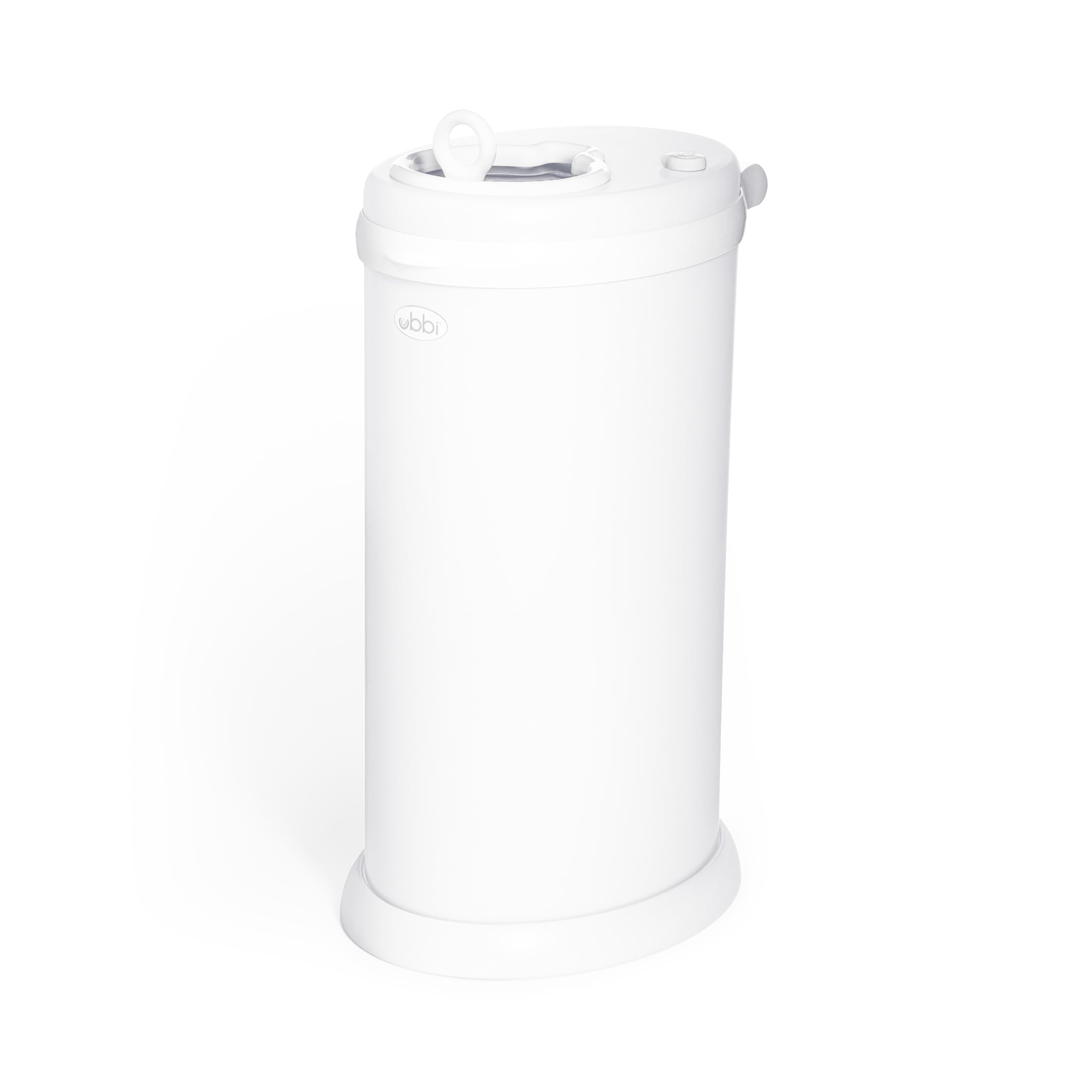
Ubbi Stainless Steel
Key Features
- Opening: Sliding top
- Capacity: 13 gallons
- Material: Stainless steel
- Bag system: Standard trash bags
- Price: Midrange
The Ubbi’s best trick is the bag you do not have to buy from the manufacturer. It takes standard trash bags, so you are not locked into a refill cartridge or a particular bag size. We like that for a nursery because it removes one recurring purchase and one more thing to remember at 2 a.m. The stainless steel body looks less like a diaper pail than the plastic competition, and the sliding lid has a childproof lock.
At 19.5 inches tall and 8.4 inches wide, it slips into a narrow gap beside a dresser without swallowing floor space. The 13-gallon capacity is large for its footprint, and the pail is rated for up to 55 newborn diapers. The powder-coated stainless finish is the reason it looks less like a diaper pail than the plastic options here.
Odor containment is the split decision. When the lid is closed, the stainless body and seal do their job; bag changes are the weak moment. The bag can create suction at the bottom when it is full, so loosen it before pulling, and take the full bag straight outside. That is the routine that keeps the Ubbi from turning a good pail into a smelly one.
None of that changes the appeal for a no-refill household. The child lock is the detail that makes it a better nursery fit than a plain stainless can: a toddler cannot pop the lid for a look.
Pros
- Uses standard trash bags, no refills
- Slim stainless body with child lock
- 13-gallon capacity in a compact footprint
Cons
- Sliding lid can be stiff to open
- Top or hinge can crack if knocked over
Choose the Ubbi if you want a stainless pail that takes standard trash bags and do not mind a little more care when emptying it.
Best for First-Year Value
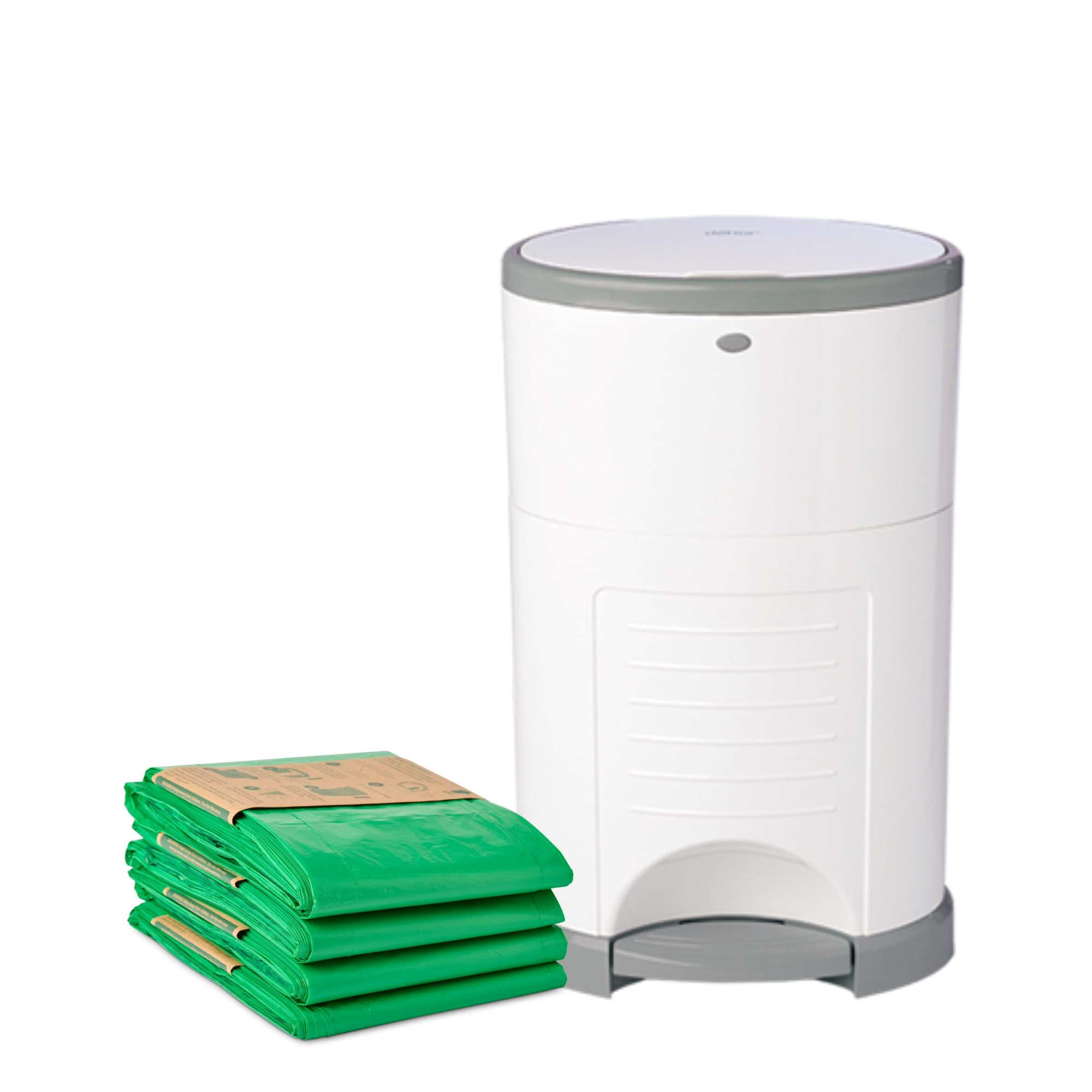
Diaper Dekor EKO
Key Features
- Liner: Continuous cut-to-size refill
- Opening: Step-on foot pedal
- Capacity: 15 liters
- Material: 70% recycled ABS
- Price: Premium
A year’s worth of refills in the box is the reason the Diaper Dekor EKO caught our attention. The gift set comes with one pre-installed refill and eight more, which takes the refill scramble out of the first year. That is a practical kind of value: you still pay for the pail, but you are not buying a new cartridge every few weeks.
The continuous liner is the other good idea. Instead of tying off a full bag every time, you cut and tie only the section you have filled, so a half-full pail does not waste a whole bag. The step pedal and quiet-close lid make it easy to use with one hand. The 15-liter pail is compact, and the oval body is made from 70% recycled ABS, which gives it a more substantial material feel than a basic plastic bucket.
The catch is the opening. It is small enough that a big toddler diaper takes a shove. Odor control is decent but not the best in this group: the lid seals, yet the pail can announce itself when you open it. For a newborn nursery where you change frequently, that is manageable; for a toddler and a small room, the Complete or Ubbi is the better fit. The EKO is the value pick for a first year, not the odor leader here.
Pros
- Includes a year’s worth of refills
- Continuous liner cuts bag waste
- Step pedal and quiet-close lid
- 70% recycled ABS body
Cons
- 15-liter capacity fills quickly
The EKO is the pick for a first-year nursery when a year of refills and a cut-to-size liner matter more than a wide opening.
Best for Small Nurseries
Diaper Genie Select
Key Features
- Opening: Step-on foot pedal
- Capacity: 2 gallons
- Material: Stainless steel
- Included refills: 2 jumbo, up to 1,620 newborn diapers
- Price: Premium
The Diaper Genie Select is the pail for the nursery that does not have a spare corner. At about 11 by 9 inches and just under 22 inches tall, it tucks beside a rocking chair or a small dresser; the stainless body looks more like a small appliance than a diaper bucket. The soft-close lid and foot pedal make it quiet enough for a sleeping baby, and the Push N Lock clamp gives the bag a secure seat.
We like it most as a second-station pail. You get stainless steel, a compact footprint, and a hands-free opening without a huge bin, and the odor containment is strong for the size. The two jumbo refills are rated for 1,620 newborn diapers, so the cartridge lasts far longer than the bag does.
The 2-gallon capacity is the catch: it is rated for up to 40 newborn diapers, so it suits a bedside station or a small apartment, not a toddler’s main pail. If the pail is going to be the only one in the house, choose a larger model; if it is a spare, the compact stainless build is worth the trade.
Pros
- Compact stainless body fits small spaces
- Soft-close lid and foot pedal
- Push N Lock clamp secures the bag
- Two jumbo refills last a long time
Cons
- Lid can pop open if not fully seated
- Cutting blade can be a weak point
Pick the Select for a small nursery or second changing station where a compact stainless pail and quiet lid matter more than capacity.
Best for Self-Sealing Setup
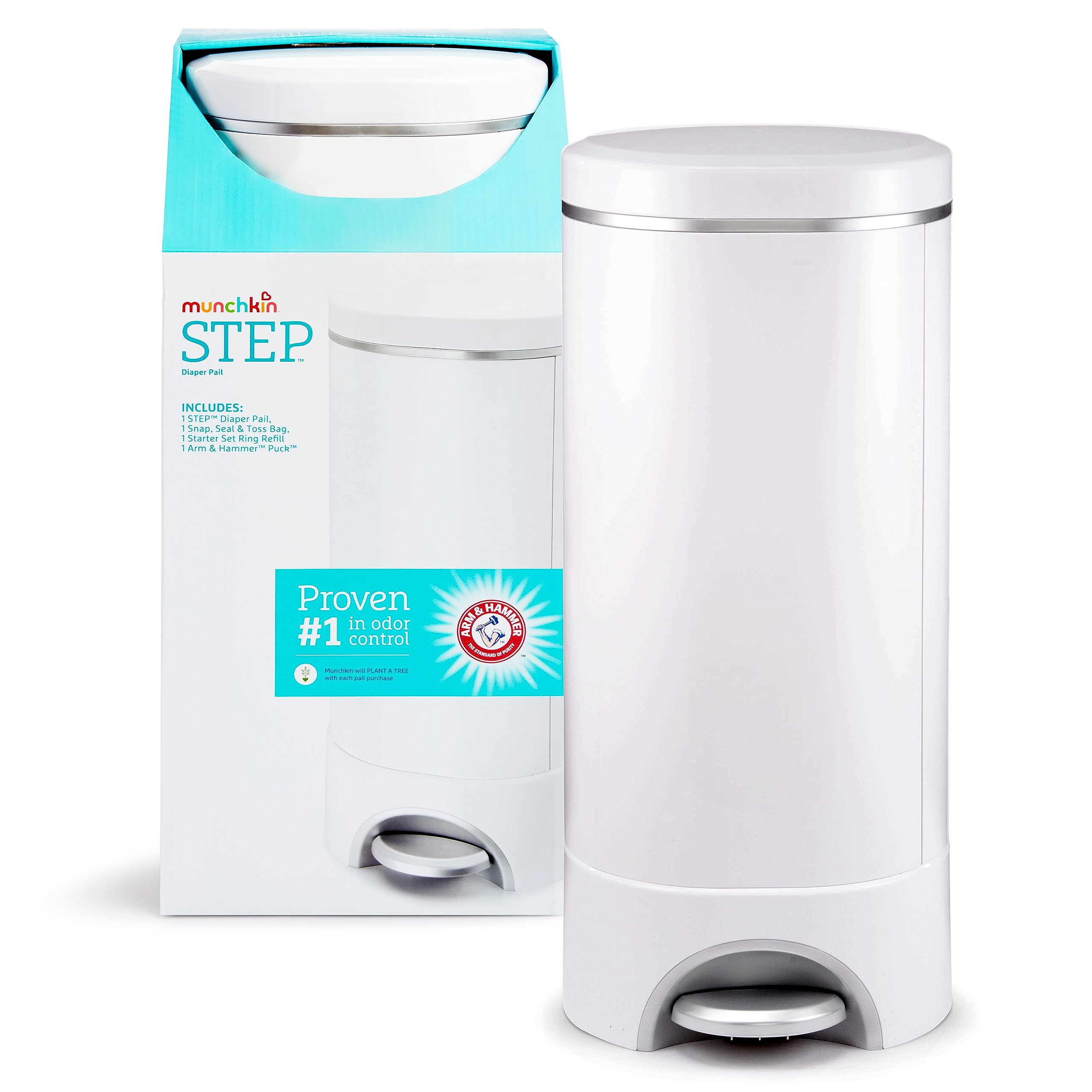
Munchkin STEP
Key Features
- Opening: Step-on foot pedal
- Capacity: 13 gallons
- Odor system: Self-sealing bag and baking soda cartridge
- Refill options: Snap, Seal & Toss or refill rings
- Price: Midrange
The Munchkin STEP’s self-sealing bag system is the most interesting mechanism in this group. As you push a diaper through, the bag twists shut behind it, so the smell is contained even when the lid is open. We like the idea for a nursery where the pail sits close to the crib; the foot pedal keeps your hands free, and the baking soda cartridge adds another layer.
The pail is large: 13 gallons, 27 inches tall, and 11.3 pounds. That size means fewer trips to empty, and the wide opening takes a toddler diaper without a fight. The refill system is flexible, with Snap, Seal & Toss bags, refill rings, and a baking soda puck. The individual bags are easy to change, which is the part of a diaper pail that gets old fastest.
The bag system is not the cheapest way to run a pail; the replacement bags are proprietary. The larger body is also a commitment in a small nursery, so measure the footprint before you decide; in a full-size room, the capacity is an asset.
The STEP is for the buyer who wants the bag to do the sealing and does not mind a larger pail. We prefer the Complete for a main nursery because its lid and seal are more straightforward, but the STEP’s self-sealing action is genuinely useful if the pail sits near where you spend the day. The baking soda cartridge is the detail we appreciate most: it gives the pail a fresher baseline without masking the whole room.
Pros
- Self-sealing bag contains odor
- Large capacity and wide opening
- Flexible refill and baking soda options
Cons
- Lid can fail to sit fully closed
- Hinge and buttons can break
The STEP is worth it if you want the bag to seal itself and can check the lid alignment; it is a large, self-sealing pail with a fussy lid.
Best for Second Stations
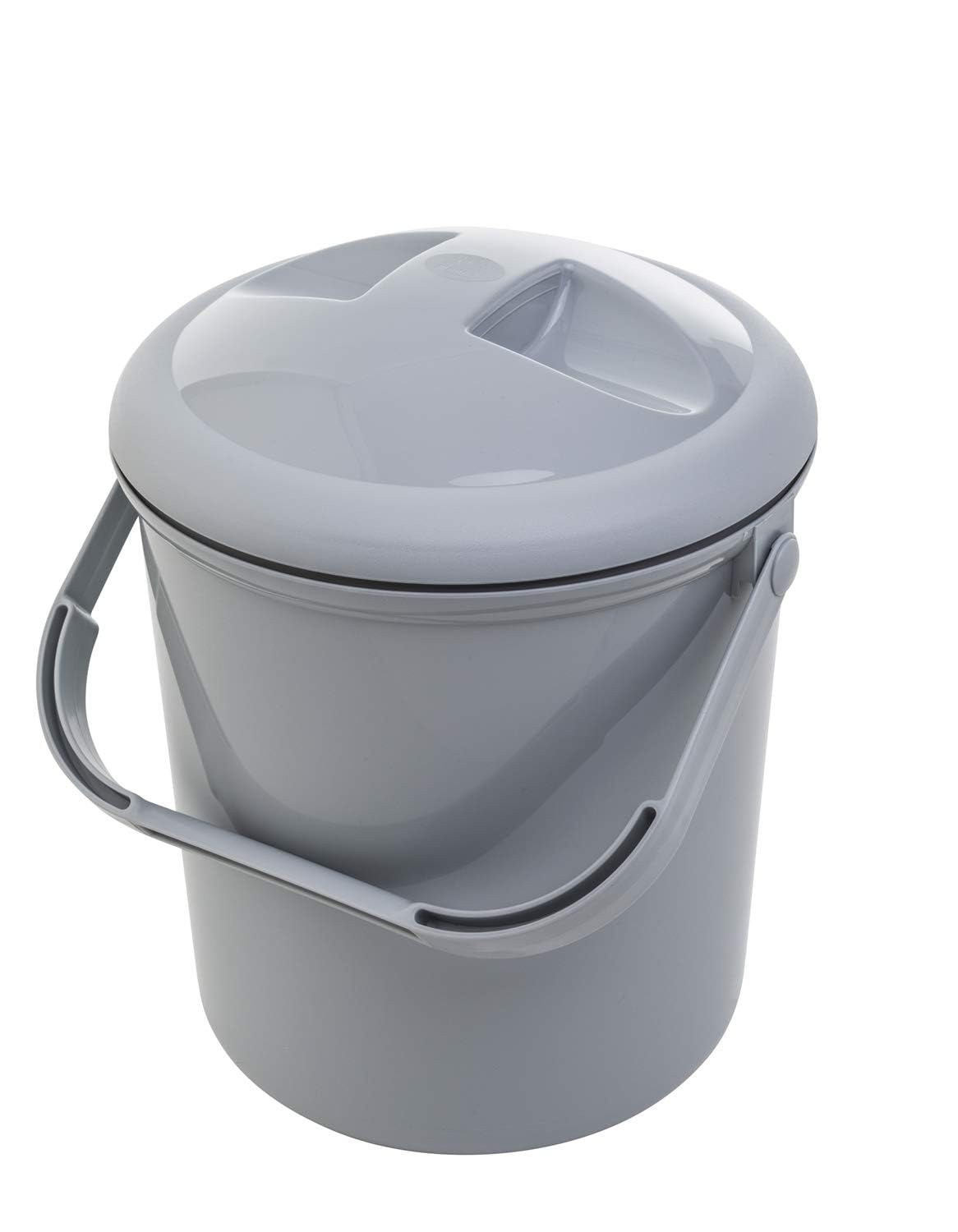
Rotho Babydesign
Key Features
- Weight: 1.14 lb
- Capacity: 10 liters
- Material: Polypropylene
- Bag system: Standard bin liners
- Price: Budget
The Rotho Babydesign is the low-cost, low-tech option: a 10-liter lidded bucket, not a diaper-disposal system, and that is the point. At 1.14 pounds, it is light enough to carry from the nursery to the bathroom, and the recessed grips make the lid easy to lift with one hand. It uses standard bin liners, so there is no refill cartridge to buy. We like it as a second pail for a small apartment or a changing station on another floor.
The limitations are plain. You lift the lid by hand, and the lid is a simple friction seal rather than a clamp. For a second station or a guest-room setup, those are easy trade-offs; for a main nursery, they are not. The polypropylene body is easy to wipe with warm soapy water, and there is no liner cartridge to thread. The carry handle is the detail that makes it more useful than a plain bucket.
Pros
- Light 1.14-pound body with carry handle
- Uses standard bin liners
- Simple wipe-clean polypropylene
Cons
- Small 10-liter capacity fills quickly
The Rotho is the simple, lightweight second pail for a small space, and it earns its place by taking standard bin liners.
How We Tested Diaper Pails in a Real Nursery
We started with the pails that keep showing up in nursery registries and parent forums, then cut anything with a flimsy lid, a hard-to-find refill, or a footprint that wouldn’t fit beside a standard changing table. That left 11 pails, which lived in my nursery and two nearby homes for six months. They went through middle-of-the-night changes, post-breakfast blowouts, and the weekend reset when the nursery gets a full clean.
Each pail got the same unpleasant test: a dirty diaper sealed inside, the lid closed, the pail left in a warm room for a full day, then opened while I stood a few feet away and noted whether the smell stayed put. I also watched how the lid closed with one hand, whether the bag twisted or tore during a change, and how many diapers went in before the pail was genuinely full rather than just full enough.
At every bag change, I noted whether I needed two hands, whether the refill mechanism jammed, and how easily the inside wiped clean after a leak. I tracked how often refills ran out and whether ordinary bags worked as a backup, which is where value and versatility show up in daily use. Over six months, hinges, pedals, and latches got a workout from roughly 20 openings a day; I noted which ones loosened, squeaked, or stopped sealing. I also checked the footprint against a narrow wall and whether the exterior looked like something I’d leave out when guests came over.
How to Choose a Diaper Pail
The right diaper pail is the one whose seal, capacity, and emptying routine match the way you actually change diapers, not the one with the longest feature list.
Start with the bag system, not the pail
The bag system decides your recurring cost and your flexibility. A proprietary cartridge, like the Diaper Genie or Munchkin systems, gives you a tailored fit and often a tighter seal, but you are tied to that refill. A pail that takes standard trash bags, like the Ubbi, is cheaper to run and easier to restock, though the seal depends more on the lid and how carefully the bag sits. If odor is the main worry, pay for the sealed system; if you empty often and hate refill shopping, standard bags are the practical choice.
The trap is comparing only the pail price. A low upfront pail with expensive refills can cost more over a year than a midrange pail with standard bags.
Size the pail to the changing station
Capacity is not just how many diapers fit; it is how often you stop to empty. A 2-gallon pail like the Select is a second-station size, while a 13-gallon Ubbi or Munchkin is a main-nursery size. Also measure the footprint and the lid swing. A tall 27-inch pail needs vertical clearance; a compact 2-gallon pail can tuck beside a chair. The trap is reading compact as small footprint when it often means a smaller opening or a smaller bag, which fills faster.
Check the lid, pedal, and hinge in person
Odor control lives or dies at the lid. A foot pedal is worth having because it keeps one hand free and discourages the lid being left open. A soft-close lid is a bonus in a sleeping nursery; a child lock is useful once your baby becomes a toddler. The part buyers underestimate is the hinge: a lid that does not seat fully, or a side door that works loose, undoes the seal. Test the lid alignment and the pedal action before the return window closes.
Plan for emptying and cleaning
The best pail is the one you are willing to empty. A continuous liner, like the Dekor system, lets you cut off only the soiled section, which saves bags but can leave more film to manage. A standard bag is quicker to tie and toss, though a full bag can create suction at the bottom. Take the bag outside before tying it when you can, and wipe the inside with mild soap rather than a harsh cleaner. We prefer a liner that stays put during emptying; if the routine is awkward, the pail will sit open and the odor problem returns.
Frequently Asked Questions
How often should I empty a diaper pail?
Empty when it is full or every two to three days, whichever comes first. Newborn diapers are small and frequent, but toddler diapers and warm rooms make the pail turn faster. Do not wait until the bag is heavy enough to stress the liner; that is when leaks and odors start.
How long does a diaper pail refill last?
Use the refill’s newborn-diaper rating as a starting point, then expect fewer diapers as your baby grows. A refill rated for hundreds of newborn diapers will not last as long with size 4s, because each diaper uses more film. Buy for the size you are using now, not the biggest headline count.
Can I use cloth diapers in a diaper pail?
Yes, if you use a washable liner or a removable bag and empty it daily. The Dekor EKO is the one in this group with a design that suits cloth diapers, while a pail that depends on a tight self-sealing film can trap moisture. Keep a separate wet bag for soaked diapers and use the pail for the dry or lightly soiled ones.
Final Verdict
The Diaper Genie Complete is the pail we recommend first for a main nursery. The foot pedal keeps both hands free, the double clamp and carbon filter give you more than a lid between the diaper and the room, and the large refill means fewer cartridge changes.
If proprietary refills bother you, the Ubbi is the clear alternative: standard bags, a slim stainless body, and a child lock, with a little more care needed when you pull a full bag. For a small nursery or a second station, the Select’s compact stainless build makes more sense than a full-size pail.
