This post contains affiliate links. We may earn a small commission when you buy through our links — at no extra cost to you.
There’s a moment at every kid’s birthday party when the wrapping paper settles and you can see which presents will get played with and which will end up on top of the toy bin. I’ve watched it at my own kids’ parties and at enough nieces’ and nephews’ to have opinions. A birthday present has to land during the party, then survive a random Tuesday afternoon three weeks later when there’s nothing to do. That’s the problem these picks solve.
Over the past six months, my team and I handed 16 birthday presents — craft kits, building sets, science toys, outdoor gear — to kids ranging from toddlers to tweens, then asked their parents what actually got used. The pattern showed up fast: the winners were the ones a kid could start on their own within a minute or two of opening the box. Age range is the thing parents get wrong most often, too; a set labeled 6 and up will flop with a 4-year-old no matter how good it looks under the wrapping. Everything below has been dropped, spilled on, and fought over, and these are the ones still in rotation.


Best for Party Performers
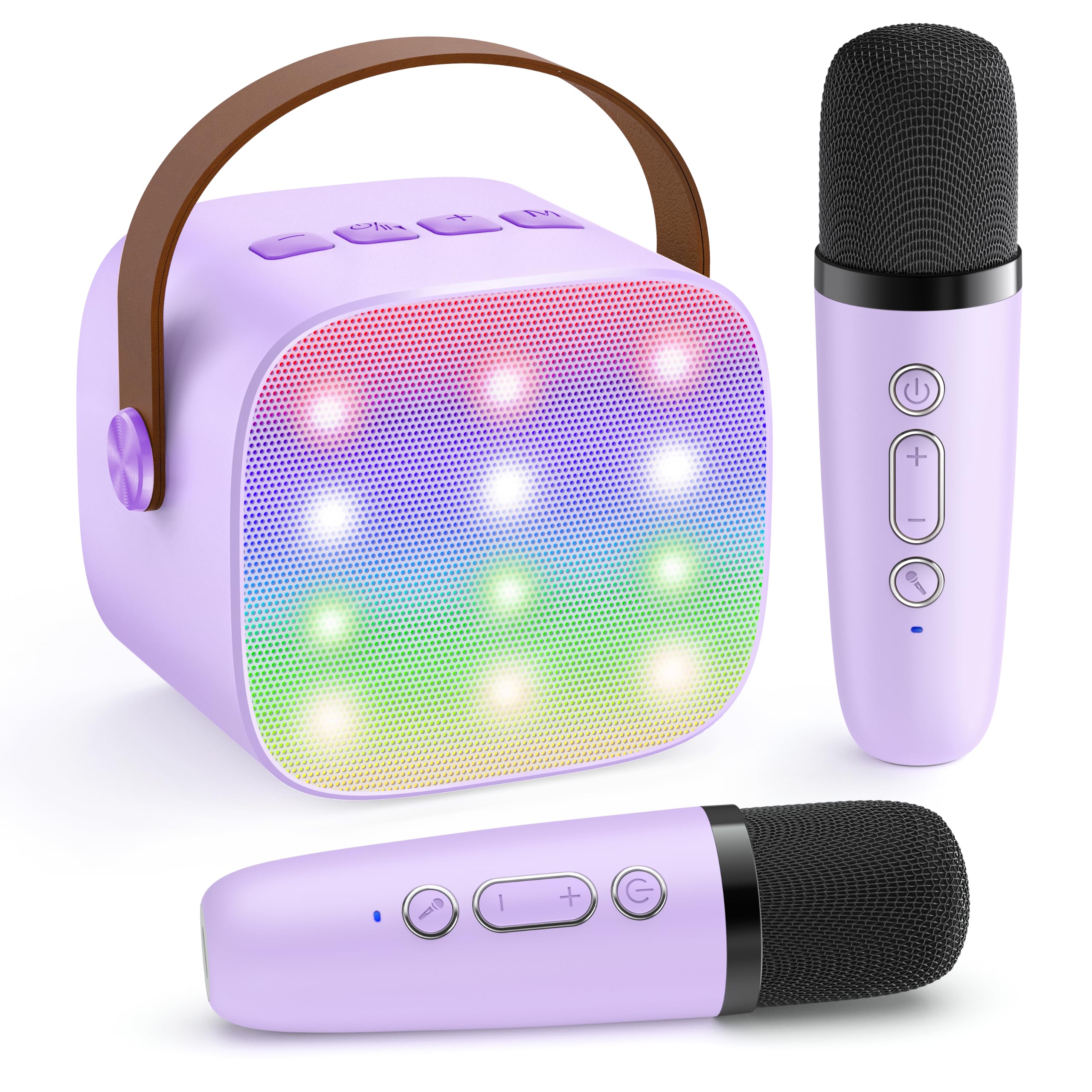
YLL Karaoke Machine
Key Features
- Microphones: 2 wireless
- Battery life: 4–8 hours
- Connectivity: Bluetooth, TF card, headphone
- Recommended age: 4–12 years
- Price: Midrange
The two microphones are what make the YLL feel like a birthday gift rather than another gadget: one child can sing while another grabs the second mic, and the speaker is small enough to move from the kitchen table to the yard. We recommend it first for the child who likes to perform, because it gives the party a center rather than adding another toy to the pile. The rechargeable speaker and mics are the practical part of that appeal, especially for a gift that may sit for a week before its first real workout.
Bluetooth is the feature that keeps it useful after the candles are out. Pair a phone or tablet and the same machine becomes a living-room speaker; the TF card slot and headphone output give it a second life for practice without an audience. The four magic voice effects are silly in exactly the way kids enjoy, and the two mics auto-pair when they are switched on, which cuts down on the usual handoff fumbling.
The box includes two charging cables, and the mics and speaker are light enough to carry in one hand. That makes it an easy gift to bring to a party and an easy toy to move to a grandparent’s house. The two mics are the part we keep coming back to: they turn a solo singer into a duo and a duo into a family argument over who gets the next song.
Pros
- Turns a party into a group activity
- Two wireless mics and rechargeable playback
- Compact enough to move room to room
- Bluetooth, TF card, and headphone options
Cons
- Sound thins at high volume
- Controls take a demo for younger kids
We recommend the YLL for the child who turns every gathering into a performance: it is the most social gift here, with two mics and a rechargeable speaker.
Best for Creative Kids
Dan&Darci Rock Painting Kit
Key Features
- Pieces: 31
- Paint type: Glow-in-the-dark and standard
- Rocks included: 10
- Recommended age: 6–12 years
- Price: Midrange
The glow-in-the-dark paints are the hook, but the kit is smart enough to work before the lights go down: ten river rocks, six standard paints, four puffy glow paints, two brushes, glitter glue, googly eyes, and gems give a child several ways to finish a rock. The box opens ready to use, which matters for a birthday gift that needs to occupy a table within minutes.
We recommend it for the 6- to 12-year-old who likes a project with a clear start and a finish, and especially for a child who has already done the usual coloring books. The fine brush is the one we reach for on details, while the wider brush covers a rock faster; the extra decorations make even a wobbly first attempt look deliberate. It is a more involved session than a scratch pad, and that is the point.
The kit is also easy to hand off to a parent: no batteries, no screens, and no mixing beyond opening the paints. The finished rocks can go into a potted plant or on a windowsill, which gives the project a second life after the table is cleared. For a child who needs a birthday afternoon rather than another object, that is a strong trade.
Pros
- Opens ready to paint
- Glow paints add an after-dark reveal
- Gems and googly eyes finish the rocks
- Works for a range of ages with help
Cons
- Glow effect is inconsistent
- Rocks are small and uneven
We reach for the Dan&Darci kit when the birthday child likes to make things, because it opens ready to paint and gives the glow effect a real shot.
Best for Science Show-Offs
National Geographic Magic Chemistry Set
Key Features
- Guide: Full color
- Included: Magic wand and gloves
- Experiments: 10
- Recommended age: 8 years and up
- Price: Midrange
A coin floats, water changes color, and snow appears from nowhere: the National Geographic set packages ten chemistry experiments as magic tricks, with a wand and white gloves for the reveal. That framing is the reason it lands with a child who thinks science is homework. The guide explains what is happening without turning the trick into a lecture.
Everything needed for the ten experiments is in the box, including the theatrical bits, so there is no last-minute hunt for a coin or a glass. The illustrated instructions are written for kids, and the explanations are short enough to read aloud while the result is still exciting. We like that the set treats the wand and gloves as part of the experiment rather than a costume afterthought.
We recommend it for an 8- to 12-year-old who enjoys a reveal, and for a household that will sit through the first round with them. The ten-trick format gives it a clear beginning and end, which is useful for a birthday gift that should not turn into a permanent science station. It is a performance kit first and a lab second, and that is exactly why it gets played with.
Pros
- Ten magic tricks with science explanations
- Wand and gloves make the reveal theatrical
- Full-color guide with kid-friendly instructions
- No extra tools needed
Cons
- Only ten experiments, so novelty has a ceiling
We recommend this set for an 8- to 12-year-old who likes a reveal, since each experiment lands as a trick and a lesson at once.
Best for Little Explorers
GeoSafari Jr. Kidnoculars
Key Features
- Focus: Fixed
- Weight: 7.05 oz
- Magnification: 2x
- Recommended age: 3 years and up
- Price: Budget
The eyepieces are the design choice that makes these binoculars work for a preschooler: they are wide and soft, so a child can press them to their face without finding two tiny holes in the dark. The 2x magnification and fixed focus are the whole idea: there is no wheel to fiddle with while a bird moves. The breakaway neck strap is another small detail that makes the binoculars feel like gear rather than a costume.
We recommend these as a first pair for a 3- to 5-year-old who wants to copy the grown-ups. The plastic body is light enough to wear without a fight, and the rubber eyecups do more for comfort than the magnification does. For a child who has trouble lining up two separate lenses, the single wide view is the feature that keeps them looking instead of handing the binoculars back.
For backyard birdwatching, bug hunting, and spotting the neighbor’s cat, the fixed focus is an advantage: point and look. The binoculars are small enough to live in a coat pocket or a car door, which is where a kid’s first pair usually ends up. They are a real step into looking closely, and that matters more here than optical reach.
Pros
- Oversized eyepieces fit small faces
- Fixed focus is easy to use
- Breakaway strap adds safety
- Light enough to wear
Cons
- Only 2x magnification
- Neck strap can come untied
We keep these for the 3- to 5-year-old who wants real gear, not a toy: the soft eyepieces and fixed focus make backyard watching easy.
Best for Curious Readers
National Geographic First Big Book of Why
Key Features
- Pages: 128
- Dimensions: 10.16 x 0.55 x 10.16 inches
- Grade level: Preschool–2
- Reading age: 3–6 years
- Price: Budget
The question is the engine of this book: each spread takes something a child has already asked about, such as why the sky is blue or why animals have tails, and answers it with a photo, a clear explanation, and another question to pull them forward. We recommend it for the 3- to 6-year-old who is deep in the why phase, because it turns the interrogation into a shared page-turn instead of a search for a screen.
The 128 pages are built for browsing rather than a single sitting, and the large format makes the photographs easy to share on a lap. The text is simple enough for an early reader to try alone, but the book is at its best when an adult reads the question and the child supplies the follow-up. It sits comfortably in the birthday-gift gap between a toy and a bedtime story.
Pros
- Turns why questions into shared reading
- Big photos and colorful pages
- Browsable 128-page format
- Simple text for early readers
Cons
- Answers stay brief, so deeper questions need another source
We recommend this book for curious preschoolers and early readers, because it turns the endless why phase into a shared page-turn.
Best for Active Afternoons
National Geographic LED Air Rocket
Key Features
- Rockets: 3 light-up
- Batteries: 9 LR41 included
- Launch height: Up to 100 feet
- Manufacturer age: 6 years and up
- Price: Premium
The extra-large foot pump is the whole trick: a child stomps, the launch tube sends a foam-tipped rocket up to 100 feet, and the yard turns into a countdown. Three light-up rockets are included, and the adjustable tube lets you change the launch angle so the game does not get stale in one afternoon.
The learning guide is a nice surprise in a toy that could have stopped at the launch. It explains flight and motion without making the kid fill out a worksheet, and the light-up rockets keep the same toy useful after dusk. We like that the set is active without being a screen, and that it gives a group of kids something to take turns with.
We recommend it for a 6- to 12-year-old with a yard, a park, or a forgiving basement, and for a parent who is happy to supervise the first few launches. The foam tips are a sensible choice for outdoor use, but this is still a toy that needs space and a little aim. It is the gift we bring when the birthday child has energy to burn rather than another thing to sit and assemble.
Pros
- Stomp launch sends rockets up to 100 feet
- Three light-up rockets
- Adjustable launch angle
- Learning guide adds a physics angle
Cons
- Foot-pump tube can crack
- Plastic legs feel flimsy
We recommend the air rocket for a high-energy kid with a yard, because the stomp launch gets everyone outside and the light-up rockets extend the show.
Best for Travel Quiet Time
ZMLM Scratch Paper Art
Key Features
- Batteries: None required
- Dimensions: 0.75 x 7.56 x 10.16 inches
- Pack count: 2 notebooks
- Recommended age: 36 months–12 years
- Price: Budget
The black page is the trick: scratch the coating and a rainbow line appears, so a child gets a bright result without opening a paint pot. The set includes two notebooks and a scratching tool, and it needs no batteries, no glue, and no drying time. That makes it the craft kit we reach for when the table is not available, or when the gift has to travel.
The format suits a car ride, a restaurant wait, or a quiet afternoon at home. The pages are small enough for a child to fill in one sitting, and the reveal is immediate enough to hold a 4-year-old’s attention. For a sibling pair, the two notebooks also mean there is less negotiating over whose turn it is.
The black coating keeps the mess contained, which makes it a better choice than paint for a couch or a car seat. The two notebooks also give a child a place to practice shapes and letters, not just doodles. It is a simple pleasure, but it is one that works in places where a paint kit cannot go.
We recommend the scratch set for a low-mess gift, a travel surprise, or a small add-on for a child who likes to draw. It is the one here that a parent can hand over in the back seat without checking for a table covering, and that is a specific kind of birthday-gift usefulness.
Pros
- No paint, glue, or batteries
- Two notebooks for sharing
- Rainbow reveal is instantly rewarding
- Easy for young kids to use
Cons
- Pages are used up quickly
We recommend the scratch notebooks for a low-mess, low-cost gift that still feels creative, especially for travel or a sibling pair.
Best for Birthday Read-Aloud
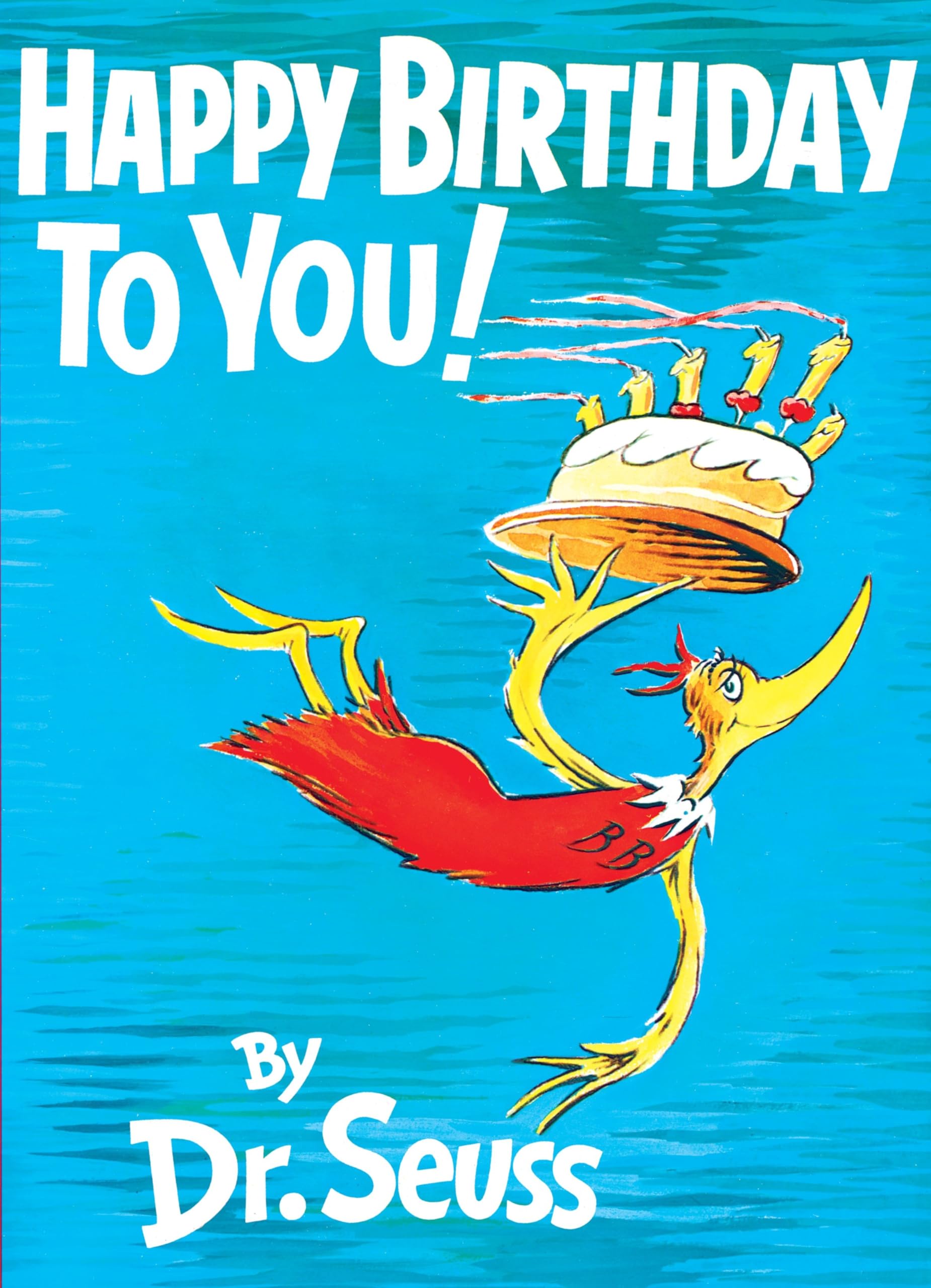
Happy Birthday to You!
Key Features
- Pages: 64
- Dimensions: 8.32 x 0.39 x 11.25 inches
- Grade level: Kindergarten–4
- Price: Budget
The title does the work: Happy Birthday to You! is a birthday book first and a Dr. Seuss story second, which makes it easy to hand to a child who already has the standard toy pile. The rhyme is classic Seuss, with invented words and a birthday kingdom, and the 64 pages give it more substance than a card.
It is a read-aloud book more than an early reader. The rhythm is the pleasure, and the length gives an adult something to perform at bedtime or on the morning of the birthday. The story also has a nice message about being celebrated for who you are, which is a better fit for a birthday than a generic moral.
For a first birthday, the book can become a ritual: read it on the day, write a note inside, and add to it each year. That makes it a gift a parent can keep even after the toys have been cleared out. It is also a useful present for a child who is starting to read on their own, because the repetition and rhyme support the effort.
We recommend it as a birthday read-aloud for a child who will grow into the longer text, and as a small keepsake for a family that likes books. It is the one here that may still be on the shelf years later.
Pros
- Birthday-specific Seuss rhyme
- 64 pages give it read-aloud substance
- Works as a yearly birthday ritual
- Rhyme supports early reading
Cons
- Longer text can lose toddlers
We recommend Happy Birthday to You! as a read-aloud birthday ritual, especially for a child who already has enough toys and will grow into the longer text.
How We Tested the Best Birthday Presents, With Real Kids and Real Parties
We started with a list of roughly 70 gifts — the ones that keep showing up at parties, plus what our own kids’ friends ask for — and cut it down by age band, safety labeling, and whether a gift needed batteries or a parent to get it running. That left 16 presents, which we tested over six months, from spring birthdays through the fall.
Most of the testing happened where gifts actually get opened: at birthday parties with six to eight kids in the room, and on the weekday afternoons and rainy Saturdays that followed. We timed how long it took a child to get from sealed box to first real play — anything past five minutes usually meant an adult was doing the fun part. We also counted what was inside against what the package promised: how many projects a craft kit actually made, how many rocks were big enough to paint, and how many pieces got used a second time. On science toys and bug viewers, we looked through the eyepieces ourselves at newsprint and at the backyard, because low magnification or a blurry lens kills the fun in about a minute.
Then we waited. Two weeks in, we asked which toy had been requested again, how long a typical play session ran before attention drifted, and whether paint was chipping off the craft pieces or staining fingers. Durability got judged the honest way — dropped on sidewalks, shoved in backpacks, left out overnight. Finally, we weighed enjoyment against price to see which gifts delivered the most play per dollar, since a present that’s loved for two days isn’t a bargain at any cost.
How to Choose Birthday Presents for Kids
The most useful birthday gift is the one that matches how the child already likes to play, not the age printed largest on the box.
Start with the kind of play
A rock-painting kit and a scratch pad both count as crafts, but one is a table project with paint and glitter glue, while the other is a quiet travel activity with no cleanup. A karaoke machine is a group gift; a question-and-answer book is a lap gift. We decide by picturing the child’s best afternoon: making something, moving around, performing, or curling up with an adult. That picture narrows the category faster than a list of popular toys.
Check the age range at both ends
We look at the youngest age a kit claims and the oldest child who will still be interested. An 8-and-up science set can delight a 6-year-old with an adult nearby, but it is not a drop-off gift, and a kit that is too young for a 10-year-old becomes a one-afternoon novelty. For mixed-age siblings, choose a wide-range craft or a group activity rather than a kit that only one child can use.
Be honest about mess, noise, and setup
Easy to use does not always mean tidy. Glow paint, glitter glue, and slime need a covered table and a grown-up who is willing to wipe up; scratch paper and a book are the low-mess choices. The karaoke machine is the high-volume choice, and that is a real consideration for a parent who works from home or has a sleeping sibling. Match the gift to the household’s tolerance, not just the child’s excitement.
Plan for the second play
The first afternoon is easy; the question is what the gift needs after that. Scratch notebooks are consumed, rock-painting paints run down, and a science kit has a fixed number of experiments. Check whether refills are available, whether the pieces store in one box, and whether the gift will still fit on a shelf. We prefer a smaller kit that gets used twice to a large one that becomes clutter.
Frequently Asked Questions
Do these gifts need batteries or charging before wrapping?
The karaoke speaker and mics are rechargeable, so charge them before the party if you want the gift to work immediately. The air rocket includes nine LR41 batteries; the Kidnoculars, scratch notebooks, and books need none. Check the battery compartment and include a note if a gift needs charging.
What’s a good birthday present for a child who already has everything?
Choose an experience or a group activity rather than another object: the karaoke machine turns the party into the play, and the air rocket gives a yard full of kids something to do. If the child prefers quiet, a rock-painting kit or the question-and-answer book takes up little space and creates an afternoon.
What’s a good gift for a child who doesn’t like crafts?
Look for movement or observation instead of a table project. The air rocket suits a child who wants to run and stomp, and the Kidnoculars suit a walker who wants to spot birds and bugs. Ask whether the child prefers action or collecting; the answer points to a different gift.
Final Verdict
For most birthdays, the YLL karaoke machine is the gift we put first: it works across a wide age range, comes with two mics, and turns the party into the activity. It is not the quiet choice, but it is the one most likely to be used before the cake is cut.
If the child is more maker than performer, the Dan&Darci rock painting kit is the better fit because it opens ready to paint and gives a table full of kids a project. For a quiet gift that keeps working after the party, choose the National Geographic First Big Book of Why.
